Watercolor Paper Preparation Advisor
Tell us about your project
Estimated Buckling Risk
Suggested Drying Time
Wait until uniformly dark
Step-by-Step Workflow
Grabbing a fresh sheet of watercolor paper and immediately dumping a bucket of blue paint onto it feels like the logical next step. But if you’ve ever watched your beautiful landscape warp into a wavy mess as it dried, you know the truth: preparation matters. The question isn't just about whether to soak; it’s about understanding watercolor paper behavior under moisture.
Most artists struggle with this because they treat paper like canvas or drawing board. It isn’t. Paper is cellulose fibers that swell when wet. If you don't manage that swelling, your work will buckle, ripple, or tear. This guide cuts through the myths and gives you a practical framework for deciding when to soak, when to skip it, and how to keep your surface flat.
The Physics of Wet Paper
To decide if you need to soak, you have to understand what happens at a molecular level. When water hits dry paper, the fibers absorb the liquid and expand. This expansion creates tension. If the paper is taped down on all four sides, the center lifts up in the middle, creating a "buckled" surface. If it's loose, the edges curl inward. Both scenarios ruin precise details and can cause pigment to pool unevenly.
Soaking the paper before painting allows the fibers to reach their maximum saturation *before* you apply pigment. Once the paper is fully wet, it has already expanded. As it dries, it contracts back to its original size. Because the expansion happened during the soak, not during the painting process, the movement is minimized. This is why professional watercolorists often tape down their paper and let it sit until it's damp but not dripping.
| Method | Buckling Risk | Ideal For | Time Required |
|---|---|---|---|
| Dry Application (No Soak) | High | Small sketches, light washes | 0 minutes |
| Wet-On-Wet (Soaked) | Low (if taped) | Sky, clouds, soft blends | 15-30 minutes |
| Wet-On-Dry (Dampened) | Medium | Controlled gradients, mid-tone areas | 5-10 minutes |
When You Absolutely Must Soak
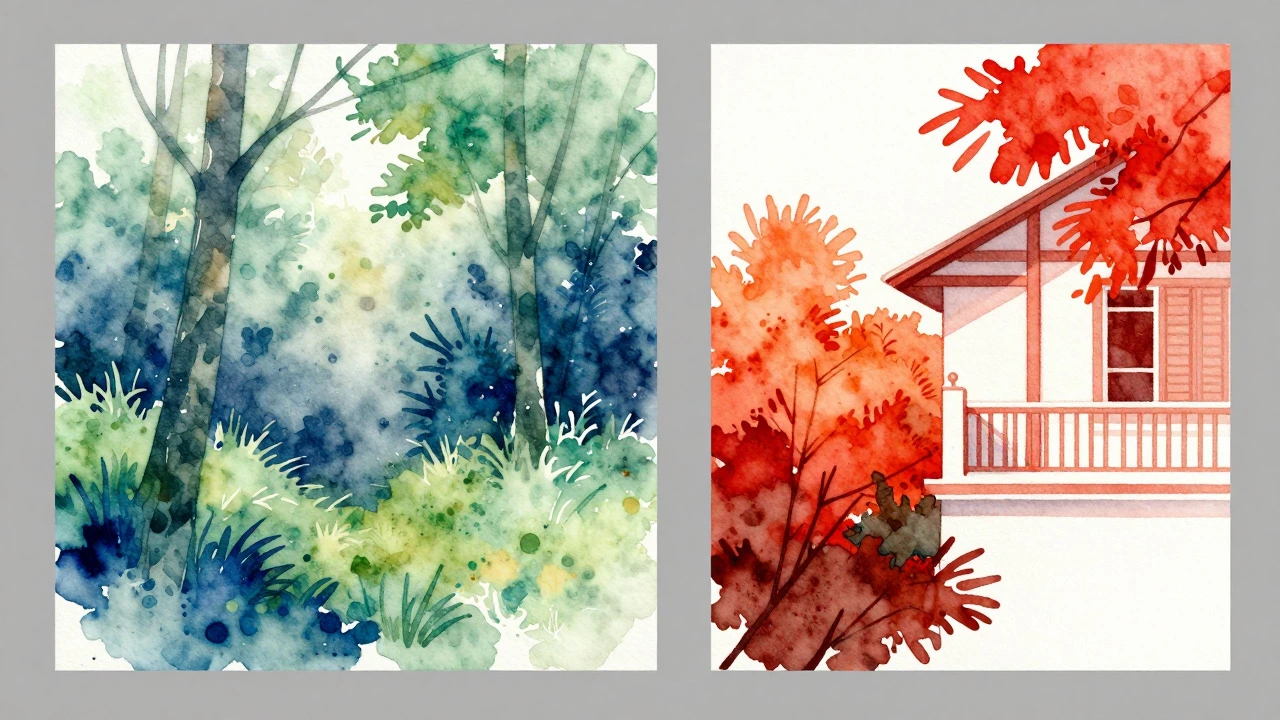
There are specific techniques where skipping the soak ruins the effect. The most common is Wet-on-Wet is a technique where pigment is applied to fully saturated paper, allowing colors to bleed and merge naturally. Think of painting a sky with soft cloud formations or a misty forest background. If the paper is dry, the paint sits on top and creates hard edges. If it’s soaked, the pigment floats and diffuses, creating those organic, dreamlike transitions.
Another scenario is large-scale works. If you are painting a piece larger than A4 size, the amount of water involved is significant. The sheer volume of liquid causes substantial fiber expansion. Without pre-soaking, the center of the sheet will likely lift off the table or create deep ripples that trap air bubbles. These bubbles become permanent white spots in your finished piece once the paper dries flat.
When You Can Skip the Soak
Does every single brushstroke require a soaked sheet? No. In fact, over-soaking can be detrimental. If you are working on a small study, a quick sketch, or a piece with very high contrast and sharp lines, dry paper is your friend. Dry paper holds pigment in place. It prevents colors from bleeding into each other uncontrollably. This is essential for architectural details, crisp foliage, or fine line work.
Consider a portrait with defined features. If the paper is too wet, the eyes might blur together. By keeping the paper dry or only slightly dampened in local areas, you maintain control. Many digital artists transitioning to traditional media make the mistake of trying to replicate digital blending on wet paper. While possible, it requires immense skill. For beginners, starting with dry paper offers more forgiveness and clearer results.
The Taping Method: Your Best Friend
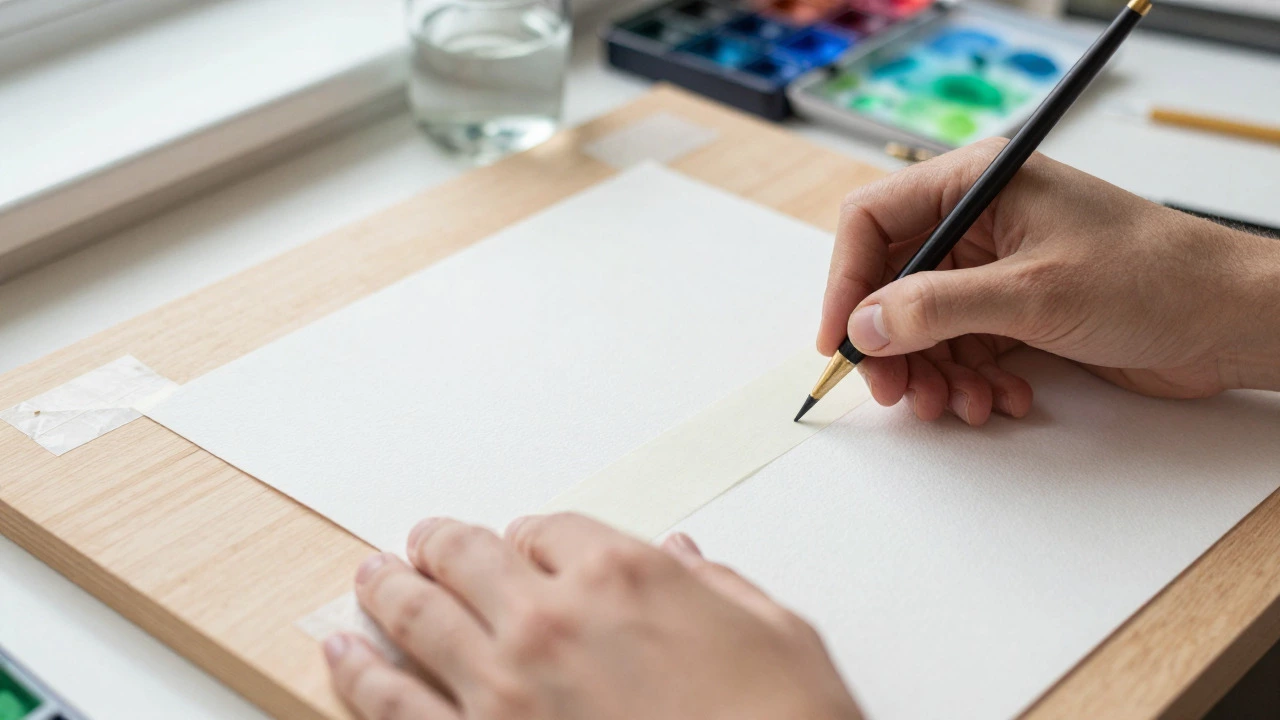
Soaking without taping is usually a bad idea. Unless you are using a specialized watercolor board that holds the paper via suction or clips, gravity will win. The standard method involves using acid-free masking tape. You tape the paper to a rigid board (not a flexible one) on all four sides. Then, you dampen the entire sheet with a clean brush or spray bottle.
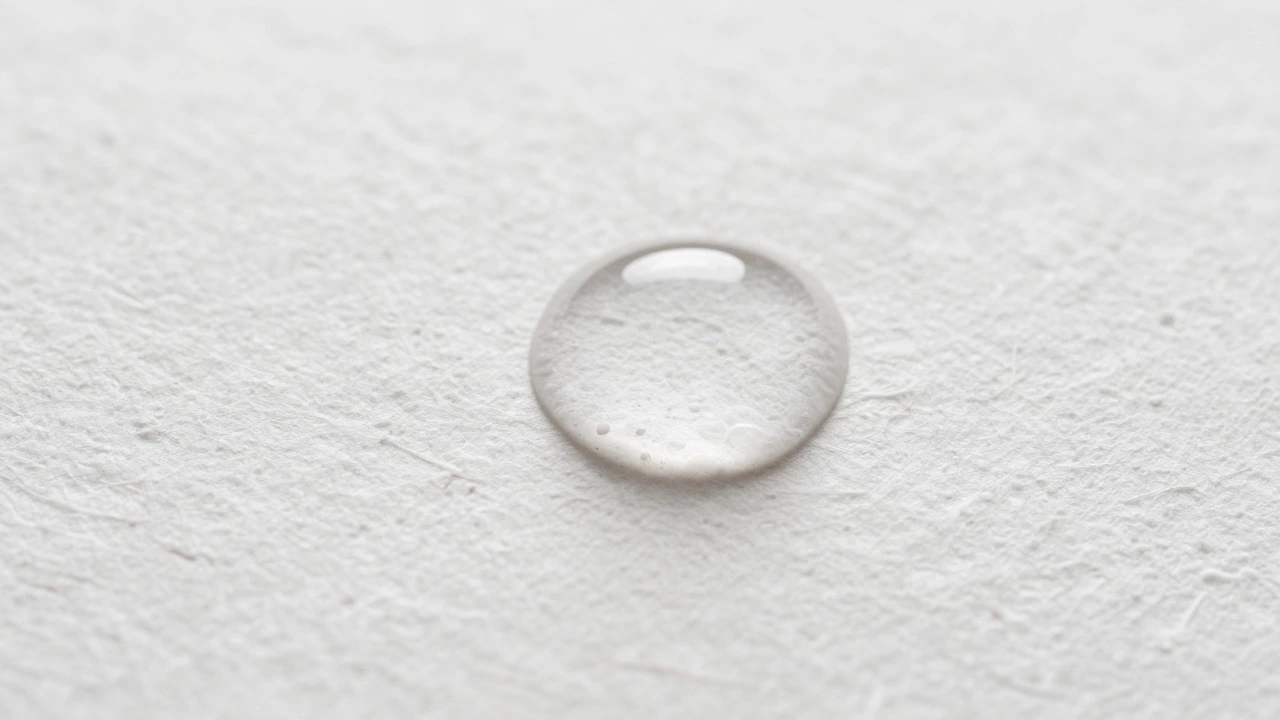
Wait. How long? That depends on the weight of the paper. Lighter papers (140 lb / 300 gsm) soak faster and buckle less. Heavier papers (300 lb / 640 gsm) are more resistant to warping but take longer to saturate. A good rule of thumb: wait until the paper looks uniformly dark and no new water droplets appear on the surface. This usually takes 15 to 30 minutes. Rushing this step leads to uneven drying and potential tearing when you remove the tape later.
Paper Weight and Texture Matter
Not all watercolor paper is created equal. The texture, or "tooth," affects how much water the paper absorbs. Rough paper has a bumpy surface that traps water in the valleys. This means it stays wetter for longer, which can increase the risk of bleeding if you aren't careful. Smooth paper, on the other hand, dries faster and offers less resistance to water flow. This makes smooth paper ideal for detailed work but challenging for broad washes, as the water runs off quickly.
Cold-press paper strikes a balance. It has a slight tooth that provides some texture without being too aggressive. Most artists find cold-press to be the most versatile choice for both wet and dry techniques. Hot-press paper is completely smooth and is often used for botanical illustrations or ink work, but it requires a lighter touch with water to avoid excessive pooling.
Common Mistakes to Avoid
- Using regular office tape: Regular tape contains acids that yellow paper over time and leaves sticky residue. Always use acid-free watercolor masking tape.
- Painting while dripping: If water drips from the paper onto your palette or table, it’s still too wet. Wait until it’s damp but not active.
- Removing tape too early: If you peel the tape before the paper is bone-dry, the edges will curl permanently. Let it dry overnight if possible.
- Ignoring grain direction: Paper has a grain. If you paint against the grain, it may crack as it dries. Check the manufacturer’s label for the grain direction and align your painting accordingly.
Practical Workflow for Beginners
If you are new to watercolor, here is a simple workflow to test these concepts:
- Take a sheet of 140 lb cold-press paper.
- Tape it to a board on all four sides.
- Dampen the entire sheet lightly with a clean brush.
- Wait 10 minutes.
- Apply a light wash of color across the whole page.
- Observe how the color spreads and settles.
- Now, take a second sheet, leave it dry, and paint a similar wash.
- Compare the two. Notice how the wet sheet allowed for blending, while the dry sheet kept the edges sharper.
How long should I soak watercolor paper?
Generally, 15 to 30 minutes is sufficient for most standard weights (140 lb). The paper is ready when it appears uniformly dark and stops absorbing additional water visibly. Heavier papers may take longer.
Do I need to soak paper for small paintings?
For small studies or sketches, soaking is optional. If you are doing light washes, you can paint directly on dry paper. However, if you plan to use heavy water amounts, taping and dampening is still recommended to prevent warping.
What happens if I don't tape my paper down?
The paper will likely curl at the edges or buckle in the center. This uneven surface can cause pigment to pool in low spots and run off high spots, leading to an unpredictable finish. Taping keeps the surface flat and consistent.
Can I reuse soaked paper after it dries?
Yes, but with caution. Once dried, the paper may have slight undulations. Re-wetting it can reactivate previous layers of paint. It is best to use leftover soaked sheets for practice exercises rather than final artworks.
Is soaking necessary for hot-press paper?
Hot-press paper is smoother and absorbs water differently than rough or cold-press. It tends to stay wetter longer on the surface. Soaking is still recommended for large washes to ensure even absorption, but you may need to wait longer for it to reach the right dampness.