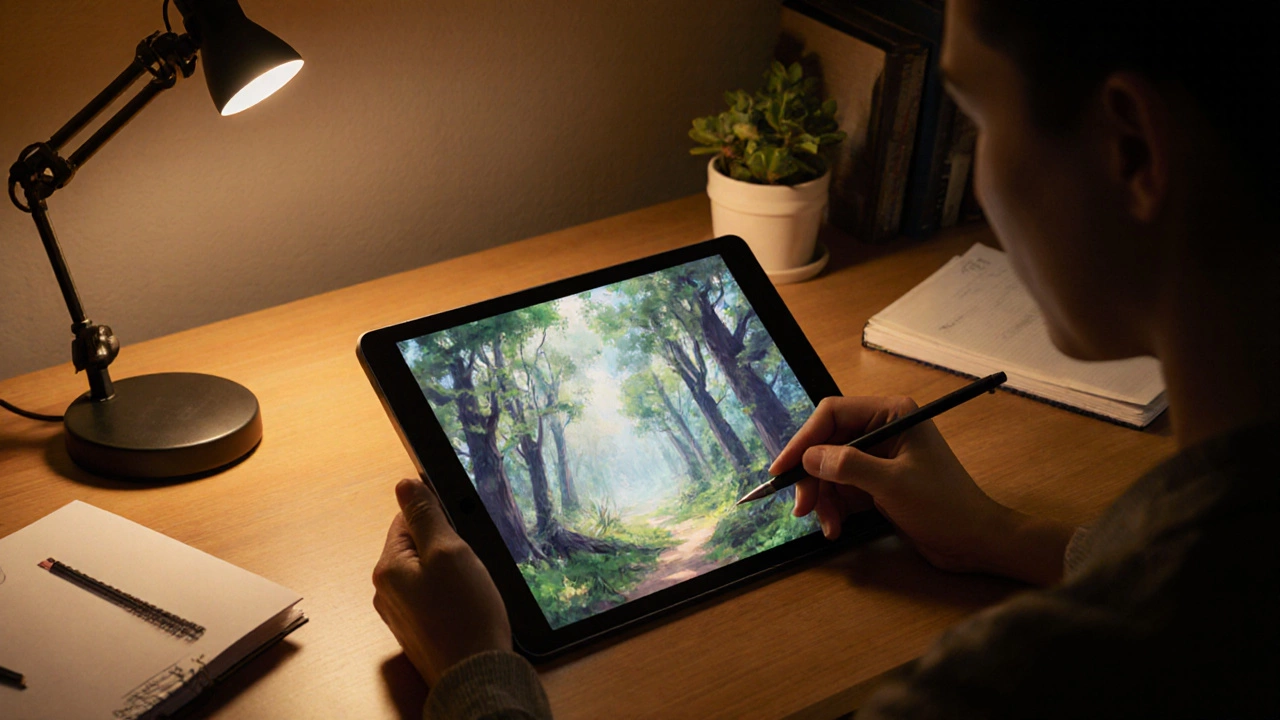
Copyright Digital Art: What You Need to Know About Ownership and Legal Risks
When you create a copyright digital art, a legal protection that gives you exclusive rights to reproduce, display, and sell your original digital creations. Also known as digital artwork copyright, it’s not automatic just because you saved a file—you need to understand what it actually protects and how to enforce it. Many artists assume that posting art online means it’s protected, but that’s a myth. If someone downloads your Instagram post, edits it, and sells it as their own, you might have no legal standing unless you’ve taken the right steps.
Copyright doesn’t protect ideas—it protects the unique expression, the specific way you’ve combined colors, shapes, textures, or digital brushes to create something original. That means if you paint a generic sunset in Photoshop, it’s hard to claim copyright. But if you’ve layered 12 custom brushes, added glitch effects from your own code, and composed it in a way no one else has, that’s yours. The law also struggles with AI-generated art, works created using tools like Midjourney or DALL·E where human input is unclear. In the U.S., courts have ruled that fully AI-made images can’t be copyrighted at all. But if you heavily edit, rearrange, or add original elements, you might still own the final version. This is why so many digital artists are confused—they’ve spent hours on a piece, only to find someone else using it as a stock image or NFT without permission.
Protecting your work isn’t about fancy lawyers or expensive registrations—at least not at first. You can start by adding a visible watermark, keeping your original layered files (PSD, ABR, Procreate files), and dating your drafts. Many artists don’t realize that the moment you create something digital, you technically own the copyright—even without registering it. But if someone steals it and you want to sue, you need proof you made it first. That’s why keeping a dated backup on a cloud service or even a printed timestamped receipt matters. Galleries, collectors, and even Instagram influencers care about this now. If you’re selling digital art, you’re not just selling pixels—you’re selling legal rights.
What you’ll find below are real, practical guides from artists who’ve been sued, had their work stolen, or learned the hard way how to protect their creations. You’ll see how much portrait artists charge when their work gets copied, how lithograph prints are verified for authenticity, and why some digital artists avoid posting full-resolution images online. There’s no fluff here—just what works, what doesn’t, and what you need to know before your next piece goes live.