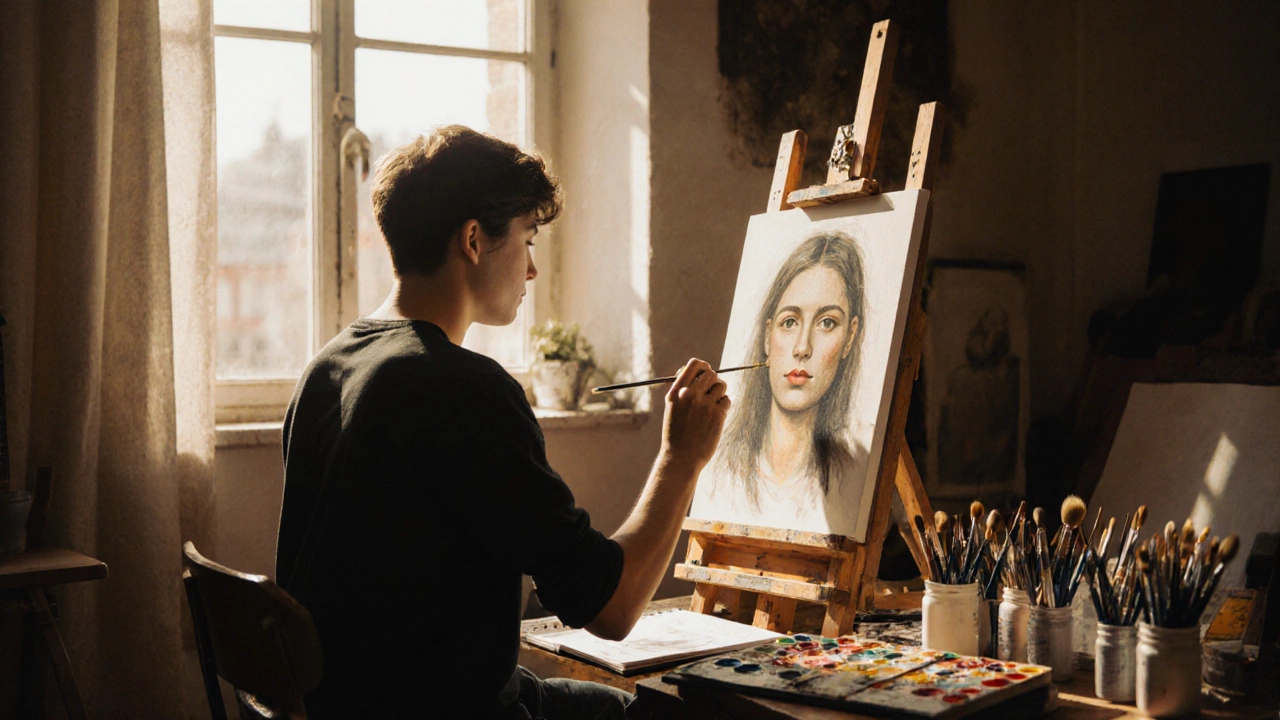
Portrait Art Market: What Sells, Who Buys, and Why It Matters
When you think of the portrait art market, the segment of the fine art world where painted, drawn, or photographed likenesses of people are bought and sold. Also known as figurative art sales, it’s not just about capturing a face—it’s about emotion, status, and identity. Unlike abstract pieces that rely on mood, portraits connect directly to human experience. People don’t buy them just because they’re pretty—they buy them because they recognize someone, remember someone, or want to be remembered.
What makes a portrait sell? It’s not just skill. A portrait painting, a hand-crafted representation of a person using traditional media like oil or charcoal. Also known as figurative portraiture, it’s a skill that demands accuracy in anatomy, lighting, and expression. But buyers care more about authenticity than perfection. A slightly imperfect portrait that feels real beats a technically flawless one that feels cold. That’s why many collectors prefer artists who capture personality over those who chase hyperrealism. And it’s why digital portraits—especially those made for social media or personalized gifts—are growing fast, even if they don’t always show up in high-end galleries.
The art pricing, the process artists use to assign value to their work based on time, materials, reputation, and market demand. Also known as art valuation, it’s one of the biggest headaches for creators. You can’t just multiply hours by $20 and call it done. Galleries look at past sales, exhibition history, and even the size of the canvas. A 16x20 inch oil portrait might sell for $800, but the same artist’s 36x48 inch version could go for $3,500—not because it took four times longer, but because bigger pieces command more attention and fit better in living rooms and offices. And don’t forget: buyers in cities like New York, London, or Mumbai pay more than those in smaller markets. Location matters.
Then there’s the buyer. The art collectors, individuals or institutions that acquire artworks for personal enjoyment, investment, or cultural impact. Also known as art patrons, they’re not all rich elites. Many are middle-class professionals who buy one piece at a time—often a portrait of a loved one, a pet, or themselves. Some buy for nostalgia. Others buy because they believe in the artist. And a growing number are buying digital portraits as NFTs or printable files, especially younger buyers who see art as part of their personal brand. The market isn’t dying—it’s splitting into pieces.
So where does that leave you? Whether you’re an artist trying to sell portraits, a collector looking to buy, or just someone curious about why certain faces end up on walls while others don’t—this collection gives you the real talk. No fluff. No theory. Just what’s actually moving in the portrait art market right now: what sells, what doesn’t, and why. You’ll find guides on pricing, tips for beginners, insights from artists who’ve cracked the code, and even what galleries won’t tell you about what they’re really looking for. This isn’t about fame or trends. It’s about understanding the quiet, steady demand for human faces in art—and how to be part of it.