Art Exhibition Persona Quiz
Answer these 4 questions to discover what you are called when you walk into a gallery.
You Are A:
Complete the quiz to see which role fits your art-world personality.
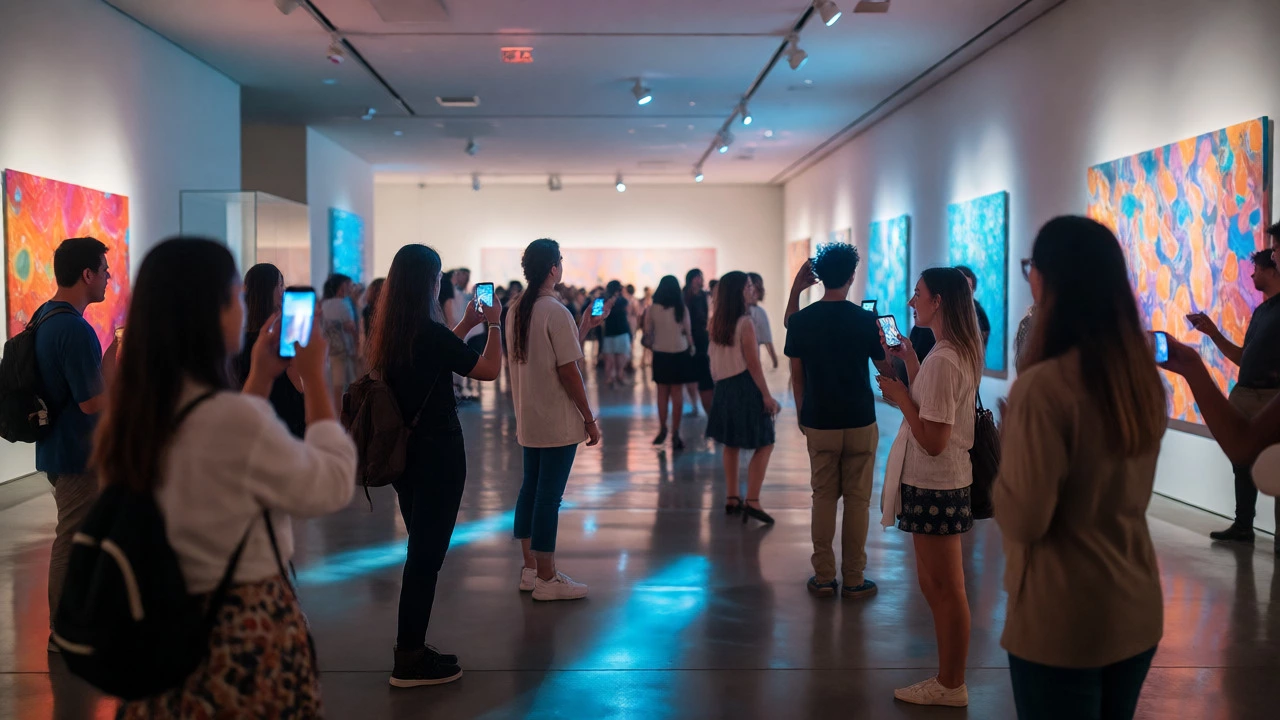
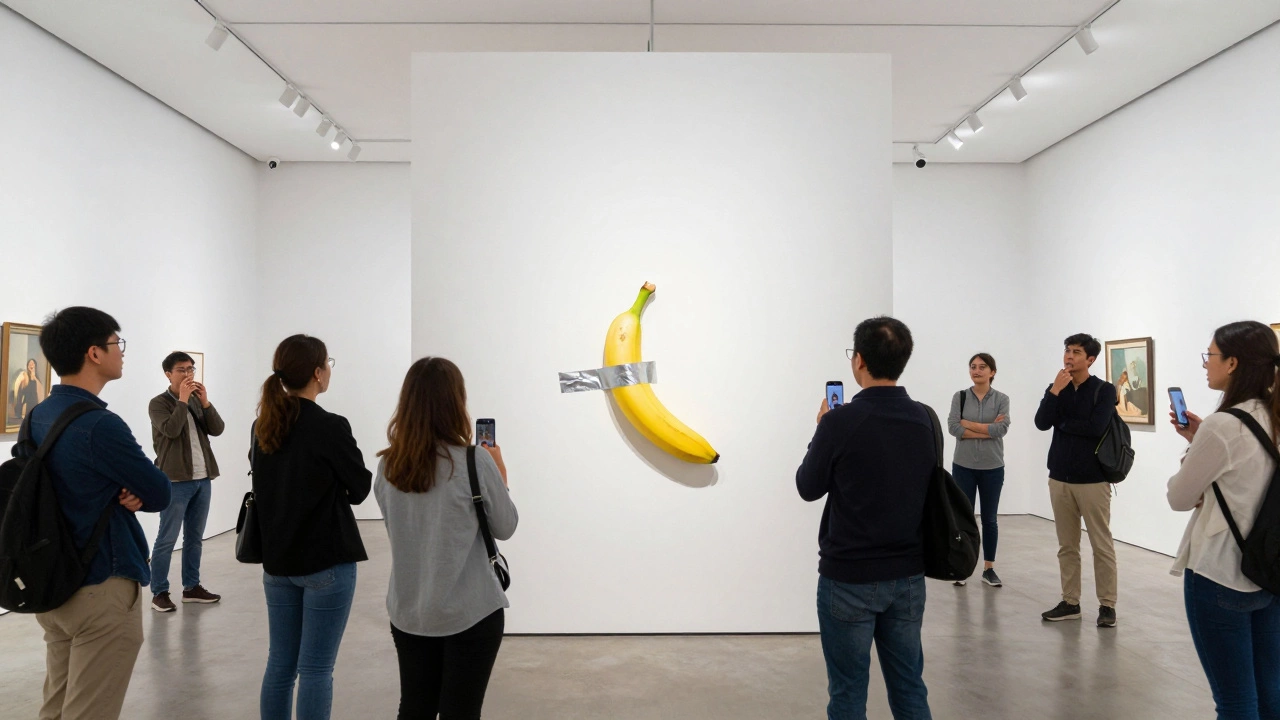
You walk into a white-walled space. There is a painting of a banana taped to the wall with duct tape. A crowd stands around it. Some are taking photos. Others look confused. What do you call them? Are they just "people"? Or is there a specific word for someone who spends their Saturday morning standing in front of abstract shapes and listening to audio guides?
The short answer is: there isn't one single word that covers everyone. But depending on why they are there, how much money they spend, and how often they show up, the vocabulary changes dramatically. If you want to sound like you know your way around the art world, you need to understand these distinctions.
Visitor vs. Attendee: The Basic Distinction
Most of the time, the simplest term is visitor. This is the standard word used by museums and galleries. It implies someone who has entered the building but hasn't necessarily committed to anything else. They might be tourists checking off landmarks. They might be students on a field trip. They might be locals killing time while waiting for a friend.
If the event is special-a vernissage (opening night), a talk, or a performance-the word shifts to attendee. An attendee has registered or bought a ticket for a specific time slot. A visitor wanders; an attendee participates.
Why does this matter? Because museums track these numbers differently. Visitor counts measure foot traffic. Attendance measures engagement. If you are writing about the art scene, using the wrong word can make you sound out of touch.
The Spectator: Passive Consumption
Then there is the spectator, which is a person who watches an event without participating in it. In the context of art, a spectator looks at the work. They observe. They might feel something. They might not. But they are primarily consumers of the visual experience.
This term comes from theater and sports, where the audience sits back and lets the action happen. In a gallery, the "action" is static. The spectator walks through the space, absorbing images. They are passive in the sense that they don't create the art, but they are active in interpreting it.
Are spectators boring? Not at all. Without spectators, art doesn't exist. The artist creates the object, but the spectator completes the meaning. When you stand in front of a Van Gogh and feel sad, you are acting as a spectator. You are the final piece of the puzzle.
The Connoisseur: Knowledge as Currency
Now we move up the ladder. Have you ever met someone who knows exactly which brushstroke technique was used in a Rembrandt from fifty feet away? That person is likely a connoisseur, defined as an expert judge in matters of taste, especially in the fine arts.
A connoisseur doesn't just look; they analyze. They know the history. They can tell you why a certain color palette was revolutionary in 1920s Paris. They visit exhibitions to verify their knowledge or discover new nuances. For them, going to an art show is less about relaxation and more about intellectual exercise.
You can spot a connoisseur easily. They ignore the popular pieces. They linger in front of obscure works. They ask the docent questions about provenance rather than price. If you are trying to impress someone in the art world, calling them a connoisseur is a high compliment. It means they have earned their taste through study and experience.

The Patron: Money Talks
Not everyone who goes to an exhibition buys anything. But some do. These people are called patrons, who are individuals who provide financial support to artists, organizations, or events.
In the old days, patrons were wealthy aristocrats who funded entire workshops. Today, a patron might be someone who buys a $50 print or a $50,000 sculpture. The key difference between a patron and a tourist is intent. A tourist sees art. A patron supports art.
Galleries love patrons. Museums rely on them. Without patrons, many contemporary artists would starve. Many small galleries would close. So when you see someone talking to the curator near the exit, shaking hands and exchanging cards, that is likely a patron relationship being built. It’s not just about buying; it’s about sustaining the ecosystem.
The Enthusiast: Passion Over Profit
Between the casual visitor and the wealthy patron sits the enthusiast, described as a person who is highly interested in and knowledgeable about a particular activity or subject.
An enthusiast loves art. They might not have millions to spend, but they have time. They follow Instagram accounts of local galleries. They read art blogs. They attend every free opening night because they enjoy the community. They buy postcards and tote bags. They share photos with captions like "Obsessed with this texture!"
Enthusiasts are the backbone of modern art culture. They create buzz. They drive social media engagement. They turn niche exhibitions into viral moments. Galleries court enthusiasts because they bring energy and visibility. You don’t need a trust fund to be an enthusiast; you just need curiosity.

The Critic: The Judge
Finally, there is the critic, which refers to a person who reviews and evaluates artistic works for publication or broadcast.
Critics go to exhibitions with a job to do. They take notes. They photograph labels. They assess lighting, curation, and relevance. Their goal isn't just enjoyment; it's evaluation. Will they write a positive review? Will they panned the show? Their words can make or break an artist's career.
While critics are professionals, today almost anyone can be a critic. If you write a blog post reviewing a local show, you are acting as a critic. The line between amateur opinion and professional critique is blurring. But the core function remains: to interpret the art for others and offer a judgment on its value.
| Term | Primary Motivation | Level of Engagement | Financial Impact |
|---|---|---|---|
| Visitor | Casual interest/Tourism | Low | Minimal (Entry fee) |
| Spectator | Observation/Reflection | Medium | None |
| Connoisseur | Intellectual analysis | High | Variable |
| Patron | Support/Collection | High | Significant |
| Enthusiast | Passion/Community | Medium-High | Moderate |
| Critic | Evaluation/Judgment | Very High | Indirect (Influence) |
Why Labels Matter in Art Culture
You might wonder: why do we need so many words? Why not just say "people who like art"? Because language shapes reality. Calling yourself a "visitor" sets low expectations. Calling yourself a "patron" signals status. Identifying as an "enthusiast" invites connection.
When you enter a gallery, you are stepping into a social hierarchy. Understanding these terms helps you navigate it. Are you there to learn? Then act like a student. Are you there to buy? Then engage like a patron. Are you there to feel? Then embrace your role as a spectator.
The next time you walk into an exhibition, ask yourself: who am I in this room? Your answer will change how you see the art-and how the art sees you.
Is there a difference between an art lover and an art enthusiast?
Yes. An art lover feels a general affection for art but may not actively seek it out. An art enthusiast actively engages with the art world-attending shows, reading about trends, and participating in the community. Enthusiasm implies action; love implies emotion.
Can I be both a patron and a connoisseur?
Absolutely. Many collectors are also experts. They use their knowledge to guide their purchases. Being a connoisseur helps you buy wisely. Being a patron ensures the art continues to be made. The two roles often overlap among serious collectors.
Do museums care if I am just a visitor?
Yes. Every visitor counts toward attendance metrics, which affect funding and reputation. Even if you don't buy anything, your presence validates the institution's mission. Museums thrive on diverse audiences, including casual visitors.
What is a "vernissage" and who attends it?
A vernissage is the private preview of an exhibition, usually held before public opening. Attendees include artists, curators, critics, patrons, and press. It is a networking event where deals are made and relationships are built. General visitors typically cannot attend.
How can I become a connoisseur?
Start by visiting regularly. Read art history books. Listen to podcasts. Ask questions at galleries. Compare different styles. Over time, your eye will train itself. Connoisseurship is a skill developed through exposure and reflection, not innate talent.