Contemporary Art Identifier Tool
Not sure if that pile of laundry is actually art? Select the artwork that best matches what you are seeing or thinking about.
The Golden Carpet
A massive installation of 100 million hand-painted porcelain seeds filling a room.
InstallationThe Shiny Balloon
A polished stainless steel sculpture looking like a foil balloon animal.
SculptureThe Candy Pile
A mound of wrapped candy weighing exactly 175 lbs that visitors are invited to eat.
ConceptualThe Digital Dream
Flowing, liquid-like light projections generated by AI processing millions of ocean photos.
Digital/MediaThe Silent Stand
An artist standing still for hours while an audience uses objects on her body.
PerformanceThe Perfect Portrait
A realistic oil painting focusing purely on technical shading and perspective.
TraditionalArtist:
Key Concept:
Walk into a gallery today, and you might see a pile of dirty laundry, a video loop of a man sleeping, or a robot painting on canvas. You look around, confused, and ask yourself: "Is this really art?" If that’s your reaction, you’re not alone. But here is the twist-that pile of laundry is art. The sleeping man is art. And understanding why requires looking past the paintbrush.
Many people mix up "modern" and "contemporary" art. They sound similar, but they mean very different things in the art world. Modern art ended decades ago. Contemporary art is happening right now. It is the art of our time, reflecting our current anxieties, technologies, and social structures. To understand what it is, we have to look at specific examples and the artists behind them.
The Difference Between Modern and Contemporary Art
Before diving into examples, let’s clear up the biggest confusion. Modern Art is art produced from the late 19th century through the 1970s. Think Picasso, Van Gogh, or Monet. This era was about breaking away from traditional realism and exploring new ways of seeing. It focused on form, color, and abstraction.
Contemporary Art is art created from the 1970s to the present day. It doesn’t just care about how something looks; it cares about what it means. It often challenges the viewer. It asks questions about politics, identity, technology, and consumerism. While modern art asked, "How can I represent reality differently?" contemporary art asks, "What is reality, and who controls it?"
This shift matters because it changes how you judge the work. You aren’t looking for technical perfection in drawing a hand. You are looking for the strength of the idea.
Example 1: The Uncomfortable Truth - Ai Weiwei
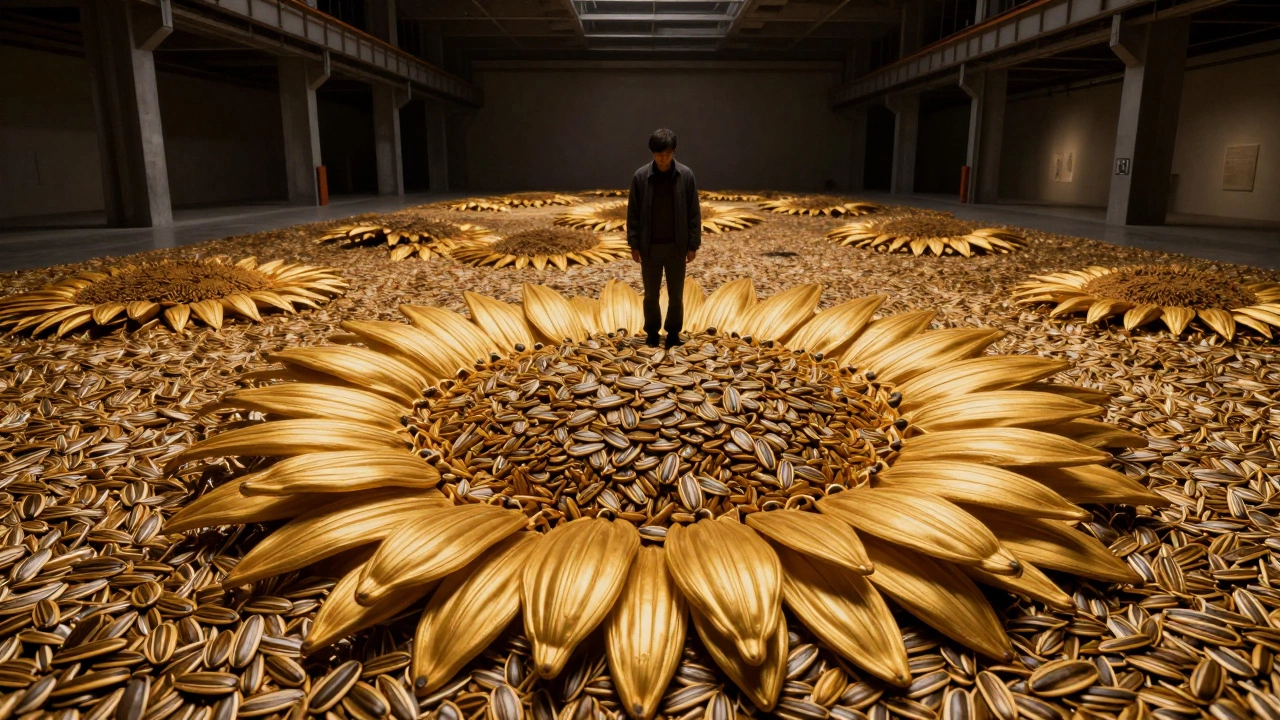
If you want an example of contemporary art that stops you in your tracks, look at Ai Weiwei, a Chinese contemporary artist and activist known for using art to critique government policies and human rights issues. One of his most famous works is Sunflower Seeds (2010).
For the Tate Modern in London, Ai Weiwei filled the Turbine Hall with 100 million porcelain sunflower seeds. Each seed was hand-painted by artisans in Jingdezhen, China, the city famous for its ceramics. From above, it looked like a golden carpet. From below, you could walk on it, hear the crunching, and smell the earthy scent.
Why does this matter? On one level, it celebrates Chinese craftsmanship. On another, it critiques mass production and individuality. In a society where millions of people are treated as identical units, each unique seed represents an individual life. It forces you to think about the value of the person versus the state. That is the power of contemporary art: it turns a simple object into a political statement.
Example 2: Technology and Emotion - Refik Anadol
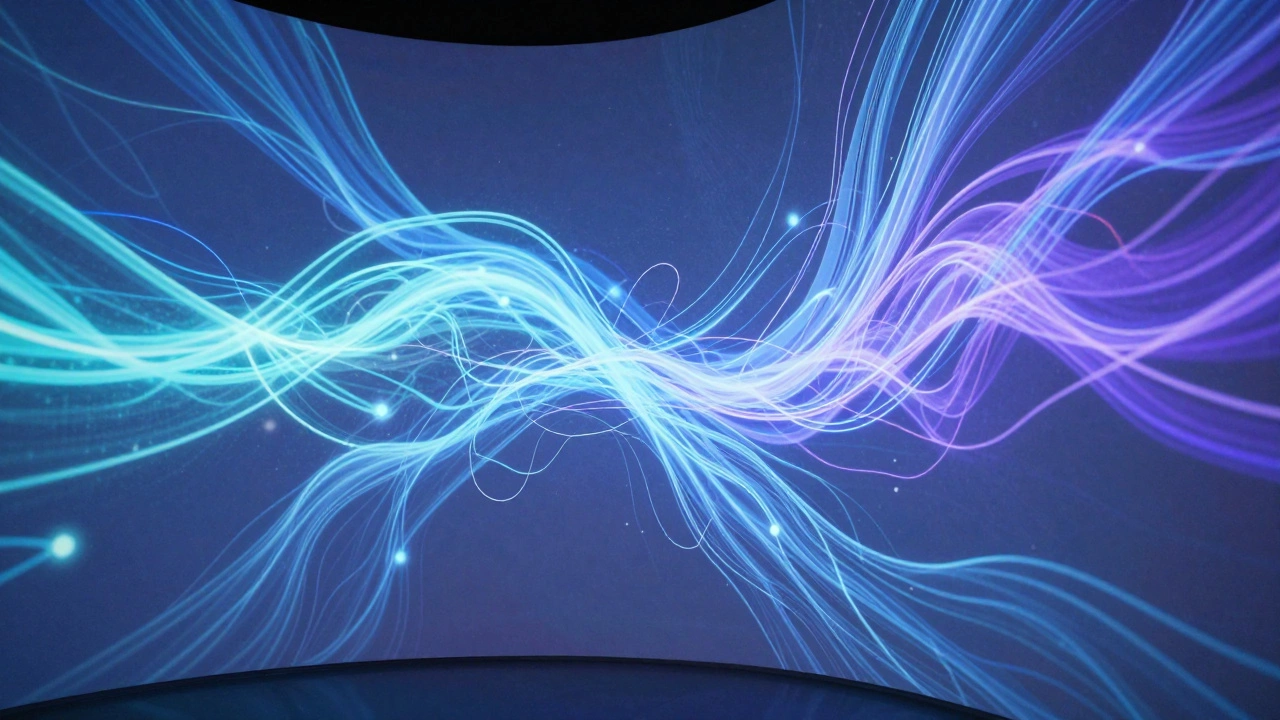
Art isn’t just about protest anymore. It’s also about data. Enter Refik Anadol, a Turkish-American media artist who specializes in machine learning and data sculpture. His work defines the current moment of 2026, where AI is everywhere.
Anadol creates immersive installations using artificial intelligence. He feeds millions of images into neural networks-like all the photos of oceans ever taken-and lets the AI dream up new visualizations. These projections cover entire buildings or fill rooms with flowing, liquid-like light.
In works like Machine Hallucinations, he shows us what a computer sees when it processes nature. It looks beautiful, alien, and deeply emotional. This example shows how contemporary art has absorbed technology. It’s no longer separate from science; it uses code as its paintbrush. For many viewers, this bridges the gap between cold data and human feeling.
Example 3: The Body as Material - Marina Abramović
Some contemporary art happens in real-time and involves the artist’s own body. Marina Abramović is a Serbian performance artist known as the 'grandmother of performance art' for her extreme endurance pieces. Her piece Rhythm 0 (1974) is chilling even today.
Abramović stood still for six hours while an audience was invited to do whatever they wanted to her using 72 objects placed on a table. Some objects were harmless, like feathers. Others were dangerous, like a knife or a loaded gun. Initially, people were gentle. But as time passed, they became violent. They cut her clothes, scratched her skin, and pointed the gun at her head.
She didn’t move. She let them. The artwork wasn’t the objects; it was the behavior of the crowd. It exposed how quickly people lose empathy when given permission. This example proves that contemporary art doesn’t need a canvas. It can be an experience that tests human nature.
Example 4: Consumer Culture - Jeff Koons
Not all contemporary art is serious or political. Some of it is playful, shiny, and deliberately shallow. Jeff Koons is an American artist famous for sculptures that mimic popular culture and luxury goods. His Balloon Dog series looks exactly like those foil balloons you get at birthday parties, but they are made of polished stainless steel and cost millions of dollars.
Critics hate him. Collectors love him. Why? Because Koons comments on consumerism. He takes something cheap and disposable and turns it into a precious object. He mirrors our obsession with brands, status, and surface-level beauty. When you look at a Balloon Dog, you are looking at a reflection of capitalism itself. It’s funny, yes, but it’s also a mirror.
Example 5: Social Connection - Felix Gonzalez-Torres
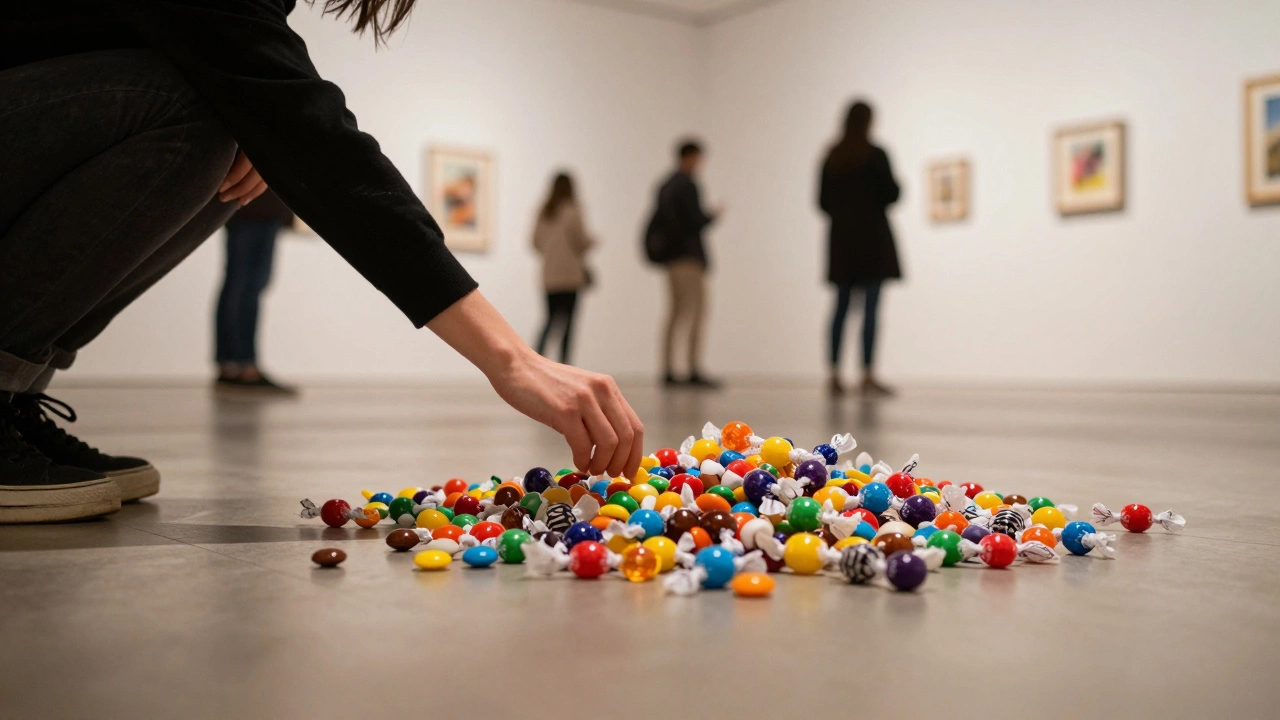
Art can also be incredibly tender. Felix Gonzalez-Torres was a Cuban-American artist whose work addressed themes of love, loss, and AIDS during the 1980s and 90s. His piece Untitled (Portrait of Ross in L.A.) consists of a pile of candy weighing 175 pounds-the weight of his partner, Ross Laycock, before he died of AIDS-related complications.
Visitors are invited to take a piece of candy and eat it. As the pile shrinks, the museum restocks it. The work decays and regenerates. It is intimate and public at the same time. By eating the candy, you become part of the artwork. You carry a piece of Ross with you. It transforms grief into a shared, physical act. This example shows how contemporary art can heal and connect people in ways a painting never could.
| Artist | Key Work | Medium | Core Theme |
|---|---|---|---|
| Ai Weiwei | Sunflower Seeds | Porcelain Installation | Individuality vs. Mass Production |
| Refik Anadol | Machine Hallucinations | AI Data Visualization | Technology and Memory |
| Marina Abramović | Rhythm 0 | Performance Art | Human Behavior and Empathy |
| Jeff Koons | Balloon Dog | Stainless Steel Sculpture | Consumerism and Value |
| Felix Gonzalez-Torres | Untitled (Portrait of Ross) | Candy Pile | Grief and Intimacy |
How to Identify Contemporary Art Yourself
You don’t need an art degree to spot contemporary art. Look for these signs:
- It uses unexpected materials: Instead of oil on canvas, look for plastic, food, code, or trash.
- It demands interaction: Do you have to walk through it? Touch it? Or does it change based on your presence?
- It references current events: Does it talk about climate change, social media, or war?
- It feels unfinished: Contemporary art often leaves room for your interpretation. It won’t give you a single answer.
When you visit a gallery, stop trying to figure out if it’s "good." Ask yourself what it makes you feel. Are you angry? Confused? Comforted? That reaction is the point. The artist succeeded if they made you think.
Why Context Matters More Than Technique
In school, we learned that art requires skill. A perfect perspective, realistic shading. Contemporary art throws that rulebook out the window. Why? Because anyone can learn to draw well. Not everyone can come up with a concept that shifts how we see the world.
Take Duchamp’s Fountain (a urinal signed "R. Mutt"). It’s often called modern, but it paved the way for contemporary art. The skill wasn’t in making the urinal; it was in choosing it. Today, artists like Maurizio Cattelan, an Italian artist known for satirical sculptures like 'Comedian' (the banana taped to a wall), continue this tradition. The banana costs $120,000. The humor lies in the absurdity of the art market. The technique is taping fruit to a wall. The genius is the joke.
If you focus only on the tape, you miss the point. You have to understand the context: the galleries, the buyers, the hype. Contemporary art is often a conversation about the art world itself.
The Role of Digital and Virtual Spaces
By 2026, contemporary art has moved beyond physical walls. NFTs (Non-Fungible Tokens) changed the game, allowing digital files to be owned and sold. Artists like Beeple, a digital artist Mike Winkelmann who sold a collage of daily images for $69 million, proved that pixels have value.
Now, we see virtual galleries in metaverse platforms. You put on a headset and walk through a museum that exists only in code. This raises new questions: Who owns digital space? Can art exist without a physical body? These are fresh debates that keep contemporary art relevant. It evolves as fast as our technology does.
Conclusion: Art Is a Mirror
So, what is an example of contemporary art? It’s Ai Weiwei’s seeds. It’s Refik Anadol’s data dreams. It’s Jeff Koons’ balloon dogs. But more broadly, it is any work that reflects our current moment. It captures the chaos, the joy, the tech, and the pain of living today.
Next time you see something strange in a gallery, don’t dismiss it. Lean in. Ask why it’s there. The answer might surprise you.
Is Banksy considered a contemporary artist?
Yes. Banksy is a leading figure in contemporary street art. His anonymous identity and political stencils address modern issues like surveillance, war, and consumerism, fitting perfectly within the contemporary art framework.
What is the difference between modern and contemporary art?
Modern art refers to works created roughly between 1860 and 1970, focusing on abstract forms and breaking from tradition. Contemporary art refers to works created from the 1970s to today, focusing on concepts, ideas, and current social issues.
Can digital art be considered contemporary art?
Absolutely. Digital art, including AI-generated images, VR experiences, and NFTs, is a major part of contemporary art. It reflects our current technological landscape and challenges traditional definitions of ownership and creativity.
Why is some contemporary art so expensive?
Price in contemporary art is driven by scarcity, the artist's reputation, historical significance, and market demand. Often, you are paying for the idea and the cultural impact, not just the materials used.
Who are some other famous contemporary artists?
Other notable contemporary artists include Yayoi Kusama (known for her polka dots and infinity rooms), Kara Walker (silhouette installations addressing race and history), and Olafur Eliasson (environmental installations).