Sculptor Path Finder
Discover Your Sculpting Path
Take this quick assessment to find which sculpting technique matches your interests, skills, and resources. Perfect for beginners exploring artistic possibilities.
When you see a statue standing in a park, a twisted metal form in a gallery, or a delicate porcelain figure on a shelf, you might wonder: who made this? The answer is simple - a sculptor. But that word hides a world of different people, tools, and traditions. Not every artist who shapes material is the same. Some work with their hands in wet clay, others with chisels and power tools, and a few even use 3D printers. So, what type of artist makes sculptures? It’s not just one kind.
Sculptors Who Work With Clay
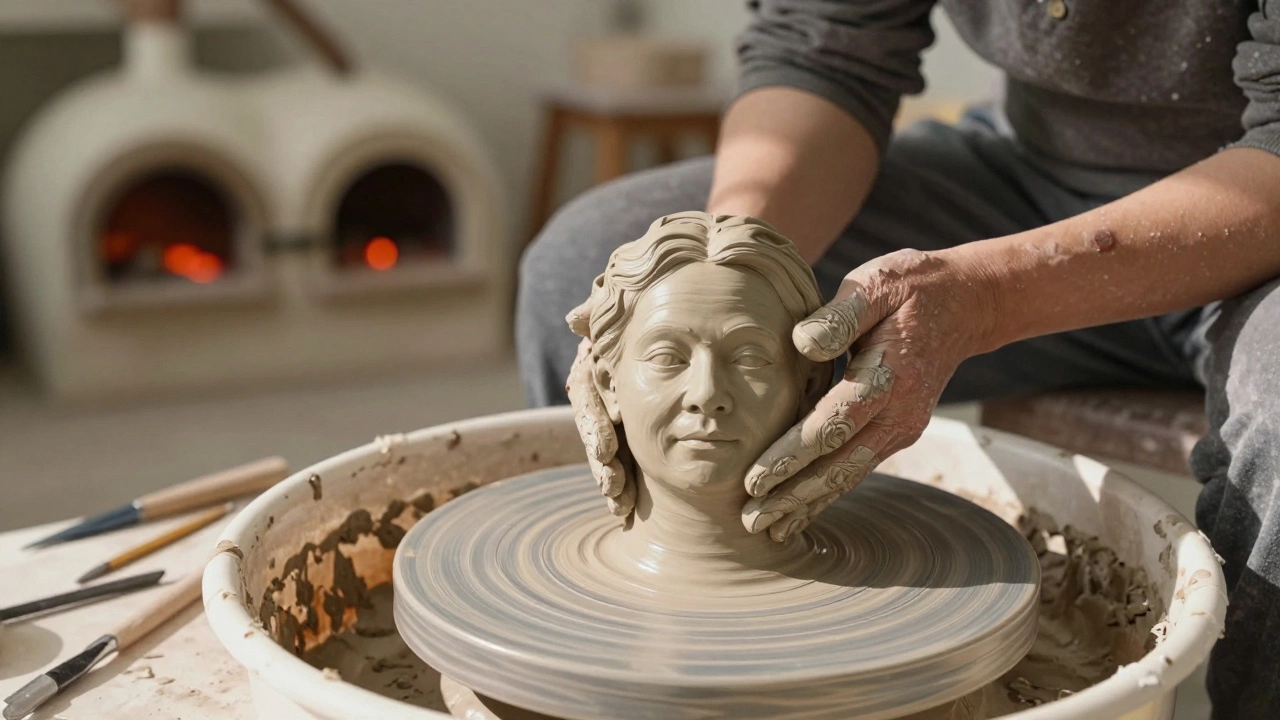
Clay is one of the oldest materials humans have used to make art. Thousands of years ago, ancient potters in Mesopotamia and China shaped figures for rituals and burial. Today, ceramic sculptors still use the same basic process: wedging, coiling, slab-building, or throwing on a wheel. They don’t just make vases or cups - they build full-body figures, abstract forms, and even life-sized installations. Many of these artists fire their work in kilns, turning soft mud into hard, permanent art. Some, like the Australian sculptor Wendy Black, create detailed portraits of everyday people using only earthenware clay. Their work is fragile, intimate, and deeply personal.Stone Carvers and Marble Artists
Then there are the sculptors who work with stone. This isn’t easy. Marble, granite, limestone - these materials are heavy, unyielding, and unforgiving. You can’t just reshape them like clay. Stone carvers need strength, precision, and patience. They start with a block, then chip away at it using chisels, rasps, and sometimes pneumatic hammers. Michelangelo famously said he didn’t create David - he just released him from the stone. That’s the philosophy of many stone sculptors today. Artists like John Paul Miller in the U.S. and Margaret Dredge in Australia spend years mastering the grain of the stone, the way light catches a curve, the hidden form beneath the surface. Their sculptures often feel timeless, as if they’ve always existed.Metalsmiths and Foundry Artists
Metal sculptors work differently. Some weld steel rods into towering, angular forms. Others cast bronze using the lost-wax method - a process that hasn’t changed much since ancient Greece. They make a wax model, coat it in ceramic, melt out the wax, pour molten metal into the mold, and then break the ceramic away to reveal the final piece. This method allows for incredible detail - every fingerprint, every fold of fabric, every strand of hair can be captured. Artists like Antony Gormley use this technique to make human figures that feel eerily alive. Foundry work is dangerous, loud, and expensive. But it’s also one of the most durable ways to make sculpture. You’ll find these pieces in public squares, museums, and even private gardens around the world.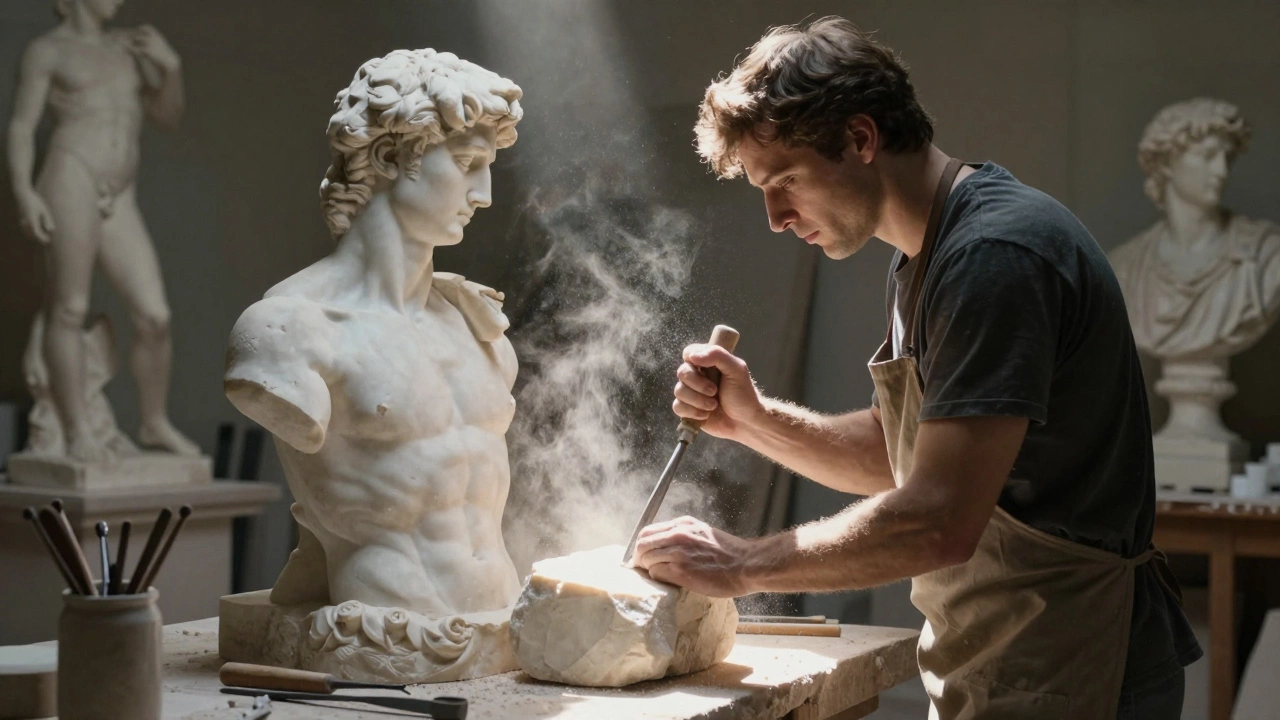
Wood Carvers and Assemblage Artists
Wood is another classic material. Carvers use gouges, knives, and routers to shape logs into animals, masks, or abstract shapes. In places like Papua New Guinea or the Pacific Northwest, wood carving is tied to cultural storytelling. In modern art, artists like John McEwen in Sydney turn driftwood and reclaimed timber into surreal, organic forms. Then there are assemblage artists - people who don’t carve at all. They collect old tools, broken toys, rusted metal, and discarded furniture, then glue, bolt, or nail them together into something new. These artists, like Louise Bourgeois or contemporary Australian artist Patricia Piccinini, make sculptures from what others throw away. Their work asks: what does it mean to rebuild something from fragments?Modern Sculptors: Digital and Mixed Media
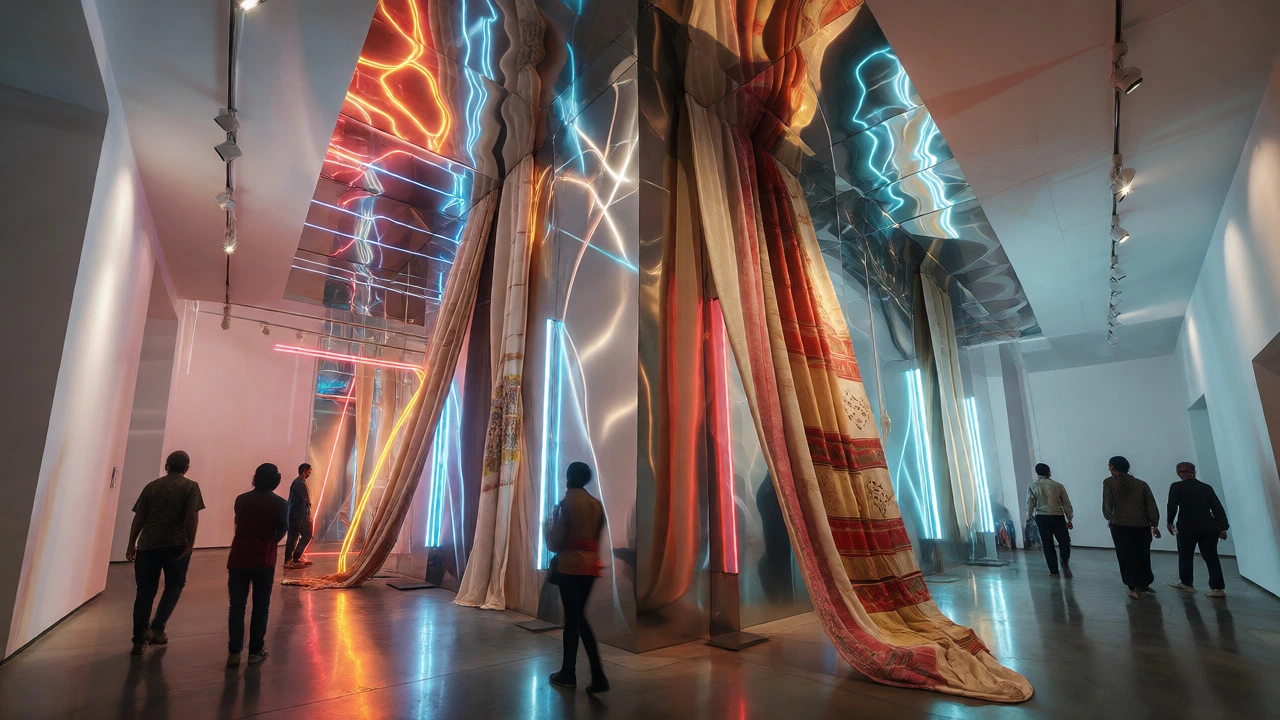
Today, the definition of a sculptor is expanding. Some artists never touch physical material at all. They design 3D models on a computer, then print them in plastic, resin, or metal using industrial printers. Others combine sculpture with light, sound, or movement. Kinetic sculptures move with wind or motors. LED installations change color based on temperature or sound. These aren’t traditional carvers or molders - they’re coders, engineers, and designers who think in three dimensions. But they’re still sculptors. The goal is the same: to give form to an idea in space. In Sydney’s Darling Harbour, you’ll find digital sculptures that respond to passersby - changing shape as people walk by. The artist behind them didn’t use a chisel. They used code.What Makes Someone a Sculptor?
So what do all these people have in common? They don’t just draw or paint. They build. They shape. They occupy space. A painting hangs on a wall. A sculpture stands in it. It has weight. It has texture. You can walk around it. You can touch it (sometimes). That’s the key difference. A sculptor doesn’t represent reality - they create a new object in it. Whether they’re shaping clay with their fingers, carving marble with a hammer, or coding a moving form on a screen, they’re all asking the same question: what can this material become?
Is It a Skill You Can Learn?
Yes - and no. You can take a class in ceramics, learn how to weld, or study stone carving at an art school. But mastery? That comes from years of failure. A clay figure collapses. A chisel slips and ruins hours of work. A bronze casting cracks in the kiln. Every sculptor has a studio full of broken pieces. What separates the ones who keep going is obsession. They don’t just want to make something beautiful. They want to make something that lasts. Something that makes people stop, look, and wonder how it was made.Who Are the Most Famous Sculptors Today?
You’ve probably seen works by Anish Kapoor - those deep red, mirror-like pits that seem to swallow light. Or Ai Weiwei, who turns bamboo and porcelain into massive political statements. Or Rachel Whiteread, who casts the empty space under chairs and stairs. These aren’t just artists - they’re storytellers who use space as their canvas. In Australia, artists like Ron Mueck, who makes hyper-realistic human figures, and Julie Fragar, who builds intricate textile sculptures, are pushing boundaries. Their work isn’t in every museum, but if you’ve ever stood in front of a sculpture and felt a chill, you’ve experienced their impact.How Do You Know If You’re a Sculptor?
If you find yourself drawn to material - not just how it looks, but how it feels, how it breaks, how it holds shape - you might be one. You don’t need a degree. You don’t need a fancy studio. Start with a lump of clay from the hardware store. Try bending wire into a form. Stack stones on the beach. If you keep coming back to it, if you start seeing shapes in junk, if you can’t stop thinking about how something could be made solid - then you’re already on the path.Do you need formal training to be a sculptor?
No. Many of the most influential sculptors never went to art school. While formal training helps you learn technique, safety, and history, what matters most is practice. You can learn to carve wood from YouTube tutorials, mold clay with a home kiln, or weld metal in a garage. The real training comes from making mistakes, failing, and trying again.
Can anyone become a sculptor, or do you need special talent?
You don’t need to be a "natural". Sculpting is more about persistence than talent. It’s a physical and mental discipline. Some people pick it up quickly; others take years. But if you’re willing to spend hours shaping, breaking, and reshaping, you’ll get better. The best sculptors aren’t the ones with the most skill - they’re the ones who never gave up.
What’s the easiest material to start sculpting with?
Polymer clay is the easiest for beginners. It doesn’t dry out like regular clay, doesn’t need a kiln, and can be baked in a home oven. It’s affordable, safe, and comes in many colors. Once you get comfortable with shaping it, you can move on to air-dry clay, plaster, or even foam. Start simple - a hand, a face, a small animal. Build confidence before tackling large or complex forms.
Do sculptors only work with traditional materials?
Absolutely not. Today’s sculptors use everything: recycled plastic, LED lights, sound sensors, fabric, paper, glass, and even living plants. Some embed electronics into their work. Others use 3D scanning to copy real objects and then distort them. The only limit is imagination. The material doesn’t define the artist - the idea does.
How do sculptors sell their work?
Many sell through galleries, art fairs, or online platforms like Etsy or Saatchi Art. Others work on commission - creating custom pieces for homes, offices, or public spaces. Some artists partner with architects or city councils to install large-scale works. A growing number are turning to crowdfunding or Patreon to fund projects before they’re made. The key is showing your process: people don’t just buy a sculpture - they buy the story behind it.
If you’ve ever picked up a piece of clay and felt it respond to your fingers - or stood in front of a statue and wondered how it got there - you’ve already connected with the heart of sculpture. It’s not about being perfect. It’s about making something real in a world full of images.