Art vs. Fine Art Photography Classifier
1. What is the primary driver behind this image?
Subject-Centric
The beauty or story of the subject itself.
Idea-Centric
A concept, emotion, or critique unrelated to the literal subject.
2. How was the image created?
Capture-Based
Waiting for the decisive moment in reality.
Construction-Based
Staged sets, actors, or heavy digital manipulation.
3. What is the relationship to reality?
Interpretive
Enhancing a real scene through lighting/composition.
Surreal/Abstract
Creating a new reality that may not exist physically.
4. Where does this work belong?
Accessible Media
Magazines, books, posters, social media.
Institutional Context
Museums, galleries, limited edition prints.
Your Result
Have you ever stood in front of a stunning photograph in a gallery, felt a surge of emotion, and then wondered why it was labeled "fine art" instead of just "art"? Or perhaps you’ve seen two images that look identical-one hanging in a museum and the other on a commercial billboard-and asked yourself what separates them? The line between art photography and fine art photography is often blurred by marketing, but the distinction lies in intent, process, and presentation. While both forms use the camera as a tool for creative expression, they serve different masters. One seeks to document or interpret reality through an artistic lens; the other seeks to create a new reality entirely, prioritizing the artist’s vision over the subject itself.
This confusion isn’t accidental. In today’s visual culture, where Instagram filters and AI-generated images flood our feeds, understanding these categories helps us appreciate the craftsmanship behind the work. It also matters if you’re an aspiring photographer trying to define your style or a collector looking to invest in meaningful pieces. Let’s break down exactly what sets these two disciplines apart, starting with their core definitions and moving into how they are created, displayed, and valued.
Defining the Core Concepts
To understand the difference, we first need to pin down what each term actually means. This isn’t about rigid academic rules but rather about the prevailing consensus in the art world.
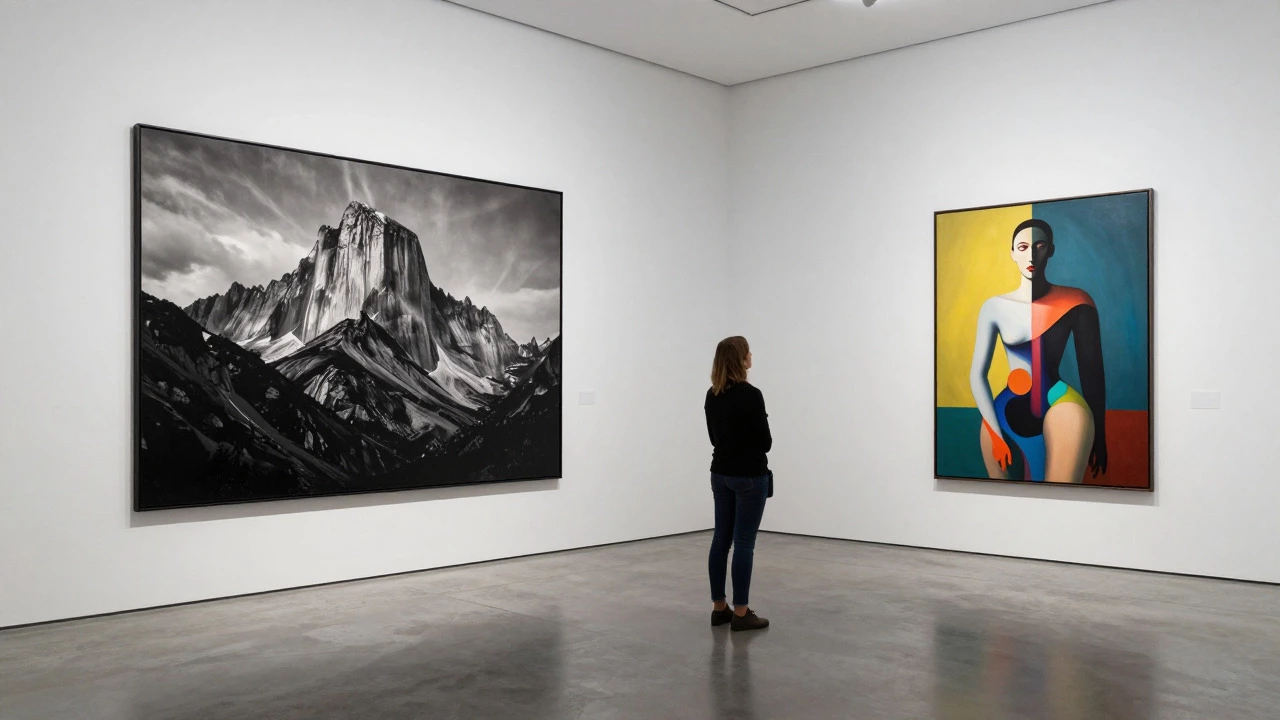
Art photography is a broad umbrella term that encompasses any photographic image created with aesthetic or expressive intent, rather than purely documentary or commercial purposes. It includes everything from stylized portraits and conceptual landscapes to photojournalism that employs artistic composition. The key here is that the photographer uses technical skills-lighting, framing, exposure-to elevate the subject beyond mere recording. Think of Ansel Adams’ black-and-white landscapes. They are photographs of real places, but his manipulation of light and dark (the Zone System) transforms them into artistic statements. The subject remains recognizable, but the treatment is artistic.
Fine art photography is a specific subset of art photography where the primary goal is to express the artist’s vision, concept, or emotion, often independent of the subject matter. In fine art, the photograph is treated like a painting or a sculpture. The subject is merely a vehicle for the idea. If you take a picture of a flower, an art photographer might focus on its beauty and structure. A fine art photographer might use that flower to explore themes of decay, time, or fragility, potentially manipulating the image so heavily that it no longer looks like a simple snapshot. The value lies in the concept and the execution, not in the fidelity to the original scene.
The Role of Intent and Concept
The biggest divider between these two is intent. Why did the photographer pick up the camera?
In general art photography, the intent is often tied to the subject. You want to capture the grandeur of a mountain, the intensity of a portrait, or the chaos of a street scene. The artistry comes from how you see it. It’s still rooted in observation. For example, a fashion editorial shot by a renowned photographer is often considered art photography because it elevates clothing and models through lighting and composition, but it still serves the narrative of the brand or the story of the model.
In fine art photography, the intent is conceptual. The artist starts with an idea-a feeling, a political statement, a philosophical question-and then finds or creates imagery to support that idea. The subject might be irrelevant. Consider the work of Cindy Sherman. She photographs herself in various costumes and scenarios. Is she documenting her life? No. She is exploring identity, gender roles, and media stereotypes. The “photo” is just the medium; the “art” is the critique. Similarly, Andreas Gursky’s massive, digitally manipulated images of stock exchanges or supermarkets aren’t just records of those places; they are commentaries on globalization and consumerism. The image is constructed to evoke a specific intellectual or emotional response, detached from the literal truth of the scene.
Process: Capture vs. Construction
How the image is made reveals a lot about its classification. While digital tools have blurred these lines, traditional distinctions remain useful for understanding the mindset.
Art photography typically relies on the moment of capture. Even if there is post-processing, the foundation is a genuine interaction with light and subject at a specific time. Street photographers like Henri Cartier-Bresson mastered the “decisive moment.” Their art lies in anticipation and timing. The process is reactive. You wait for the elements to align. Post-production might adjust contrast or crop, but it rarely changes the fundamental content of the image.
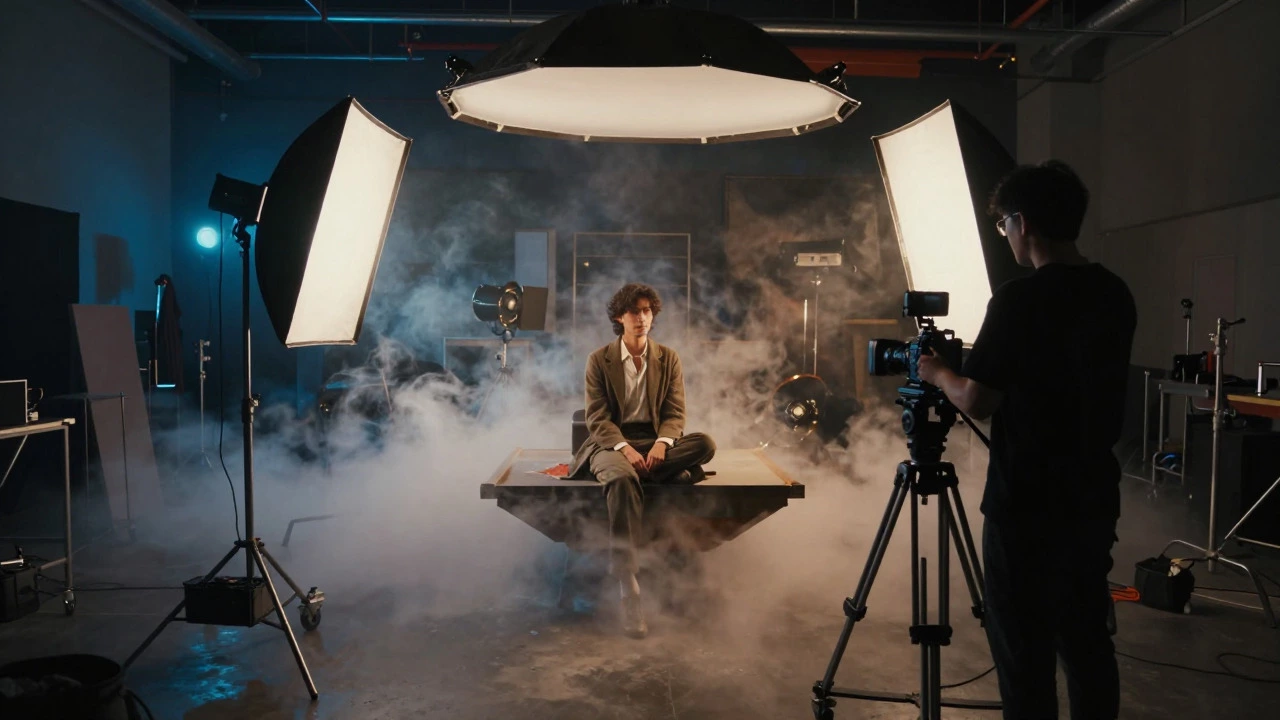
Fine art photography is often constructive. The artist may spend weeks planning a shoot, building sets, directing actors, or compositing multiple images together. Gregory Crewdson, known for his cinematic, eerie suburban scenes, doesn’t just walk around taking pictures. He rigs lights, hires crews, and stages complex narratives. The final image is a synthesis of many elements, much like a painter layers paint. Digital manipulation is not just accepted; it’s expected. The photograph becomes a canvas. If you look at Jeff Wall’s backlit transparencies, you see images that are meticulously staged and lit, often involving dozens of people and props, designed to look like candid moments but actually being total fabrications. This level of control shifts the work from documentation to creation.
| Feature | Art Photography | Fine Art Photography |
|---|---|---|
| Primary Goal | Aesthetic interpretation of a subject | Expression of concept or personal vision |
| Relationship to Subject | Subject-centric; enhances reality | Idea-centric; subject is a tool |
| Process | Capture-based; minimal to moderate editing | Construction-based; heavy staging/manipulation |
| Display Context | Galleries, magazines, books, online portfolios | Museums, high-end galleries, limited edition prints |
| Value Driver | Technical skill, composition, emotional impact | Conceptual depth, uniqueness, artist’s reputation |
Presentation and Context
Where you see the work often tells you what it is. Context shapes perception.
Art photography appears in diverse settings. You’ll find it in coffee table books, magazine editorials, advertising campaigns, and public galleries. It can be reproduced widely without losing its essence. A beautiful landscape photo can be printed on a poster, sold in a shop, and still be appreciated for its beauty. The accessibility is part of its nature. It invites viewers to connect with the visible world in a more profound way.
Fine art photography demands a specific context. It is usually presented in white-cube galleries or museums, often as large-scale, limited-edition prints. The physical object matters immensely. The paper quality, the printing technique (like platinum-palladium or giclée), and the framing are integral to the artwork. A fine art print is often signed and numbered, similar to a lithograph. The scarcity adds to the value. If you hang a fine art piece in your home, it’s not just decoration; it’s a statement of taste and an investment in the artist’s career. The experience is meant to be contemplative, requiring the viewer to step back and engage with the underlying concept.
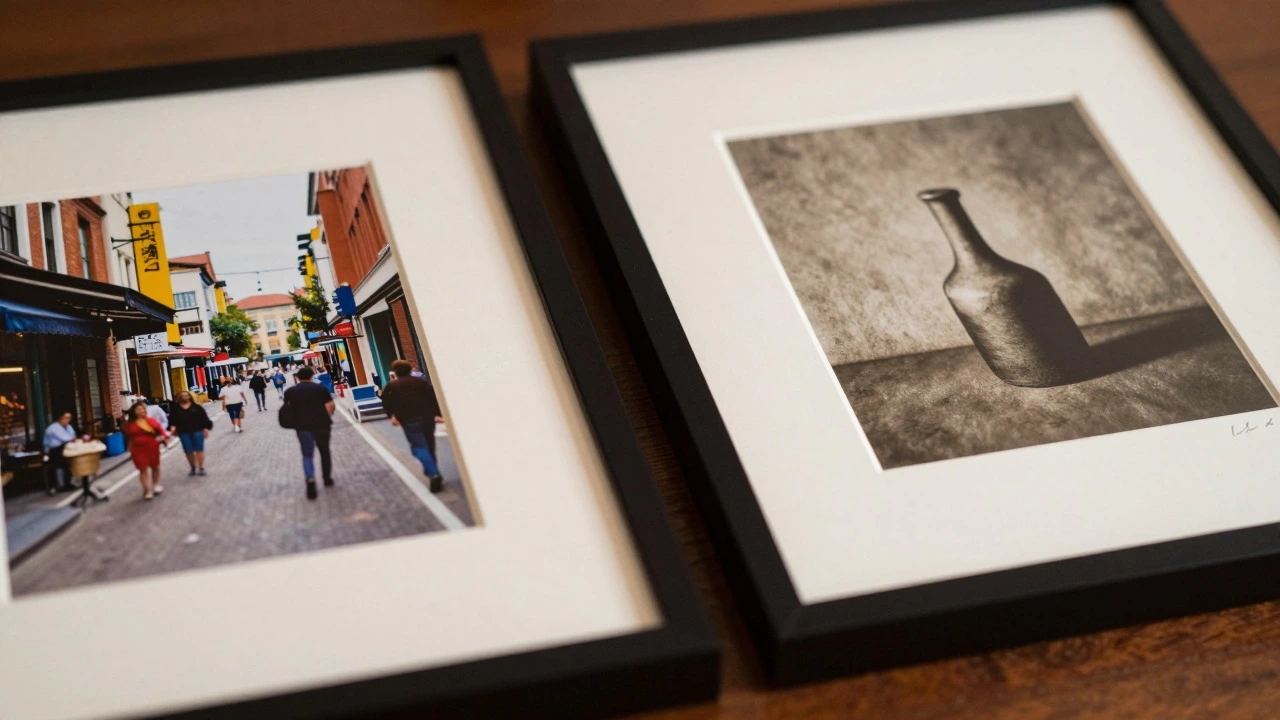
Market Value and Collectibility
If you’re thinking about buying or selling, this distinction becomes financial.
Art photography has a broad market. Prices vary wildly based on the photographer’s fame, the rarity of the image, and the size of the print. However, many art photographs are mass-produced or available as open editions. You might buy a print of a famous sunset for $50 or a limited edition from a well-known contemporary photographer for $5,000. The value is subjective but generally accessible.
Fine art photography operates closer to the traditional art market. Prices are driven by provenance, critical acclaim, and institutional recognition. Works by pioneers like Man Ray or contemporary stars like Wolfgang Tillmans can sell for hundreds of thousands of dollars at auction. Collectors buy fine art photography not just for display but as assets. The market is smaller, more exclusive, and heavily influenced by critics, curators, and gallery representation. When you buy a fine art photograph, you’re often buying into a narrative about the artist’s place in history.
Why the Distinction Matters Today
In an age where anyone can take a professional-looking photo with a smartphone, why do we still care about these labels? Because they help us navigate meaning. Without these distinctions, all images become noise. Knowing whether a work is art photography or fine art photography guides how we look at it. Do we ask, “What does this show me?” or “What is the artist trying to say?”
For creators, identifying your lane helps refine your practice. Are you obsessed with capturing the perfect light on a face? Lean into art photography. Are you driven to deconstruct societal norms using staged imagery? Embrace fine art. There’s no hierarchy of value-both are valid-but clarity of purpose leads to stronger work.
Ultimately, the boundary is porous. Many photographers move between both. Sally Mann’s intimate family portraits are deeply personal (art) yet conceptually rich (fine art). The best approach is to let the work speak for itself. But understanding the framework allows you to appreciate the depth, intention, and craft behind every frame.
Is fine art photography always expensive?
Not necessarily, but it tends to command higher prices due to limited editions and gallery representation. Emerging fine art photographers may sell prints for affordable amounts, while established artists can charge premium prices. The cost reflects production quality, scarcity, and the artist's market position.
Can a photograph be both art and fine art?
Yes, the terms overlap significantly. All fine art photography is a form of art photography, but not all art photography qualifies as fine art. The distinction lies in the degree of conceptual abstraction and the intent behind the work. Many successful photographers operate in both spaces depending on the project.
Does digital editing make a photo fine art?
No, digital editing alone does not define fine art. While fine art photographers often use heavy manipulation, the key factor is the conceptual intent. A heavily edited selfie is not automatically fine art unless it serves a broader artistic or philosophical statement. Technique supports the idea, but the idea drives the classification.
Where can I start collecting fine art photography?
Start by visiting local galleries and attending art fairs. Look for artists whose concepts resonate with you personally. Research their background and check if their work has been exhibited in reputable venues. Begin with smaller prints or works by emerging artists to build your collection gradually while learning the market dynamics.
How do I know if my photography is fine art?
Ask yourself if the subject matter is secondary to the message you are conveying. If you are creating images to express a unique vision, challenge perceptions, or explore abstract ideas rather than simply documenting reality, you are likely working in the realm of fine art photography. Seek feedback from curators or peers who specialize in conceptual art.