Contemporary Art Style Quiz
Think you can spot the difference between Modern and Contemporary art? Test your eye with this quick interactive guide based on current art trends.
Loading question...
Quiz Complete!
You scored 0 out of 5.
You walk into a gallery or scroll through Instagram and see something that stops you in your tracks. It’s not quite abstract, but it’s definitely not realistic. It might be a shiny metal sculpture, a blurry photo of a city street, or a painting that looks like it was made yesterday (because it was). You wonder: what does a contemporary style look like? Is there a single answer? The short answer is no. But the longer, more useful answer involves understanding the mindset behind the work rather than just spotting a specific brushstroke.
Here is the truth that confuses most people: "Contemporary" doesn't mean "modern." In art history, Modernism ended roughly around the 1970s. Contemporary art is everything created from then until right now-today, October 2026. Because this period spans over fifty years, it is incredibly diverse. However, if you squint at the chaos, certain patterns emerge. This guide breaks down what actually defines contemporary style, so you can spot it in museums, homes, and digital feeds without needing an art degree.
The Core Definition: Time vs. Trend
Before we talk about aesthetics, we need to clear up the biggest misconception. Many people use "modern" and "contemporary" interchangeably. They are not the same. Modern Art refers to a specific historical movement from the late 1800s to the mid-20th century, characterized by artists like Picasso and Pollock who broke away from traditional realism. Contemporary Art, on the other hand, is defined by its time period: art produced in the current era. This means contemporary style isn't a fixed set of rules. It is fluid. It changes as culture changes. If you are looking for a signature look, you are chasing a moving target.
So, what holds it together? The unifying thread is conceptual priority. In classical art, the skill of execution was often the main point. Can you paint a horse exactly as it looks? In contemporary art, the idea matters more than the technical perfection. A piece might look messy, simple, or even accidental because the artist wanted to make a statement about society, identity, or technology. When you ask "what does a contemporary style look like," you are really asking, "how do today's artists communicate ideas?" Often, they do it by breaking the rules of presentation.
Visual Markers: What You Actually See
If you strip away the theory, what do you physically see when you encounter contemporary work? While there is no single uniform, several visual traits appear frequently across different mediums.
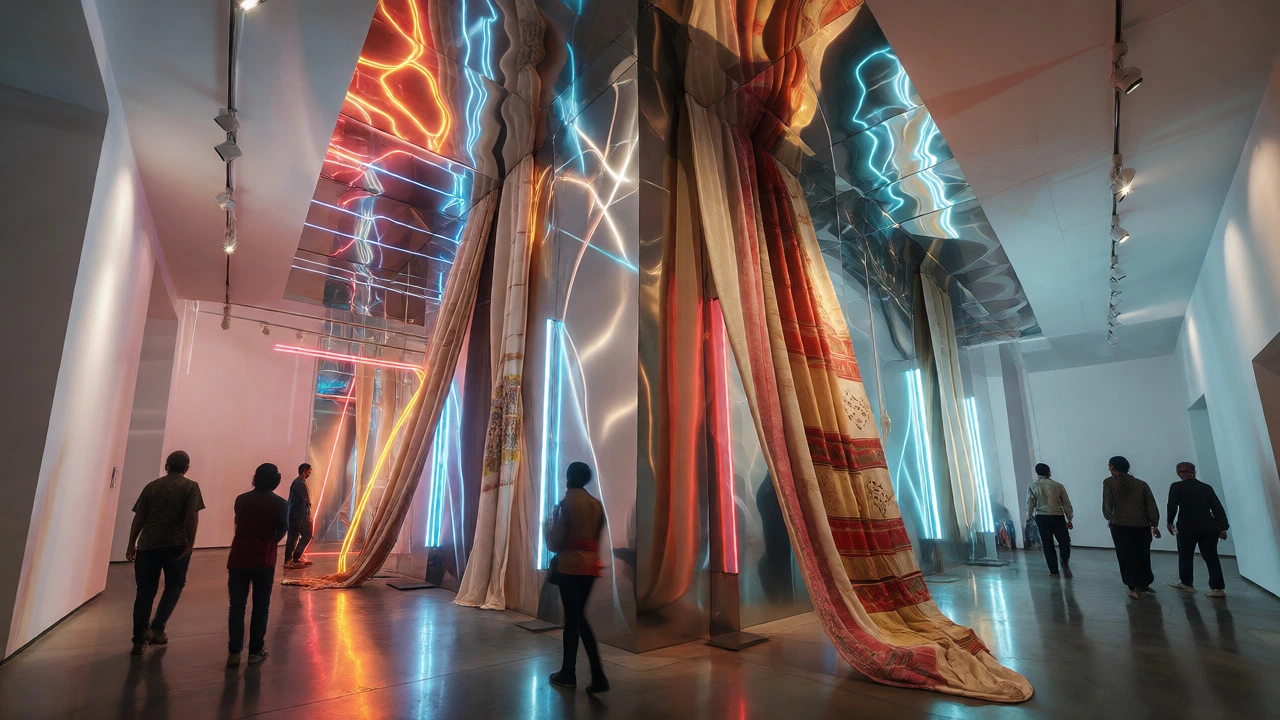
- Mixed Media: Pure oil paintings on canvas are less common as the sole focus. Contemporary artists love combining materials. You might see wood, plastic, neon lights, video screens, and fabric all in one installation. This reflects our mixed-media lives-we consume text, video, and images simultaneously.
- Minimalism and Maximalism Coexistence: Unlike previous eras that favored one extreme, contemporary style swings between stark minimalism (clean lines, white spaces, few objects) and chaotic maximalism (cluttered, vibrant, overwhelming details). Both are valid expressions of the current moment.
- Digital Integration: Since the early 2000s, digital tools have become central. This includes AI-generated imagery, 3D printing, and NFTs (Non-Fungible Tokens). Even traditional painters often use digital sketches or projections before picking up a brush. The boundary between physical and digital art has blurred significantly.
- Everyday Objects: Ready-mades-ordinary items presented as art-are still huge. Think of a pile of laundry or a branded shopping bag placed on a pedestal. This challenges the viewer to question what has value.
Notice how these markers aren't about beauty in the traditional sense. They are about engagement. A contemporary piece wants you to think, feel uncomfortable, or recognize yourself in the work. It rarely aims to just decorate a wall quietly.
Thematic Focus: What Contemporary Artists Talk About
Style is often driven by subject matter. Contemporary art is deeply concerned with the issues of our time. If you want to identify the style, look at the themes. Are they addressing global connectivity, climate change, gender identity, or political instability? These topics dominate the scene.
| Feature | Classical Art | Modern Art | Contemporary Art |
|---|---|---|---|
| Time Period | Pre-1850s | 1860s-1970s | 1970s-Present |
| Primary Goal | Realism & Beauty | Experimentation & Form | Concept & Context |
| Materials | Oils, Marble, Bronze | Acrylics, Collage, Steel | Digital, Found Objects, Mixed Media |
| Audience Role | Passive Observer | Active Interpreter | Participant/Critic |
This table highlights why contemporary style feels different. It invites you into the conversation. For example, consider Installation Art. This type of art transforms a space into an immersive experience, requiring the viewer to walk through it rather than just look at it. Artists like Olafur Eliasson create rooms filled with fog or light, making the environment itself the artwork. This participatory nature is a hallmark of contemporary style.
Another major theme is globalization. Contemporary artists come from everywhere, not just Europe and North America. This leads to a fusion of cultural symbols. You might see Japanese calligraphy mixed with American pop art aesthetics, or African textile patterns used in Western conceptual frameworks. This cross-pollination creates a visual language that is hard to pin down to one nationality, which is exactly the point.

How to Spot Contemporary Style in Daily Life
You don't need to visit the Tate Modern or the MoMA to see this style. It influences interior design, fashion, and advertising. Here is how to spot it outside the gallery walls.
In home decor, contemporary style often features clean lines, neutral palettes, and open spaces. But unlike mid-century modern design, which has a retro vibe, contemporary interiors feel current. They incorporate smart technology seamlessly and often feature bold, singular art pieces that provoke thought. If your living room has a sleek sofa but also a strange, jagged sculpture that makes guests ask "what is that?", you have embraced contemporary style.
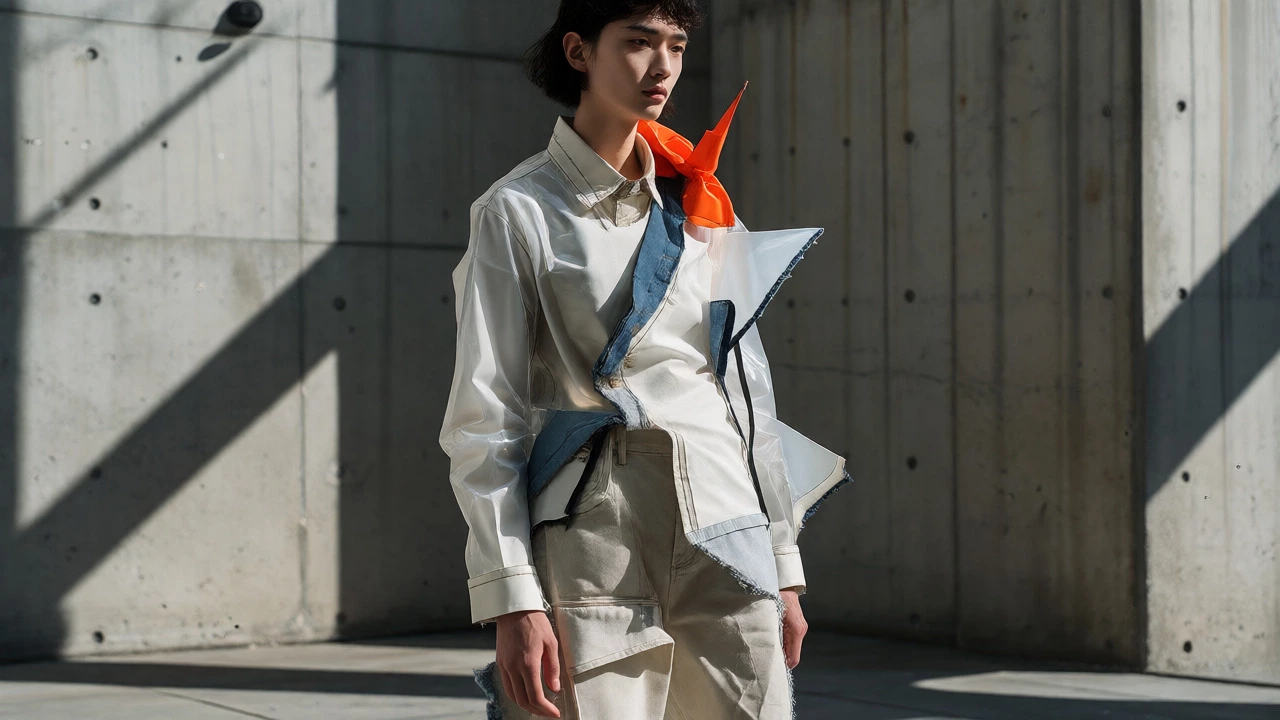
In fashion, look for deconstructed garments. Clothes that look unfinished, asymmetrical cuts, and unconventional fabrics are key indicators. Brands like Balenciaga or Rick Owens often play with the idea that clothing is a form of self-expression and critique, not just utility. This mirrors the conceptual approach of contemporary art.
On social media, the line between content creation and art is thin. Digital filters, augmented reality effects, and meme-based visual commentary are forms of contemporary expression. The speed at which trends rise and fall online is faster than ever, influencing artists to produce work that responds to immediate cultural moments. This immediacy is part of the style-it is urgent and relevant.
The Role of Technology and AI
We cannot discuss contemporary style in 2026 without talking about artificial intelligence. Tools like Midjourney and DALL-E have changed the landscape. Some purists argue that AI-generated images aren't "art" because they lack human intent. Others argue that the prompt engineering-the choice of words and concepts-is the new artistic skill.
Regardless of where you stand, AI has influenced the aesthetic. We see more surreal, hyper-detailed, and dreamlike visuals in mainstream media. This "AI look"-smooth textures, impossible lighting, and blended realities-has seeped into commercial photography and graphic design. It adds another layer to what contemporary style looks like: a blend of human creativity and machine precision.
Moreover, blockchain technology has introduced new ways to own and display art. Digital art, once hard to collect due to easy copying, now has provenance via NFTs. This has encouraged more artists to experiment with purely digital formats, knowing they can sell them. As a result, you see more screen-based art in galleries, projected onto walls or displayed on high-end monitors, challenging the definition of a "canvas."
Pitfalls: What Contemporary Style Is Not
To truly understand what contemporary style looks like, it helps to know what it isn't. It is not necessarily "good" taste in a traditional sense. It can be ugly, boring, or confusing. That is often intentional. If a piece seems too polished or decorative, it might lean towards commercial illustration or classical revival rather than contemporary fine art.
Also, don't confuse it with "trendy." Trends fade quickly. Contemporary art engages with deeper societal structures. A trendy meme might disappear in a week; a contemporary artwork referencing that meme might explore the psychology of internet addiction, lasting much longer. The difference lies in depth and context.
Finally, avoid thinking it is only for elites. While auction prices can reach millions, contemporary art is increasingly democratic. Street art, community projects, and online platforms allow anyone to participate. The barrier to entry has lowered, both for creators and viewers.
Key Takeaways
- Time-Based Definition: Contemporary art is defined by the present day, not a specific aesthetic rulebook.
- Concept Over Craft: The idea behind the work is usually more important than technical realism.
- Mixed Materials: Expect combinations of digital, physical, and found objects.
- Social Commentary: Themes often address identity, politics, technology, and global issues.
- Viewer Participation: The audience is expected to engage, interpret, and sometimes interact with the work.
Is contemporary art the same as modern art?
No. Modern art refers to a specific historical period roughly from the 1860s to the 1970s. Contemporary art refers to art produced from the late 20th century to the present day. While they share some experimental roots, contemporary art is broader and more focused on current social and technological contexts.
Why does contemporary art look so simple or messy?
Contemporary artists often prioritize the concept over technical perfection. A simple object or a seemingly messy arrangement can convey a powerful message about consumerism, identity, or emotion. The simplicity forces the viewer to focus on the meaning rather than the craftsmanship.
Can I find contemporary style in home decor?
Yes. Contemporary interior design features clean lines, neutral colors, and open spaces, but it differs from modern design by being more fluid and incorporating current trends. It often includes unique art pieces, mixed materials, and functional yet stylish furniture that reflects current lifestyles.
How does technology influence contemporary style?
Technology allows artists to use new mediums like digital video, AI generation, and 3D printing. It also changes how art is distributed and viewed, with social media and NFTs playing significant roles. This results in a style that is often digital-native, interactive, and responsive to rapid cultural shifts.
Do I need to understand the art to appreciate it?
Not necessarily. While context helps, contemporary art is designed to evoke a reaction. Your personal interpretation is valid. Trust your instincts-if a piece makes you curious, uncomfortable, or happy, it is working. Reading labels or artist statements can deepen the experience, but they are not prerequisites for enjoyment.