Abstract Art Balance Calculator
Check if your abstract composition has visual balance using the principles from the article: balance, contrast, rhythm, scale, and intentional imperfection
When you look at a Jackson Pollock drip painting or a Mark Rothko color field, it’s easy to think: anyone could do this. No rules. No structure. Just chaos on canvas. But here’s the truth - abstract art doesn’t break rules. It redefines them.
Abstract Art Isn’t Random
People often mistake abstraction for randomness. They see splatters, bold shapes, or muted gradients and assume the artist just flung paint and called it done. That’s not how it works. Abstract art has always operated under a set of internal guidelines - not the same as Renaissance perspective or anatomical accuracy, but guidelines nonetheless. Take Wassily Kandinsky, one of the first artists to fully abandon representation. He didn’t just start painting without a plan. He studied music, spirituality, and color theory. He believed certain shapes and hues carried emotional weight - yellow was sharp and aggressive, blue was calm and spiritual. He built entire compositions around these ideas. His 1913 painting Composition VII looks like a storm of lines and colors, but every element was placed with intention. He even made sketches for months before starting the final piece. Or consider Hilma af Klint, who began making abstract works in 1906 - years before Kandinsky. Her paintings were guided by spiritualist rituals, geometric patterns, and symbolic systems she developed over a decade. She didn’t paint randomly. She painted according to a coded language only she fully understood. Abstract art doesn’t lack rules. It just doesn’t follow the ones you learned in high school art class.What Are the Real Rules?
If you ask ten abstract artists what rules they follow, you’ll get ten different answers. But dig deeper, and you’ll find patterns. Here are the five most consistent principles behind successful abstract work:- Balance - Not symmetry, but visual weight. A small red shape on one side might balance a large gray area on the other. Artists test this by stepping back, squinting, or even turning the canvas upside down.
- Contrast - Light vs. dark, smooth vs. textured, warm vs. cool. Without contrast, abstract pieces look flat or muddy. Even Rothko’s soft color fields rely on subtle shifts in hue and opacity to create depth.
- Rhythm - Repetition with variation. A repeated brushstroke, a recurring shape, or a consistent color palette creates movement. It’s like a drumbeat - predictable enough to feel intentional, varied enough to stay interesting.
- Scale and Proportion - How big is that shape? How much space does it take? Too much empty space can feel empty. Too much activity can feel chaotic. Artists use the golden ratio, grid systems, or even their own body as a measuring tool.
- Intentional Imperfection - This one’s tricky. Abstract art often embraces mess, but not all mess is good. A drip that runs where it shouldn’t can ruin a piece. A smudge that adds texture can elevate it. The difference? Control. The artist lets accidents happen - but only after they’ve set the stage.
These aren’t taught in textbooks. They’re learned through trial, failure, and years of staring at a blank canvas wondering why nothing feels right.
Why Do People Think There Are No Rules?
Part of the confusion comes from how abstract art is presented. Museums often hang a Pollock next to a child’s finger painting and say, “See? Art is freedom.” That’s misleading. It’s like putting a Stradivarius next to a toy violin and saying, “See? Music is just noise.” The other reason? Abstract art is hard to talk about. We’re trained to look for “what it represents.” A portrait? That’s a person. A landscape? That’s a mountain. But an abstract piece asks you to feel it, not name it. That’s uncomfortable. So we say, “It’s just random,” to avoid the discomfort of not understanding. But if you look at the process - the sketches, the studies, the failed canvases stored in artist studios - you’ll see discipline. A lot of it.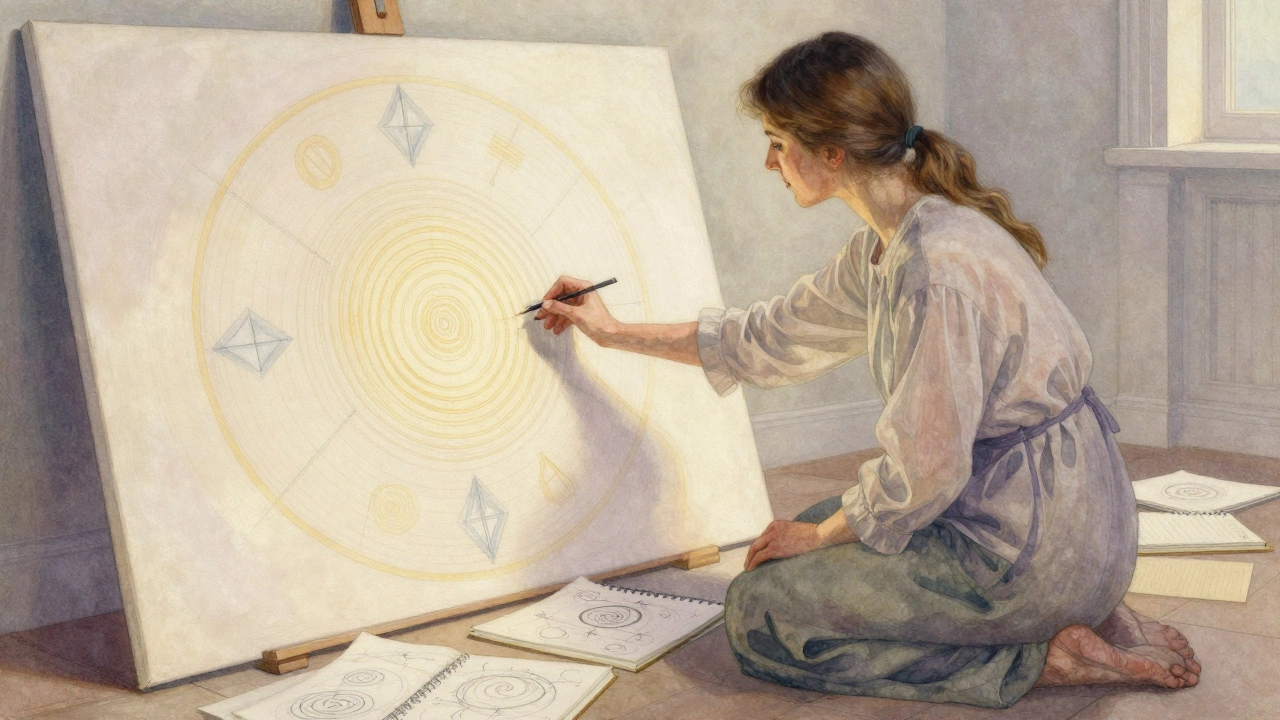
The Role of Materials and Process
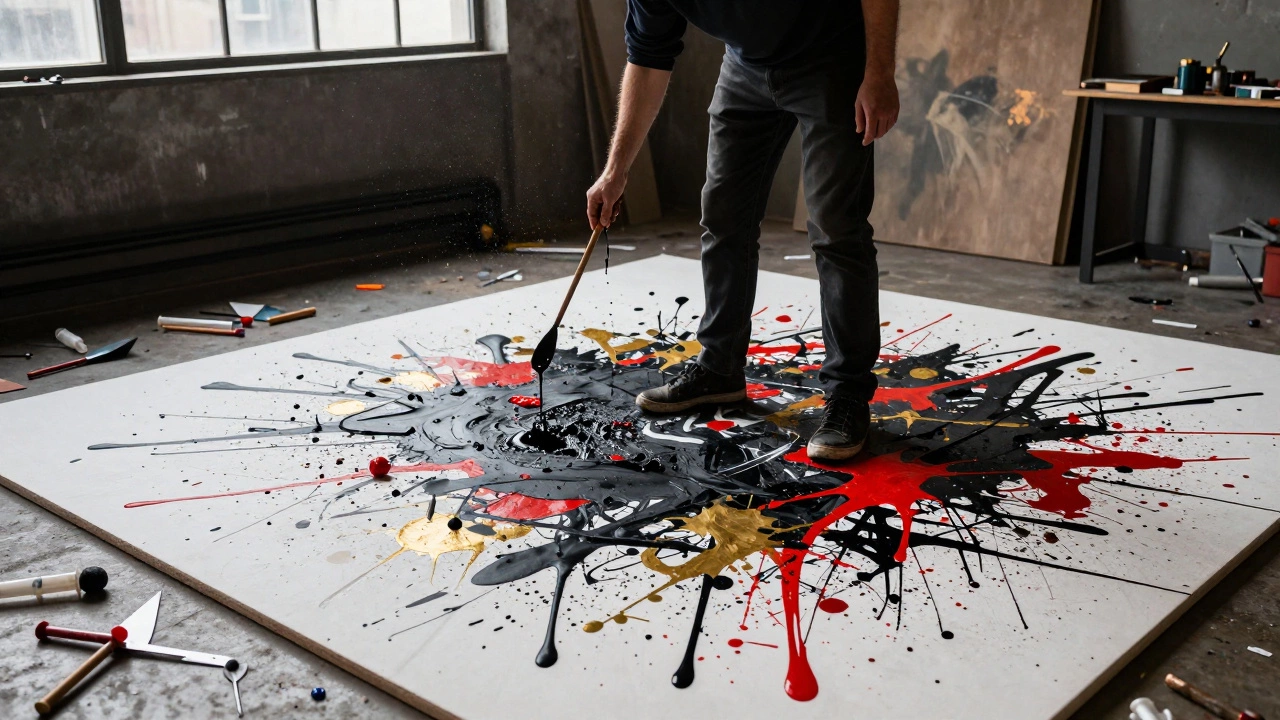
Rules aren’t just about composition. They’re also about how you work. Jackson Pollock didn’t just drip paint. He laid his canvases on the floor. He used sticks, trowels, and basting syringes. He mixed sand, glass, and aluminum into his paint. He worked for hours, sometimes days, on a single piece. His method was a ritual. He had to control his body’s movement, the viscosity of the paint, the timing of each pour. That’s not chaos. That’s precision. Similarly, Agnes Martin painted delicate grids with pencil and watercolor. She used rulers. She counted every line. She worked in silence, meditating before each stroke. Her paintings look serene, almost effortless. But each one took months. She destroyed dozens before finishing one. The materials you choose become part of the rulebook. If you use acrylic, you have fast drying times. If you use oil, you have days to rework. If you use ink, you can’t erase. These aren’t limitations - they’re constraints that shape creativity.What Happens When Rules Are Broken?
Some artists deliberately break these principles - and it works. But only because they knew the rules first. Franz Kline’s bold black-and-white strokes look like wild scribbles. But he started as a figurative painter. He spent years drawing figures, then slowly stripped them down to their essential lines. His famous works aren’t random - they’re distilled. Or take Cy Twombly. His scribbles look like doodles. But he studied ancient Roman graffiti, Renaissance drawing, and poetry. His marks are layered with meaning. He didn’t break rules - he rewrote them. The most powerful abstract art doesn’t come from ignoring structure. It comes from understanding it so deeply that you can bend it, stretch it, or even break it - and still make it feel intentional.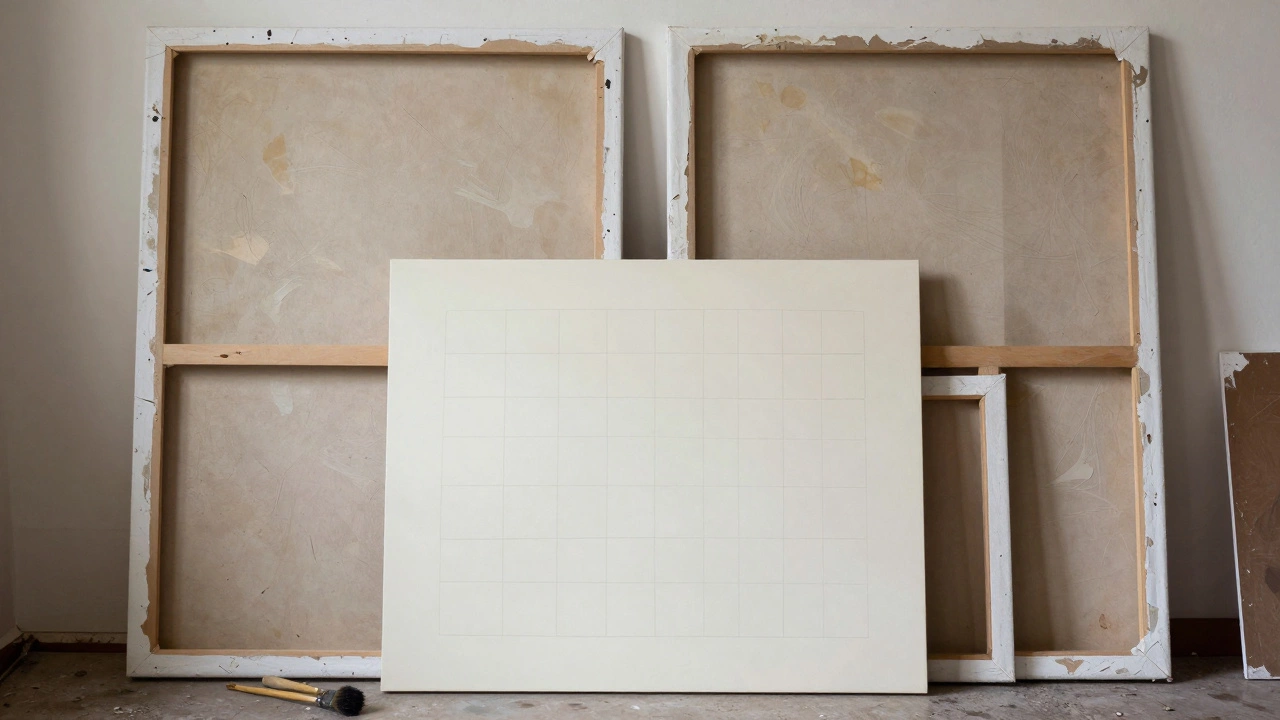
Can You Learn Abstract Art?
Yes - but not by copying Pollock or Rothko. You learn by doing the work. Start with constraints:- Use only three colors for a week.
- Paint with your non-dominant hand.
- Work on a small canvas - 8x10 inches - and don’t let yourself go bigger.
- Set a timer: 20 minutes. No overthinking. Just respond.
These aren’t random exercises. They force you to focus on balance, rhythm, and contrast - the real rules of abstraction.
Many students think they need inspiration. They wait for a flash of genius. But abstract art isn’t about waiting. It’s about showing up. Day after day. Trying. Failing. Trying again.
The best abstract artists I’ve met don’t talk about inspiration. They talk about discipline. About how they clean their brushes. About how they mix their paints. About how they stare at a canvas for hours before touching it.
Final Thought: Rules Are a Foundation, Not a Cage
Abstract art doesn’t need rules because it’s wild. It needs rules because it’s profound. The chaos you see? It’s built on decades of study, failure, and quiet repetition. The freedom you admire? It’s earned, not given. So next time you look at an abstract piece and think, “I could do that,” ask yourself: Have you spent 100 hours just mixing colors? Have you destroyed 20 canvases to get one right? Have you learned to listen to the silence between brushstrokes? If not - then no, you probably can’t do that. Not yet.Is abstract art just random splatters?
No. While some abstract works appear chaotic, they’re almost always built on deliberate choices - balance, contrast, rhythm, scale, and material control. Artists like Kandinsky, Rothko, and Martin spent years developing systems and constraints to guide their work. What looks like randomness is often the result of intense discipline.
Do you need to know how to draw to make abstract art?
Not technically, but understanding form, space, and composition helps. Many abstract artists started as figurative painters. They learned how to draw, then stripped away representation to focus on structure. You don’t need to paint a perfect human figure, but you do need to understand how shapes relate to each other on a surface.
Can abstract art be taught?
Yes - but not by copying famous artists. Abstract art is taught through exercises that build awareness: color relationships, material behavior, compositional balance. Students learn by doing, failing, and refining - not by following instructions. The goal isn’t to make a “good” abstract piece. It’s to develop a personal visual language.
Why do some abstract paintings sell for millions?
Because they’re rare, historically significant, and the result of lifelong practice. A Pollock drip painting isn’t valuable because it looks easy. It’s valuable because it represents a breakthrough in how art could be made - and because Pollock spent decades refining his technique. The market rewards depth, not just appearance.
Is there a right way to interpret abstract art?
No. Abstract art invites personal response, not fixed meaning. But that doesn’t mean it’s meaningless. The best abstract work communicates emotion, energy, or tension - even if you can’t name what it’s “about.” You don’t need to decode it. You need to feel it.