Sculpture Proportion Calculator
Calculate Human Proportions
Based on the 10-head rule from the article: A typical adult is 7-8 heads tall.
Starting sculpture isn’t about having a degree or expensive studio space. It’s about touching material, shaping it with your hands, and letting your ideas take physical form. If you’ve ever picked up a lump of clay and wondered what to do with it, you’re already on the path. Sculpture art is one of the oldest forms of human expression - from ancient Venus figurines to modern steel installations - and it’s just as accessible today as it ever was.
Start with the right materials
You don’t need to buy a full set of tools on day one. Begin with something simple: plasticine or air-dry clay. These are forgiving, inexpensive, and don’t require kilns or special ventilation. Plasticine stays soft indefinitely, so you can reshape it endlessly. Air-dry clay hardens in a few days and can be painted afterward. Both are sold at art supply stores or even big-box retailers like Bunnings or Spotlight in Australia.
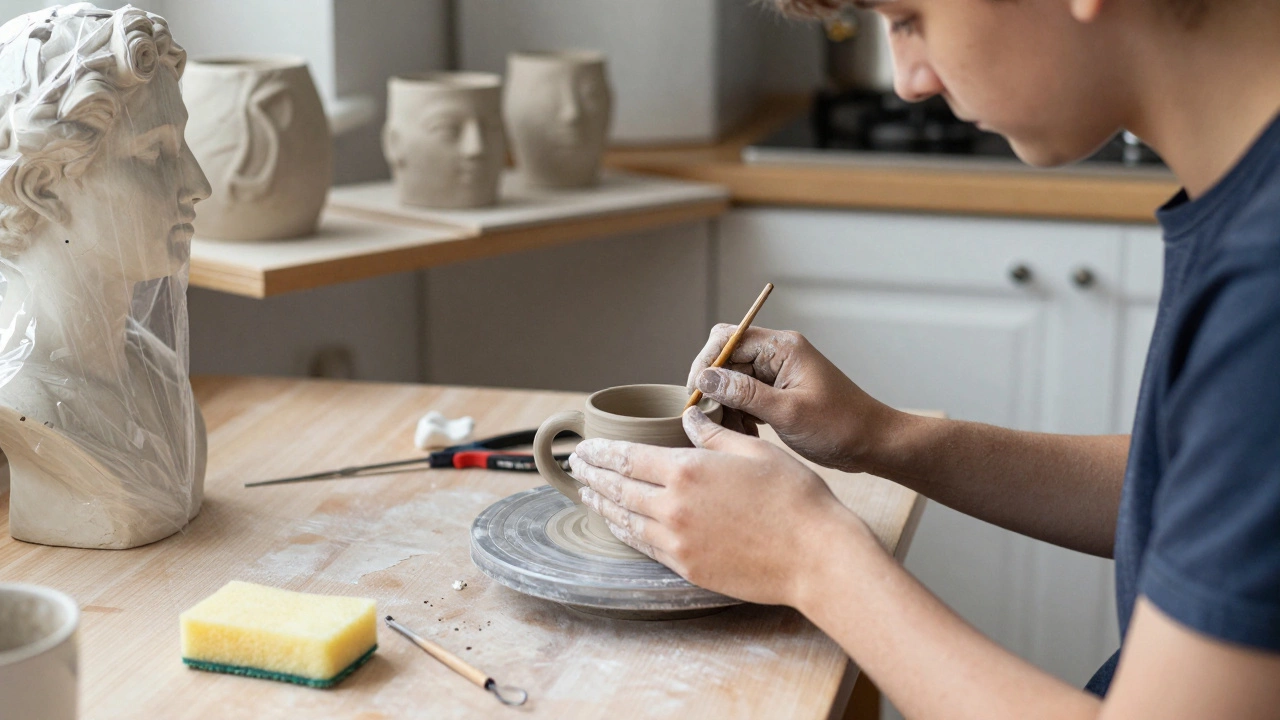
For tools, start with three basics: a wooden modeling tool (or even a butter knife), a wire cutter (for slicing clay), and a small sponge. That’s it. You’ll be surprised how much you can do with just these. As you progress, you’ll naturally discover what you need next - maybe a loop tool for carving, or a rasp for smoothing surfaces.
Learn by copying, not just imagining
Most beginners try to sculpt a perfect human face or a dynamic horse on their first try. That’s how frustration starts. Instead, copy real objects. Start with something simple: an apple, a coffee mug, or your own hand. Place it on the table in front of you and try to recreate its shape in clay. Don’t aim for realism - aim for observation. Notice how the light hits the curve of the mug. How the thumb bends differently from the fingers. This trains your eye more than your hands.
There’s a reason art schools make students copy plaster casts. It’s not about copying perfectly - it’s about learning to see volume, weight, and proportion. Try copying a small ceramic animal from a thrift store. Spend three days on it. Then try again. You’ll notice how your third attempt looks nothing like the first. That’s progress.
Understand form and structure
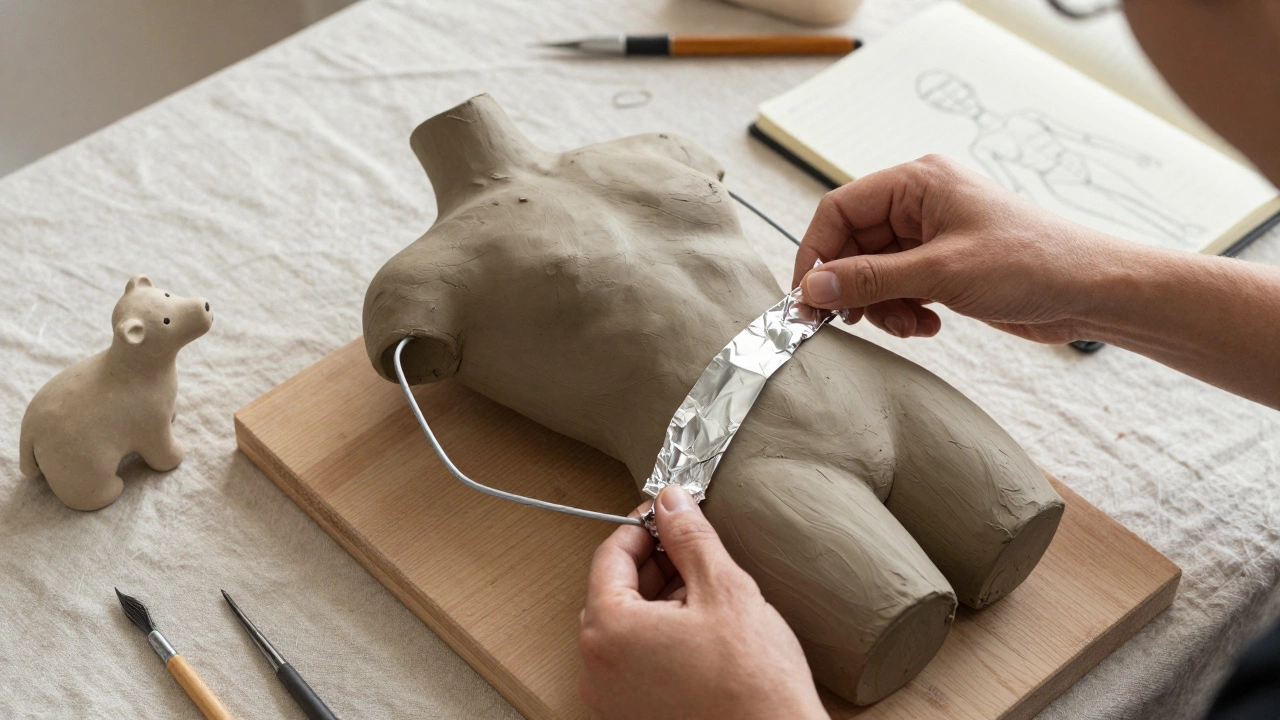
Sculpture is about space as much as it is about material. A figure isn’t just skin and muscle - it’s built on a skeleton. Even if you’re making a stylized bird or abstract shape, think about what holds it together. Use wire armatures for larger pieces. Bend thick gauge wire into a basic pose, then wrap it in aluminum foil to bulk out the form before adding clay. This saves material and gives your sculpture internal support.
For human figures, learn the 10-head rule. In proportion, an adult human body is roughly 7 to 8 heads tall. A child is 5. Use this as a rough guide when building torsos and limbs. Don’t stick to it rigidly - but knowing the baseline helps you break it intentionally.
Work in stages
Great sculpture doesn’t happen in one session. Break your process into clear steps:
- Block in - Rough out the general shape. Think of it like sketching in 3D.
- Refine - Add details: fingers, facial features, folds in fabric.
- Smooth - Use damp sponges or your fingers to soften edges.
- Texture - Add surface detail with tools or even household items like a toothbrush or lace.
- Finish - Let it dry, then seal with acrylic varnish or paint.
Take photos at each stage. You’ll see how your work evolves - and spot mistakes you didn’t notice while working.
Study real sculptors - not just images, but their process
Look at Auguste Rodin’s sketches. Notice how he kept reworking the same figure over months. Watch Henry Moore’s videos. He carved directly into stone, embracing flaws. Visit the National Gallery of Victoria in Melbourne - they have a whole wing of sculptural studies. You don’t need to visit in person - many museums now offer high-res online collections with zoomable details.
Pay attention to how they handled transitions: from rough to smooth, from heavy to light. Rodin left fingerprints in his bronze casts. Moore left chisel marks. These weren’t mistakes - they were choices. Your work doesn’t need to be polished. It needs to be honest.
Practice consistently - not perfectly
You don’t need to spend hours every day. Even 20 minutes, three times a week, builds muscle memory. Keep a small workspace - a shoebox on your desk, a corner of the kitchen table. Make it easy to return to. Leave your clay covered in plastic wrap so it doesn’t dry out. When you come back, you’ll pick up right where you left off.
Set small goals: “This week, I’ll make three heads.” Not “I’ll make a statue of myself.” One head a day. You’ll surprise yourself. By the end of the month, you’ll have a small collection of forms that show real growth.
Embrace failure as part of the process
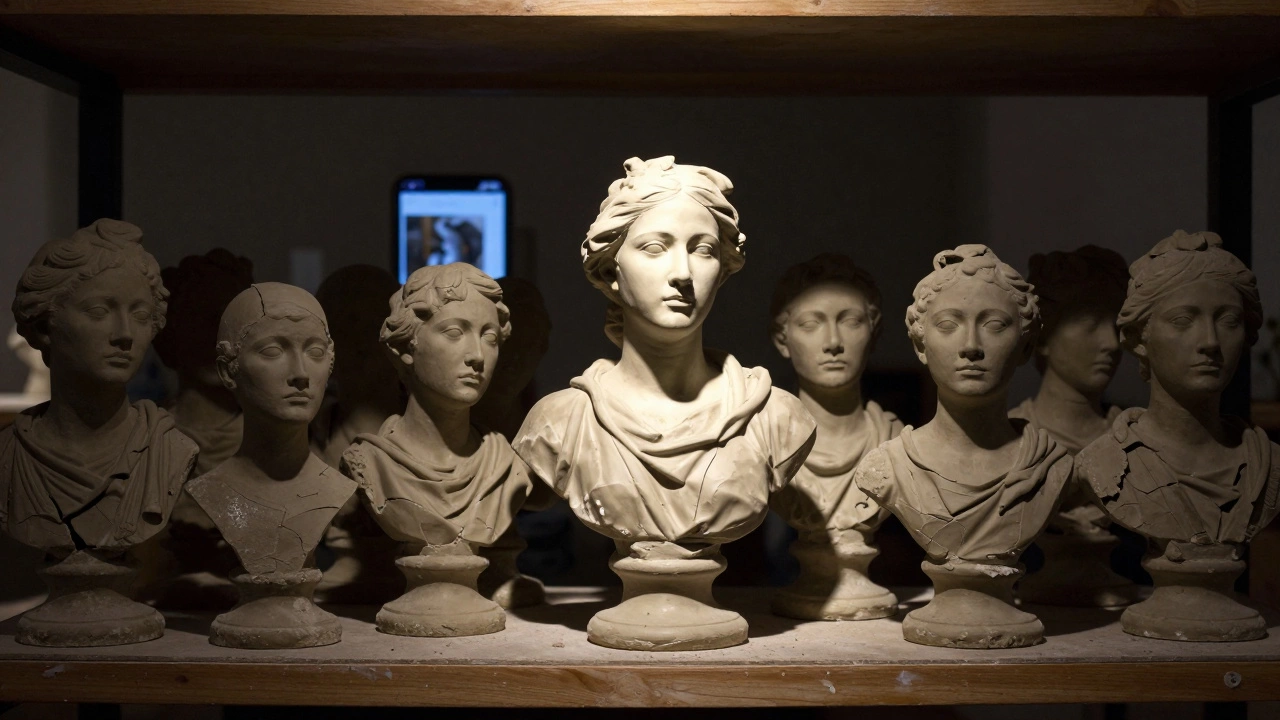
Clay cracks. Fingers slip. Proportions go wrong. That’s normal. Don’t throw pieces away. Keep them. Stack them on a shelf. Look at them a month later. You’ll see how far you’ve come. One of my students kept a box of 47 failed busts. She called it her “library of mistakes.” When she finally made a good one, she said, “I didn’t get it right. I got it right because I got it wrong 47 times.”
Even Michelangelo said he didn’t sculpt David - he just removed the stone that wasn’t David. Your failures aren’t wasted. They’re lessons.
Join a community
You don’t need to go to art school. But you do need feedback. Look for local sculpting workshops - many community centers in Sydney, like the one in Newtown or Marrickville, offer low-cost weekly classes. Online, join forums like r/Sculpture on Reddit or Facebook groups like “Sculptors of Australia.” Post your work. Ask questions. People will help.
Don’t wait until you’re “good enough.” Show up early. Share your first clumsy hand. Someone else will say, “I did that too.” And suddenly, you’re not alone.
What comes next?
Once you’re comfortable with clay, try other materials. Plaster is cheap and casts well. Wax is great for lost-wax bronze casting (though that’s more advanced). Wood and stone require more tools, but you can start with soft limestone or soapstone. Each material teaches you something new about pressure, resistance, and patience.
Eventually, you’ll find your voice. Maybe you’ll carve faces. Maybe you’ll make abstract forms that echo the shapes of Sydney Harbour. Maybe you’ll build something so personal, you’ll never sell it. That’s okay. Sculpture isn’t about perfection. It’s about presence. It’s about making something that didn’t exist before - and knowing you made it with your own hands.
Do I need formal training to learn sculpture?
No. Many of the most influential sculptors - like Louise Bourgeois or Antony Gormley - were self-taught. What matters is consistent practice, observation, and feedback. Formal classes can help, but they’re not required. Start with materials you can afford, work regularly, and learn from your mistakes.
What’s the best clay for beginners?
Air-dry clay is the easiest for beginners because it doesn’t need a kiln. Brands like DAS or Activa are widely available in Australia. If you want to keep working without drying, use plasticine - it never hardens. Avoid polymer clay at first; it’s more expensive and requires baking, which adds complexity.
Can I make sculpture without a studio?
Absolutely. Many sculptors work in kitchens, garages, or even bedrooms. Cover your surface with a plastic sheet or old towel. Keep your tools in a shoebox. Use a damp cloth to cover your clay when you’re done. You don’t need a dedicated space - just a consistent routine and a place to leave your work safely.
How long does it take to get good at sculpture?
There’s no set timeline, but most people notice real improvement after 3-6 months of regular practice. If you work 20-30 minutes, three times a week, you’ll build muscle memory and visual understanding. The key isn’t talent - it’s repetition. Your hands will learn before your mind fully understands why.
What are common mistakes beginners make?
Trying to make something too complex too soon. Ignoring proportions. Not using an armature for larger pieces. Letting clay dry out and crack. Not taking photos to track progress. And worst of all - giving up because it doesn’t look like a masterpiece on day one. Sculpture is slow. It’s tactile. It’s messy. And that’s what makes it powerful.