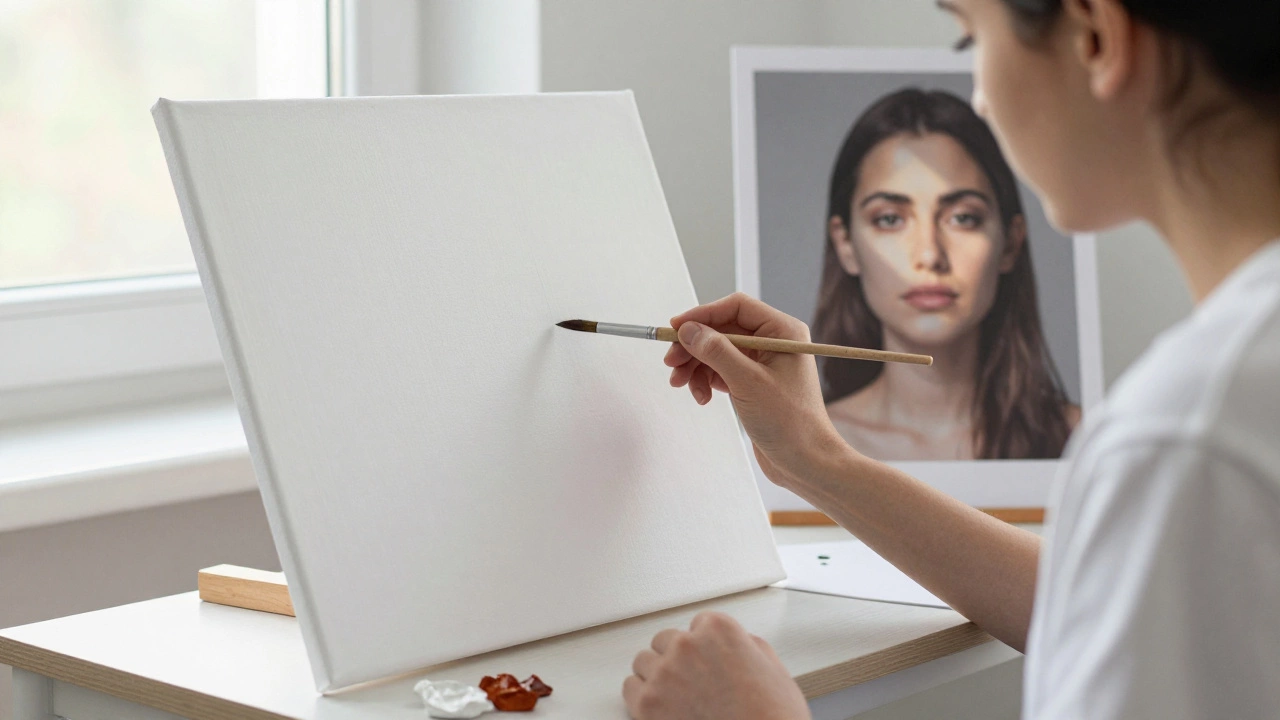
How to Paint Portraits: Beginner Tips, Common Mistakes, and Real Techniques
When you start how to paint portraits, the process of capturing a person’s likeness through paint, often using oil, watercolor, or digital tools. Also known as portrait art, it’s not just about drawing eyes and noses—it’s about reading light, emotion, and structure. Most beginners think they need perfect drawing skills, but that’s not true. What matters more is learning to see values—the darks and lights—that give a face its shape. You don’t need to render every hair strand. You need to understand where the shadows fall and how the light hits the cheekbone.
Oil painting, a traditional medium using pigments mixed with drying oils like linseed oil, is still one of the most popular ways to paint portraits because it lets you build layers slowly. Artists like Van Gogh used specific pigments like cadmium yellow and cobalt blue to make skin tones feel alive. But you don’t need vintage paints. You just need to start with three colors: burnt umber, titanium white, and a red like cadmium red. That’s it. Many artists ruin their first portraits by using too many colors too soon, or by starting with the eyes. Don’t. Start with the big shapes—the head as an oval, the jawline, the placement of the eyes halfway down. Block in the shadows first, then add light. This is called dark to light, a technique where artists build form by laying down shadows before highlights. It creates depth without looking flat.
Watercolor portraits are trickier because you can’t easily fix mistakes. Overworking the paper, using dirty brushes, or skipping quality paper are the top reasons people get frustrated. If you’re new, try oil or digital first. Digital art on a phone? Yes, it works. Apps like Procreate Pocket let you paint realistic portraits with a stylus, and artists are selling them on Etsy without any special license—just copyright ownership. But whether you’re using a brush or a tablet, the core rules stay the same: focus on values, not details. Get the proportions right before you add texture. Measure with your pencil or the edge of your screen. Is the nose really halfway between the eyes and chin? Often, it’s not. Most portraits fail because the features are too high or too low.
And don’t worry if your first few portraits look off. Even professionals mess up. One artist sold a $3,000 portrait after five failed attempts. The key isn’t perfection—it’s consistency. Practice sketching faces from photos daily. Study how light hits a forehead in morning sun. Notice how the neck connects to the jaw. Watch how the mouth changes shape when someone smiles. These aren’t secrets. They’re observations. The best portrait painters aren’t geniuses. They’re people who paid attention long enough to see what others skip.
There’s a reason portrait prices range from $100 to $50,000. It’s not just about fame. It’s about control. The artist who knows how to mix skin tones without turning them gray, who understands how to suggest a cheekbone with one brushstroke, who can make someone feel seen—that’s the artist buyers remember. You don’t need to be the next Rembrandt. You just need to learn the basics, avoid the common traps, and keep showing up.
Below, you’ll find real guides from artists who’ve been there—how to start, what tools to use, what to avoid, and how to price your work when you’re ready to sell. No fluff. Just what works.