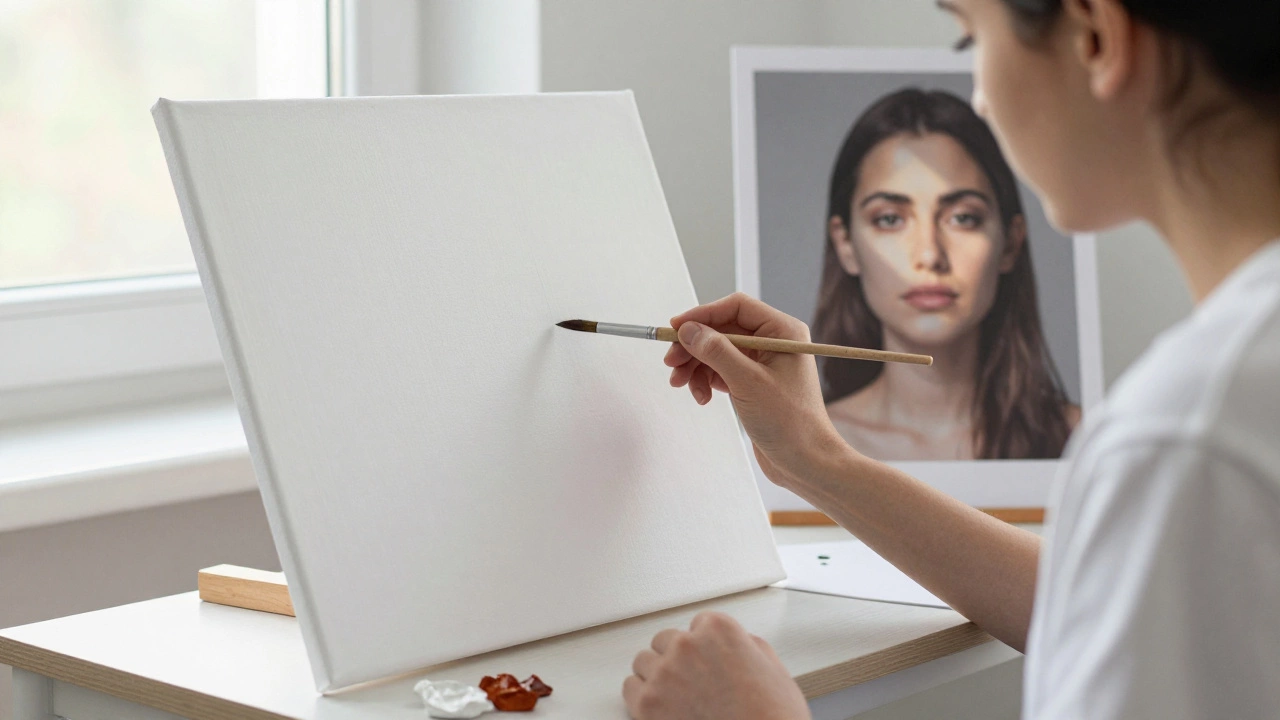
Painting Faces: How to Start, Avoid Mistakes, and Sell Portrait Art
When you paint a face, you’re not just mixing colors—you’re capturing portrait painting, the art of rendering human likeness with emotion, structure, and depth. It’s one of the oldest and most challenging forms of visual storytelling, and it’s still alive in studios, galleries, and phone screens today. What makes it hard isn’t just skill—it’s knowing where to start, what to ignore, and how to make the eyes feel alive without overworking them. Many beginners think they need perfect lines or hyper-realistic details, but the truth is, oil painting, a medium that builds depth through layers and controlled drying, and even watercolor, a fluid, unforgiving medium where mistakes show fast, both rely on the same core: values over details, darks before lights, and patience over perfection.
Look at the posts here. You’ll see people asking how to start a portrait, what brushes to use, why their colors turn muddy, and whether they can sell what they make. One artist uses a phone to paint faces with Procreate, another spends weeks layering oil paint to get the right shadow under a cheekbone. Some ruin their watercolor portraits by using dirty brushes or adding too many colors at once. Others skip the sketch and dive into paint, only to realize halfway through that the nose is too far left. These aren’t accidents—they’re lessons. And they’re all part of the same journey. The real secret? Most successful portrait artists don’t start with the eyes. They start with the shape of the head, then block in the darkest areas, then let the light reveal the form. They know that portrait painting, the art of rendering human likeness with emotion, structure, and depth isn’t about copying a photo—it’s about reading light, understanding bone structure, and letting the paint breathe.
There’s no magic tool, no app that fixes bad proportions. But there are clear steps: measure with your pencil, use limited colors to keep harmony, paint from dark to light, and stop before you overwork it. You don’t need expensive supplies—just a good reference and the will to try again. And if you’re thinking about selling your work? Prices range from $100 to $50,000, not because of the size, but because of the connection the viewer feels. A face that looks like someone’s mother, or their child, or themselves—that’s what moves people. The posts below give you the exact steps, the hidden mistakes, and the real numbers behind what sells. No fluff. Just what works.