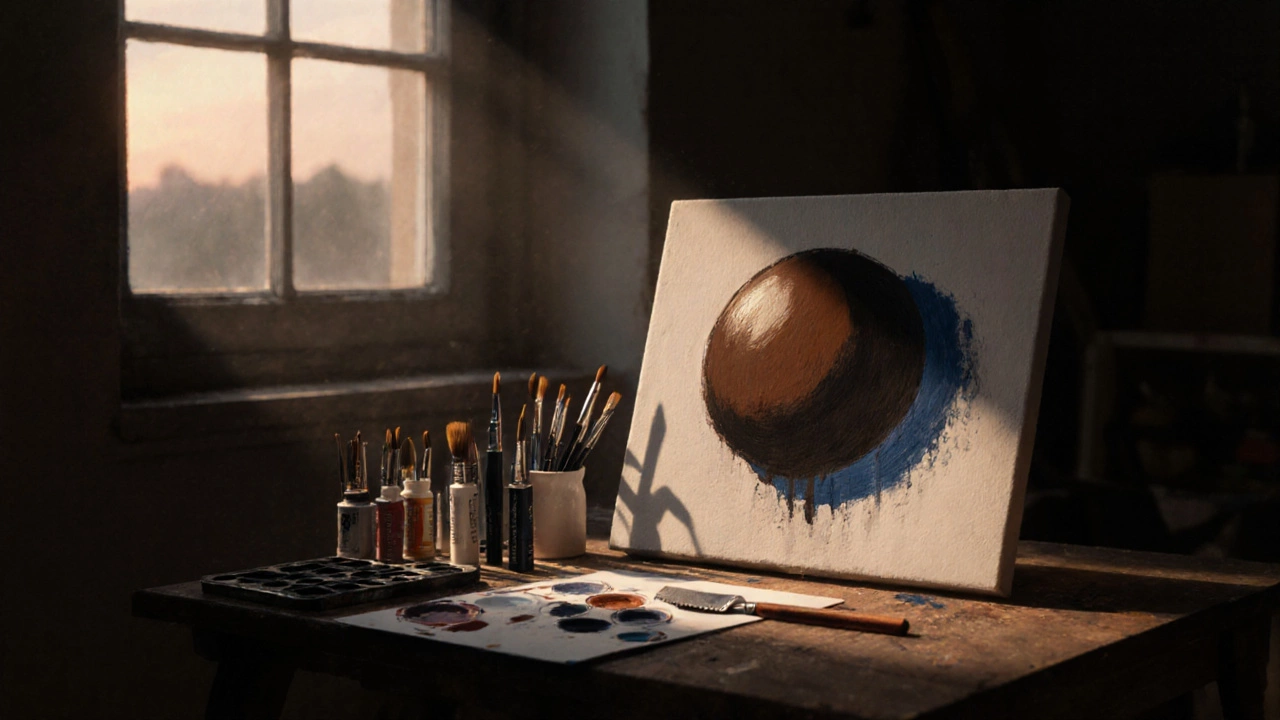
Painting Values: How Light, Shadow, and Tone Shape Art That Sells
When we talk about painting values, the range of lightness and darkness in a piece that creates depth and form, we’re not talking about price tags or worth—we’re talking about the invisible backbone of every great painting. Whether it’s a hyperrealistic portrait or a bold abstract piece, painting values are what make the eye believe what it’s seeing. Without them, color is flat. Without them, form disappears. This isn’t theory—it’s the reason a Rothko feels heavy, a Rembrandt glows, and a modern portrait sells for thousands while another sits unsold.
Painting values work hand-in-hand with light and shadow in art, the contrast between illuminated and dark areas that defines volume and mood. Think of it like a grayscale photo—remove the color, and you still know where the face is, where the light hits the cheek, where the eye sinks into shadow. That’s value. Artists who master this don’t just mix colors—they control how the viewer’s eye moves, where it stops, and what it feels. That’s why galleries look for artists who understand tonal range, the full spectrum from pure white to deep black used to create realism or emotional impact. It’s not about how many colors you use—it’s about how well you use the ones that matter: black, white, and every gray in between.
You’ll see this in the posts below. One article breaks down how to brighten a dull oil painting using glazing and scumbling—both tricks that adjust value, not just hue. Another shows how portrait artists nail anatomy by first blocking in values before adding color. There’s even a guide on pricing art for exhibitions, where buyers often respond more to strong value contrast than flashy color. Even digital artists and lithograph collectors care about this—because if the value structure is weak, no amount of detail or signature will save it.
Painting values aren’t just for oil painters. They’re the silent language of all visual art. Whether you’re buying a $200 portrait or a $50,000 abstract, you’re buying a story told in light and dark. And if you’re making art? Mastering values is the fastest way to go from amateur to professional. No fancy brushes. No expensive pigments. Just understanding how light behaves—and using it to make your work unforgettable.