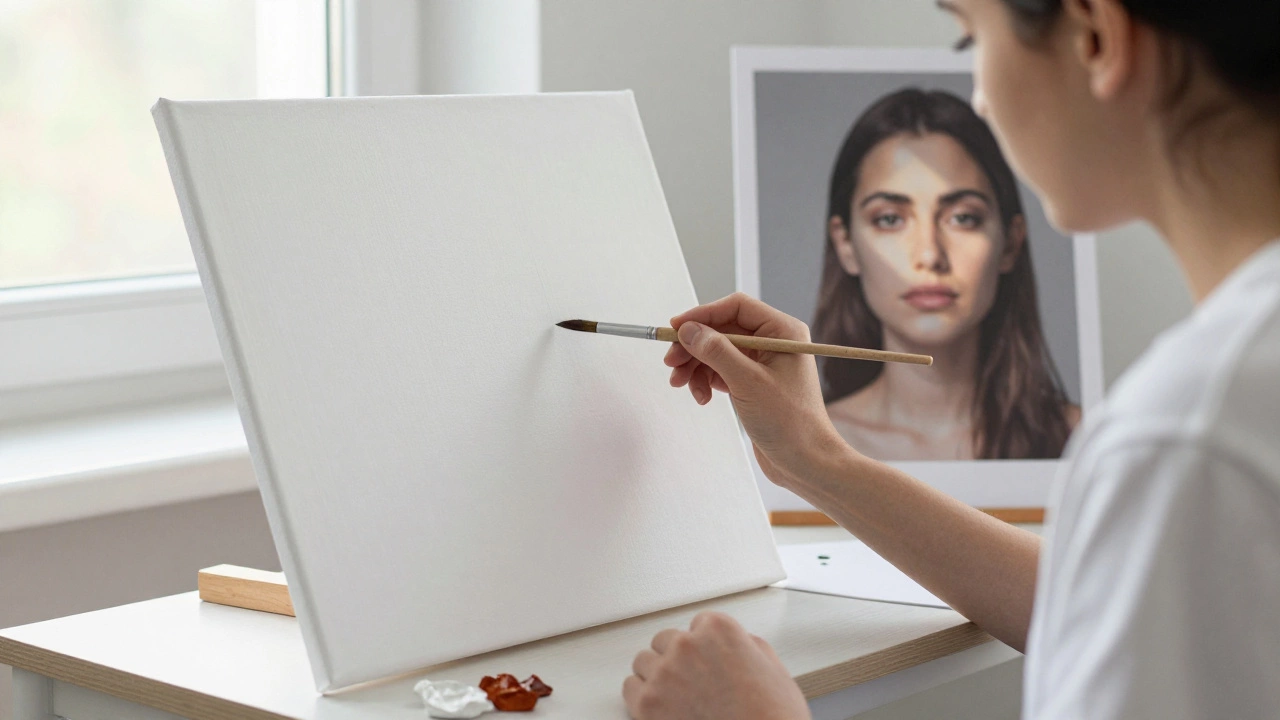
Portrait Painting Supplies: What You Really Need to Get Started
When you start painting a portrait, it’s not about having the most expensive gear—it’s about having the right portrait painting supplies, tools and materials used to create realistic or expressive human faces in paint. Also known as portrait art materials, these basics make the difference between a muddy mess and a lifelike face. You don’t need a full studio. You don’t need 50 brushes. You just need a few solid tools that do their job.
Most beginners think they need fancy canvases and expensive pigments, but the real issue is usually the artist brushes, tools with bristles or synthetic fibers used to apply paint to surfaces like canvas or paper. A few good round brushes in sizes 2, 6, and 10, plus one flat brush for blocking shapes, will get you further than a drawer full of cheap ones. The same goes for oil painting tools, equipment used to mix, apply, and manipulate oil-based paints including brushes, palettes, and mediums. A simple wooden palette, a jar of odorless mineral spirits, and one linseed oil medium are all you need to start. Skip the 12-tube starter kits—just grab cadmium yellow, burnt sienna, ultramarine blue, and titanium white. That’s it. Van Gogh didn’t have a full rainbow—he made magic with a handful of colors.
And if you’re thinking about watercolor portraits? You’ll need different watercolor portrait materials, supplies specifically suited for painting portraits using transparent water-based pigments. Not just any paper. You need 140lb cold-pressed paper—thin paper buckles and ruins your washes. Skip the student-grade tubes. Use professional-grade paints even if you buy just three colors. And yes, you can paint portraits on a phone now too—apps like Procreate Pocket and Adobe Fresco let you build skin tones with pressure-sensitive brushes, but the core skills stay the same: values over details, dark to light, and patience.
What you’ll find in the posts below isn’t a list of every brush made since 1950. It’s the real, tested, no-nonsense stuff that artists actually use. From why you shouldn’t use black to mix shadows, to how to pick a canvas size that sells, to what brushes survive years of use—this collection cuts through the noise. You’ll learn what’s worth buying, what’s a waste, and what you can skip entirely. No theory. No fluff. Just what works when you’re staring at a blank canvas and need to make a face come alive.