Modern Art Interpretation Simulator
Stop looking for what it *is*. Start asking what it *means*. Adjust the canvas below to see how changing focus changes the message.
The Artist's Intent
Click a style above or adjust the sliders. Modern art isn't about copying reality; it's about interpreting emotion, form, and context.
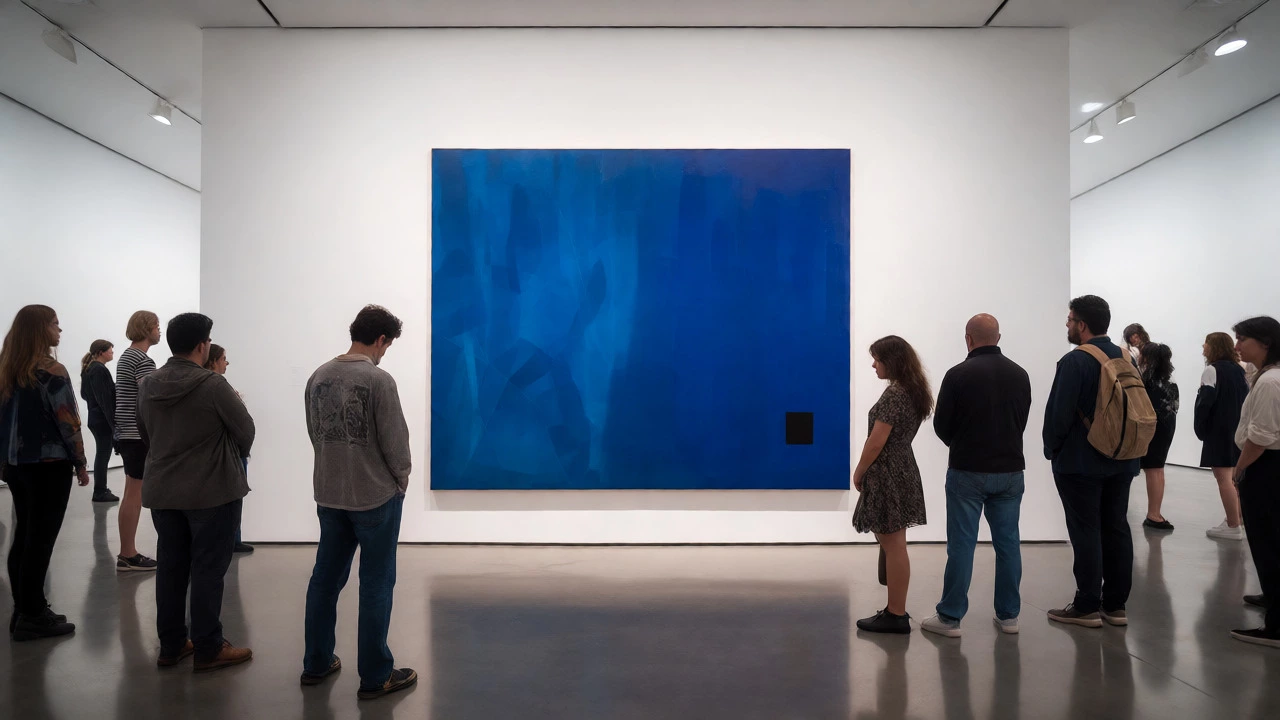
You stand in front of a canvas. It’s mostly blue. Maybe there’s a single black square in the corner. The price tag reads six figures. You look around, expecting someone to laugh, but everyone else is nodding seriously. Did you miss something? This feeling of confusion is so common it has its own name: art anxiety. But here’s the twist: modern art isn’t actually difficult because it’s complex. It’s difficult because it changed the rules of the game without telling the audience.
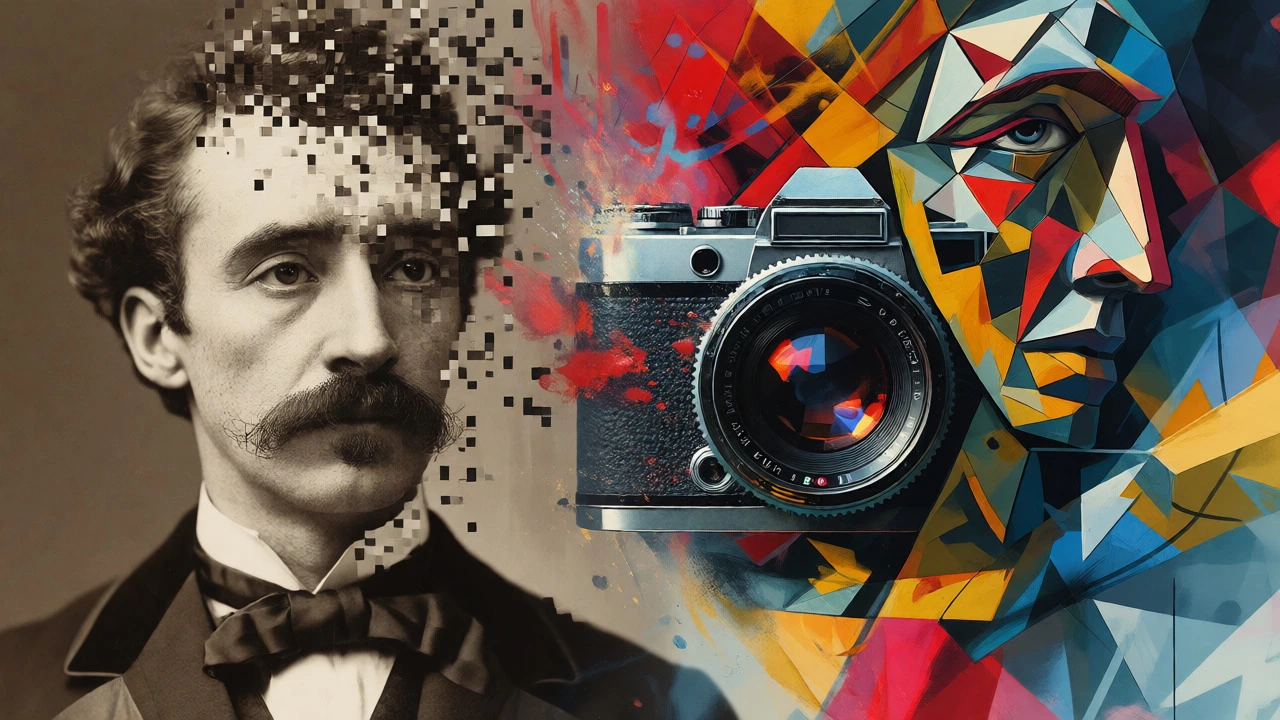
If you grew up thinking art should look like a photograph or tell a clear story, modern art feels broken. That’s not your fault. For centuries, artists were hired to document reality-kings, battles, religious scenes. Then, in the late 19th and early 20th centuries, technology stole that job. Photography arrived. Suddenly, painting didn’t need to be a camera anymore. Artists had to find new reasons to exist. They stopped copying the world and started interpreting it, questioning it, or just playing with color and form. If you’re trying to judge a Rothko by how realistic the paint looks, you’re using the wrong metric. You’re judging a song by how much it sounds like a drum.
The Camera Killed Realism (And Changed Everything)
To understand why modern art looks "weird," you have to look at what came before it. Before the 1850s, if you wanted to remember your grandfather, you paid an artist to paint him. Accuracy was the gold standard. If the nose was off, the painter got fired. But when cameras became affordable, realism lost its monopoly on truth. Why spend months perfecting a lifelike portrait when a snapshot could do it in seconds?
Artists panicked, then adapted. They realized they could show things cameras couldn’t capture: emotions, dreams, time passing, or pure energy. Pablo Picasso didn’t paint faces incorrectly; he painted them from multiple angles at once. He was showing you the concept of a face, not just the surface. When you see a distorted figure in a museum, ask yourself: "What is this artist trying to make me feel, rather than what are they trying to show me?"
This shift created a gap between expectation and reality. Most people still expect art to mirror life. When it doesn’t, we assume the artist lacks skill. In reality, many modern artists mastered traditional techniques first. Salvador Dalí, famous for his melting clocks, could draw hyper-realistic portraits. He chose abstraction because it communicated better. Skill is no longer about imitation; it’s about intention.
It’s Not About What It Is, It’s About What It Means
Here is the biggest hurdle for viewers: Conceptual Art. In this genre, the idea is more important than the object. Think of Marcel Duchamp’s "Fountain"-a urinal signed "R. Mutt." Many people say, "My kid could do that." True. But his kid didn’t. Duchamp challenged the definition of art itself. He asked: Is art made by the hand, or by the mind?
When you look at conceptual work, stop looking for beauty. Look for context. Why did the artist choose this specific object? What social norm are they poking fun at? Often, the difficulty comes from missing the cultural reference. It’s like hearing a joke where you don’t know the background story. Once you know the context, the piece clicks. It stops being a random object and starts being a statement.
| Movement | Main Goal | What to Look For | Common Misconception |
|---|---|---|---|
| Impressionism | Capture light and fleeting moments | Visible brushstrokes, outdoor settings | Painters were lazy or unskilled |
| Cubism | Show multiple perspectives simultaneously | Geometric shapes, fragmented forms | The artist can’t draw straight lines |
| Abstract Expressionism | Express raw emotion through action | Drip patterns, large scale, energy | It’s just random splatter |
| Minimalism | Reduce art to essential elements | Simplicity, industrial materials, space | It’s too simple to be art |
Why Do We Feel Stupid in Galleries?
Galleries are designed to intimidate. White walls, hushed tones, and plaques filled with jargon create an atmosphere of exclusivity. This is partly historical. For decades, art criticism was written by academics for other academics. Terms like "post-structuralist deconstruction" aren’t helpful if you just want to enjoy a painting. But recently, museums have tried to break down these barriers.
Part of the difficulty is also psychological. We are taught to seek "correct" answers. In school, math problems have one right solution. Art doesn’t. When you stare at a Jackson Pollock drip painting, there is no hidden code to crack. There is only your reaction. Do you feel chaos? Calm? Anger? Your interpretation is valid. The fear of being "wrong" paralyzes many viewers. Release that pressure. If a piece makes you feel nothing, that’s data too. Maybe it’s not for you. That’s okay.
Another factor is the sheer volume of output. Since the mid-20th century, the definition of art expanded to include everything from banana duct-taped to a wall (Maurizio Cattelan’s "Comedian") to digital NFTs. When anything can be art, the filter disappears. Without a shared standard of quality, judgment becomes subjective and exhausting.
Visual Literacy: Learning to Read Art
You wouldn’t expect to read French without learning the alphabet. Similarly, understanding modern art requires building visual literacy. This means recognizing the tools artists use to communicate. You don’t need a degree, but knowing a few basics helps immensely.
- Color Theory: Warm colors advance toward you; cool colors recede. Artists use this to create depth or tension without perspective lines.
- Composition: Where does your eye go first? Is the balance symmetrical (stable) or asymmetrical (dynamic)?
- Texture: Is the surface rough or smooth? Texture adds tactile sensation to a visual medium.
- Scale: Why is this tiny or massive? Scale dictates intimacy or dominance.
Try this exercise next time you visit a gallery. Pick one piece. Spend two minutes just looking. Don’t read the label yet. Ask three questions: 1. What is the dominant color, and how does it make me feel? 2. Where is my eye drawn to, and why? 3. If this piece could speak, what tone would it have? Shouting? Whispering? Then, read the label. See if your intuition matches the artist’s intent. Often, it does. You’re already smarter than you think.
The Role of Context and History
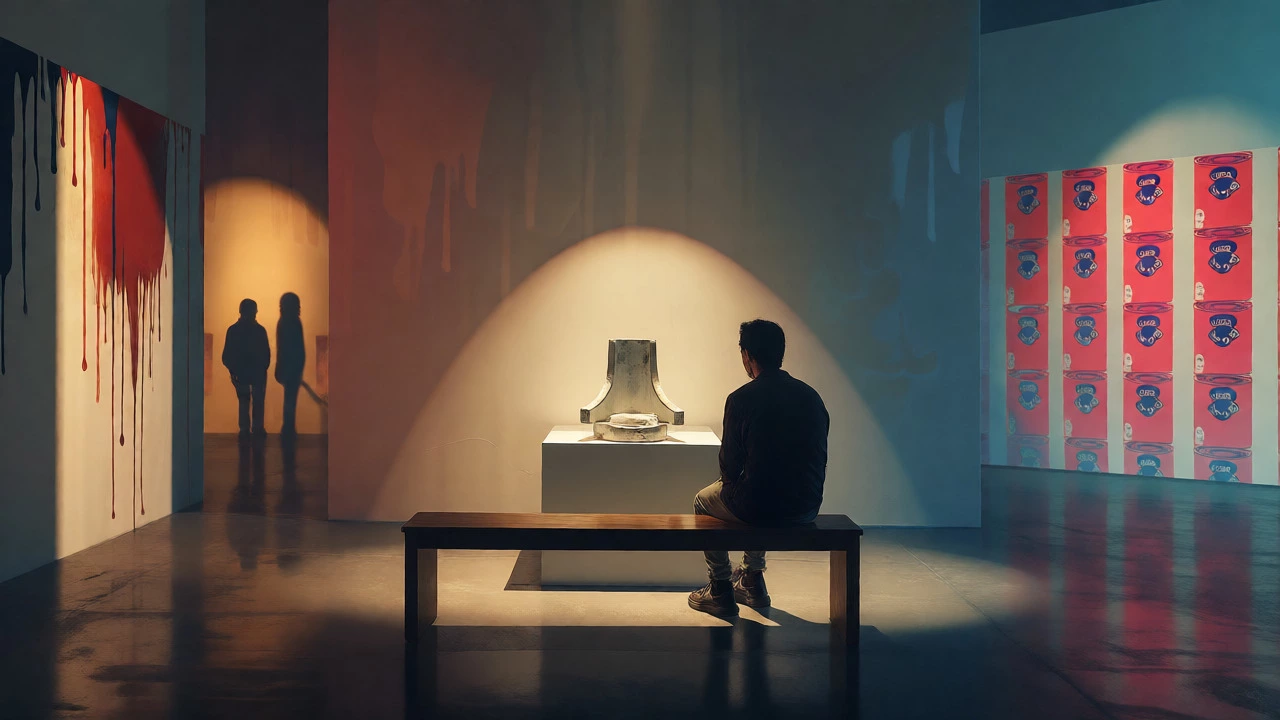
Art doesn’t happen in a vacuum. It reacts to politics, war, technology, and society. Guernica by Picasso is confusing as a standalone image-horses, bulls, jagged lines. But knowing it depicts the bombing of a Basque town during the Spanish Civil War changes everything. The chaos isn’t aesthetic; it’s traumatic.
Many modern works are responses to their time. Pop Art emerged in the 1960s as a reaction to consumer culture. Andy Warhol’s soup cans weren’t celebrating soup; they were critiquing mass production and uniformity. Understanding the historical moment unlocks the meaning. If a piece seems obscure, check the date. What was happening in the world then? Was there a war? A technological boom? A social movement? Art often mirrors these shifts.
This contextual layer is why some older modern art feels dated today. Styles evolve quickly. What was shocking in 1950 might seem tame now. But the underlying human concerns-identity, mortality, connection-remain relevant. The style fades; the message persists.
Practical Tips for Enjoying Modern Art
You don’t need to love every piece. You just need to engage with it. Here are some strategies to reduce the friction:
- Start Small: Don’t try to digest a whole museum in one day. Pick five pieces. Go deep on those.
- Use Audio Guides Wisely: They provide context, but don’t let them dictate your opinion. Listen, then form your own view.
- Talk to Staff: Gallery guards and docents often know fascinating stories about the collection. Ask them, "Which piece do you personally like?" Their passion is contagious.
- Accept Ambiguity: Some art is meant to be unresolved. Let it sit with you. You might understand it better after lunch.
- Follow Your Gut: If a piece bores you, move on. Life is short. If it intrigues you, stay longer. There is no rulebook.
Remember, modern art invites participation. It’s a conversation, not a lecture. The artist offers a perspective; you offer your experience. Together, they create meaning. So next time you see a blank white canvas, don’t roll your eyes. Ask: What is the absence saying? Maybe it’s silence. Maybe it’s potential. Maybe it’s just white. And that’s enough.
Is modern art really just money laundering?
While the high-end art market does involve investment and tax strategies, reducing all modern art to finance ignores its cultural value. Museums, critics, and historians preserve these works because they reflect societal shifts. However, it is true that celebrity status and speculation drive prices, sometimes disconnecting value from artistic merit.
Do I need to know art history to enjoy modern art?
No. While context helps, emotional response is primary. Many people connect deeply with abstract or conceptual pieces without knowing the artist’s biography. Use labels and guides as optional aids, not prerequisites for enjoyment.
Why is abstract art so expensive?
Price in modern art is driven by scarcity, provenance (ownership history), and the artist’s reputation. An abstract painting by a renowned master is unique and cannot be replicated. Collectors pay for prestige and historical significance, not just labor hours.
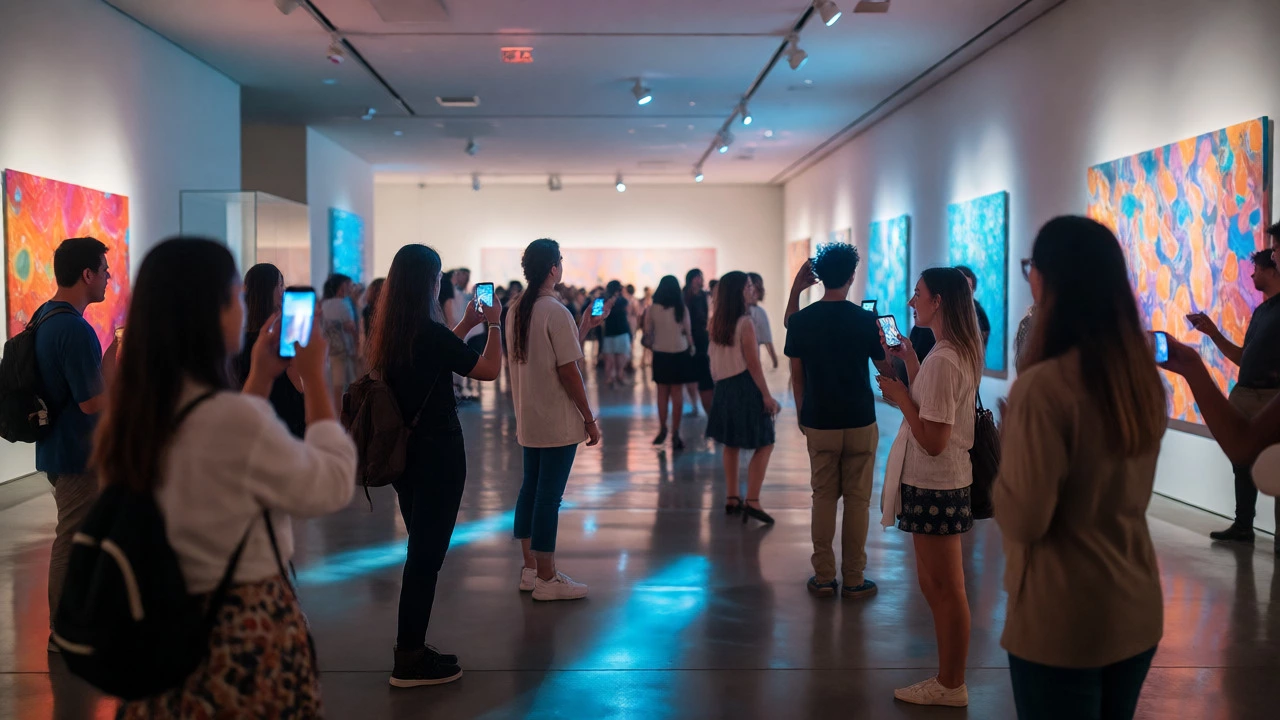
Can I take photos in modern art galleries?
Policies vary by institution. Many allow non-flash photography for personal use, but prohibit tripods and commercial shooting. Always check signs or ask staff. Some contemporary installations restrict photos to protect copyright or preserve the viewer’s experience.
What if I hate a famous piece of modern art?
That’s perfectly fine. Taste is subjective. Famous does not mean universally liked. Acknowledge your reaction, consider why it doesn’t resonate (is it the color? the size? the concept?), and move on. Disliking a piece is part of engaging with it.