Oil Painting Medium Checker
Choose Your Painting Medium
Select an oil to see if it's suitable for oil painting. Proper mediums are essential for artwork durability.
Linseed Oil
The professional standard
Olive Oil
Kitchen oil
Other Oil
Walnut, poppy, safflower
Medium Assessment
Select an oil to see the assessment.
Many artists wonder if they can swap out traditional linseed oil for something more common-like olive oil-when painting with oils. It sounds tempting: olive oil is in your kitchen, it’s cheap, and it’s natural. But using it in place of linseed oil? That’s where things go wrong. And not just a little wrong. You could ruin your painting before it even dries.
Why Linseed Oil Is the Standard
Linseed oil has been the backbone of oil painting for over 500 years. It’s not just a medium-it’s a drying oil, meaning it chemically reacts with oxygen and hardens into a tough, flexible film. This is what lets layers of paint stick together, stay stable, and last for centuries. Old Masters like Rembrandt and Vermeer relied on it. So did the Impressionists. Even today, professional-grade oil paints use refined linseed oil as their base.
It’s not just about drying. Linseed oil has the right viscosity-it’s thick enough to hold brushstrokes but thin enough to mix smoothly with pigment. It also yellows slightly over time, which actually helps warm tones like skin and golds look richer. Modern artists can choose cold-pressed, refined, or stand oil versions depending on whether they want faster drying, less yellowing, or a glossier finish.
What Happens When You Use Olive Oil
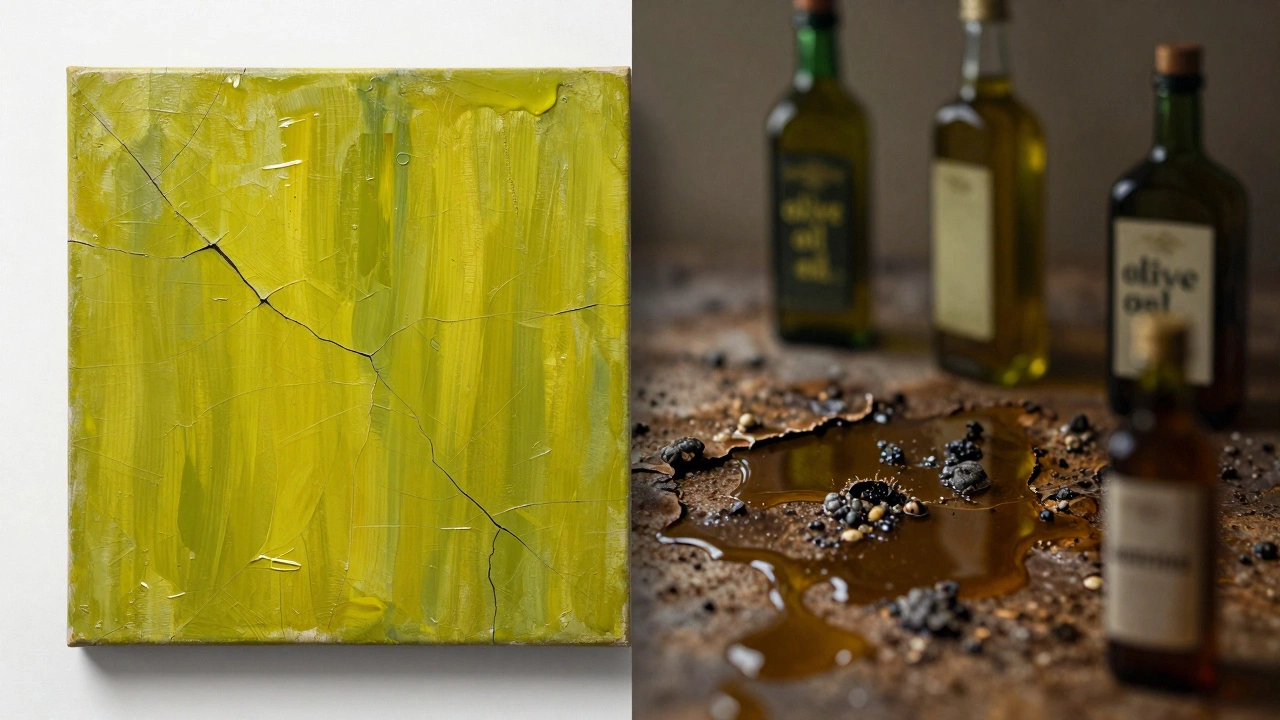
Olive oil is a non-drying oil. That means it doesn’t harden. Ever. It stays sticky, soft, and oily. If you mix it into your paint, your brush won’t clean easily. Your canvas will feel greasy for months. And after a year? The paint layer might still be tacky. You’ll get dust, dirt, and even insects stuck to your painting.
Worse, olive oil oxidizes differently than linseed oil. Instead of forming a stable film, it breaks down into rancid compounds. That smell? Yeah, that’s not just unpleasant-it’s a sign your painting is chemically degrading. Over time, the paint film will crack, darken unevenly, and eventually flake off. Some artists have tried olive oil on small test panels and watched the surface turn brown and sticky within six months.
There’s no historical record of any serious artist using olive oil as a primary medium. Even in the Renaissance, when artists experimented with everything from walnut oil to poppy seed oil, olive oil was never considered for fine art. It was used for lamps, cooking, and soap-not canvases.
What About Other Kitchen Oils?
Same problem. Sunflower oil, safflower oil, canola oil-all non-drying. They’re used in some modern water-mixable oil paints as additives, but only in tiny amounts and never as the main binder. Even then, they’re stabilized with chemical additives to prevent rancidity. You can’t just pour olive oil into your tube of cadmium red and expect it to behave like professional paint.
Some DIY tutorials online suggest using olive oil with turpentine as a cheap medium. That’s a bad idea. Turpentine evaporates quickly, leaving the olive oil behind. The result? A painting that looks fine at first, then slowly turns into a sticky mess. Artists who’ve tried this report their work becoming unusable within a year. One painter in Berlin had to scrap a 3-foot landscape because the surface started oozing oil two years after completion.
What Should You Use Instead?
If you’re looking for alternatives to linseed oil, there are plenty of safe, proven options:
- Walnut oil - Dries slower than linseed, less yellowing, great for light colors.
- Poppy seed oil - Very pale, ideal for whites and pastels, but takes longer to dry.
- Stand oil - Linseed oil that’s been heated to thicken it. Gives a smooth, enamel-like finish.
- Alkyd mediums - Synthetic, dries fast, good for layering. Brands like Liquin are widely used by professionals.
All of these are available at art supply stores for under $15 a bottle. They’re designed for painting. They dry properly. They won’t ruin your work.
Why This Myth Persists
Why do people keep thinking olive oil works? Partly because it’s familiar. You know how it smells. You’ve used it to cook. It feels natural, so it must be safe for art. But art materials aren’t food. What’s safe to eat isn’t safe to paint with.
Another reason? Online videos. Some influencers show “quick oil painting hacks” using household items. They’ll dip a brush in olive oil and say, “See? It blends beautifully!” What they don’t show is what happens six months later. The painting looks great on Instagram-but it’s a time bomb.
There’s also a romantic idea that old artists used whatever was handy. But they didn’t use olive oil. They used walnut oil, poppy oil, and linseed-oils specifically chosen for their drying properties. They knew the difference.
What If You Already Used Olive Oil?
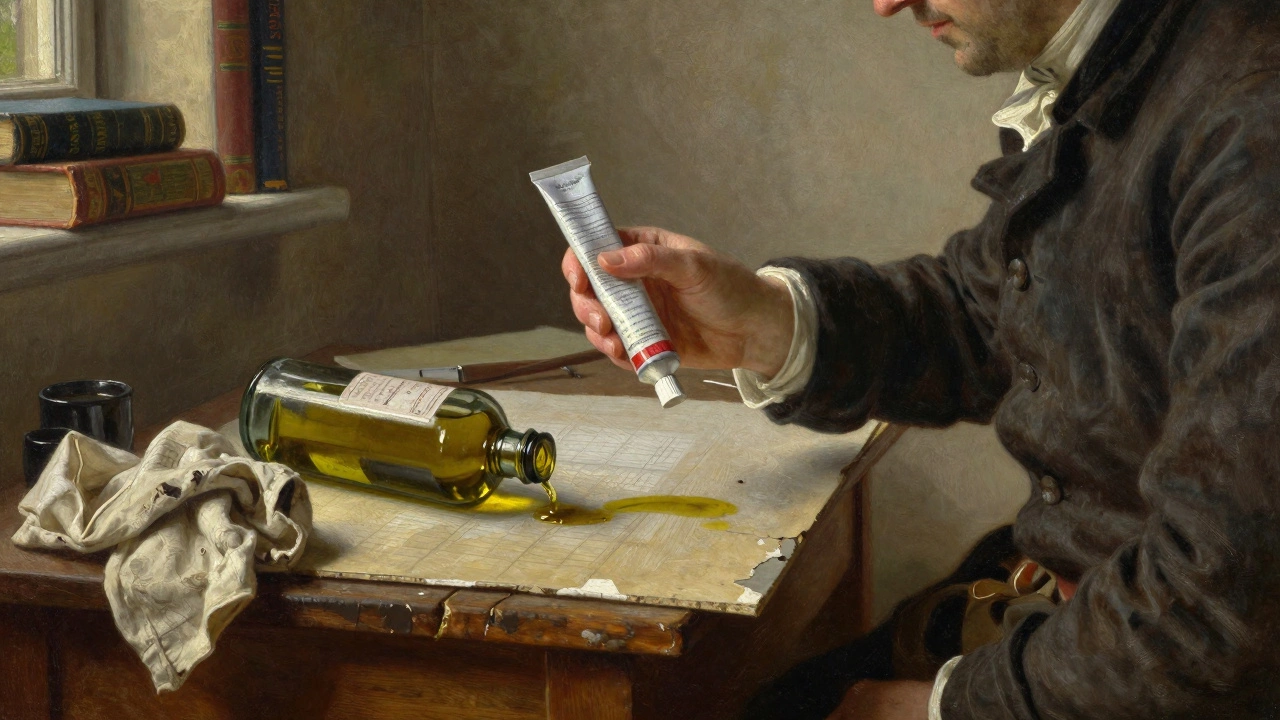
If you’ve already painted with olive oil, don’t panic-but don’t ignore it either. If the painting is still wet, stop adding more. Let it dry in a dust-free, ventilated space for at least six months. Even then, it may never fully harden.
If it’s already dry to the touch but still feels oily, you might be able to apply a thin layer of retouch varnish to seal the surface. But this is only a temporary fix. The underlying paint will remain unstable. Long-term, the only real solution is to repaint the piece using proper materials.
There’s no miracle solvent or cleaner that will remove olive oil from dried paint. Don’t try rubbing alcohol or turpentine on it-that will just damage the paint film further.
Final Verdict
No, you cannot use olive oil instead of linseed oil for oil painting. Not safely. Not reliably. Not if you want your artwork to last.
Oil painting is a craft built on chemistry, not convenience. Using the wrong medium isn’t a creative choice-it’s a risk to your time, your materials, and your reputation as an artist. Your paintings deserve better than kitchen oil.
Stick with linseed, walnut, or poppy seed oil. They’re affordable, proven, and made for artists. Your future self-and your paintings-will thank you.