Abstract Art Brain Impact Calculator
Based on neuroaesthetic research, estimate how specific abstract art characteristics affect brain regions and emotional states.
Neurological Analysis
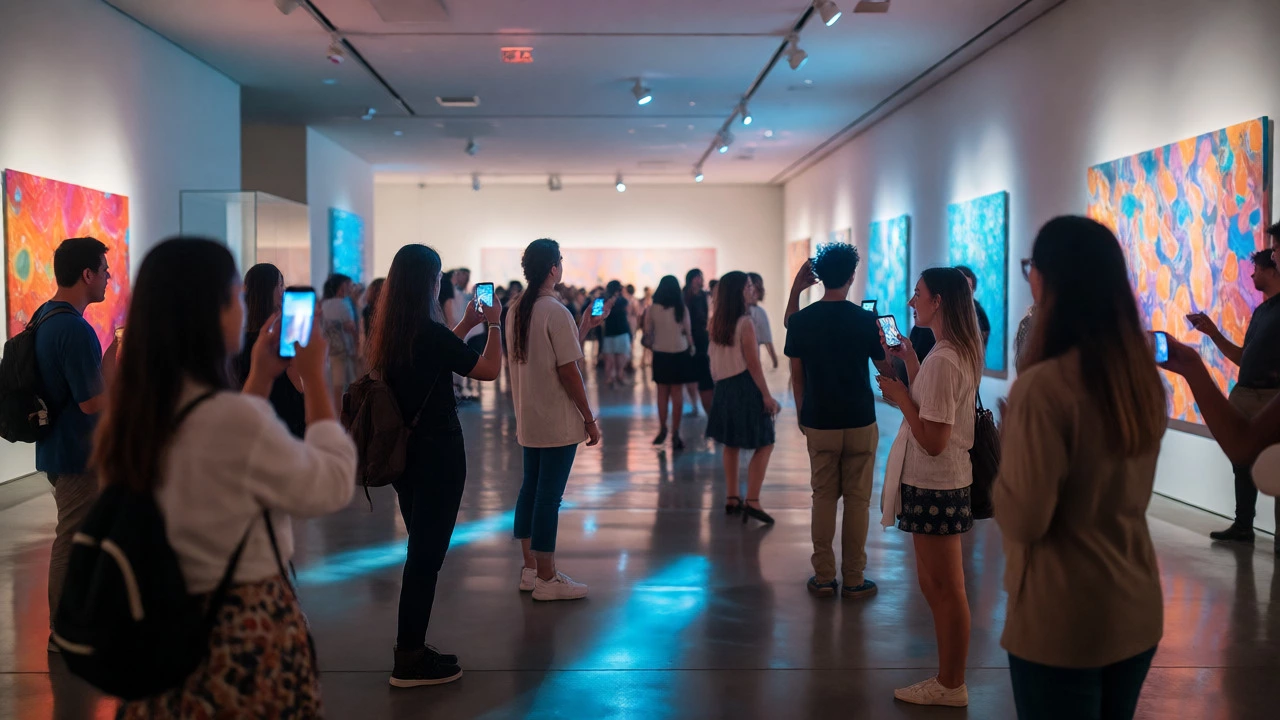
Walk into a gallery and stare at a canvas that looks like a spilled box of paint. You might feel confused, bored, or even annoyed. But if you stand there for another minute, something shifts. Your eyes start tracing shapes. Your mood lifts. Or maybe it drops. This reaction isn't random. It’s biology.
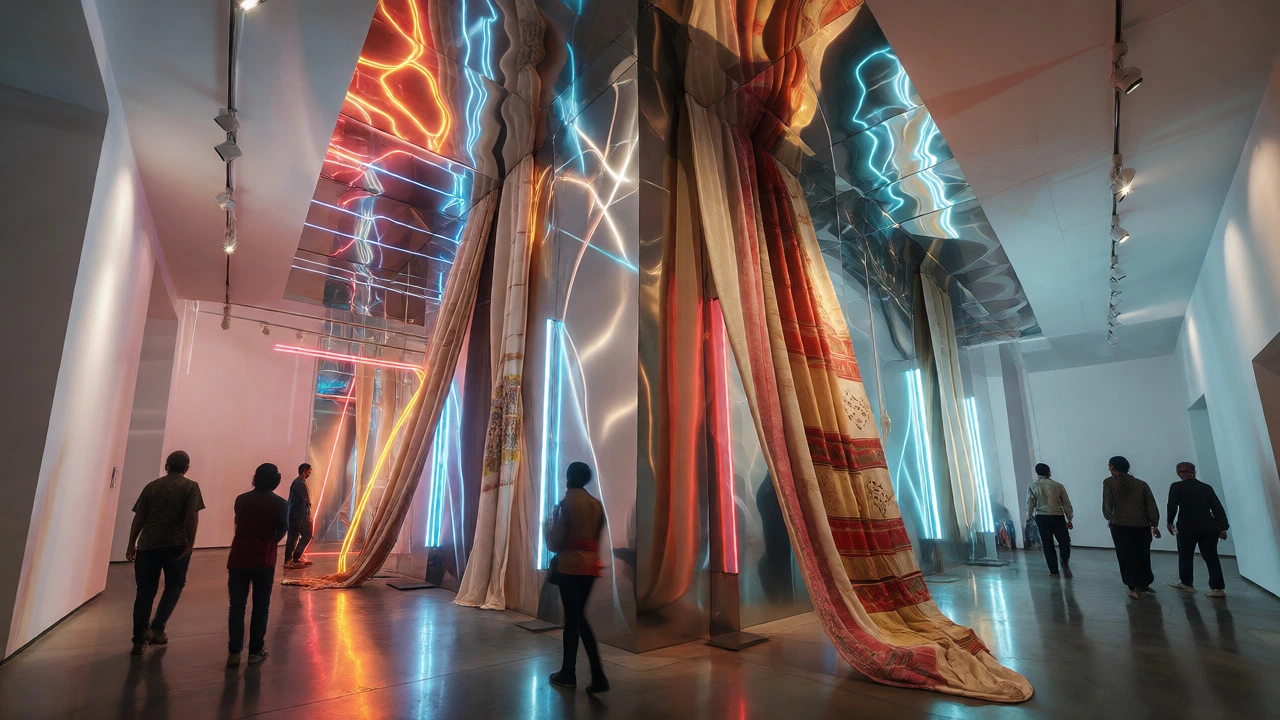
We often think of art appreciation as a learned skill-something you pick up from history books or museum guides. But recent research in neuroaesthetics, the study of how we process beauty, shows that our brains react to abstract art in very specific ways. Unlike realistic paintings, which give us clear subjects to identify, abstract works force our neural networks to work harder, creating unique patterns of activation that can influence emotion, memory, and even stress levels.
The Brain on Ambiguity: Why We Struggle With Non-Representational Art
When you look at a photograph of a tree, your brain takes a shortcut. The visual cortex identifies the object instantly. You recognize "tree," and the process is largely complete. But when you look at a Kandinsky or a Rothko, there is no tree. There is only color, line, and form. This lack of immediate recognition triggers a different neurological pathway.
This is where the concept of perceptual ambiguity comes in. Our brains are prediction machines. They constantly try to make sense of the world by matching what they see with past experiences. When abstract art denies this match, the brain doesn't just shut down. Instead, it engages in a search for meaning. This effort activates the prefrontal cortex, the area responsible for complex thinking and decision-making.
Some people find this frustrating. Others find it liberating. The difference often lies in cognitive flexibility-the ability to hold multiple interpretations at once. Studies suggest that individuals who score high in openness to experience, one of the Big Five personality traits, tend to enjoy abstract art more because their brains are less threatened by uncertainty. For them, the struggle to interpret the image is part of the pleasure.
Color, Emotion, and the Limbic System
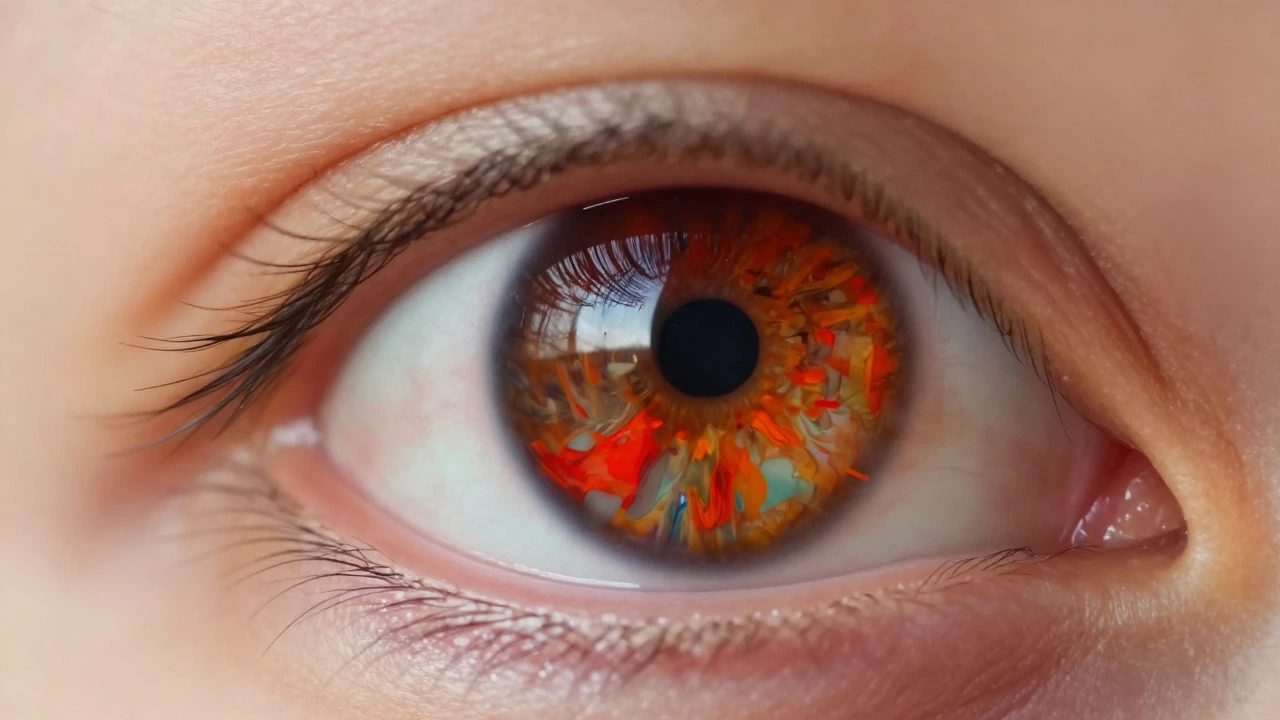
If shape forces the brain to think, color makes it feel. Abstract art relies heavily on chromatic intensity to bypass logical processing and hit the emotional centers directly. The limbic system, particularly the amygdala, responds rapidly to color stimuli before we even consciously register the image.
- Warm tones (reds, oranges): These colors tend to increase heart rate and arousal. In abstract compositions, large fields of red can create a sense of urgency or passion, triggering a mild fight-or-flight response that feels exciting rather than dangerous.
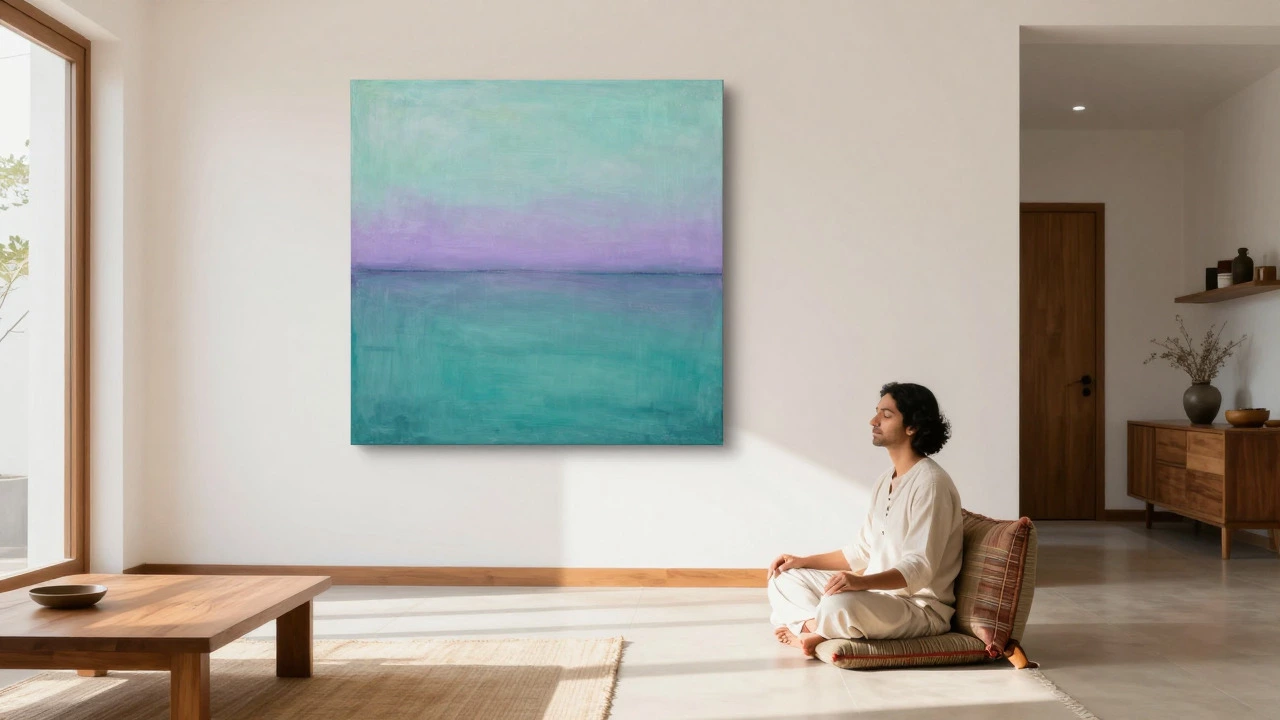
- Cool tones (blues, greens): These generally lower physiological arousal. A Mark Rothko color field painting, dominated by deep blues or somber blacks, can induce a meditative state, slowing down breathing and reducing anxiety.
- High contrast: Sharp juxtapositions of black and white or complementary colors create visual tension. This tension keeps the viewer engaged, preventing habituation (the brain's tendency to ignore static stimuli).
This direct link between color and emotion is why abstract art is often used in therapeutic settings. It allows patients to project their internal states onto the canvas without the filter of narrative. You don't have to understand the story; you just have to feel the impact.
Pattern Recognition and the Visual Cortex
Even without recognizable objects, abstract art is full of structure. Lines, curves, and geometric forms engage the primary visual cortex (V1) and higher-order areas like V4, which processes color and shape complexity. The brain loves patterns. It seeks symmetry, rhythm, and repetition.
When an abstract piece offers a coherent pattern, the brain releases dopamine-a reward chemical associated with pleasure and learning. This is why certain geometric abstractions feel "right" or satisfying. Conversely, chaotic compositions may cause cognitive dissonance, leading to discomfort. However, some viewers appreciate this chaos because it breaks routine mental models, offering a novel sensory experience.
Consider the work of Piet Mondrian. His grids of primary colors and black lines are simple, yet they require precise visual tracking. The eye moves along the lines, finding balance and equilibrium. This movement stimulates neural pathways related to spatial awareness and order. It’s a quiet workout for the visual system.
Memory, Association, and Personal Meaning
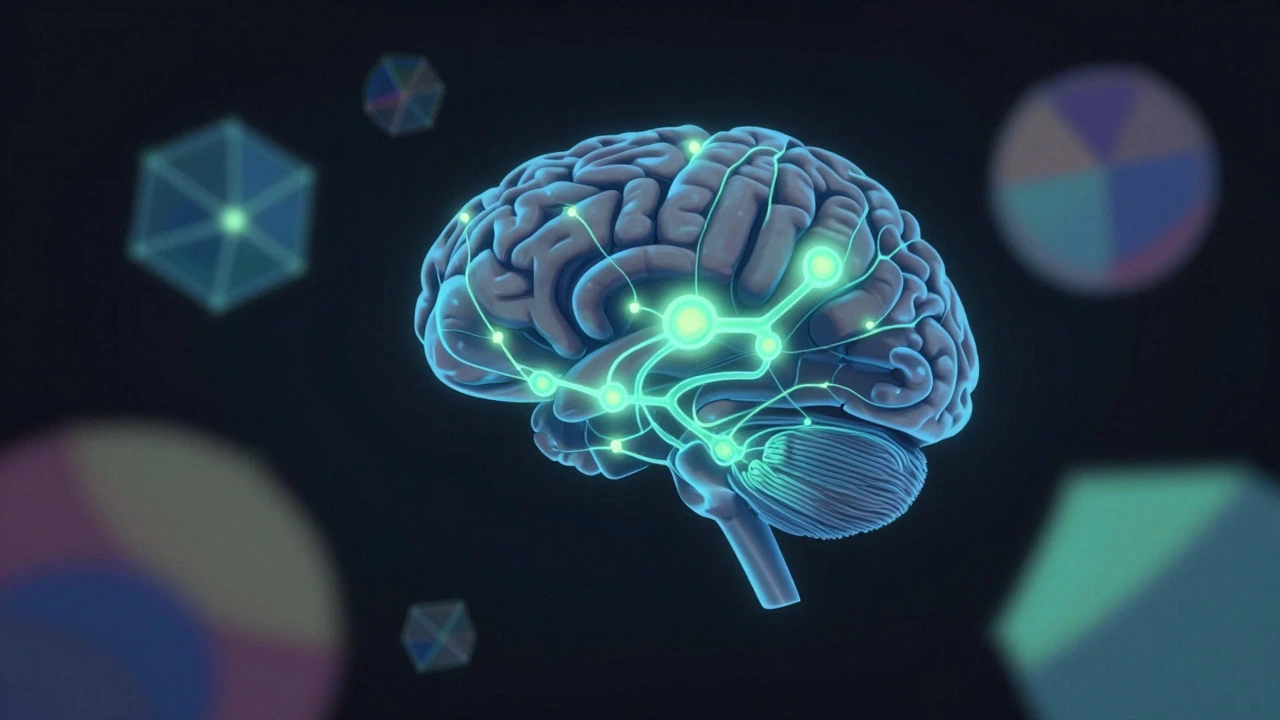
Abstract art is subjective not just because it lacks subject matter, but because it invites personal association. Since there is no literal depiction, the brain fills in the gaps using memories and emotions tied to the viewer’s own life. A swirl of blue might remind someone of the ocean, while jagged yellow lines could evoke sunlight through leaves.
This process involves the hippocampus, the brain region critical for memory formation. By linking new visual stimuli to existing memories, abstract art creates stronger neural connections. This is why you might remember an abstract painting long after leaving the gallery-it was personalized by your mind.
Research indicates that engaging with ambiguous images can enhance creative thinking. Because the brain is forced to generate its own interpretations, it practices divergent thinking-the ability to come up with multiple solutions to a problem. This is a valuable cognitive skill that extends beyond art appreciation.
Stress Reduction and Flow States
One of the most surprising benefits of viewing abstract art is its potential to reduce stress. When we encounter complex but non-threatening visual stimuli, we can enter a state of flow-a focused immersion where time seems to slow down. This state is associated with reduced activity in the default mode network (DMN), the brain system active during mind-wandering and self-referential thought.
Since much of our daily stress comes from rumination (replaying past events or worrying about the future), suppressing the DMN can provide significant relief. Abstract art, by demanding attention to the present moment, helps quiet this internal chatter. It anchors you in the now.
Art therapy programs often use abstract drawing and viewing techniques to help clients manage anxiety. The act of creating or observing non-representational forms allows for emotional expression without the pressure of accuracy or judgment. It’s a safe space for the brain to explore feelings freely.
| Brain Region | Realistic Art Response | Abstract Art Response |
|---|---|---|
| Visual Cortex (V1-V4) | Rapid object identification | Sustained pattern analysis |
| Prefrontal Cortex | Low engagement (familiarity) | High engagement (interpretation) |
| Amygdala | Emotional response to content | Emotional response to color/form |
| Hippocampus | Contextual memory retrieval | Personal association creation |
| Dopamine System | Reward from recognition | Reward from discovery/insight |
Individual Differences: Why Reactions Vary
Not everyone reacts to abstract art the same way. Genetics, culture, and prior exposure all play roles. People with higher levels of trait anxiety may find ambiguous images unsettling, interpreting the lack of clarity as a threat. Those with artistic training may focus on technique and composition, analyzing brushstrokes and color theory rather than emotional resonance.
Cultural background also matters. Western viewers are often trained to look for realism and perspective, so abstract art can seem like a violation of natural laws. In contrast, cultures with traditions of calligraphy or symbolic iconography may be more comfortable with non-literal representation. Understanding these differences helps explain why abstract art can be polarizing.
Age is another factor. Children often embrace abstract art readily, seeing possibilities in every shape. As we age, our brains become more rigid in their expectations, making it harder to appreciate ambiguity unless we actively train ourselves to do so.
Practical Applications: Using Abstract Art for Mental Well-being
You don’t need to be an art critic to benefit from the neurological effects of abstract art. Here are some practical ways to incorporate it into your life:
- Create a calming corner: Place abstract pieces with cool tones and soft gradients in spaces where you relax. This can help lower cortisol levels after a stressful day.
- Use for brainstorming: Hang dynamic, high-energy abstract art in creative workspaces. The visual stimulation can boost divergent thinking and spark new ideas.
- Practice mindful viewing: Spend five minutes staring at an abstract piece. Notice what emotions arise. Don’t judge them; just observe. This practice strengthens mindfulness skills.
- Engage in abstract creation: Try painting or drawing without a goal. Let your hand move freely. This process can be deeply therapeutic, releasing pent-up emotions through color and motion.
By understanding how abstract art affects the brain, we can move beyond questions of "what does it mean?" to "how does it make me feel?" This shift in perspective opens up a richer, more personal relationship with art-one that is grounded in neuroscience and accessible to everyone.
Why do some people hate abstract art?
Dislike often stems from cognitive friction. When the brain cannot quickly identify an object, it perceives ambiguity as a problem to solve. If the viewer lacks patience or cognitive flexibility, this unresolved tension feels frustrating rather than intriguing. Additionally, cultural conditioning towards realism can make non-representational forms seem meaningless or childish.
Does looking at abstract art improve creativity?
Yes, studies suggest that engaging with abstract art can enhance divergent thinking. Because the brain must generate its own interpretations, it practices forming novel connections between concepts. This mental exercise can translate to improved problem-solving skills in other areas of life.
Which colors in abstract art are best for relaxation?
Cool colors like blues, greens, and soft purples are generally associated with calmness. They tend to lower heart rate and reduce physiological arousal. Large, solid fields of these colors, such as those found in Color Field painting, are particularly effective for inducing a meditative state.
Can abstract art help with anxiety?
For many people, yes. By focusing attention on the present moment and suppressing the default mode network (responsible for rumination), abstract art can provide a mental break from anxious thoughts. However, highly chaotic or intense abstract pieces may exacerbate anxiety in sensitive individuals, so choosing calming compositions is key.
Is the enjoyment of abstract art genetic?
Partially. Research indicates that personality traits like openness to experience, which have a genetic component, correlate with a preference for abstract art. However, environmental factors like education and exposure also play significant roles in shaping aesthetic preferences over time.