Art Exhibition Pricing Calculator
Calculate fair prices for your artwork using the formula from the article: Material cost + (Time × Hourly rate) + Profit margin.
Example: Material cost $80 + (20 hours × $25) + 15% profit = $667 (rounded to $650)
Your Recommended Price
Based on $0 materials + 0 hours at $0/hour + 15% profit margin
Hosting your first art exhibition can feel overwhelming. You’ve spent months, maybe years, creating work. Now you need to get it seen. But you don’t need a big gallery, a huge budget, or connections in the art world to make it happen. What you need is a clear plan, a few practical steps, and the courage to put your work out there.
Start with a clear theme
Your exhibition isn’t just a pile of paintings on the wall. It’s a story. Without a theme, viewers won’t know where to look or what to feel. A theme gives your show direction. It ties everything together.Think about what connects your pieces. Is it a color palette? A feeling? A personal experience? A social issue? Maybe all your work explores isolation after moving cities. Or maybe you’re using recycled materials to comment on waste. Don’t overcomplicate it. One strong idea is better than five vague ones.
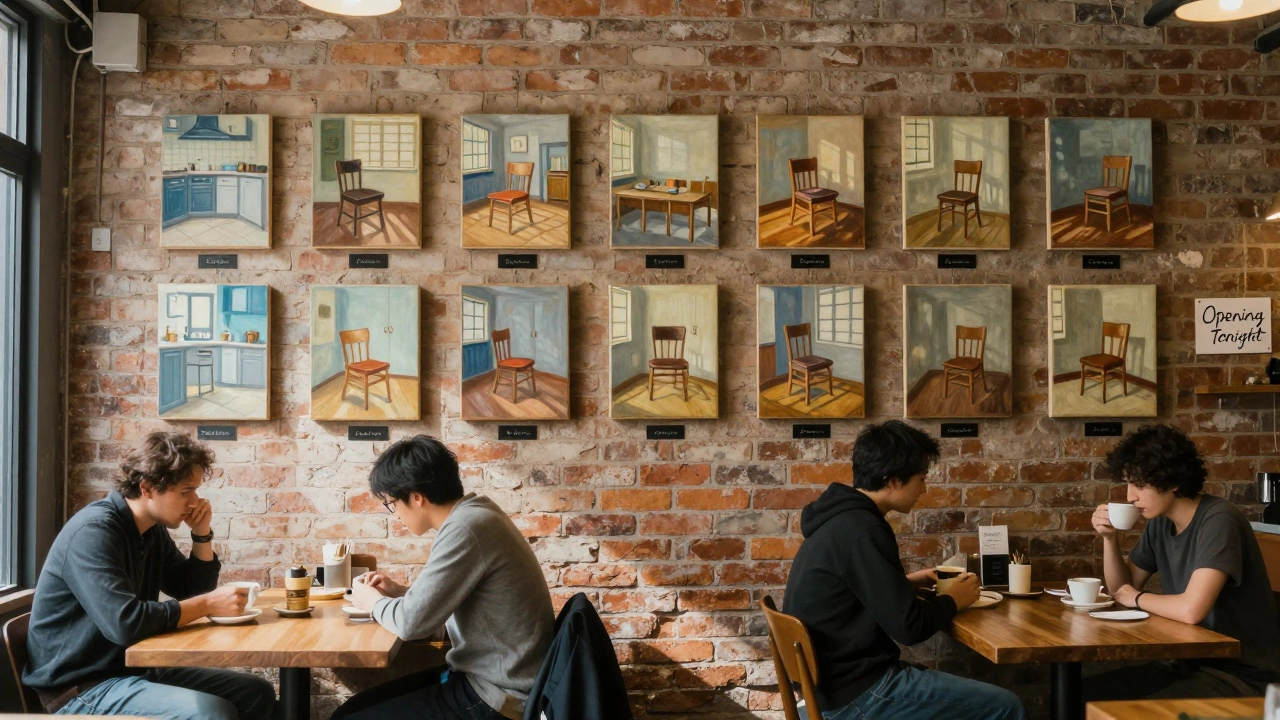
For example, a show called “Empty Chairs” featured 12 small oil paintings of unoccupied chairs in different rooms - a kitchen, a classroom, a hospital waiting area. The theme wasn’t about chairs. It was about absence. People stayed longer. They talked. They left notes. That’s the power of a focused theme.
Choose the right space
You don’t need a white-walled gallery. In fact, most first-time artists start somewhere smaller and more personal. Think about places that already get foot traffic and feel open to art.Here are real options that worked for others:
- A local café with empty walls - owners often welcome art in exchange for a small cut of sales or free coffee for the staff.
- A community center or library - many have dedicated exhibition corners and don’t charge rent.
- A vacant retail space - ask the landlord if you can use it for a weekend. Many are happy to fill empty space with something lively.
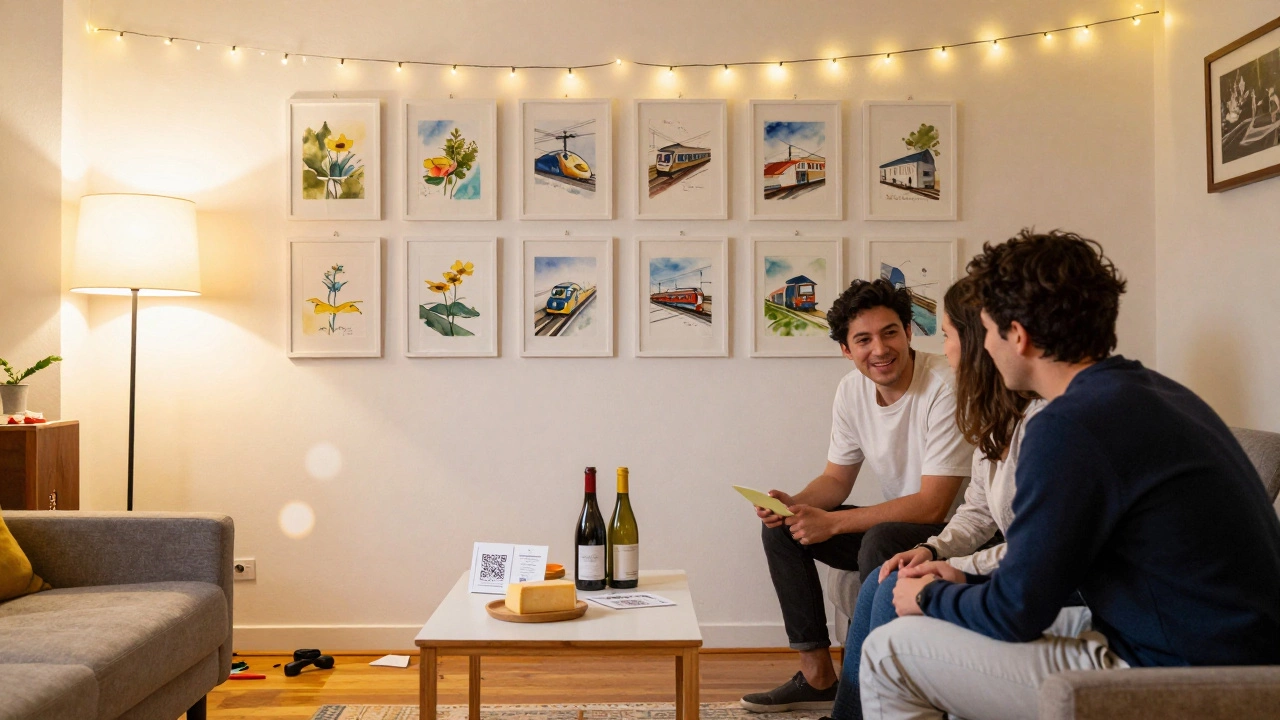
- Your own living room - yes, really. Host an open house on a Saturday afternoon. Invite friends, neighbors, and people from your art group.
When choosing a space, consider lighting, wall space, and accessibility. Natural light is best for viewing art. Avoid spaces with direct sunlight hitting your pieces. Make sure there’s enough room for people to walk around without bumping into paintings. And if you’re in a public space, check if you need a permit.
Prepare your artwork
Your pieces need to look professional - not because you’re trying to impress critics, but because you’re asking people to take your work seriously.Here’s what to do:
- Frame or mount everything consistently. Use the same type of frame or backing for all pieces. Mismatched frames look messy.
- Label each piece clearly. Include the title, medium, and price. Use small, clean cards on the wall or attached to the frame. Avoid handwriting unless it’s part of your style.
- Make sure everything is ready to hang. Use D-rings and wire, not just nails or tape. Test the hanging system on a wall before the show.
- If you’re showing prints, use archival paper and UV-protective glass. Faded prints look cheap.
One artist I know hung 15 small watercolors in identical white frames with black labels. People thought she’d hired a designer. She didn’t. She just paid attention to details.
Price your work fairly
Pricing art is hard. Too low, and people think it’s not valuable. Too high, and no one buys anything.Use this simple formula: Material cost + Time × your hourly rate + 10-20% for profit.
Let’s say a painting took you 20 hours. You value your time at $25/hour. Materials cost $80. That’s $500 + $80 = $580. Add 15% → $667. Round to $650. Done.
Don’t price based on what others charge. Price based on your own effort and materials. If you’re new, it’s okay to price lower than established artists. But don’t give your work away. It sets a bad precedent.
Offer a range. One small piece at $120, one medium at $350, one large at $800. That gives people options.
Plan your opening night
The opening is your chance to connect with people. It’s not a party. It’s a conversation starter.Here’s what to do:
- Invite your inner circle - friends, family, fellow artists, teachers. Ask them to bring one person each.
- Keep it simple. Coffee, wine, or tea. Maybe some cheese and crackers. Don’t go overboard.
- Be ready to talk about your work. Not in a lecture. Just answer questions honestly. “Why did you choose blue?” “What inspired this piece?”
- Have a sign-up sheet or QR code for your email list. People who show interest are your future buyers and supporters.
- Take photos - of the show, of people looking at your art, of you smiling. Use these later for social media.
One artist hosted her opening on a Thursday night. Only 22 people came. But three bought work. One of them was a local curator. That show led to her first gallery representation.
Use social media smartly
You don’t need 10,000 followers. You need 50 people who care.Start posting two weeks before the show:
- Share behind-the-scenes photos - your studio, your hands painting, your workspace.
- Post one piece at a time with a short caption: “This is ‘Morning Train,’ painted after my commute. It’s part of a show opening Dec 12 at The Book Nook.”
- Tag the venue, local art groups, and artists you admire. Don’t spam. Just be real.
- Run a tiny ad - $20 on Instagram to reach people within 10 km of the venue. Target people interested in local art, galleries, or painting.
Don’t post the whole show at once. Let people discover it slowly. People remember what they wait for.
Follow up after the show
The exhibition doesn’t end when the lights go off. That’s when the real work begins.Within 48 hours:
- Send a thank-you email to everyone who came. Include 2-3 photos from the show and a link to your website or Instagram.
- Reach out to the people who asked questions. Say: “Thanks for stopping by. I’d love to send you updates on new work.”
- Update your portfolio with the exhibition. Add the venue, dates, and any sales.
- Ask for feedback. Not “Was it good?” Ask: “What piece stayed with you? Why?”
Keep the momentum. Post a photo of the sold pieces with a note: “‘Ocean Drift’ found a home. Thank you.” People love to see their support make a difference.
What to avoid
Here are common mistakes first-time artists make:- Trying to show too much. Less is more. 8-12 strong pieces beat 30 weak ones.
- Not labeling work. People walk away because they don’t know what they’re looking at.
- Being afraid to talk. Silence makes people nervous. A simple “Hi, I’m the artist” goes a long way.
- Ignoring logistics. Check the weather. Have backup lighting. Bring extra tape, nails, and a ladder.
- Expecting to sell everything. Most first shows sell 2-4 pieces. That’s normal.
Next steps after your first show
After your first exhibition, you’ll know what works and what doesn’t. Use that.- Start planning your next one - even if it’s just a small group show with three other artists.
- Apply to open studio events or local art fairs. They’re low-pressure ways to get exposure.
- Build your email list. It’s your most valuable asset.
- Keep creating. The next show will be better because you did this one.
Your first exhibition isn’t about fame. It’s about proving to yourself that your work matters enough to be seen. That’s the real win.
Do I need a gallery to have my first art exhibition?
No. Most artists start without a gallery. You can host your first show in a café, community center, library, or even your home. Galleries are great for later, when you have a track record. For now, focus on showing your work where people already gather.
How many pieces should I show in my first exhibition?
8 to 12 pieces is ideal. Too few feels empty. Too many overwhelms viewers. Choose your strongest, most cohesive work. Quality beats quantity every time.
What if no one comes to my opening?
It happens. Even the best-planned shows have low turnout. Don’t take it personally. Focus on the people who do come. Talk to them. Take photos. Post about it. One genuine connection is worth more than 50 empty rooms.
Should I sell my art at my first exhibition?
Yes. Selling isn’t the goal - visibility is. But if you price your work fairly and make it easy to buy (cash, card, QR code), you’ll find buyers. Even one sale validates your work and gives you confidence for the next show.
How do I label my artwork properly?
Use small, clean labels with the title, medium, and price. Mount them on the wall near the piece or attach them to the frame. Use printed text, not handwriting, unless it’s part of your style. Avoid clutter. People should be able to read it from 1.5 meters away.
Can I host an art exhibition online instead?
You can, but a physical show builds deeper connections. Online shows are good for reaching more people, but they lack the emotional impact of standing in front of a real painting. Start with a real-space exhibition. Then use photos from it to build your online presence.