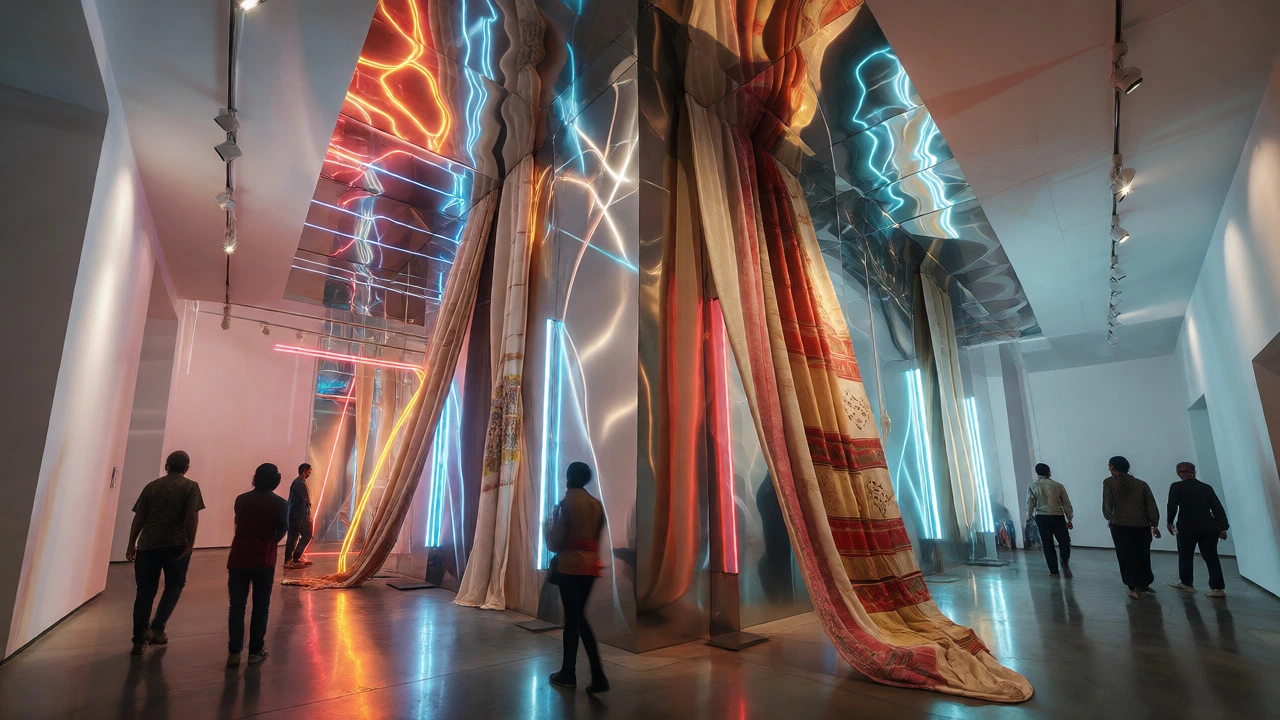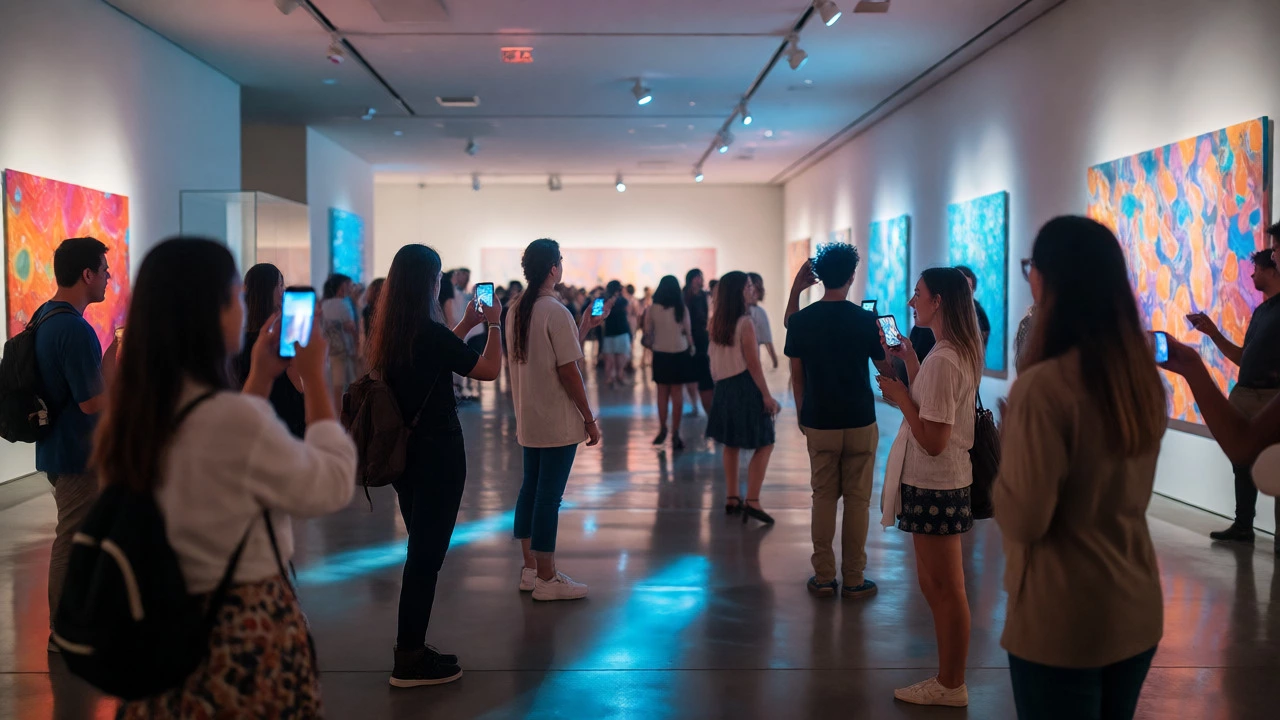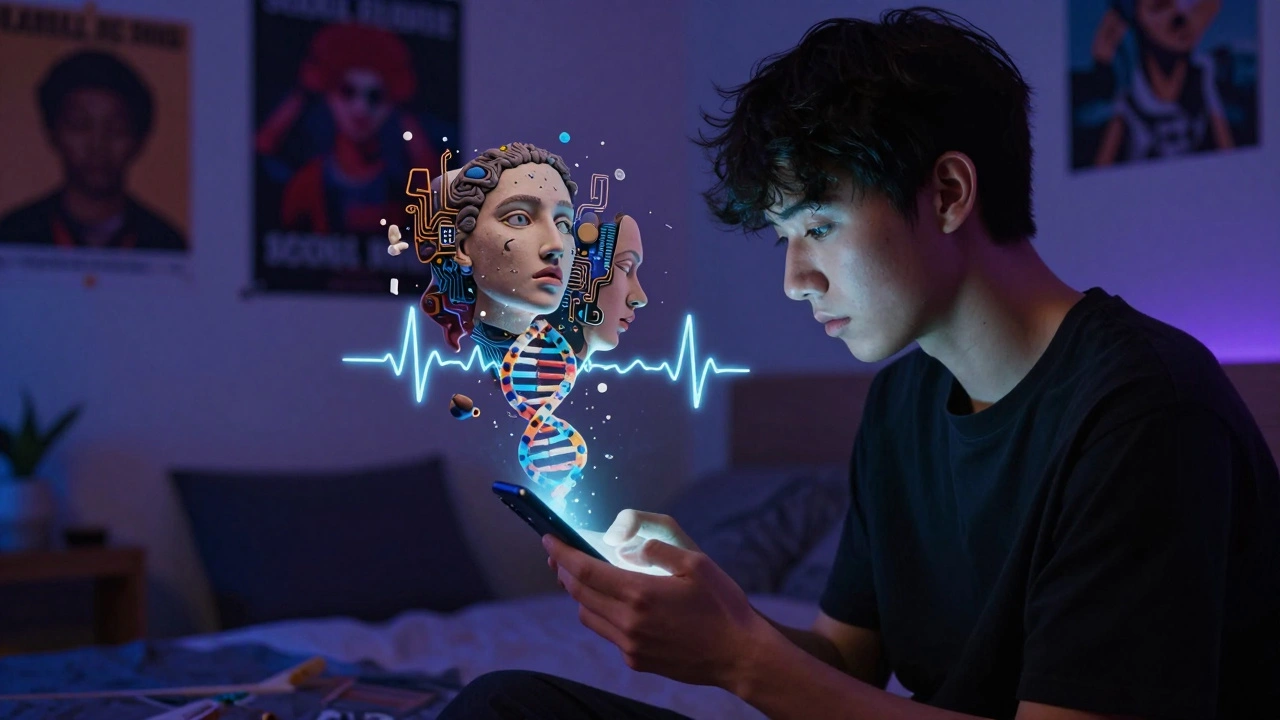
Contemporary art isn’t just what’s being made right now-it’s what’s challenging what art even means. Unlike movements from the past that had clear styles or techniques, today’s art is defined by ideas, context, and disruption. If you’re trying to understand what’s happening in galleries, museums, and even street corners, you need to look past brushstrokes and focus on the three dominant movements shaping the field in 2026.
1. Post-Internet Art
Post-Internet art doesn’t mean art made online. It means art shaped by the fact that the internet never went away. Artists born after 1990 didn’t learn to draw before they learned to scroll. Their work reflects how identity, memory, and emotion are now filtered through screens, algorithms, and digital noise.
Think of artists like Heather Dewey-Hagborg creates facial sculptures from DNA found in public trash, questioning surveillance and genetic privacy. Or Rafael Lozano-Hemmer builds interactive installations where crowds’ heartbeats control light patterns, turning collective emotion into public spectacle. Their tools aren’t brushes-they’re sensors, code, and data streams.
This movement rejects the idea of the solitary genius. Instead, it asks: Who owns your image when it’s uploaded? Can a meme be a masterpiece? Why does a viral video feel more real than a painting?
2. Climate Art (or Ecological Art)
Climate change isn’t a theme in contemporary art-it’s the foundation. Artists no longer just depict melting glaciers or polluted rivers. They use the materials of destruction to make the work itself.
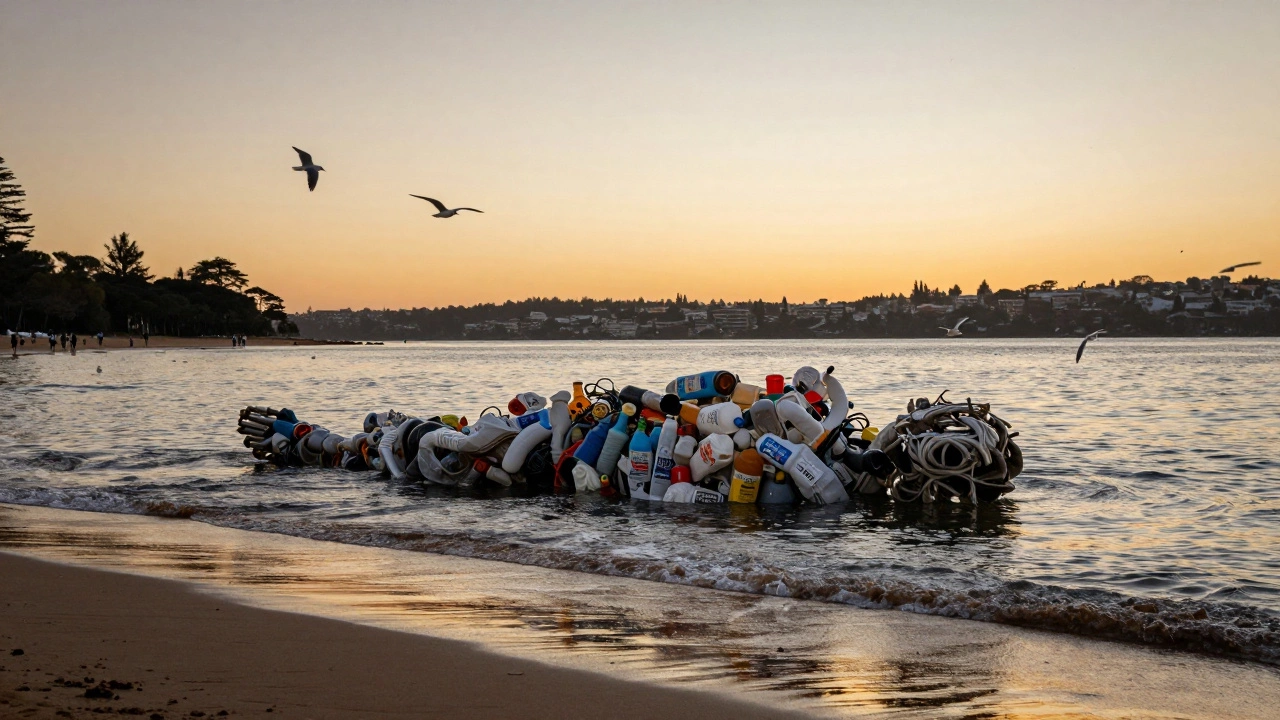
Olafur Eliasson has installed artificial glaciers in urban squares to melt slowly, forcing viewers to witness time and loss in real time. Agnes Denes planted a two-acre wheat field in downtown Manhattan in 1982, and her work still influences artists who grow food in abandoned lots or turn plastic waste into soil. In 2025, a group in Sydney turned 12 tons of ocean plastic into a floating sculpture that drifted into the harbor-visible only during low tide.
This isn’t activism disguised as art. It’s art that demands action. These works don’t hang on walls. They rot, grow, dissolve, or disappear. Their value isn’t in permanence-it’s in urgency.
3. Decolonial Art
For decades, Western museums defined what counted as "important" art. Today’s artists are dismantling that hierarchy-not by rejecting tradition, but by resurrecting it.
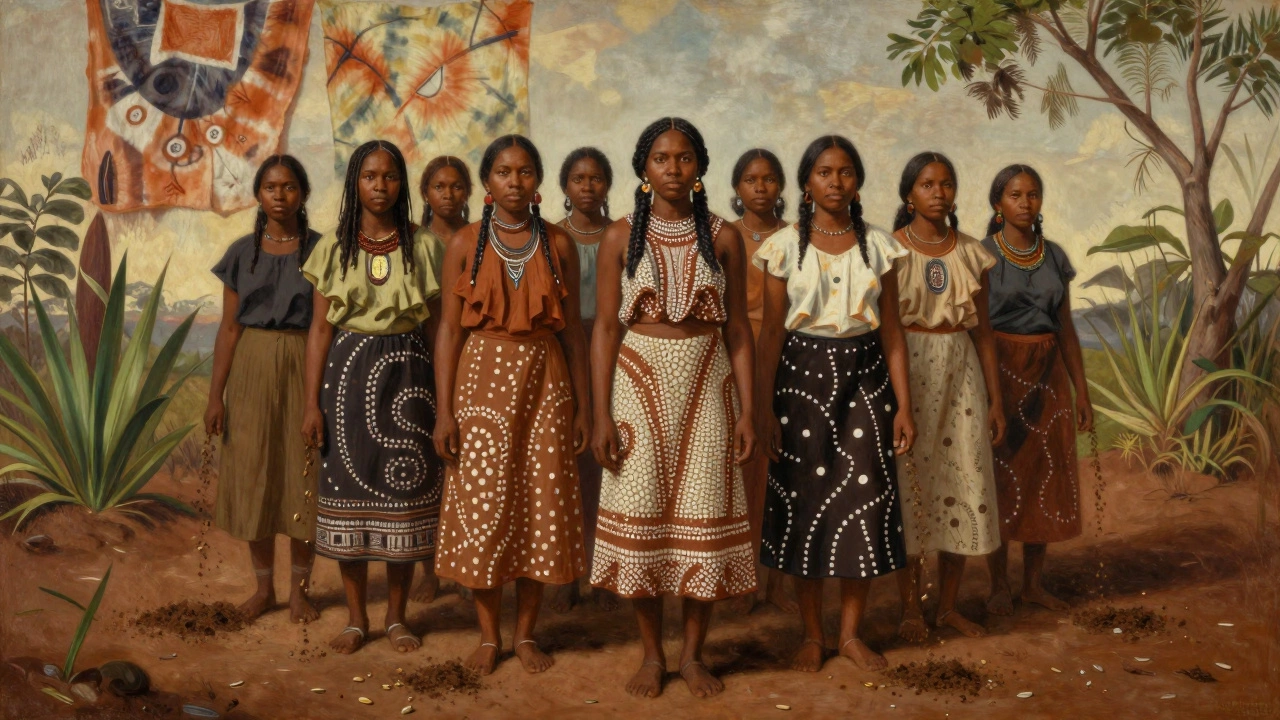
Tracey Moffatt uses film and photography to rewrite colonial narratives, placing Indigenous Australian women as central figures in scenes once dominated by European explorers. Yinka Shonibare dresses mannequins in Dutch wax fabric-often mistaken as "African" but actually made in Holland for Indonesian markets-to expose how culture is manufactured and sold. In Mexico City, artists are reviving pre-Hispanic dye techniques using only native plants, rejecting synthetic pigments imported by colonizers.
This movement doesn’t ask for inclusion. It asks for replacement. Who gets to tell the story? Who gets to decide what’s beautiful? What happens when a museum’s collection is no longer the center of the world?
Why These Three? Not Just Trends-Structural Shifts
You’ll hear about "digital art," "street art," or "conceptual art" everywhere. But those aren’t movements-they’re tools. The real shifts are deeper.
Post-Internet art changed how we experience identity. Climate art changed how we experience time. Decolonial art changed how we experience power. These aren’t styles you can copy. They’re frameworks that force you to rethink your assumptions.
Look at the 2025 Venice Biennale. Of the 80 national pavilions, 67 featured work tied to one of these three movements. Not because they were trendy, but because they answered the most urgent questions of our time: Who are we? Where are we going? And who gets to decide?
What These Movements Are Not
They’re not about aesthetics. You won’t find a "Post-Internet look"-some artists use clay, others use AI. They’re not about skill. A decolonial piece might be a single seed planted in a gallery floor. They’re not about fame. Many of the most influential artists today never show in New York or London.
These movements reject the idea that art must be beautiful, rare, or expensive. They’re messy, temporary, and often uncomfortable. That’s the point.
Where to See This Art
You won’t find these works in traditional galleries alone. Look for:
- Community land projects where art grows with crops
- Online archives that archive deleted social media posts as historical artifacts
- Indigenous-run museums that don’t label objects as "art" but as living ancestors
- Public spaces where installations change with weather or tide
In Sydney, the Art Gallery of New South Wales now has a permanent section called "Earth Memory"-featuring works that decay on purpose. In Berlin, a collective turns expired social media data into soundscapes you can walk through. In Lagos, artists are building libraries from discarded smartphones.
What This Means for You
If you’re an artist: Stop trying to "fit in." Start asking which system you’re challenging. Is it the algorithm? The colonial archive? The carbon footprint of your materials?
If you’re a collector: Value process over permanence. A work that disappears is not lost-it’s transformed.
If you’re just curious: Don’t ask "Do I like it?" Ask "What does it make me question?"
The art of 2026 doesn’t want you to admire it. It wants you to change.
What’s the difference between modern art and contemporary art?
Modern art refers to work made roughly between the 1860s and 1970s-think Picasso, Mondrian, Pollock. It was about breaking from tradition, often through new styles like abstraction or cubism. Contemporary art is everything made since the 1970s, but it’s not defined by style. It’s defined by context: what’s happening in the world, who’s speaking, and how power works. Modern art asked, "What can art look like?" Contemporary art asks, "What can art do?"
Are all contemporary artists using technology?
No. While Post-Internet art uses digital tools, many contemporary artists work with clay, fabric, soil, or found objects. The movement isn’t about the tool-it’s about the idea. An artist might use a hand-sewn quilt to challenge colonial gender roles, or plant trees to reclaim land stolen by governments. Technology is one option, not a requirement.
Why do some contemporary artworks look so simple?
Simplicity is often intentional. A single stone placed in a gallery isn’t about craftsmanship-it’s about presence. A blank wall might be a protest against commercialization. A video of someone breathing for 10 minutes challenges the idea that art must be "exciting." These works strip away distraction to force you to confront what’s left: time, space, silence, or your own assumptions.
Can contemporary art be bought and collected?
Yes-but collecting it is different. You might buy a photograph of a disappearing glacier, or a certificate that grants you access to a performance that only happens once. Some collectors own the rights to a concept, not an object. A work might come with instructions to recreate it, or a promise to return materials to the earth. Ownership in contemporary art often means responsibility, not possession.
Is contemporary art only for elites?
Not anymore. While major museums still dominate headlines, the real energy is elsewhere. Community gardens with embedded art, Indigenous storytelling apps, online platforms that pay artists in crypto or barter, and pop-up shows in subway stations-all these are where contemporary art thrives. Many artists refuse gallery representation entirely. The movement is becoming more democratic, not less.
What’s Next?
If you want to stay connected, follow artists who work outside the traditional art world. Look for collectives in Manila, Johannesburg, or Lima-not just Berlin or New York. Check out local land trusts that host art installations. Visit museums that don’t have gift shops. The future of art isn’t in auction houses. It’s in the soil, the screen, and the silence between breaths.