Art Style Identifier & Comparison Tool
Select an art style to explore its key characteristics, historical context, and defining features.
Traditional Art
Pre-1860s academic art focusing on representation, technical mastery, and beauty
1400–1850Modern Art
Late 19th–mid 20th century art emphasizing ideas, emotion, and breaking conventions
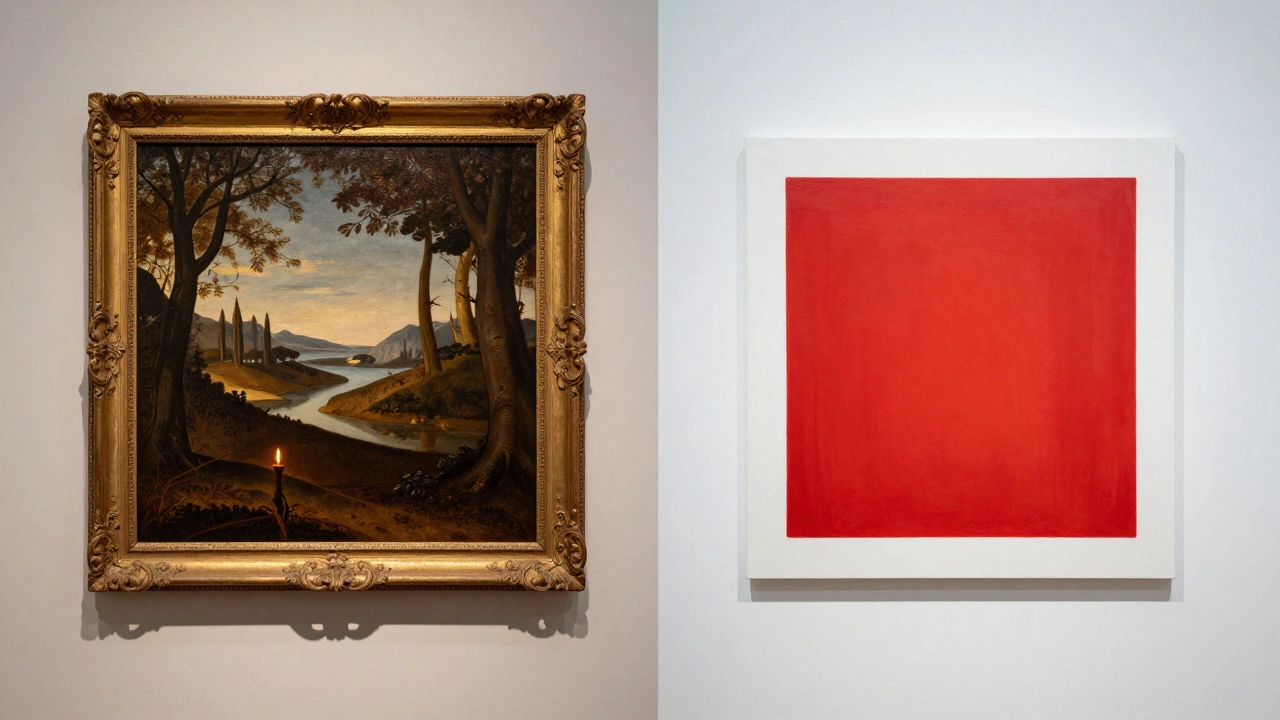
1860–1970Walk into a gallery and you might see a photorealistic landscape that looks like a window onto the world. Walk into another, and you’ll stare at a canvas with a single red square or a pile of bricks on the floor. It’s easy to feel confused. Is it art? Why does it look so different? The gap between modern art and traditional art isn’t just about style; it’s about a fundamental shift in what artists believe their job is.
Traditional art focuses on skill, representation, and beauty. Modern art focuses on ideas, emotion, and breaking rules. Understanding this difference changes how you look at everything from Renaissance paintings to abstract sculptures.
The Core Philosophy: Representation vs. Expression
At its heart, traditional art is about representation. The goal was to capture reality as accurately as possible. If you commissioned a portrait, you wanted to recognize your face. If you bought a religious painting, you wanted to see the biblical scene clearly. The artist’s hand was hidden behind technical perfection.
Modern art, which roughly spans from the late 19th century to the mid-20th century, flipped this script. Artists stopped trying to copy the world and started trying to interpret it. They asked: "What if I paint how I feel about the sunset, rather than how it looks?" This shift moved the focus from the subject matter to the artist’s internal experience.
- Traditional Art: Values objective reality, technical mastery, and clear narratives.
- Modern Art: Values subjective experience, conceptual innovation, and emotional impact.
This philosophical change meant that "skill" was redefined. In traditional contexts, skill meant drawing a perfect eye. In modern contexts, skill could mean composing a powerful arrangement of colors that evokes anxiety or joy.
Timeline and Historical Context
To understand the difference, you have to look at when these movements happened. Traditional art covers thousands of years, but for comparison purposes, we usually refer to pre-1860s academic art. This includes the Renaissance, Baroque, and Neoclassical periods.
Modern art began around 1860s and lasted until the 1970s. It emerged alongside industrialization, urbanization, and rapid technological change. Artists were reacting to a world that felt increasingly chaotic and mechanical.
| Period | Approximate Dates | Key Characteristics |
|---|---|---|
| Renaissance | 1400-1600 | Revival of classical ideals, perspective, realism |
| Baroque | 1600-1750 | Dramatic lighting, movement, emotional intensity |
| Neoclassicism | 1750-1850 | Clean lines, moral virtue, return to Greek/Roman forms |
| Impressionism (Early Modern) | 1860-1890 | Capture of light, visible brushstrokes, everyday subjects |
| Cubism/Abstract (High Modern) | 1900-1970 | Fragmented forms, non-representational shapes, conceptual focus |
The invention of the camera in the mid-19th century played a huge role. Once machines could record reality perfectly, artists felt freed from the obligation to do so. This allowed them to explore abstraction and symbolism without worrying about accuracy.
Techniques and Materials
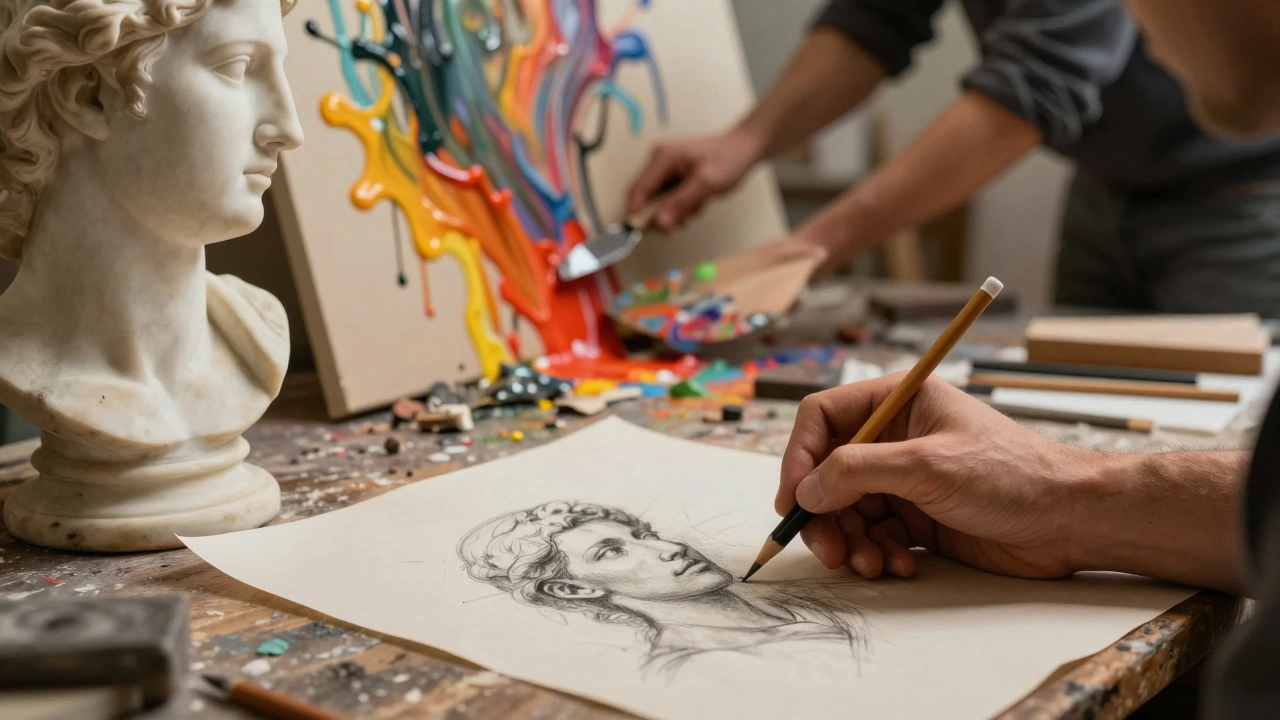
The tools used by artists also highlight the divide. Traditional artists relied on established methods passed down through apprenticeships. They used oil paints, charcoal, marble, and bronze. The process was slow and deliberate. A single portrait could take months because every detail had to be rendered with precision.
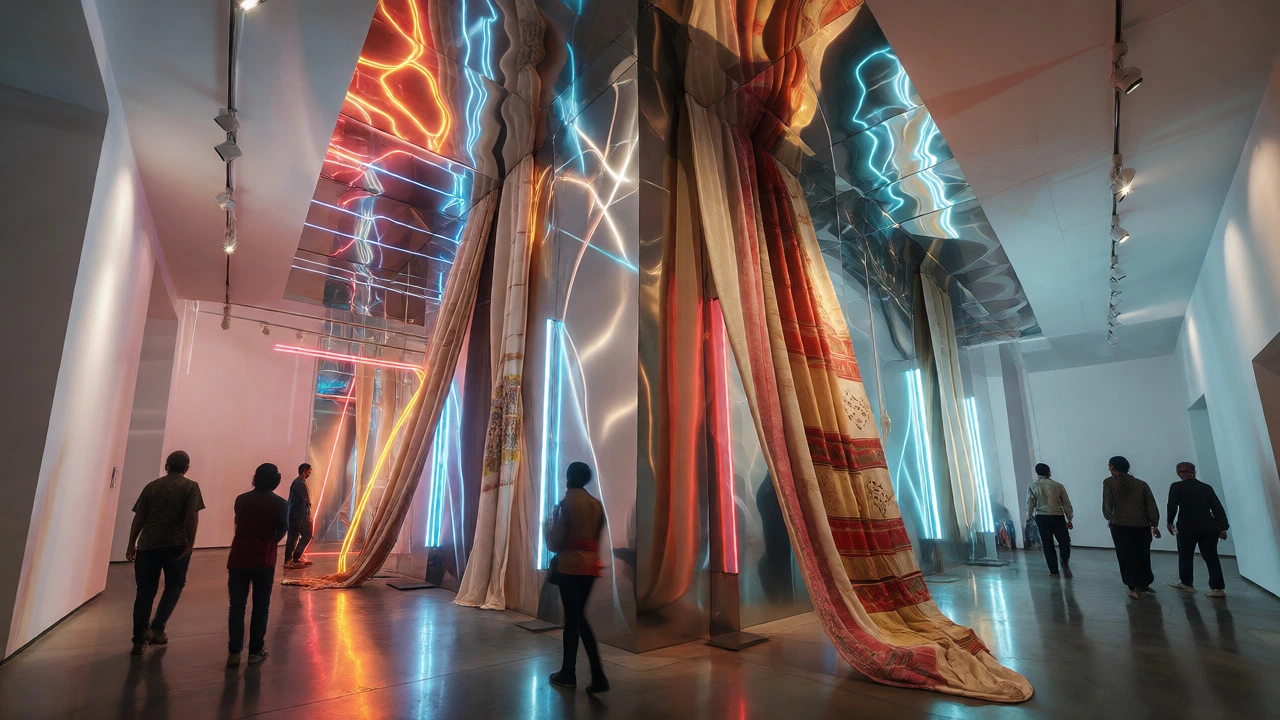
Modern artists experimented with new materials and faster techniques. They embraced mass-produced items, found objects, and unconventional mediums. Marcel Duchamp, for instance, placed a urinal in a gallery and called it art. This challenged the idea that art required manual craftsmanship.
- Traditional Techniques: Chiaroscuro (light/shadow contrast), linear perspective, glazing, sculpting with chisels.
- Modern Techniques: Collage, assemblage, action painting, ready-mades, digital manipulation (in later phases).
You can see this in the work of Pablo Picasso. He didn’t just paint faces; he broke them apart into geometric shapes to show multiple viewpoints at once. This wasn’t a lack of skill-it was a new way of seeing.
Subject Matter and Themes
Traditional art often depicted religious scenes, historical events, mythology, or portraits of the wealthy. These subjects reinforced social hierarchies and cultural values. The viewer was expected to know the story being told.
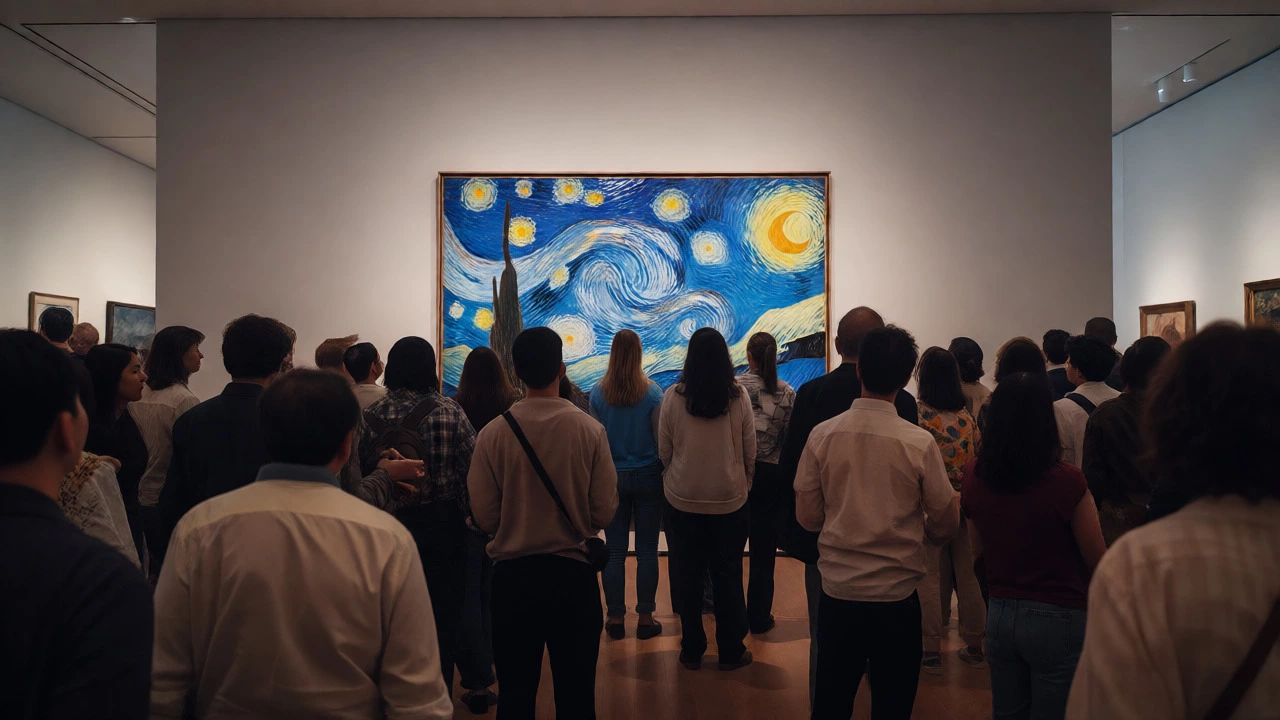
Modern art turned inward and toward the mundane. Artists painted city streets, factory workers, personal emotions, and pure abstraction. Vincent van Gogh painted his own room not because it was beautiful, but because it reflected his mental state. Jackson Pollock didn’t paint figures at all; he let gravity and motion dictate the composition.
This shift made art more personal and less universal. Instead of telling you what to think, modern art asks you to react. It invites interpretation rather than providing a clear narrative.
The Role of the Viewer
In traditional art, the viewer is passive. You look at a painting of a battle and understand who won, who lost, and why it matters. The meaning is fixed by the artist and the context.
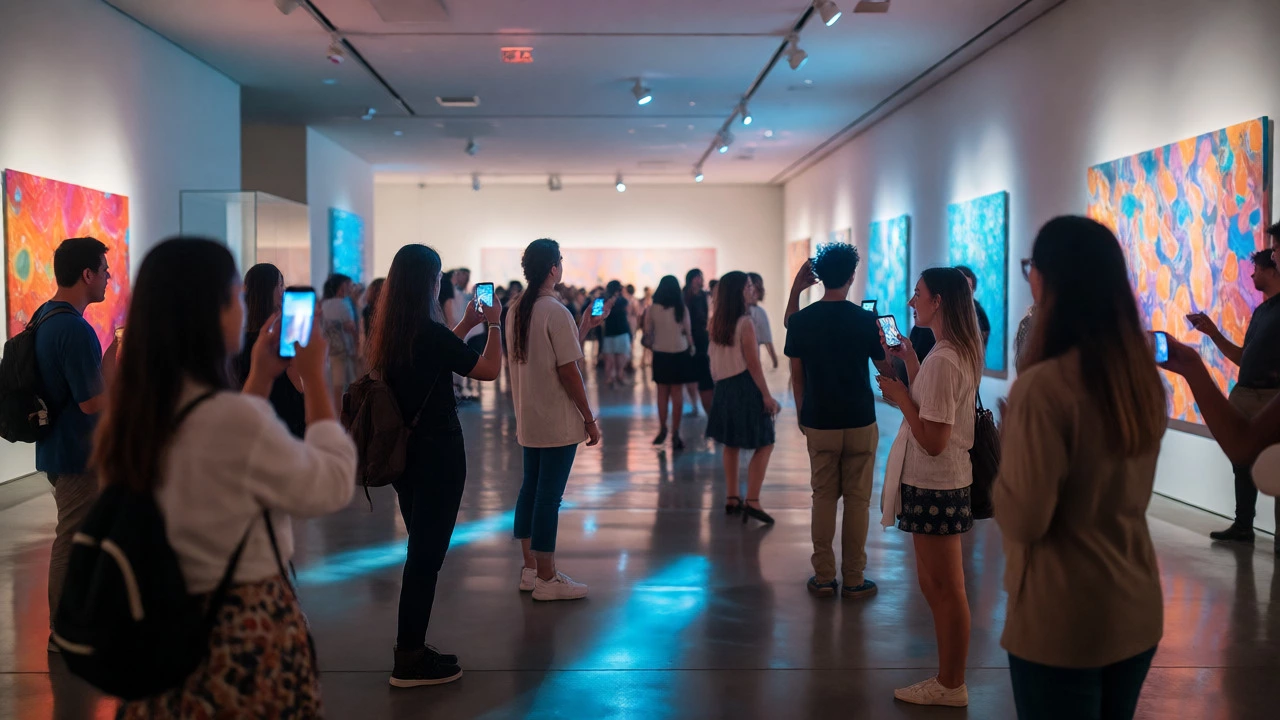
In modern art, the viewer becomes active. You stand in front of an abstract piece and ask, "What does this mean to me?" There is no right answer. The value lies in your engagement with the work. This democratizes art-anyone can bring their own perspective, regardless of education or background.
This can be frustrating if you’re used to clear answers. But it’s also liberating. It means art isn’t just about decoration or documentation; it’s about conversation and challenge.
Common Misconceptions
One common myth is that modern art is "easy" because anyone could do it. This ignores the decades of study, experimentation, and conceptual depth behind many works. Another myth is that traditional art is always superior because it requires more technical skill. Both views miss the point: they measure different goals.
Traditional art aims for harmony and truth-to-nature. Modern art aims for innovation and truth-to-experience. Neither is inherently better-they serve different purposes in human culture.
Is modern art still being created today?
The term "modern art" typically refers to the period ending in the 1970s. Art created after that is usually called "contemporary art." However, the principles of modern art-experimentation, abstraction, and conceptual focus-continue to influence artists today.
Why do some people dislike modern art?
Many people expect art to represent something recognizable. When modern art abandons realistic depiction, it can feel confusing or meaningless. This reaction is natural, especially if you’re unfamiliar with the historical context and intentions behind the work.
Can traditional techniques be used in modern art?
Yes. Many modern artists trained in traditional methods before breaking away. For example, Salvador Dalí used hyper-realistic techniques to create surreal, dreamlike images. Skill remains important, even when the goal shifts.
What is the main difference between modern and contemporary art?
Modern art refers to the period from roughly 1860 to 1970, characterized by rebellion against tradition and exploration of new forms. Contemporary art refers to art created from the late 20th century to the present day, often addressing current social, political, and technological issues.
How did the camera affect the development of modern art?
The camera took over the role of recording reality accurately. This freed artists from the need to replicate nature, allowing them to explore abstraction, emotion, and concept-driven works that photography couldn’t achieve.