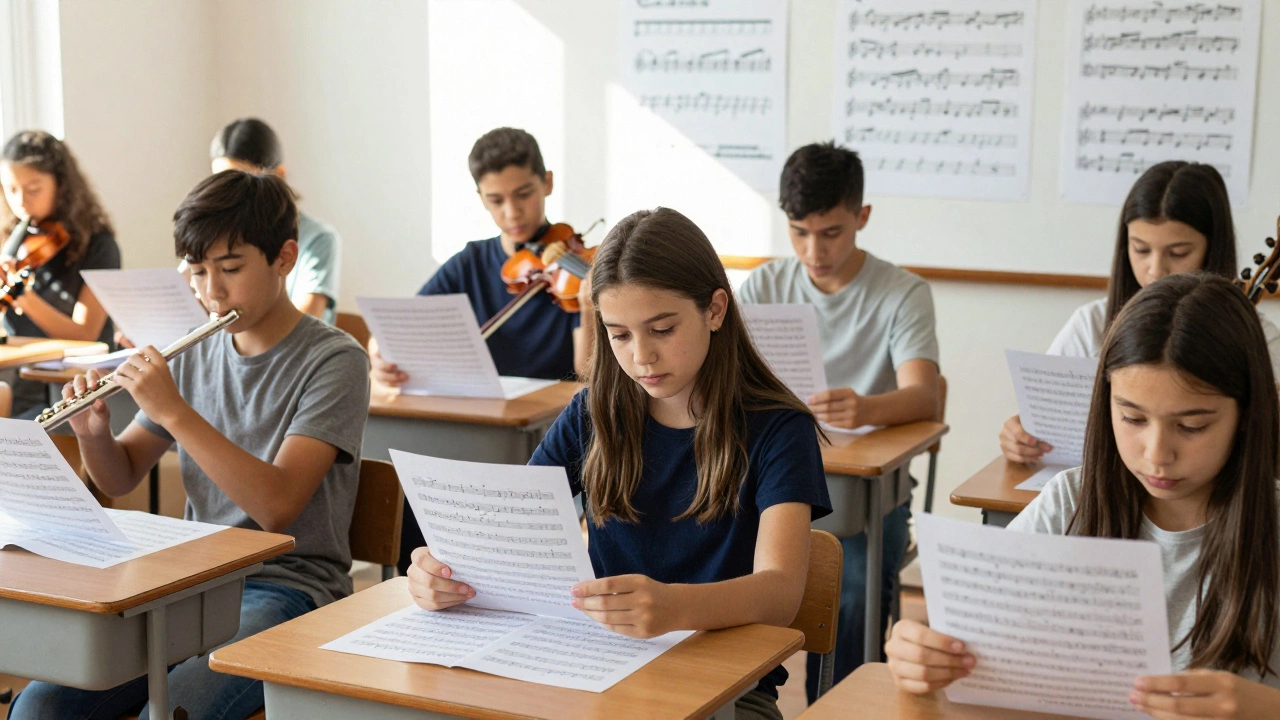
By 8th grade, most students have been in music class for at least five years. They’re no longer just singing nursery rhymes or tapping rhythms on desks. They’re reading sheet music, playing instruments with real technique, and even writing their own short pieces. So what exactly are they learning? It’s not just about hitting the right notes-it’s about understanding how music works, how to express yourself through it, and how to work with others to make something bigger than any one person.
Music Theory: More Than Just Notes
Students in 8th grade music class start digging into the real building blocks of music. They learn how scales are built-major, minor, pentatonic-and why certain combinations of notes sound happy, sad, or tense. They identify intervals by ear, like the difference between a perfect fifth and a tritone. They learn chord construction: how a C major chord is made of C, E, and G, and how changing one note turns it into a minor or seventh chord. This isn’t memorization for tests-it’s training their ears to hear harmony in pop songs, movie scores, or even the background music in a video game.
They also study rhythm in depth. Time signatures like 6/8 and 5/4 stop being confusing. They clap, tap, and count complex patterns. They learn syncopation-not just as a word, but as the groove that makes funk, jazz, and hip-hop move. One teacher might have students rewrite a pop song’s rhythm into 3/4 time to see how it changes the feel. That’s the kind of hands-on learning that sticks.
Instrumental Skills: From Beginner to Player
If they’re in band or orchestra, most 8th graders are already playing an instrument. But they’re not just playing the same three songs over and over. They’re working on tone quality, breath control (for wind players), bow technique (for strings), or finger dexterity (for piano and percussion). They learn how to adjust their playing for dynamics-playing softly without losing clarity, or loudly without cracking notes.
They tackle ensemble playing. That means listening to others, matching tempo, blending volume, and entering at the right moment. In a string quartet, a single out-of-tune note can ruin the whole piece. In a jazz band, they learn to improvise over chord changes, even if it’s just a simple two-bar solo. One student might be learning to play the melody of West Side Story while another is figuring out how to accompany it with walking bass lines.
Many schools now offer guitar or ukulele classes too. Students learn open chords, strumming patterns, and how to play along with recordings. They might even write a verse and chorus based on a chord progression they’ve learned.
Composition and Creativity: Making Music, Not Just Playing It
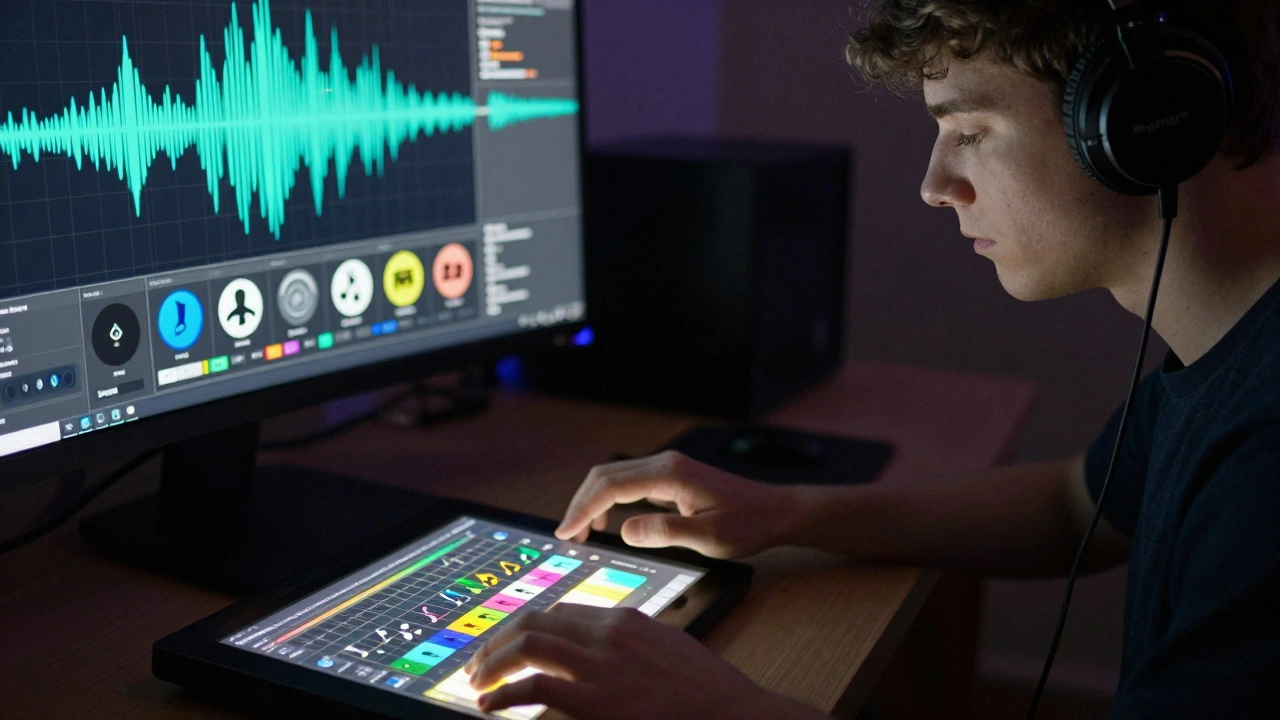
By 8th grade, students aren’t just consumers of music-they’re creators. They use digital tools like GarageBand, Soundtrap, or even simple notation software to compose short pieces. They might be asked to write a 16-bar melody using only the D minor scale, or create a rhythm track that builds tension and releases it. Some teachers give them a theme-like ‘a storm’ or ‘a morning walk’-and ask them to turn it into music.
They learn about form: A-B-A structures, verse-chorus patterns, and how composers repeat and vary material to hold attention. One student might compose a piece that starts quiet and builds to a loud climax, then ends with a single note fading out. They learn that music isn’t random-it’s designed.
Listening and Analysis: Learning to Hear Deeply
Music class isn’t just about making sound-it’s about listening. Students analyze recordings from different cultures and eras. They might compare a Bach fugue to a hip-hop beat, or a West African djembe ensemble to a rock drum fill. They identify instruments, textures, and emotional intent. They learn why a piece from the Baroque period sounds different from one written in 2020.
They study genres: blues scales, swing rhythms, modal jazz, electronic dance music. They learn how cultural context shapes music. For example, why do some Native American songs use pentatonic scales? Why do Indian ragas focus on one note at a time? These aren’t trivia questions-they’re ways of understanding the world.
Performance and Collaboration
Performance is a big part of 8th grade music. There are concerts, recitals, and even informal class performances. But it’s not just about getting applause. Students learn stage presence, how to manage nerves, and how to recover if they make a mistake. They learn that music is a shared experience-what they play affects everyone else in the room.
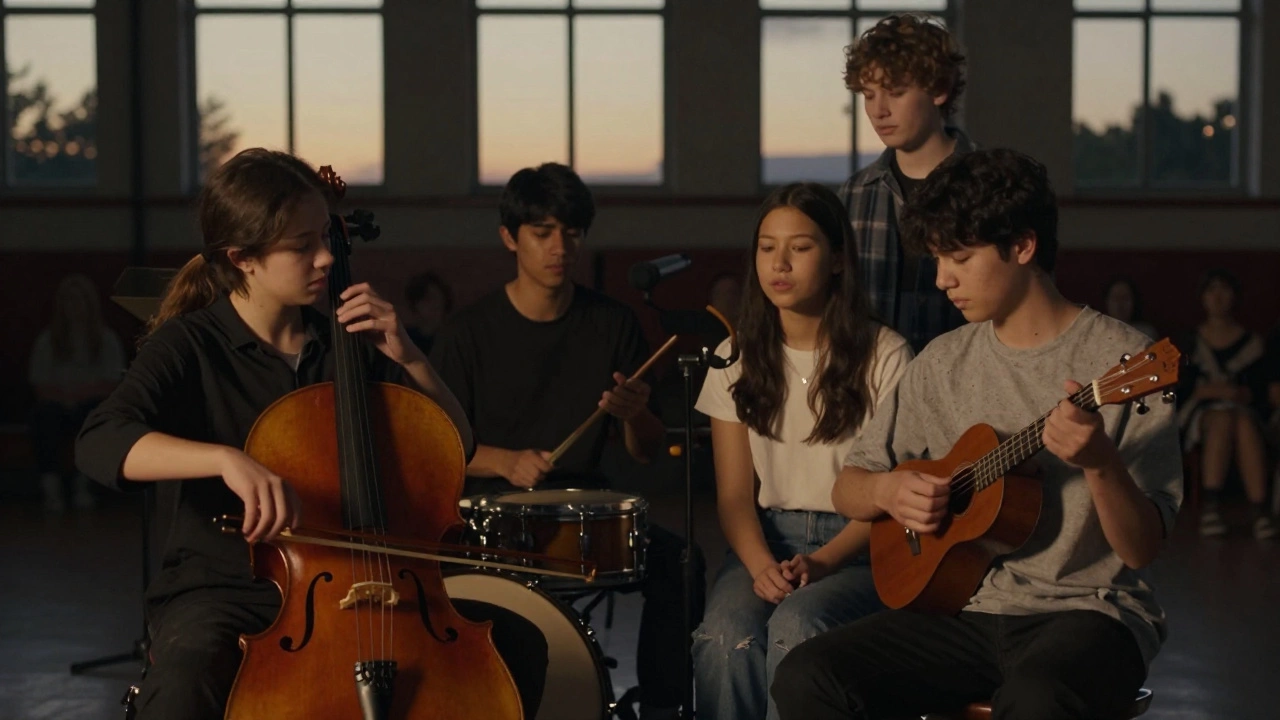
Group projects are common. They might form small ensembles to rehearse a piece over several weeks. They assign parts, set practice goals, and give each other feedback. One student might be the drummer, another the melody player, and a third the arranger. They learn leadership, patience, and compromise. A good music class doesn’t just teach notes-it teaches how to work with people.
Technology and Modern Music
Today’s 8th graders grow up with music streaming, sampling, and auto-tune. So music class reflects that. They learn how to record their own performances using smartphones and basic mics. They explore how producers use loops, effects, and layering to build tracks. They might deconstruct a popular song to see how many layers are actually in it-vocals, bass, drums, synth pads, ad-libs.
Some classes introduce MIDI and digital audio workstations. Students learn how to draw in notes on a grid, adjust velocity, or change the tempo without affecting pitch. They might create a remix of a classical piece using modern beats. This isn’t about replacing traditional skills-it’s about expanding them.
Why It Matters Beyond the Classroom
What 8th graders learn in music doesn’t just help them pass a class. It builds skills that last a lifetime. They learn discipline-practicing daily, even when they don’t feel like it. They learn problem-solving-figuring out why a passage isn’t working and how to fix it. They learn resilience-playing through mistakes without quitting.
They also learn emotional intelligence. Music lets them express feelings they can’t always put into words. A student who struggles in math might find confidence in playing a solo. A quiet kid might shine in a choir. Music gives them a voice.
And it’s not just about becoming a musician. Studies show that students who study music perform better in math, reading, and memory tasks. They develop focus, pattern recognition, and attention to detail. These aren’t side effects-they’re direct results of how music trains the brain.
By the end of 8th grade, students aren’t just learning music. They’re learning how to think, feel, and connect through sound. And that’s something no textbook can teach.
Do 8th graders need prior music experience to join band or choir?
No, many schools offer beginner bands or choirs for 8th graders with no previous experience. Teachers start from the basics-how to hold the instrument, how to read a note, how to breathe properly. What matters most is willingness to practice and listen. Some students pick up an instrument for the first time in 8th grade and go on to play in high school ensembles.
Is music class required in 8th grade?
It depends on the school district. In many U.S. public schools, music is part of the required arts curriculum through 8th grade. Some districts allow students to opt out after 6th or 7th grade, but others require at least one year of arts education each year. Even in schools where it’s optional, most students choose to stay in because they enjoy it.
What instruments can 8th graders learn in school?
Common instruments include flute, clarinet, saxophone, trumpet, trombone, French horn, tuba, violin, viola, cello, bass, percussion, piano, guitar, and ukulele. Schools usually provide instruments for students who can’t afford them. Choir is also a major option for students who prefer singing over playing.
How much practice is expected outside of class?
Most teachers recommend 15 to 30 minutes of practice four to five times a week. It’s not about hours-it’s about consistency. Practicing 10 minutes every day is better than one hour once a week. Teachers often give practice logs or use apps that track progress. The goal is steady improvement, not perfection.
Can 8th graders take music classes online?
Some schools offer hybrid or fully online music courses, especially in rural areas or during disruptions like the pandemic. These usually include video lessons, digital assignments, and virtual ensemble recordings. While it’s harder to learn an instrument remotely, theory, listening, and composition can be taught effectively online. In-person instruction is still preferred for instrumental training.