Artist Workshop Terms Quiz
Ever walked into a studio and heard artists talking about their workshop-only to realize they weren’t talking about a place to fix cars, but where they paint, sculpt, or print? If you’ve ever wondered what an artist workshop is actually called, you’re not alone. The truth is, there’s no single name. What artists call their working space depends on where they are, what they do, and who they’re talking to.
It’s Not Just a Studio
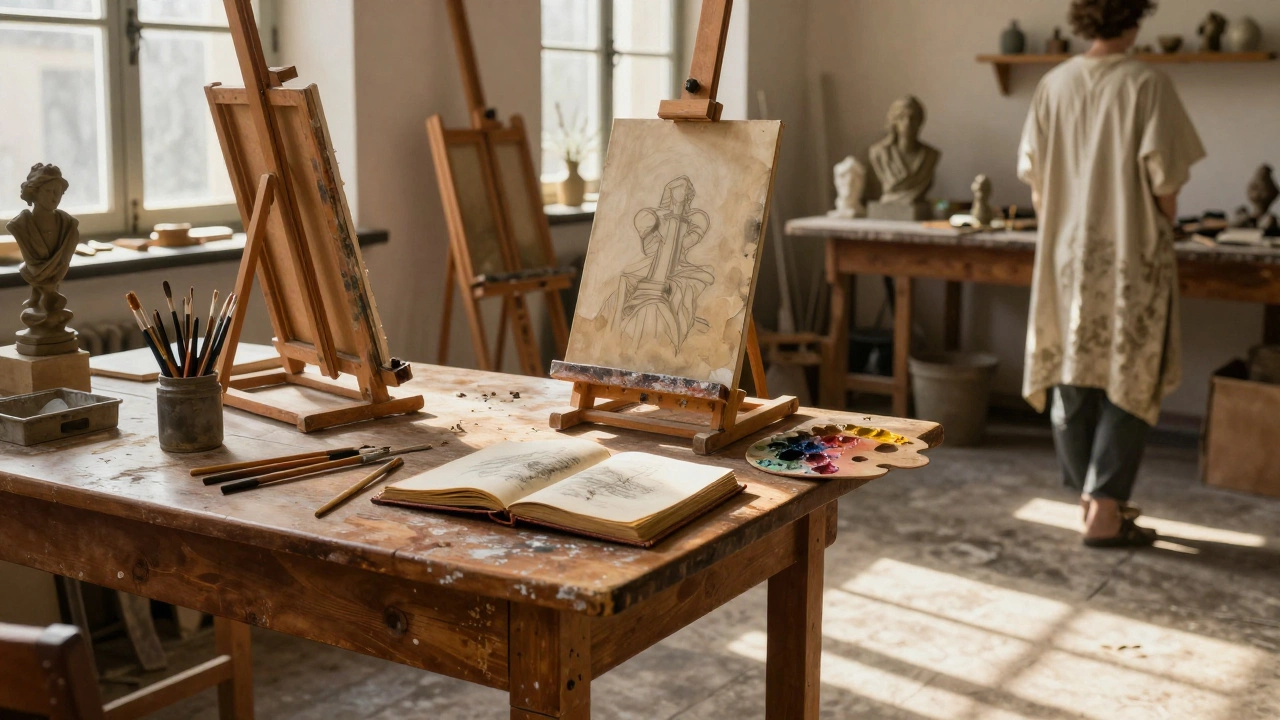
Most people assume an artist’s workshop is called a studio. And yes, that’s the most common term. But calling everything a studio is like calling every kitchen a “cooking space.” It’s true-but it misses the nuance. In Europe, especially in countries like Italy or France, artists have long used the word atelier. That’s not just fancy French. It’s a specific kind of space: usually a large, light-filled room attached to a home or part of an old building, where master artists trained apprentices for generations. Today, you’ll still find art schools and individual artists using “atelier” to signal tradition, technique, and hands-on mentorship.In the U.S., “studio” dominates. But even here, context changes the meaning. A painter in Brooklyn might say, “I’m heading to my studio,” meaning a small rented room in a converted warehouse. A ceramicist in Portland might say the same thing-but their studio has kilns, clay wheels, and shelves full of glazed pots. A printmaker in Melbourne might call theirs a “print shop.” A textile artist in Sydney might refer to theirs as a “weaving room.” The word changes based on the medium, the tools, and the culture.
Artist Residencies: Workshops With a Time Limit
Then there are artist residencies. These aren’t permanent spaces-they’re temporary. Think of them as artist retreats. Organizations like Yaddo in New York or Cité Internationale des Arts in Paris invite artists to live and work on-site for weeks or months. These are often called “residencies,” but functionally, they’re workshops with housing, meals, and sometimes peer feedback built in. They’re not just about making art-they’re about immersion. You’re surrounded by other creators, away from daily distractions, with time to experiment.Many artists say their most important breakthroughs happened during a residency. That’s because the structure forces focus. No errands. No emails. Just the work. Residencies often have shared equipment-print presses, kilns, darkrooms-so you’re not just working alone. You’re part of a small, intense creative community. That’s a different kind of workshop.
Creative Retreats and Art Camps
If you’ve seen ads for “painting retreats in Tuscany” or “sculpture camps in the Rockies,” you’ve seen another form of artist workshop. These are usually short-term, instructor-led, and often paid experiences. They’re less about building a lifelong practice and more about learning a new skill, getting inspired, or escaping routine. Some are run by universities. Others by private instructors. They might last three days or three weeks.These are sometimes called “art workshops” in marketing materials-but that’s where confusion starts. A “workshop” here means a class, not a space. You’re not renting a room. You’re signing up for instruction. The term gets stretched. But in practice, if someone says, “I’m going to a workshop next month,” they probably mean a course, not a studio.
What About Art Schools and Academies?
Art schools like the Slade School of Fine Art or the Art Students League of New York are full of workshops-but they don’t call them that. In these institutions, the term “workshop” usually refers to a specific class or session, often led by a visiting artist. You might enroll in “Figure Drawing Workshop” or “Etching Techniques Workshop.” These are structured, time-bound, and graded. They’re part of a curriculum.But the physical space where students work? That’s the “studio.” The school might have ten studios-each assigned to a different discipline: painting, sculpture, printmaking. Each studio has its own tools, its own vibe, its own history. Students return to the same studio every day. Over time, it becomes their second home.
Why Does the Name Matter?
It matters because the name tells you what kind of experience you’re walking into. If you’re looking to learn how to mix oil paints properly, you want an atelier or a studio with a mentor. If you’re looking to get away and explore new ideas without pressure, a residency is better. If you’re on a tight budget and just want to try watercolor for the weekend, a creative retreat might be your best bet.Artists themselves care about the language. A painter who trained in Florence will say they work in an atelier. A street artist in Berlin might call their alleyway studio a “bomb site.” A digital artist in Tokyo might not even have a physical space-they work from a laptop in a café. The name reflects identity, training, and intention.
Common Terms and What They Really Mean
| Term | Typical Use | What It Implies |
|---|---|---|
| Studio | Most common in the U.S., Australia, Canada | Personal, permanent space. May be rented or owned. Focus on individual practice. |
| Atelier | Common in Europe, especially France, Italy, Belgium | Traditional, often master-apprentice based. Emphasis on technique and discipline. |
| Residency | International programs, non-profit arts orgs | Temporary, immersive, often includes housing. Focus on experimentation and community. |
| Workshop (as event) | Marketing for short courses | Instructional, time-limited, usually paid. Not a physical space-more like a class. |
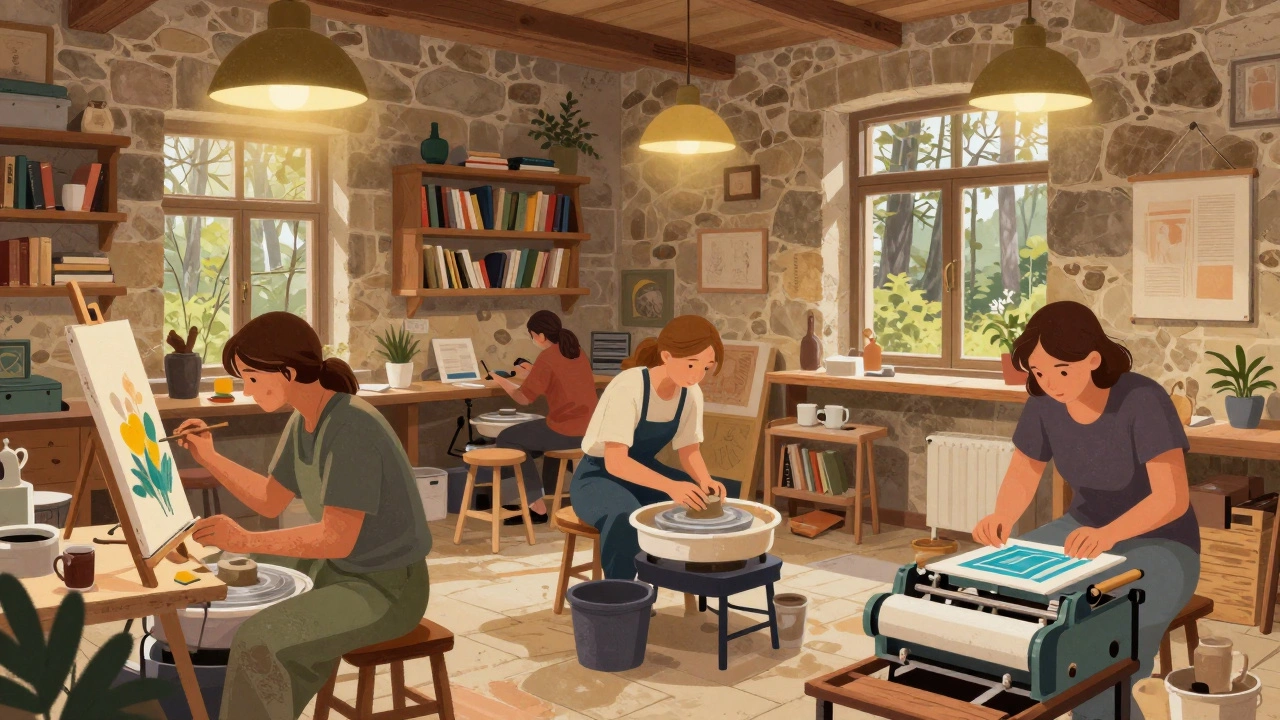
| Print Shop / Kiln Room / Weaving Studio | Medium-specific spaces | Defined by tools and materials. Often shared in co-ops or collectives. |

What Should You Call Your Own Space?
If you’re starting out and don’t have a fancy name for your workspace, just call it what it is. If you’re painting on a table in your living room, that’s your studio. If you’re renting a shared space with three other artists and a kiln, call it your studio too. No one’s going to check your credentials.But if you want to sound like you know what you’re talking about-especially when applying to residencies, galleries, or schools-use the right term. Don’t say “I work in a workshop” if you mean a studio. Don’t call your weekend watercolor class a “residency.” Precision matters in art. It shows you understand the culture.
How to Find the Right Space for You
- If you want to learn traditional techniques: Look for ateliers or art academies with life drawing classes.
- If you want to focus deeply for weeks: Apply to artist residencies-many offer grants or stipends.
- If you want to try something new without commitment: Search for “art workshops near me” or check local community centers.
- If you’re a maker who needs heavy equipment: Join an artist collective or makerspace. Many have shared kilns, laser cutters, or screen-printing stations.
- If you’re digital: Your laptop is your studio. But consider joining online artist communities for feedback and accountability.
The space you work in doesn’t define your art-but the way you think about it does. Naming your space is part of claiming your identity as an artist. Whether you call it a studio, an atelier, or just “the corner where I don’t let anyone else sit,” it’s yours. And that’s what matters.
Is a studio the same as a workshop?
Not always. A studio is a permanent physical space where an artist works. A workshop can mean either a type of studio (especially in Europe) or a short-term class. Context matters. If someone says, “I’m going to my workshop,” they might mean their studio-or they might mean they’re attending a class. Ask for clarification.
Can I call my home art space an atelier?
Technically, yes-if you’re serious about traditional methods and want to signal that depth. But don’t use it just because it sounds fancy. An atelier implies mentorship, discipline, and often a lineage of teaching. If you’re self-taught and painting in your garage, “studio” is more honest and widely understood.
Do artist residencies cost money?
Some do, some don’t. Many residencies are competitive and offer free housing, meals, and studio space-with a small stipend. Others charge fees, especially if they’re in popular locations like Italy or the south of France. Always check what’s included: travel, materials, and mentorship can vary widely.
What’s the difference between a workshop and a class?
In art circles, they’re often used interchangeably. But a workshop usually implies hands-on, intensive work over a few days, often with a focus on technique. A class might be weekly, longer-term, and more theoretical. A workshop is usually shorter and more focused.
Are artist collectives the same as workshops?
Not exactly. A collective is a group of artists sharing a space and resources-like a print shop or sculpture yard. It’s a community, not a teaching environment. But collectives often host workshops. So while they’re not the same, they can overlap.