Abstract Art Emotional Resonance Simulator
Create your own abstract composition below. Adjust the sliders to change the mood, then observe how the visual elements shift from chaotic to balanced. Remember: There is no "correct" answer here—only what you feel.
Look at your creation. Do not ask "What is it?" Ask:
- Does this feel heavy or light?
- Is my eye moving quickly or slowly?
- Does this make me feel anxious or calm?
You stand in front of a canvas. It’s a swirl of blue, a jagged line of red, maybe just a black square on white. Your brain screams for logic: "Is that a horse? A tree? What does it mean?" If you’re looking for a picture of a thing, you’ve already missed the point. The key to abstract art isn’t decoding a hidden message like a cryptic crossword puzzle. It’s about surrendering to the emotional resonance of color, shape, and form.
Most people feel intimidated by galleries filled with non-representational work. They worry they don’t "get it." But here’s the secret: there is no single correct answer. Abstract art invites you to feel rather than analyze. It bypasses the logical part of your brain and speaks directly to your senses. Whether you are an artist trying to create or a viewer trying to understand, the gateway is the same. You have to stop asking "what is this?" and start asking "how does this make me feel?"
The Shift from Representation to Expression
To understand the key, you have to look at why artists stopped painting what they saw. For centuries, art was documentation. Painters captured kings, landscapes, and biblical scenes. But with the invention of photography in the 19th century, cameras could capture reality faster and more accurately than any human hand. Artists were freed from the duty of replication.
This liberation led to movements like Cubism, where Pablo Picasso broke objects into geometric fragments to show multiple perspectives at once. Then came Wassily Kandinsky, who believed colors had their own spiritual vibration. He didn't paint mountains; he painted the feeling of standing on one. This shift-from depicting the outer world to exploring the inner world-is the foundation of abstract art. The key here is intentionality. The artist isn't making random marks; they are curating experiences.
Color as a Language, Not a Label
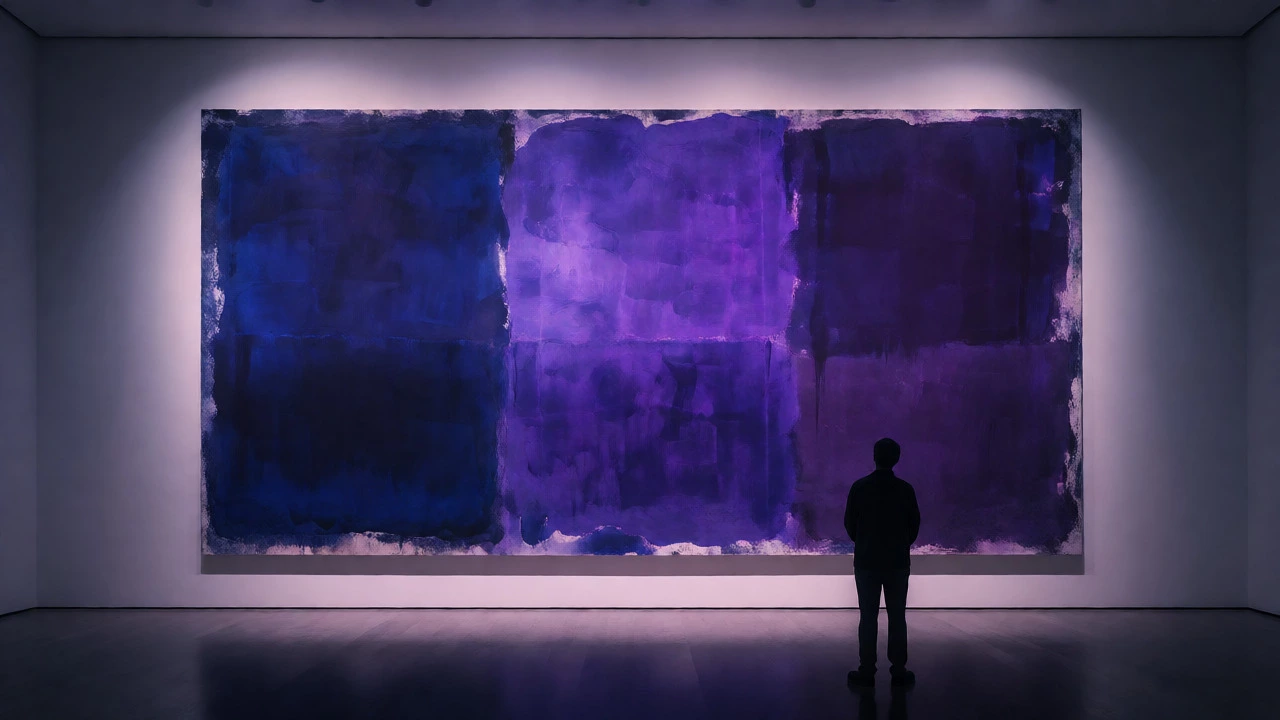
In representational art, color describes an object. A leaf is green because leaves are green. In abstract art, color describes a mood. Think about how you react to a deep, dark purple versus a bright, neon yellow. One feels heavy, mysterious, perhaps even mournful. The other feels energetic, anxious, or joyful. That reaction is the artwork.
Mark Rothko mastered this. His famous color-field paintings are essentially large rectangles of blurred hues stacked on top of each other. Viewers often report crying when standing before them. Why? Because the scale and saturation overwhelm the visual cortex, triggering a primal emotional response. When you look at abstract art, pay attention to your physiological reactions. Does the red make your heart rate speed up? Does the blue calm your breathing? That physical feedback is the dialogue between you and the piece.
Composition and the Balance of Chaos
If you think abstract means "anything goes," you’re mistaken. Great abstract art relies heavily on composition-the arrangement of elements within the frame. Even if the shapes are irregular, they must balance each other. Imagine a seesaw. If you put a massive, dark triangle on the left side, you need something substantial on the right to keep it from tipping over. That counterweight might be a cluster of small, bright dots or a thick vertical line.
Artists use tension and release to guide your eye. A chaotic scribble creates anxiety; a smooth curve provides relief. The key to appreciating this is to track your gaze. Where does it land first? Where does it go next? Is there a focal point, or is the energy distributed evenly? In works by Jackson Pollock, the lack of a central focus forces your eyes to dance across the entire canvas. It’s not messy; it’s controlled chaos. Understanding this structural intent transforms confusion into appreciation.
The Role of Materiality and Texture
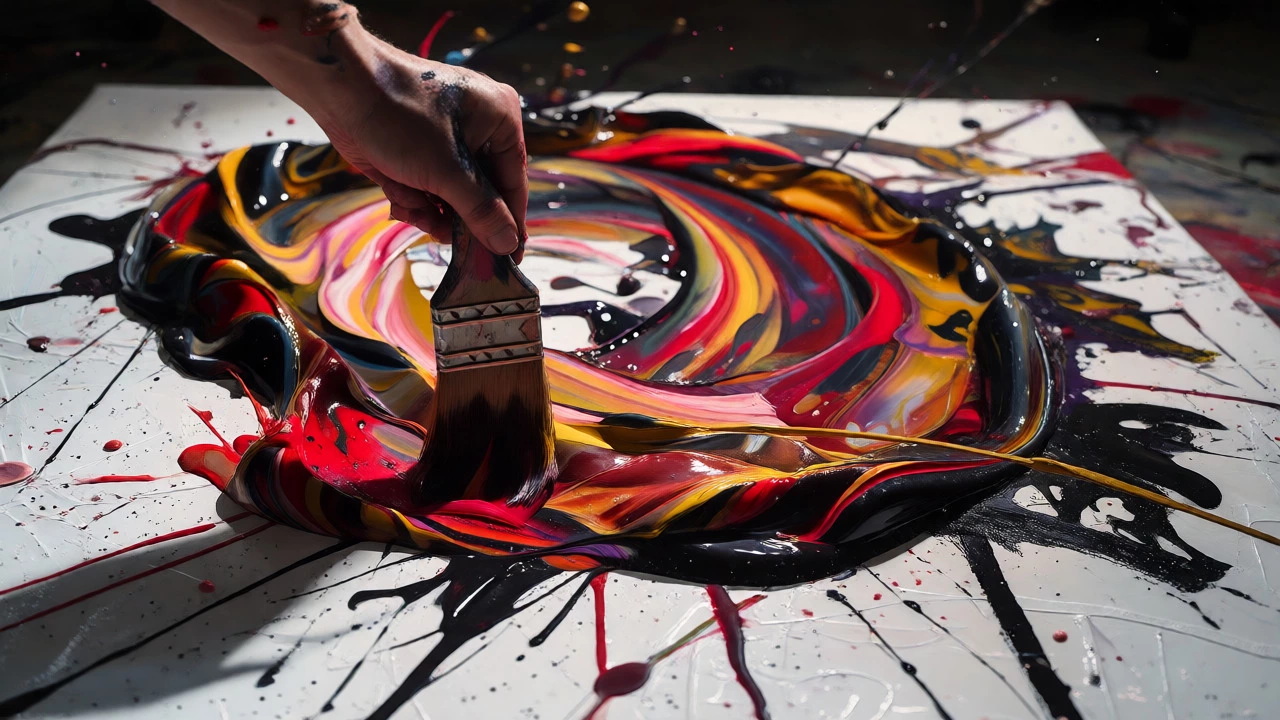
Abstract art often celebrates the material itself. In traditional painting, the goal is often to hide the brushstrokes so the image looks seamless. In abstract expressionism, the process is visible. You can see the drip of the paint, the drag of the palette knife, the texture of the canvas. This is known as materiality.
When you view these pieces, notice the surface. Is it rough? Smooth? Glossy? Matte? These tactile qualities add depth to the experience. An artist might use thick impasto (paint applied so thickly that brush or palette knife strokes are visible) to convey aggression or passion. Conversely, thin washes might suggest fragility or memory. By focusing on the physical substance of the art, you engage another sense-touch, even if you can’t actually touch the gallery wall. This sensory engagement is a critical component of the abstract experience.
Contextualizing the Viewer's Experience
Your background matters. Two people can look at the same abstract piece and see completely different things. One might see a storm; the other might see a celebration. Neither is wrong. The art acts as a mirror. If you are going through a turbulent time, chaotic lines might resonate deeply. If you seek order, geometric abstractions might offer comfort.
This subjectivity is a feature, not a bug. Unlike a portrait of Queen Elizabeth II, which has a fixed identity, an abstract work is open-ended. It requires participation. You bring your memories, emotions, and cultural context to the viewing. The artist provides the stimulus; you provide the meaning. This collaborative aspect makes abstract art uniquely personal. It’s not about finding the artist’s hidden diary entry; it’s about discovering what the visual language unlocks in you.
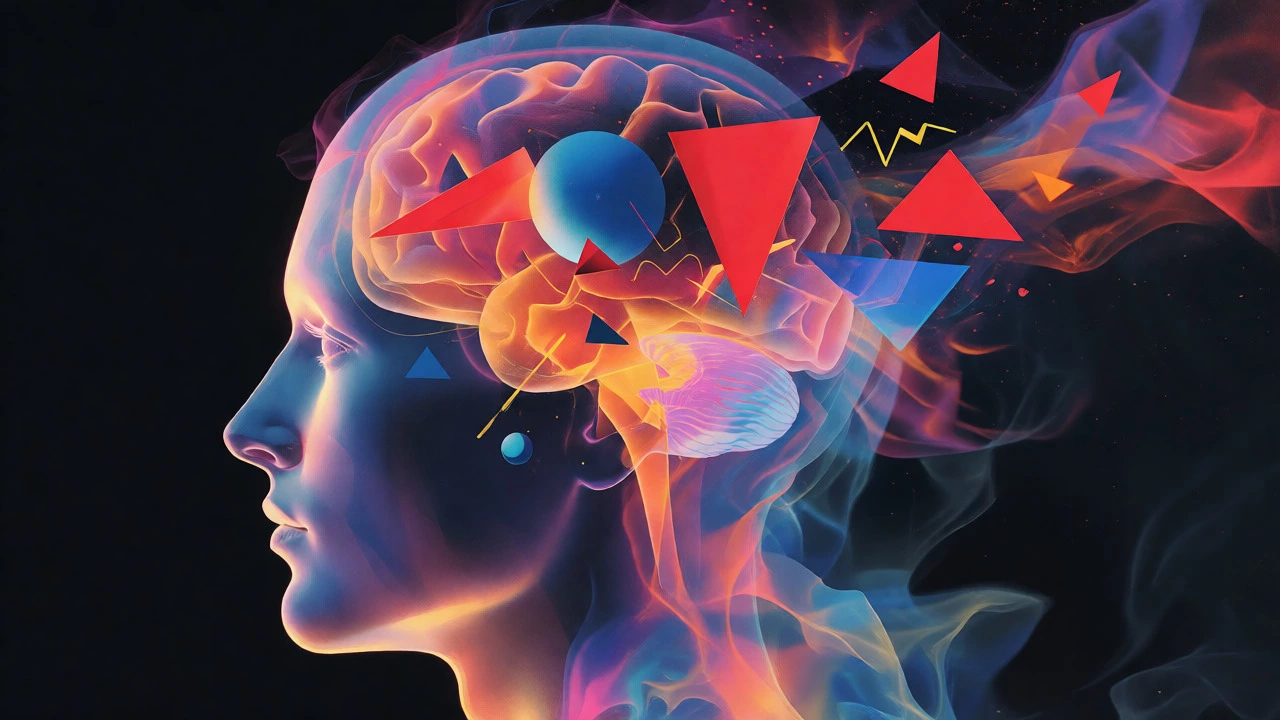
How to Engage with Abstract Art: A Practical Guide
If you want to deepen your connection with abstract art, try these steps next time you visit a museum or scroll through an online gallery:
- Silence the Critic: Stop judging whether it’s "good" or "bad." Instead, ask if it’s effective. Does it communicate something?
- Describe the Sensation: Try to articulate the feeling using words unrelated to objects. Use verbs and adjectives like "vibrating," "heavy," "floating," or "sharp."
- Check the Scale: Step back. Then step close. See how the perception changes. Large-scale works often envelop you, while small ones invite intimacy.
- Research the Artist’s Intent: While interpretation is free, knowing the artist’s historical context (e.g., post-war trauma for Pollock, spiritual seeking for Kandinsky) adds layers of understanding.
| Element | Traditional Role | Abstract Role | Viewer Action |
|---|---|---|---|
| Color | Describes object reality | Conveys emotion/mood | Note physiological response |
| Line | Defines boundaries | Creates movement/tension | Track eye movement |
| Shape | Represents forms | Establishes rhythm/balance | Analyze composition weight |
| Texture | Mimics surface | Emphasizes materiality | Imagine tactile sensation |
Bridging the Gap Between Creator and Observer
For artists, the key is authenticity. Don’t paint what you think should be abstract. Paint what you feel. If you are angry, let the lines be jagged. If you are peaceful, let the colors blend softly. Authenticity resonates because humans are wired to detect sincerity. A forced abstraction feels hollow; a genuine one feels alive.
For viewers, the key is openness. Let go of the need for control. Abstract art doesn’t give you answers; it gives you questions. It asks you to confront your own perceptions. Over time, you’ll find that your tolerance for ambiguity grows. You become better at navigating uncertainty in life, too. That’s the real power of abstract art-it trains your mind to find beauty in the undefined.
Is abstract art just random splashes of paint?
No. While some techniques like dripping paint may appear random, most abstract artists carefully plan composition, color harmony, and balance. Even in action painting, there is a deliberate control behind the chaos to ensure the final image holds together visually and emotionally.
Why do some abstract paintings sell for millions?
Value in abstract art is driven by scarcity, historical significance, and provenance. Works by pioneers like Kandinsky or Pollock changed the trajectory of art history. Collectors pay for the cultural importance and the unique ability of these specific pieces to evoke universal human emotions.
Do I need to know art history to enjoy abstract art?
Not necessarily. You can enjoy abstract art purely on a sensory level. However, learning basic concepts like color theory or the history of movements like Abstract Expressionism can enhance your appreciation by providing context for the artist's choices.
What is the difference between abstract and modern art?
Modern art is a broad historical period (roughly 1860s-1970s) that includes many styles, including realism and impressionism. Abstract art is a style within modern and contemporary art that does not attempt to represent external reality. All abstract art is modern or contemporary, but not all modern art is abstract.
Can anyone learn to appreciate abstract art?
Yes. Appreciation is a skill developed through exposure and practice. Start with accessible artists like Rothko or Mondrian, whose work uses simple shapes and colors. Spend time with each piece, allowing yourself to sit with the discomfort of not "knowing" until a feeling emerges.