Art Gallery Survival Calculator
Your Gallery Details
Key Statistics
5-year survival rate: 45% for major cities (based on Australian data)
Monthly overhead: $6,667-$12,500 for major cities
Profit threshold: Only 20% earn full-time salaries
Online sales growth: 42% of sales now occur online
Tip: Every $1,000 monthly revenue increase improves survival odds by 8%
Most people think art galleries are glamorous spaces filled with elegant openings, expensive paintings, and quiet whispers. But behind the velvet ropes and white walls, many galleries are barely staying afloat. The truth? Art gallery success rate is lower than you’d expect. In the U.S. and Europe, about 60% of commercial art galleries close within five years. In Australia, the number is similar-roughly 55% shut down by year five. This isn’t because artists aren’t talented or collectors aren’t interested. It’s because running a gallery is a brutal business, and most people don’t realize how hard it is to make it work.
What Does ‘Success’ Even Mean in an Art Gallery?
Before we look at numbers, we need to define success. For some, it’s selling a few pieces each month. For others, it’s getting into Art Basel or having a solo show at the Museum of Modern Art. But for most small galleries, success means covering rent, paying staff, and not going into debt. The average gallery in Sydney spends $80,000 to $150,000 a year just on rent and utilities, depending on the neighborhood. A gallery in Paddington might pay $12,000 a month for 100 square meters. That’s before salaries, insurance, framing, marketing, or shipping artwork.
Only about 20% of galleries make enough to pay their owner a full-time salary. The rest rely on second jobs, savings, or family support. One Melbourne gallery owner told me she works as a freelance graphic designer during the week and runs her gallery on weekends. That’s not uncommon. In fact, a 2024 survey by the Australian National Gallery Association found that 68% of gallery owners have a second source of income.
Why Do So Many Galleries Fail?
There are three big reasons galleries die before they hit year five: cash flow, artist relationships, and market saturation.
First, cash flow is a nightmare. Galleries don’t get paid when they hang a show-they get paid when someone buys. That means you might spend $20,000 on framing, promotion, and lighting for a three-week exhibition, and only sell one piece for $5,000. The rest? You’re stuck with it. Many galleries end up holding inventory for years, tying up capital they can’t use elsewhere.
Second, artist relationships are fragile. Artists expect galleries to promote them, sell their work, and build their reputation. But galleries need artists to produce work consistently and price it right. If an artist raises prices too fast, buyers walk away. If they don’t produce new work for over a year, the gallery loses momentum. The average gallery works with 12 to 18 artists. If just two of them stop delivering, the gallery’s entire calendar collapses.
Third, there are too many galleries. In Sydney alone, there are over 140 commercial galleries. Only about 20 of them regularly sell work to collectors outside Australia. The rest compete for the same small pool of local buyers. And with online platforms like Artsy and Saatchi Art growing, buyers don’t need to visit a physical space to find art. Many galleries haven’t adapted. They still think if they hang a show and invite a few friends, the sales will come.
Who Actually Makes It?
The galleries that survive are not the ones with the fanciest lighting. They’re the ones that treat art like a business.
Take Gallery 113 in Newtown. They opened in 2019 with $50,000 in savings and no investors. Instead of hosting monthly openings, they host one major show every four months. They focus on mid-career Australian artists who have already been in group shows at public institutions. They don’t take on unknowns. They charge a 40% commission (higher than the industry average of 30-35%), but they only take artists they’re confident they can sell. They also built a mailing list of 8,000 collectors through targeted Instagram ads and email newsletters. In 2024, they sold $1.2 million worth of art. They’re profitable. And they’ve never taken a loan.
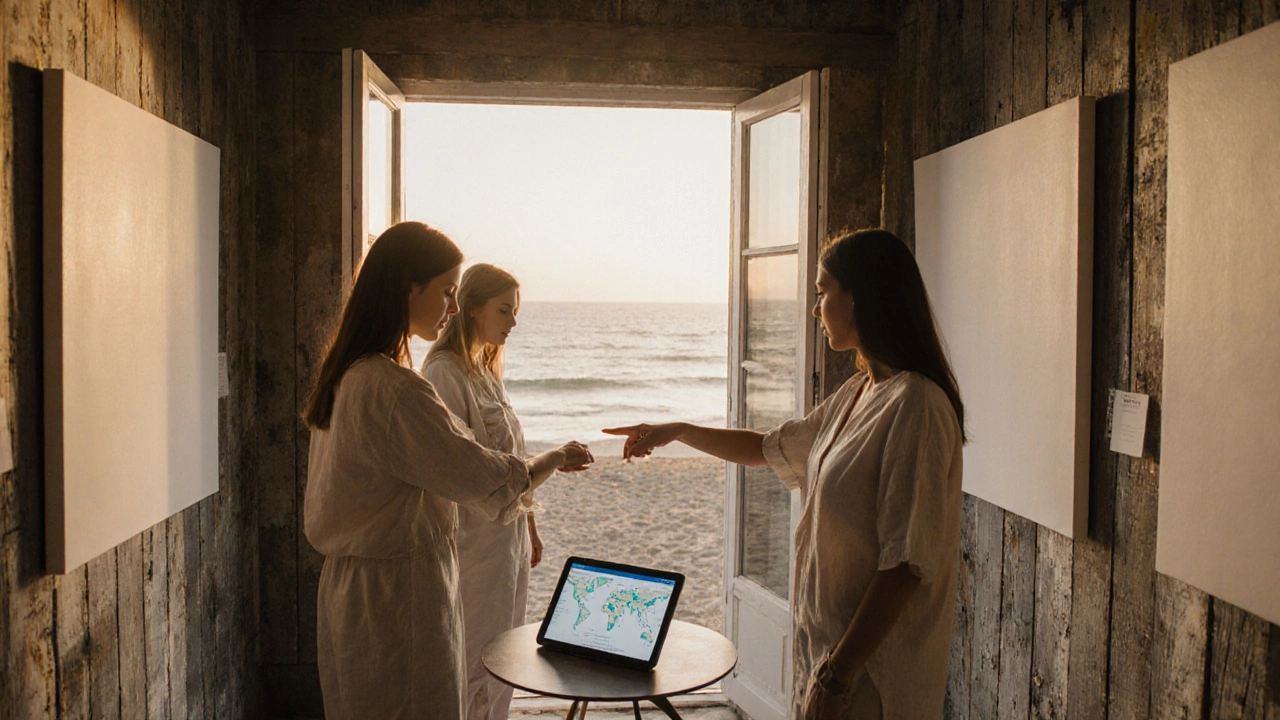
Another example: Coastline Contemporary in Byron Bay. They don’t even have a traditional gallery space. They run pop-up exhibitions in rented beachside villas during the summer season. Their overhead is 70% lower than a fixed-location gallery. They sell mostly to interstate buyers who visit for holidays. Their success isn’t about prestige-it’s about logistics and timing.
These galleries share three traits: they’re selective, they track data, and they diversify income. They sell prints, offer artist talks for a fee, partner with interior designers, and license images for editorial use. One Sydney gallery makes 30% of its income from educational workshops. Another sells limited-edition artist books. They don’t wait for collectors to walk in-they go find them.
The Role of Online Sales
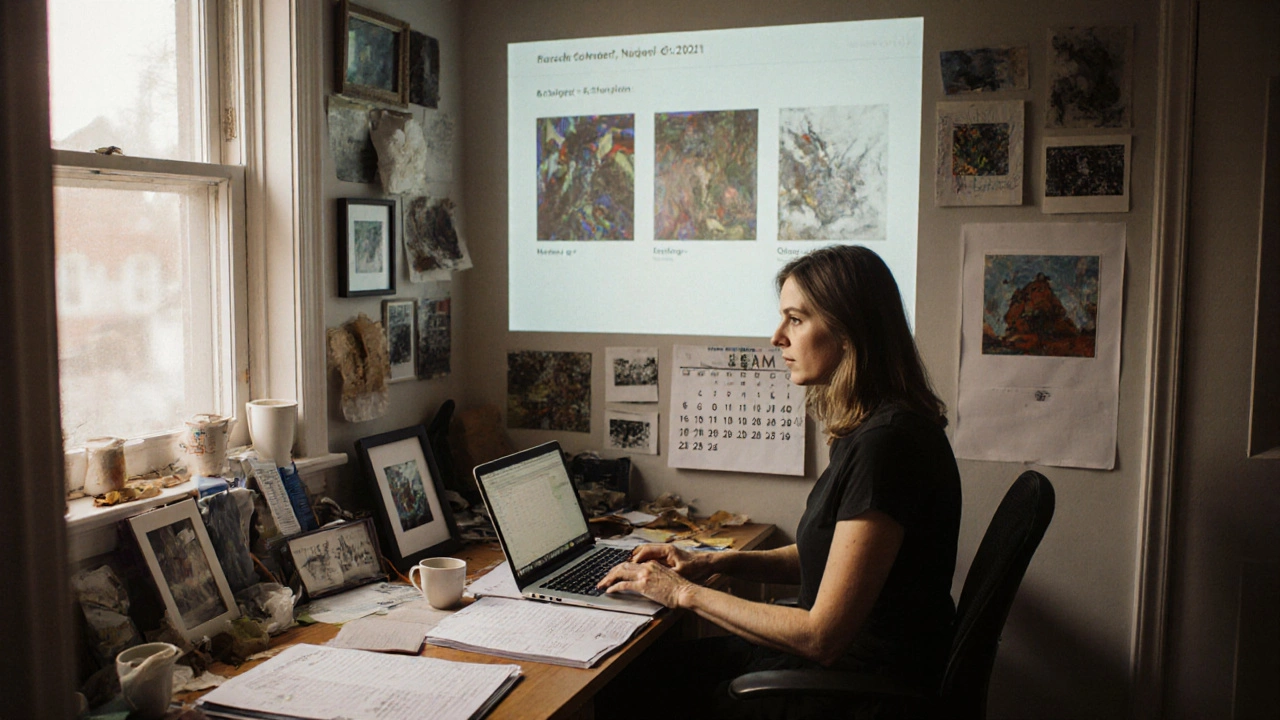
Online sales used to be a side hustle. Now, they’re the lifeline. In 2023, 42% of art sales in Australia happened online, up from 18% in 2019. But here’s the catch: galleries that sell online don’t just upload photos to Instagram. They invest in high-quality photography, detailed artist bios, secure payment systems, and return policies. They use platforms like Artlogic or ArtCloud to manage inventory and client databases.
One small gallery in Adelaide started selling through their own website after realizing 80% of their buyers were from Melbourne or Brisbane. They hired a part-time web developer for $300 a month. Within a year, online sales made up 55% of their revenue. They now have a 12-month waiting list for new artists-because they can prove they can sell.
The galleries that still rely only on foot traffic are the ones vanishing. Physical space matters, but only if it’s backed by digital reach.
What’s the Real Success Rate?
Let’s break it down by time:
- Year 1: 85% of galleries are still open-but most are operating at a loss.
- Year 3: 65% remain. This is where cash flow problems hit hardest.
- Year 5: 45% survive. These are the ones who’ve figured out how to sell consistently.
- Year 10: Only 20% are still going. These are the rare ones with loyal collector bases, strong artist rosters, and multiple revenue streams.
That means if you open a gallery today, you have a 1 in 5 chance of being around in a decade. That’s worse than the survival rate for restaurants in Australia, which sits at 28% after five years.
How to Improve Your Odds
If you’re thinking of opening a gallery-or you’re already running one-here’s what actually works:
- Start small. Don’t rent a 150-square-meter space in the CBD. Start with a 40-square-meter pop-up or a shared space with another gallery. Reduce your fixed costs.
- Know your collectors. Track who buys what. Do they prefer small works? Do they buy during winter or summer? Use simple tools like Google Sheets to log sales and contact info.
- Don’t take every artist. Be picky. If an artist hasn’t been in a public exhibition or has no social media presence, ask why. If they can’t explain their pricing, walk away.
- Build a digital presence. Hire a photographer. Take 10 high-res photos of each artwork. Write a 200-word artist bio. Post consistently on Instagram and email your list every six weeks.
- Diversify income. Sell prints. Host paid talks. Partner with architects or designers. License images. Don’t rely on sales alone.
There’s no magic formula. But there’s a clear pattern: the galleries that survive are the ones that stop pretending they’re in the art world and start acting like they’re in business.
Is It Worth It?
Yes-if you’re ready for the grind. The art world still needs spaces where people can see work in person, where curators can build narratives, and where artists can find real support. But the old model is dead. The new model is lean, digital, and selective.
Success isn’t about having the most beautiful walls. It’s about knowing your numbers, respecting your artists, and listening to your buyers. The galleries that last aren’t the ones with the most hype. They’re the ones that show up every day-even when no one’s coming through the door.
What percentage of art galleries survive past five years?
About 45% of commercial art galleries survive past five years in Australia and similar markets like the U.S. and Europe. The rest typically close due to cash flow issues, poor artist selection, or failure to adapt to digital sales.
Do art galleries make money?
Most galleries don’t make a profit in their first three years. Only about 20% of gallery owners earn a full-time salary from their gallery. Profit usually comes from a mix of art sales, prints, artist talks, licensing, and partnerships-not just from selling original artwork.
Why do galleries fail even when they have good art?
Good art doesn’t sell itself. Galleries fail because they don’t understand business basics: cash flow, pricing, marketing, or customer retention. Many assume collectors will come if the work is beautiful. In reality, collectors need to be found, nurtured, and educated about the art.
Can online sales replace physical galleries?
Online sales can’t fully replace physical galleries, but they’ve become essential. Buyers still want to see art in person before spending thousands-but they often discover it online first. Galleries that combine both a strong digital presence and a well-curated physical space have the highest success rates.
How much does it cost to run an art gallery?
In Australia, a small gallery in a major city spends $80,000 to $150,000 annually on rent, utilities, insurance, framing, and staff. This doesn’t include marketing, shipping, or artist commissions. Many owners cover these costs with personal savings or a second job.
What’s the average commission rate for art galleries?
The standard commission is 30-40%. Top-tier galleries in New York or London may charge 50%, especially for emerging artists. Smaller galleries often charge 40% to cover higher overhead costs relative to their sales volume. Anything below 30% usually means the gallery can’t afford to promote the artist properly.
If you’re considering opening a gallery, ask yourself: Are you prepared to be a business owner first, and a curator second? Because in today’s market, that’s the only way to survive.