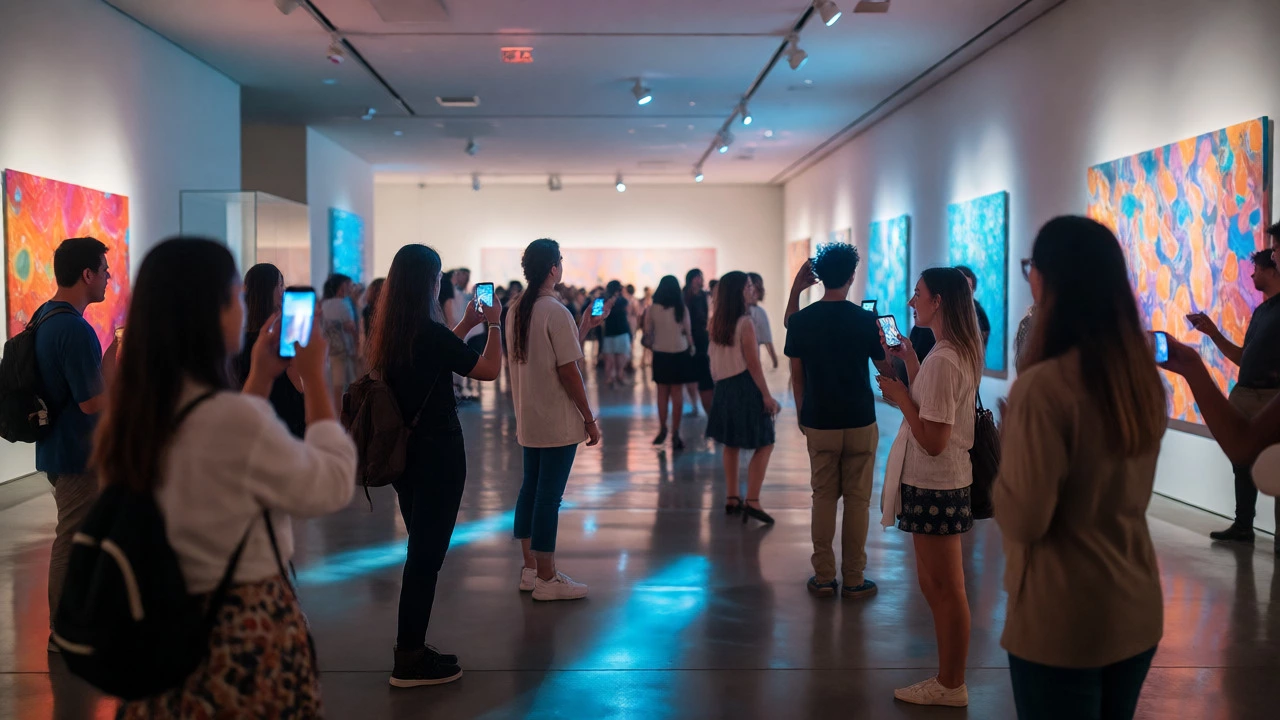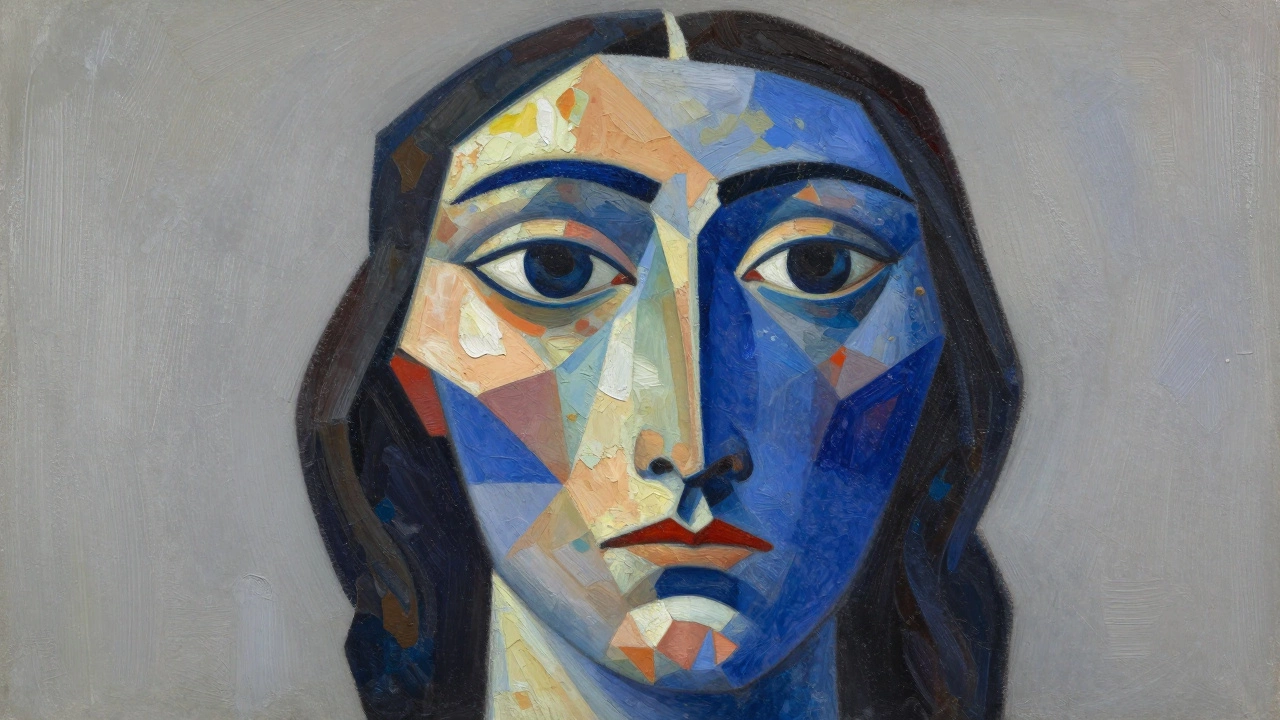
Modern painting doesn’t look like what you think of as "art" from centuries ago. No golden frames, no perfect landscapes, no flawless portraits of nobles. Instead, you see bold colors, strange shapes, and paintings that feel more like emotions than stories. So what actually makes a painting modern? It’s not just when it was made-it’s how it was made, why it was made, and what it refused to be.
It Broke the Rules of Representation
Before the late 1800s, painting was mostly about copying the world as it looked. Artists trained for years to render faces, buildings, and fields with perfect perspective and lighting. But modern painting started when artists said: "Why bother?" Take Paul Cézanne. He painted apples and mountains, but he didn’t try to make them look real. He broke them into geometric shapes-cubes, cones, cylinders. His goal wasn’t to fool your eye. It was to show how you see. That shift, from copying to interpreting, is one of the first signs of modern art.Then came Picasso and Braque with Cubism. They showed multiple angles of a face at once. A nose from the side, an eye from the front, a jaw from below-all mashed together. It wasn’t a mistake. It was a statement: reality isn’t one fixed view. It’s layered, broken, changing.
Color Became a Subject, Not a Detail
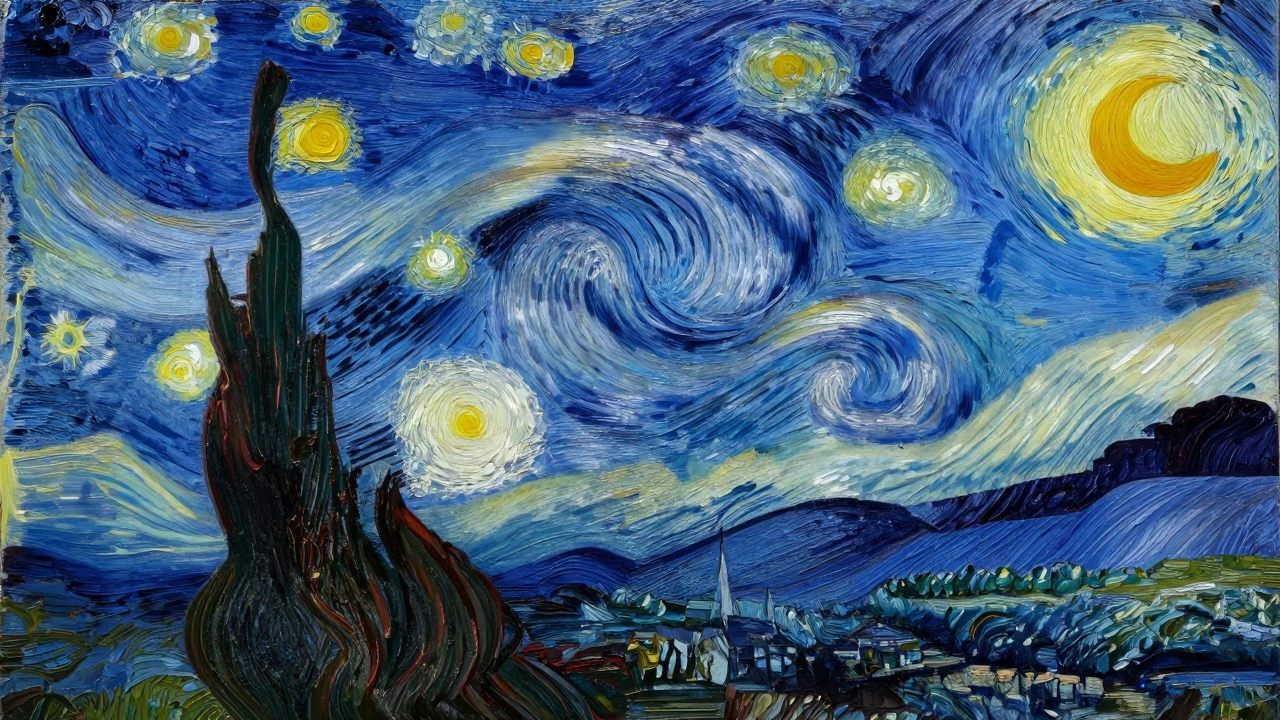
In traditional art, color served the form. Skin was pink. Grass was green. Shadows were gray. Modern painters flipped that. Color wasn’t there to describe-it was there to feel.Matisse didn’t paint blue skies because the sky was blue. He painted them blue because it made the room feel calm. Van Gogh didn’t use yellow because the sun was yellow. He used it because it burned with emotion. In his painting "The Starry Night," the sky swirls like a storm inside his head. That’s not observation. That’s expression.
By the 1910s, artists like Kandinsky dropped objects entirely. His paintings had no trees, no people, no houses. Just lines, shapes, and color. He called it abstract. He believed color could move you the same way music does. No story needed. Just feeling.
It Embraced Experimentation
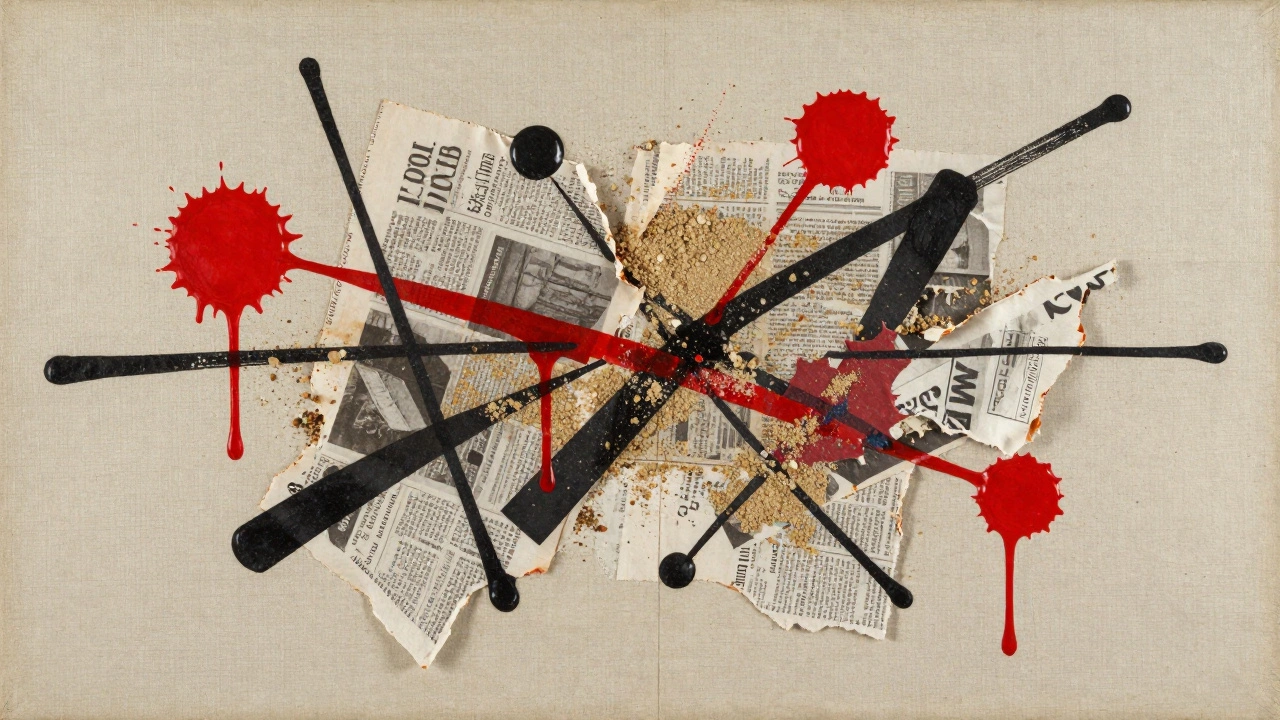
Modern painting didn’t wait for permission. Artists tried everything. They glued newspaper onto canvas (Picasso, Braque). They dripped paint (Pollock). They painted with their whole body (de Kooning). They used industrial paint, sand, even ash.Before modern art, you needed a studio, brushes, and oil paint. Modern artists used whatever was at hand. In 1912, Picasso stuck a piece of oilcloth with a wood-grain pattern into a drawing of a guitar. It wasn’t a trick. It was a new language. Art didn’t have to be "made"-it could be assembled.
This wasn’t chaos. It was a deliberate rebellion against the idea that art had to be "skillful" in the old way. Skill wasn’t about precision. It was about intention. Could you make someone feel something new? That was the real test.
It Answered a Changing World
Modern painting didn’t happen in a vacuum. It happened because the world was changing fast.The Industrial Revolution brought factories, trains, and mass production. Artists saw beauty in machinery-not just in churches and castles. The invention of photography freed painting from the job of recording reality. If a camera could capture a face perfectly, why should a painter try?
World War I shattered old beliefs about progress and order. Artists responded with Dada-nonsense art, absurd collages, anti-art. Duchamp’s "Fountain," a signed urinal, wasn’t a joke. It was a question: "What even is art?"
Modern painting asked: What does it mean to be human in a world of machines, wars, and mass media? It didn’t give answers. It gave questions.
It Rejected Tradition
Modern art didn’t just evolve. It broke from the past. It didn’t care about Renaissance rules, classical proportions, or religious themes. Even when it borrowed from older styles, it twisted them.Look at Edward Hopper’s "Nighthawks." It looks realistic. But it’s not. The light is too sharp. The shadows are too deep. The people are alone, even together. Hopper didn’t paint a diner. He painted loneliness in the modern city. That’s not realism. It’s emotional truth.
Modern painters didn’t need approval from academies or patrons. They painted for themselves, for other artists, for people who felt the same way. Galleries changed. Museums started showing work that confused people. That was the point.
It Wasn’t About Beauty
You can’t look at a Picasso portrait and say, "That’s beautiful." But you can say, "That’s powerful."Modern painting didn’t aim for harmony. It aimed for honesty. It showed anxiety, anger, alienation, and confusion. It didn’t smooth out the edges. It dug into them.
That’s why modern paintings often feel unsettling. They’re not trying to please you. They’re trying to wake you up. A modern painting might make you uncomfortable. That’s not a flaw. It’s a feature.
Modern Isn’t Just a Time Period
Many people think "modern art" means anything painted between 1880 and 1950. That’s wrong. Modern is a mindset.A painting from 1920 that copies a Renaissance style isn’t modern. A painting from 2020 that breaks rules, uses raw emotion, and questions reality? That’s modern-even if it was made yesterday.
Modern painting isn’t about age. It’s about attitude. It asks: Is this new? Is this honest? Is this necessary? If the answer is yes, it belongs.
The paintings that endure aren’t the ones with perfect brushwork. They’re the ones that changed how we see. They made us question what art could be. And that’s what makes them modern.