Musical Genius Potential Calculator
Based on research showing that musical ability depends more on practice and emotional connection than IQ scores.
When people talk about genius in music, they often bring up IQ scores like they’re a trophy. 120 IQ sounds impressive - it’s in the top 10% of the population. But here’s the truth: no musician walks around saying, "My IQ is 120, so I’m better than you." And no record label ever signed someone because they aced a Stanford-Binet test.
The idea that high IQ equals musical genius is a myth built on misunderstanding. IQ tests measure logic, pattern recognition, and verbal reasoning. They don’t measure rhythm, emotional expression, timbre sensitivity, or the ability to improvise a solo that makes a room hold its breath. You can have a 160 IQ and struggle to play "Twinkle Twinkle Little Star" in time. Or you can have an IQ of 95 and write a symphony that moves millions.
Let’s look at real people. Wolfgang Amadeus Mozart is often cited as a child prodigy with a genius-level IQ. But there’s no record of him ever taking an IQ test - they didn’t exist in the 1700s. Historians estimate his cognitive abilities were off the charts, but that’s guesswork. Same with Ludwig van Beethoven. He was a master of structure, harmony, and emotional depth. But his IQ? Unknown. His hearing loss? Debilitating. His will? Unbreakable.
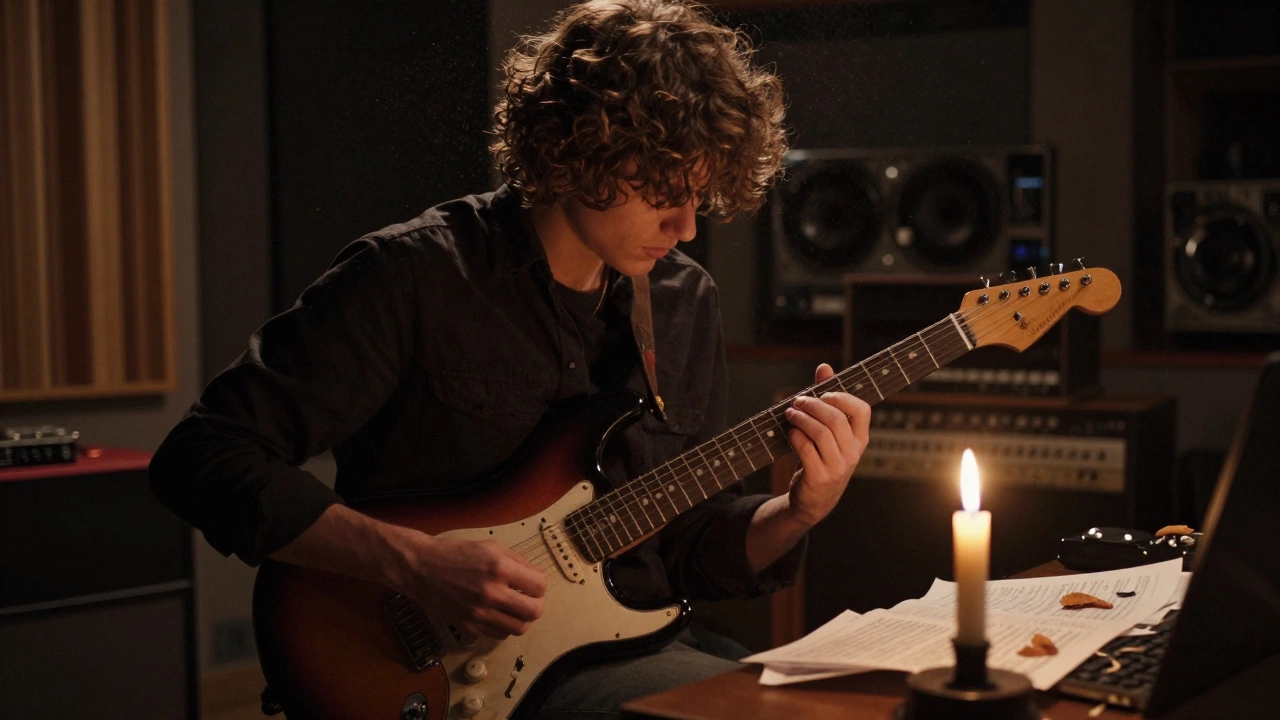
Fast forward to the 20th century. Jimi Hendrix never finished high school. He struggled with reading. Yet he redefined the electric guitar. He didn’t need to understand the theory behind modal scales to make them scream. He felt them. He bent them. He made them cry. His genius wasn’t measured in numbers - it was measured in how many guitarists still try to copy his solos 50 years later.
Then there’s Stevie Wonder. Born blind, he taught himself dozens of instruments by ear. He composed, arranged, and produced his own albums before he turned 20. He’s a living legend. But his IQ? No one knows. And honestly? It doesn’t matter. What matters is that he heard harmonies in his head that most trained musicians can’t even imagine.
Even in classical music, the numbers don’t add up. Yo-Yo Ma, one of the greatest cellists alive, has spoken publicly about how he learned music through feeling, not formulas. He talks about the emotional weight of a phrase, the silence between notes, the breath of the instrument. He doesn’t mention IQ. He mentions humanity.
Why IQ Tests Don’t Capture Musical Genius
IQ tests are designed for logic problems, not creativity. They ask you to find the next shape in a sequence. They test how fast you can solve math puzzles. They measure verbal fluency. But music? Music is about emotion, memory, timing, and intuition. It’s about knowing when to hold a note longer than the sheet music says. It’s about making a listener feel something they can’t name.
Studies from the University of Melbourne in 2023 showed that professional musicians scored average on standard IQ tests - but far above average on tests measuring auditory memory, emotional recognition, and rhythmic precision. In other words, their brains were wired differently - not smarter, just differently.
Think of it this way: a chess grandmaster and a jazz pianist both see patterns. But one sees moves on a board. The other sees shifts in mood, tension, and release. One wins by calculation. The other wins by soul.
Who Actually Has a 120 IQ in Music?
There are a few known cases where musicians have publicly shared their IQ scores - and they’re rare.
- Brian May, Queen’s guitarist and astrophysicist, reportedly scored 120+ on IQ tests. He holds a PhD in astrophysics and wrote complex guitar solos that mirror orbital mechanics. He’s one of the few who bridges high IQ with musical mastery - but even he says his music came from emotion, not calculation.
- Mariah Carey reportedly scored 140 on an IQ test in her youth. She’s known for her five-octave range and vocal control. But her genius lies in her ear - not her test scores. She can hear a note and replicate it perfectly, even if she’s never sung it before.
- Philip Glass, minimalist composer, studied mathematics before turning to music. He’s said his early training helped him structure repetitive patterns. But he doesn’t credit IQ for his creativity. He credits obsession.
These are exceptions. Not the rule.
The Real Secret Behind Great Musicians
The most common trait among top musicians isn’t IQ. It’s deliberate practice. That’s the term psychologist K. Anders Ericsson coined after studying violinists at Berlin’s Academy of Music. He found that the best players didn’t have higher IQs. They practiced 10,000 hours - not because they were geniuses, but because they loved it enough to show up every day, even when they were tired.
They made mistakes. They failed. They rewrote melodies 50 times. They listened to recordings over and over until their ears could detect a single note out of tune.
It’s not about being born smart. It’s about being stubborn. It’s about showing up when no one’s watching. It’s about loving the process more than the result.
What IQ Can’t Measure
IQ tests can’t measure:
- How well you can feel a groove in your chest
- How deeply you can connect with a lyric that saved someone’s life
- How you can turn a single chord progression into a story
- How you know when to stop playing - because silence speaks louder
These are the things that make music alive. They’re not in textbooks. They’re not on tests. They’re in the room when a child hears their first song and stops crying. They’re in the tears at a funeral when a violinist plays a tune the deceased loved. They’re in the way a street musician’s melody makes a busy city pause for five seconds.
So Who Has a 120 IQ in Music?
A few people do. Maybe more than we know. But their IQ score didn’t make them great. It was their hunger. Their curiosity. Their willingness to fail again and again.
The real question isn’t "Who has a 120 IQ?" It’s: "Who kept playing when no one was listening?"
That’s the answer.
Can you have a high IQ and still be a bad musician?
Absolutely. IQ measures problem-solving and logical reasoning, not musical ability. Someone with a 150 IQ might understand chord theory perfectly but struggle to play in time or express emotion. Music isn’t a math test - it’s a language of feeling. You can know all the rules and still not speak the heart of the language.
Do all prodigies have high IQs?
No. Many child prodigies - like violinist Midori or pianist Lang Lang - were identified by their intense focus, emotional connection to music, and obsessive practice habits. Their IQs were never the focus. Their drive was. One study of 87 child musicians found that only 12% had IQs above 130. The rest had average scores but extraordinary dedication.
Is IQ important for composing music?
It can help with structure - like understanding complex harmonies or large-scale form. But most great composers, from Debussy to Björk, relied on intuition, experimentation, and emotional memory. Beethoven composed his Ninth Symphony while deaf. He didn’t need to hear the notes - he heard them in his mind. That’s not IQ. That’s imagination.
Do music schools test IQ for admission?
Never. Music schools look at audition tapes, ear training, sight-reading, and passion. They want to see how you respond to feedback, how you handle pressure, and whether you can connect with an audience. IQ scores aren’t even collected. If you can move someone with your music, they don’t care what number you got on a test.
Can you improve your musical intelligence without a high IQ?
Yes - and that’s the good news. Musical intelligence isn’t fixed. You can train your ear, your timing, your memory, and your emotional expression. Practice scales. Sing along to songs. Transcribe solos by ear. Listen to genres you hate. The more you engage with music, the more your brain adapts. You don’t need genius. You just need consistency.