Abstract Art Fame Finder
Not sure who the "most famous" abstract artist is? It depends on what you value. Select the statement that best describes your taste in art below to discover your match.
Structure & Theory
I like ordered, intellectual, and balanced compositions. I appreciate geometric shapes and primary colors.
Energy & Chaos
I crave raw energy, spontaneity, and action. I love seeing the physical process of creation.
Peace & Emotion
I want peace, meditation, and deep emotional resonance. I connect with large fields of color.
Modernity & Value
I am interested in current relevance, market value, and contemporary techniques like squeegee abstraction.
Key Stats
Walk into any major museum gift shop or scroll through a high-end interior design feed, and you’ll see it: big, bold splashes of color that don’t look like anything in particular. But if you ask ten people who invented this style, you’ll get ten different answers. Some will say Wassily Kandinsky is the father of abstract art because he claimed to paint music. Others will swear by Jackson Pollock, the guy who threw paint on the floor. So, who actually holds the crown for being the most famous abstract artist?
The truth is messy, fascinating, and depends entirely on what you value: historical precedence, market price, or cultural recognition. There isn’t one single "king" of abstraction. Instead, there’s a hierarchy of fame based on different criteria. If we’re talking about who started it all, it’s likely Kandinsky or Hilma af Klint. If we’re talking about who broke records at auction, it’s Jeff Koons or Gerhard Richter. If we’re talking about who everyone recognizes from pop culture, it’s probably Pollock or Rothko.
The Historical Pioneer: Wassily Kandinsky
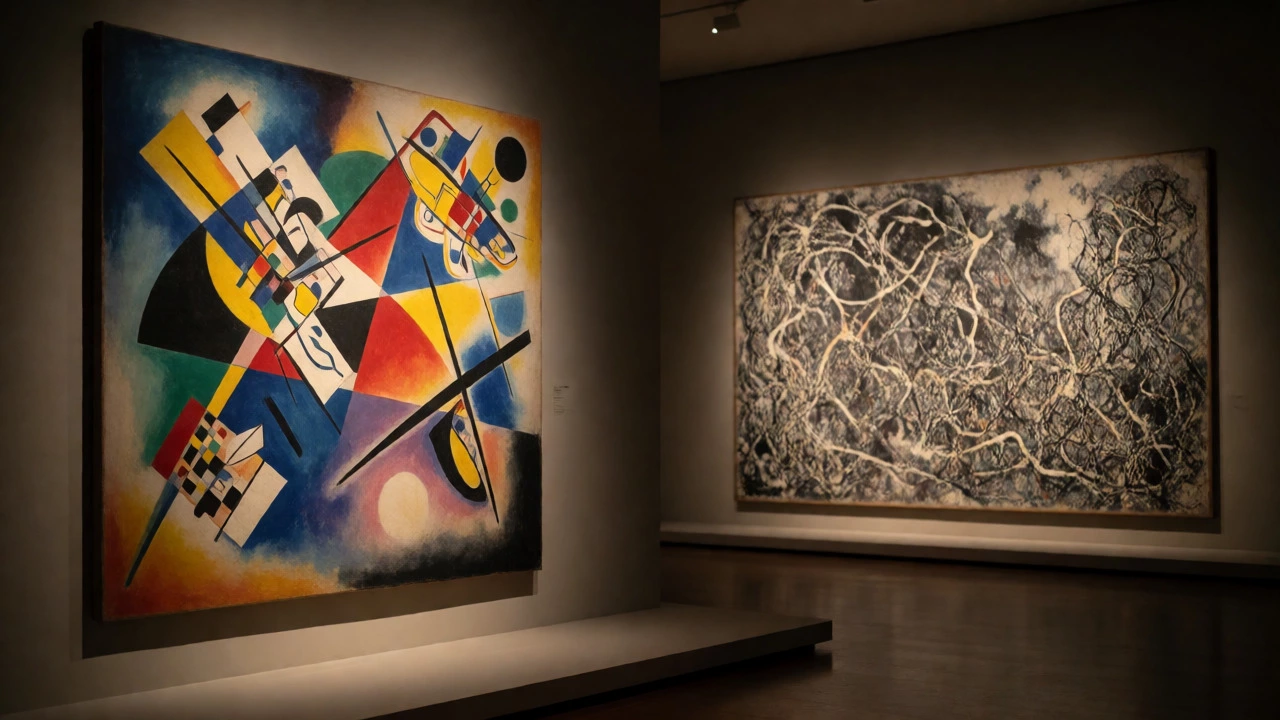
If you want to point to the person who arguably turned abstraction into a legitimate art form, you have to look at Wassily Kandinsky. A Russian painter born in 1866, Kandinsky didn’t just make weird shapes; he wrote the rulebook. His 1911 treatise, Concerning the Spiritual in Art, argued that colors and shapes could evoke emotions directly, without needing to depict a tree or a face. He believed art should be like music-purely emotional and non-representational.
Kandinsky’s fame comes from his role as a theorist and a pioneer. He co-founded the Blue Rider group in Munich, which pushed German Expressionism toward abstraction. When you see geometric abstract art today-the sharp lines, the primary colors-you’re looking at Kandinsky’s DNA. However, while he is critically acclaimed, he isn’t necessarily the name that pops up first for the average person walking down the street. His fame is academic, respected but not always mainstream.
The Pop Culture Icon: Jackson Pollock
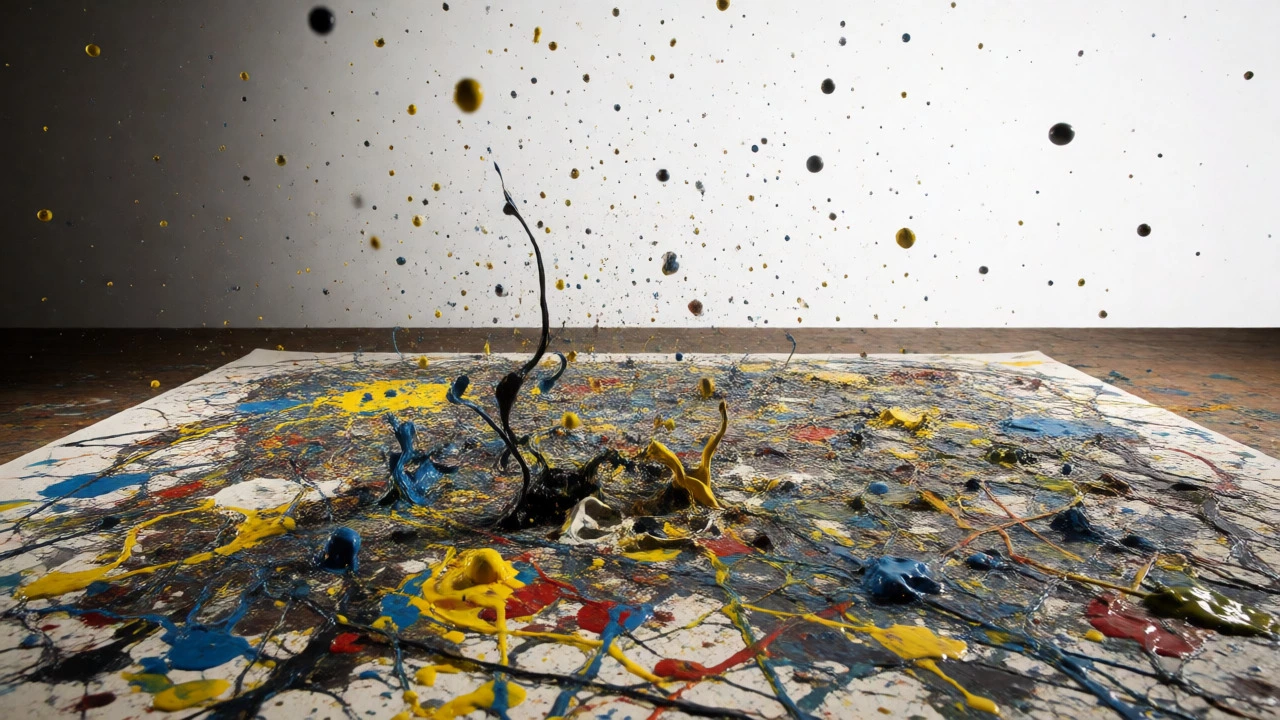
Ask someone to describe abstract art, and they might mimic throwing a bucket of paint. That’s Jackson Pollock. An American painter active in the mid-20th century, Pollock became the face of Abstract Expressionism. His technique, known as "drip painting," involved laying large canvases on the floor and pouring, flinging, and dripping enamel paints onto them.
Why is Pollock so famous? Because his process was dramatic. Life magazine famously called him "Jack the Dripper." His work shifted the center of the art world from Paris to New York City. For many, Pollock represents the ultimate act of artistic freedom-no brushstrokes, no pre-planned composition, just pure action. His paintings are instantly recognizable. You don’t need an art degree to spot a Pollock. This accessibility makes him arguably the most "famous" in terms of general public recognition, even if critics sometimes argue his work lacks the depth of his contemporaries.
The Emotional Giant: Mark Rothko
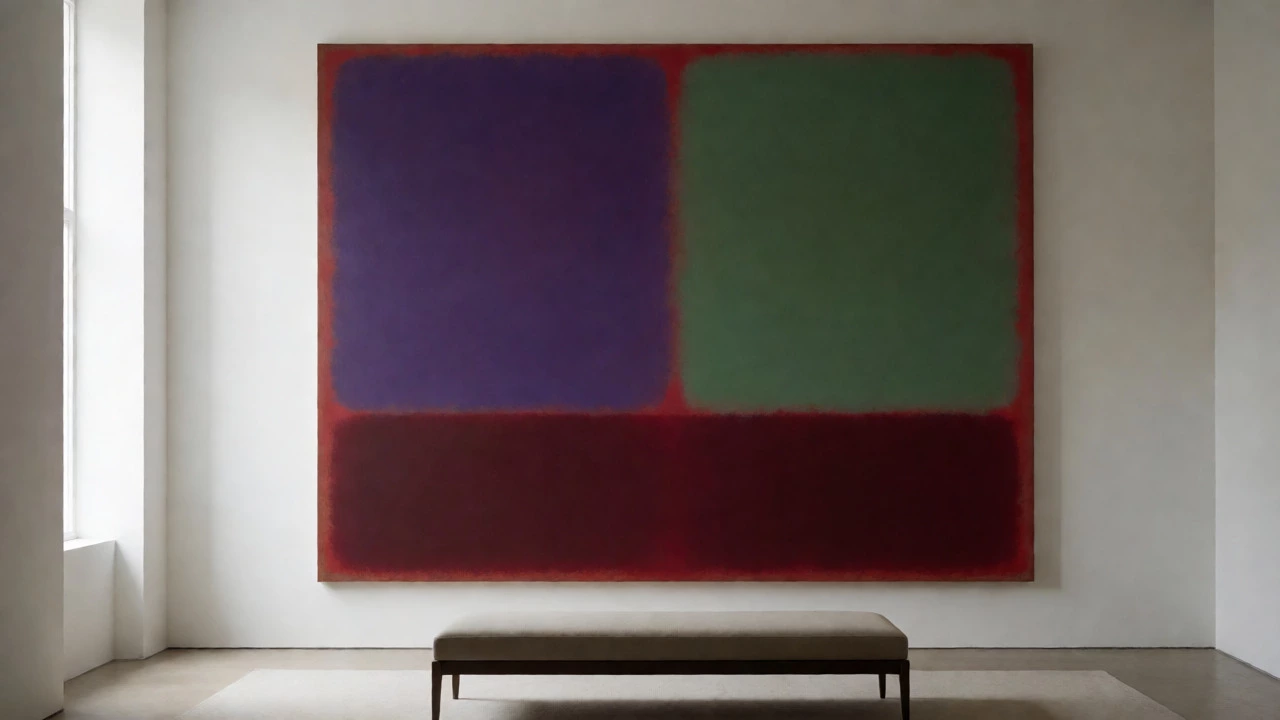
If Pollock is about energy, Mark Rothko is about silence. Rothko is another giant of Abstract Expressionism, but his style couldn’t be more different. He painted large fields of soft, rectangular blocks of color that seem to float on the canvas. His goal wasn’t to show movement but to evoke basic human emotions-tragedy, ecstasy, doom.
Rothko’s fame skyrocketed after his death, particularly when his works began selling for hundreds of millions of dollars. The No. 6 (Violet, Green and Red) sold for $186 million in 2014. But beyond the money, Rothko created spaces for contemplation. The Rothko Chapel in Houston is a testament to his enduring influence. People often report crying in front of his paintings. This emotional connection gives him a unique kind of fame-not just as a celebrity artist, but as a spiritual guide for viewers seeking meaning in chaos.
The Market Leader: Gerhard Richter
Fame in the modern era is often measured in dollar signs. By that metric, Gerhard Richter is the reigning champion. A German contemporary artist, Richter is known for his versatility-he does photorealistic paintings, blurry photo-paintings, and massive abstract squeegee works. His abstract pieces, where he drags thick layers of paint across the canvas with a large squeegee, are prized by collectors worldwide.
In 2015, his abstract painting Abstraktes Bild sold for $46.3 million, setting a record for a living artist at the time. Richter’s fame is global and current. Unlike Kandinsky or Pollock, who are historical figures, Richter is very much alive and active. His presence in museums, galleries, and auction houses keeps his name in the headlines. If you define "famous" as "currently relevant and valuable," Richter takes the top spot.
The Hidden Gem Who Was Right All Along: Hilma af Klint
For decades, art history books ignored women. Hilma af Klint, a Swedish artist, created her first abstract paintings in 1906-years before Kandinsky. She worked in secret, driven by spiritualism and geometry. Her work wasn’t shown publicly until 1944, and she requested that it remain hidden for 20 years after her death.
Today, Hilma af Klint is experiencing a massive resurgence. Major exhibitions at the Guggenheim in New York and Tate Modern in London have brought her back into the spotlight. Many now argue she should be credited as the true first abstract artist. Her fame is growing rapidly as we rewrite art history to be more inclusive. While she may not yet match Pollock’s name recognition, her story adds a crucial layer to the conversation about who deserves the title.
Comparing the Titans
To help you decide who fits your definition of "most famous," here’s a breakdown of how these artists compare across key metrics.
| Artist | Primary Style | Peak Fame Era | Auction Record (Approx.) | Main Claim to Fame |
|---|---|---|---|---|
| Wassily Kandinsky | Geometric/Lyrical Abstraction | 1910s-1940s | $40M+ | Theoretical foundation of abstract art |
| Jackson Pollock | Action Painting/Drip | 1940s-1950s | $200M+ | Cultural icon of American freedom |
| Mark Rothko | Color Field | 1950s-Present | $87M+ (varies) | Emotional depth and meditative quality |
| Gerhard Richter | Squeegee Abstraction | 1980s-Present | $46M+ (historical) | Highest value for living abstract artist |
| Hilma af Klint | Spiritual Geometric | 2010s-Present | N/A (mostly museum-held) | Pioneer who predates Kandinsky |
Why Does Fame Matter in Abstract Art?
You might wonder why we care so much about ranking these artists. It’s not just about bragging rights. The fame of these individuals shapes what we buy, what museums display, and how we understand creativity itself. When Jackson Pollock became famous, it validated the idea that the process of making art was as important as the result. When Rothko became famous, it proved that simple color could hold complex emotion.
This fame also drives the market. Collectors aren’t just buying paint; they’re buying a piece of history associated with a famous name. That’s why a small sketch by Kandinsky can cost more than a large masterpiece by an unknown contemporary artist. The narrative around the artist becomes part of the artwork’s value.
How to Identify Your Favorite Abstract Artist
If you’re trying to figure out which abstract artist resonates with you, ignore the rankings for a moment. Look at what moves you emotionally.
- Do you like structure and theory? Check out Kandinsky or Piet Mondrian. Their work feels ordered, intellectual, and balanced.
- Do you crave raw energy and chaos? Go with Pollock or Willem de Kooning. Their work feels alive, aggressive, and spontaneous.
- Do you want peace and meditation? Look at Rothko or Barnett Newman. Their large color fields invite you to slow down and breathe.
- Are you interested in mystery and spirituality? Explore Hilma af Klint or Agnes Martin. Their work feels otherworldly and deeply personal.
Remember, abstract art doesn’t require you to "get it." It requires you to feel it. The most famous artist is simply the one whose feelings align best with yours.
Frequently Asked Questions
Who is considered the inventor of abstract art?
While several artists experimented with abstraction simultaneously, Wassily Kandinsky is traditionally credited as the first to create purely abstract paintings and write theoretical texts supporting the movement. However, recent scholarship highlights Hilma af Klint, who created abstract works earlier but kept them private.
Is Jackson Pollock really the most famous abstract artist?
In terms of general public recognition and pop culture impact, yes. His "drip" technique is iconic and easily recognizable. However, in terms of critical acclaim and market value among living artists, names like Gerhard Richter or Jeff Koons compete strongly.
What is the difference between Abstract Expressionism and Minimalism?
Abstract Expressionism, associated with Pollock and Rothko, emphasizes emotional expression, gesture, and subjective feeling. Minimalism, associated with artists like Donald Judd, strips art down to its essential forms, focusing on objectivity, materials, and space rather than emotional content.
Why is abstract art so expensive?
High prices are driven by scarcity, provenance, and the fame of the artist. Works by Kandinsky, Pollock, and Rothko are rare and historically significant. Additionally, the art market treats these works as alternative assets, similar to gold or stocks, driving up their value during economic uncertainty.
Can I tell if an abstract painting is good?
There is no objective standard, but experts look for composition, color harmony, texture, and emotional resonance. A "good" abstract painting usually has a visual flow that guides your eye and evokes a specific feeling or thought, even if that feeling is confusion or calm.