Realism Assessment Tool
Test your understanding of what makes a portrait truly realistic using the criteria from the article.
Based on the article, authentic realism is measured by four key elements:
- 1 Soft edge transitions (not hard photo-like borders)
- 2 Visible texture with subtle brushstrokes
- 3 Light with weight and depth (not flat)
- 4 Human imperfections (asymmetry, blemishes)
Edge Transitions
Does the portrait show soft, gradual transitions between light and shadow?
Texture and Brushwork
Is there visible texture showing the artist's hand?
Light Quality
Does light have depth and weight in shadows?
Human Imperfections
Does the portrait include subtle imperfections?
When someone asks who the most realistic portrait artist is, they’re not really looking for a name on a trophy. They want to know who can make you stop, stare, and wonder if the person in the painting is breathing. Realistic portrait art isn’t just about details-it’s about capturing a soul in pigment. And today, that skill lives in a handful of artists who don’t just paint faces-they resurrect them.
What Makes a Portrait Truly Realistic?
Realism in portraiture isn’t about how many hairs you draw or how shiny you make the skin. It’s about light, depth, and the quiet tension between stillness and life. A realistic portrait makes you forget it’s paint. You see the slight unevenness of a lip, the way light catches the edge of an eyelid, the faint shadow under a cheekbone that tells you the person just turned their head a second ago.
Artists who master this don’t rely on photos alone. They study anatomy like surgeons. They spend weeks on a single eye. They mix colors until the tone matches the exact shade of someone’s skin under natural morning light. And they don’t stop at the surface-they capture personality in the tilt of a head, the half-smile that’s almost gone.
This isn’t photo-reproduction. It’s translation. And only a few artists have turned that translation into something unforgettable.
Chuck Close: The Grid That Changed Everything
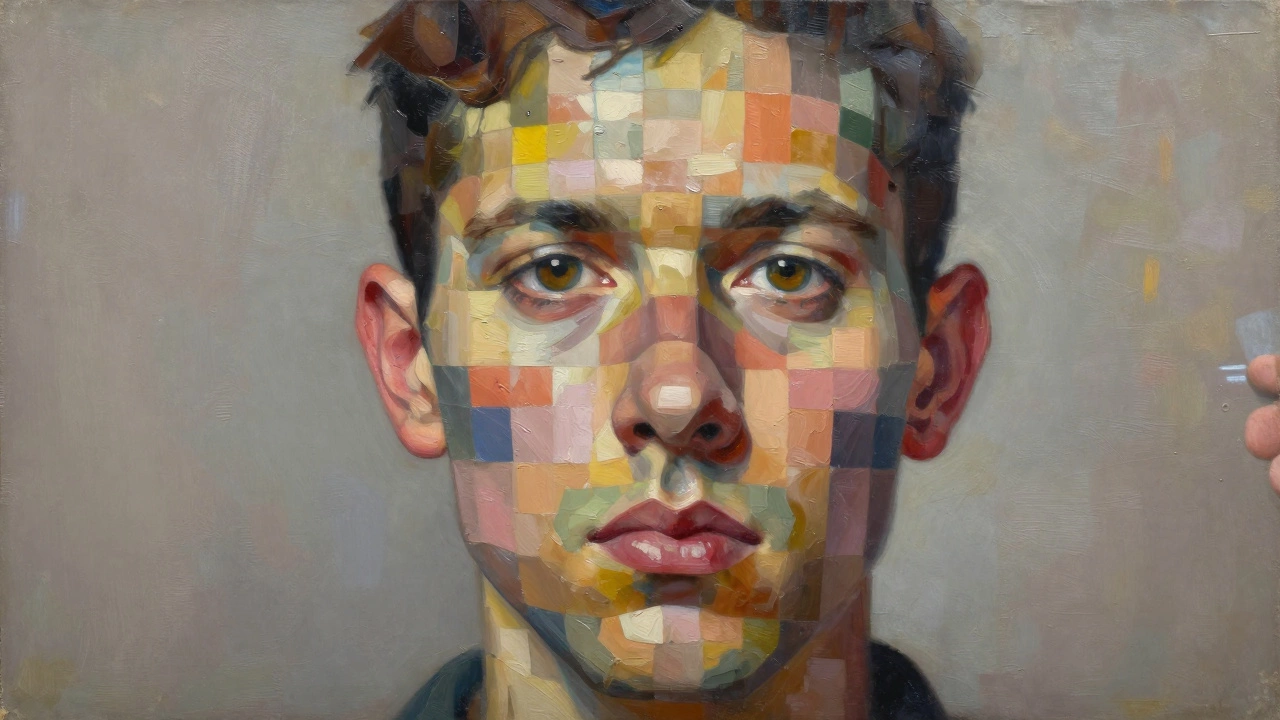
If you’ve ever stood in front of a giant portrait of a face that looks like a photograph from ten feet away-but up close is a chaos of colored squares-you’ve seen Chuck Close’s work. He didn’t paint like a traditional portraitist. He built faces like mosaics, using a grid system to break down every pixel of a photo into brushstrokes.
Close’s portraits are massive. Some are over ten feet tall. His 1968 piece Big Self-Portrait took him months. Each square, each stroke, was deliberate. He didn’t smooth out the brushwork-he celebrated it. That’s what made his realism so powerful. It wasn’t about hiding the art. It was about showing you how hard it was to make something look real.
After a stroke in 1988 left him partially paralyzed, Close adapted. He painted with a brush strapped to his arm. His style evolved, but his obsession with capturing human presence never changed. He painted celebrities, friends, strangers-all with the same intensity. His work proves that realism isn’t about perfection. It’s about presence.
Roberto Bernardi: The Quiet Master of Light
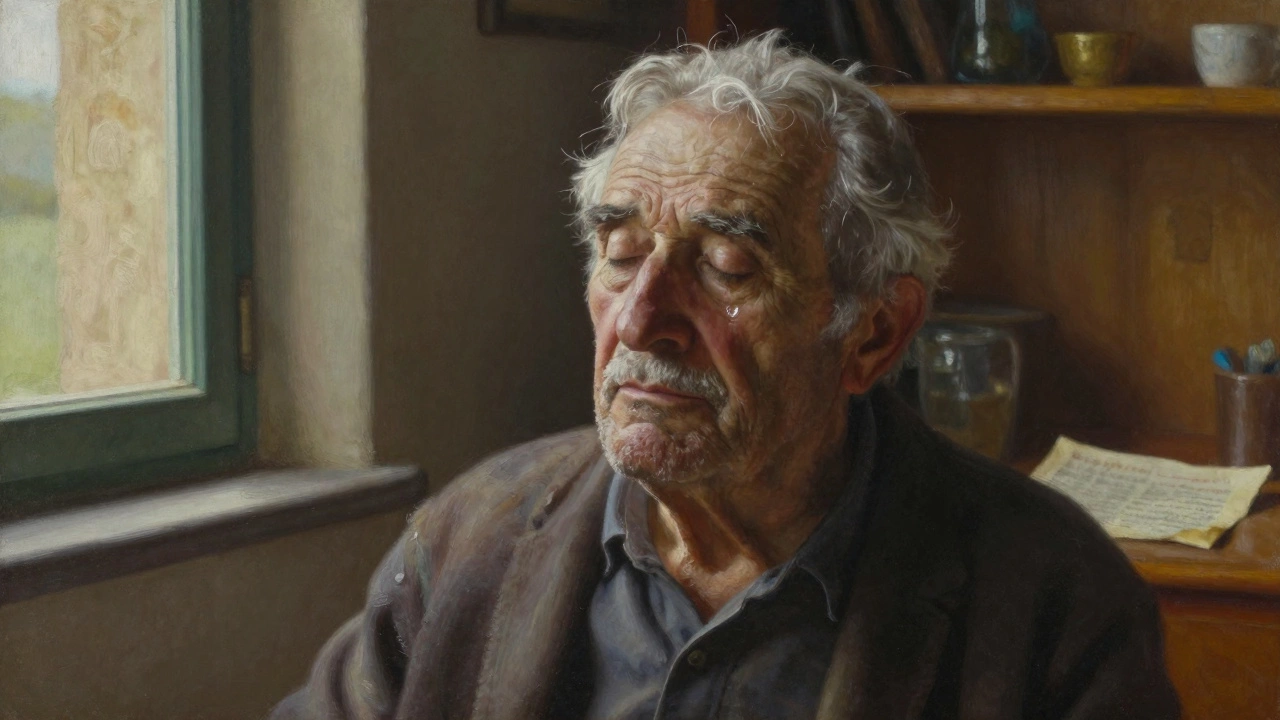
While Close worked big and bold, Roberto Bernardi worked small-and quieter. Bernardi, an Italian artist based in Tuscany, paints hyperrealist portraits so detailed they look like high-resolution photos printed on canvas. But they’re not photos. They’re oil paintings, sometimes taking over 600 hours to complete.
What sets Bernardi apart is his control of light. He doesn’t just paint skin-he paints how light moves across it. The way a strand of hair catches the sun. The soft glow behind an ear. The faint reflection in an iris. His portraits of elderly people are especially haunting. You can see the weight of years in the wrinkles, the quiet dignity in the gaze.
He rarely paints celebrities. His subjects are often ordinary people: a woman reading a letter, a man with his eyes closed, a child holding a toy. That’s what makes his work feel so real. You don’t just see a face. You feel a moment.
Audrey Flack: The First Woman of Hyperrealism
In the 1970s, when most artists were chasing abstraction, Audrey Flack turned back to realism-and made it revolutionary. She was one of the first women to lead the hyperrealist movement. Her portraits aren’t just accurate. They’re layered with meaning.
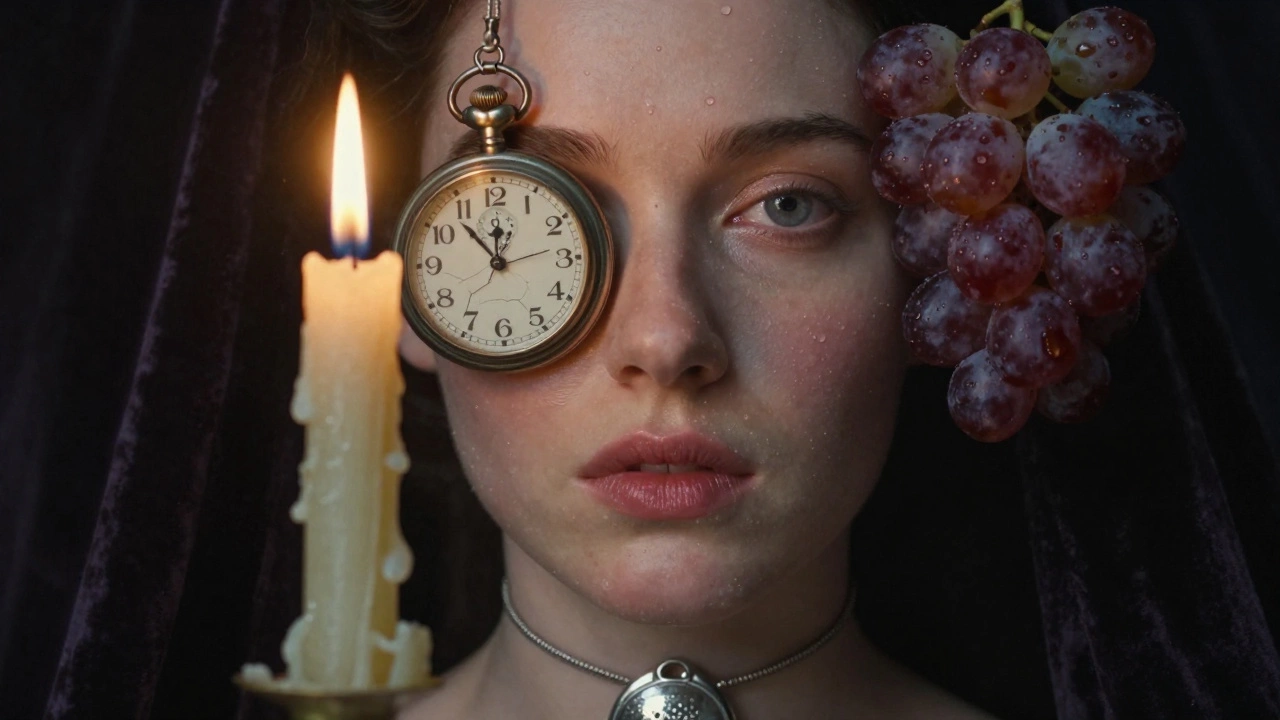
Flack’s 1977 painting Marilyn (Vanitas) looks like a photograph of the actress. But it’s surrounded by symbols: a burning candle, a clock, a half-eaten apple. She wasn’t just painting Marilyn Monroe. She was painting time, memory, and loss.
Her technique was meticulous. She used airbrushes to blend colors so smoothly, you couldn’t tell where one tone ended and another began. She painted reflections in jewelry, the texture of silk, the dew on a grape-all with the precision of a scientist. But she never lost the humanity. Her portraits feel intimate, like you’ve been invited into someone’s private world.
Why There’s No Single “Most Realistic” Artist
Here’s the truth: there’s no official crown for the most realistic portrait artist. Realism isn’t a competition. It’s a language. And each artist speaks it differently.
Chuck Close built faces from fragments. Bernardi captured the silence between breaths. Flack painted emotion into the details. You can’t say one is better than the others. You can only say which one moves you.
Some artists today, like Richard Estes or Gottfried Helnwein, push realism into surreal territory. Others, like Alyssa Monks, paint water dripping off skin so realistically you feel the chill. But none of them would call themselves the “best.” They’re just chasing the same thing: the moment when a painting stops being art-and starts being life.
How to Tell Realism From a Photo
If you’ve ever stared at a hyperrealist painting and thought, “That’s just a photo,” you’re not alone. But here’s how to tell the difference:
- Look at the edges. Real paintings have soft transitions. Photos have hard borders.
- Check the texture. Paint has depth. You can see brushstrokes under magnification-even if they’re tiny.
- Watch the light. In a photo, light is flat. In a realist painting, light has weight. It pushes into shadows and pulls out highlights.
- Look for imperfections. Real skin isn’t flawless. A slight asymmetry, a tiny blemish, a stray hair-that’s what makes it human.
The best realist portraits don’t trick your eyes. They trick your heart.
Where to See These Artists’ Work
You won’t find Chuck Close’s paintings in a small gallery. His work hangs in the MoMA in New York, the National Portrait Gallery in London, and the Art Institute of Chicago. Bernardi’s pieces are mostly in private collections in Europe, but major exhibitions pop up in Florence and Milan. Flack’s work is in the Smithsonian and the Whitney Museum.
If you’re in Sydney, check out the Art Gallery of New South Wales. They’ve hosted traveling hyperrealism shows in recent years. Keep an eye on their calendar-realist portraits are making a quiet comeback.
What This Means for You
Whether you’re an artist, a collector, or just someone who loves a good face, the question isn’t who’s the best. It’s who speaks to you.
Do you like the scale and structure of Close? The quiet intimacy of Bernardi? The emotional depth of Flack? Each artist offers a different door into realism. And once you step through one, you’ll start seeing the others differently.
Realism in portraiture isn’t about copying reality. It’s about revealing what’s hidden in it. And that’s why, no matter how good the cameras get, people will always need painters.
Who is considered the most realistic portrait artist today?
There’s no single answer. Chuck Close, Roberto Bernardi, and Audrey Flack are widely regarded as masters of hyperrealism, each with a unique approach. Close builds portraits from grids, Bernardi captures subtle light and emotion, and Flack layers meaning into every detail. The "most realistic" depends on what you value-precision, depth, or emotional resonance.
Is hyperrealism the same as photorealism?
They’re similar but not the same. Photorealism aims to replicate a photograph exactly, often using projectors or grids. Hyperrealism goes further-it enhances reality. Artists add texture, lighting, and emotional nuance that a photo might miss. Hyperrealist works feel more alive, even if they look more detailed.
How long does it take to paint a hyperrealist portrait?
It varies. A small portrait might take 80-150 hours. Large, detailed works like those by Roberto Bernardi can take 400-600 hours-sometimes over a year. Chuck Close’s giant pieces took months, even years, to complete. Patience isn’t optional-it’s the medium.
Can digital tools make someone a realistic portrait artist?
Digital tools can help with composition or color matching, but they don’t replace skill. Realism comes from understanding light, anatomy, and texture-things you learn by observing and painting, not by clicking filters. Many digital artists use traditional techniques as a foundation. The brush still matters.
Why are realistic portraits still popular today?
In a world of filters and AI-generated faces, realistic portraits feel like a return to truth. They remind us that human faces are complex, imperfect, and deeply personal. People connect with them because they see themselves-or someone they love-in the details. Realism isn’t outdated. It’s a rebellion against the fake.