Abstract Art Rejection Analyzer
Select an Artistic Concept
Choose a scenario or artwork style to see how it was perceived by the public and critics in the early-to-mid 20th century.
Select an option to reveal the historical context and reasons for rejection.
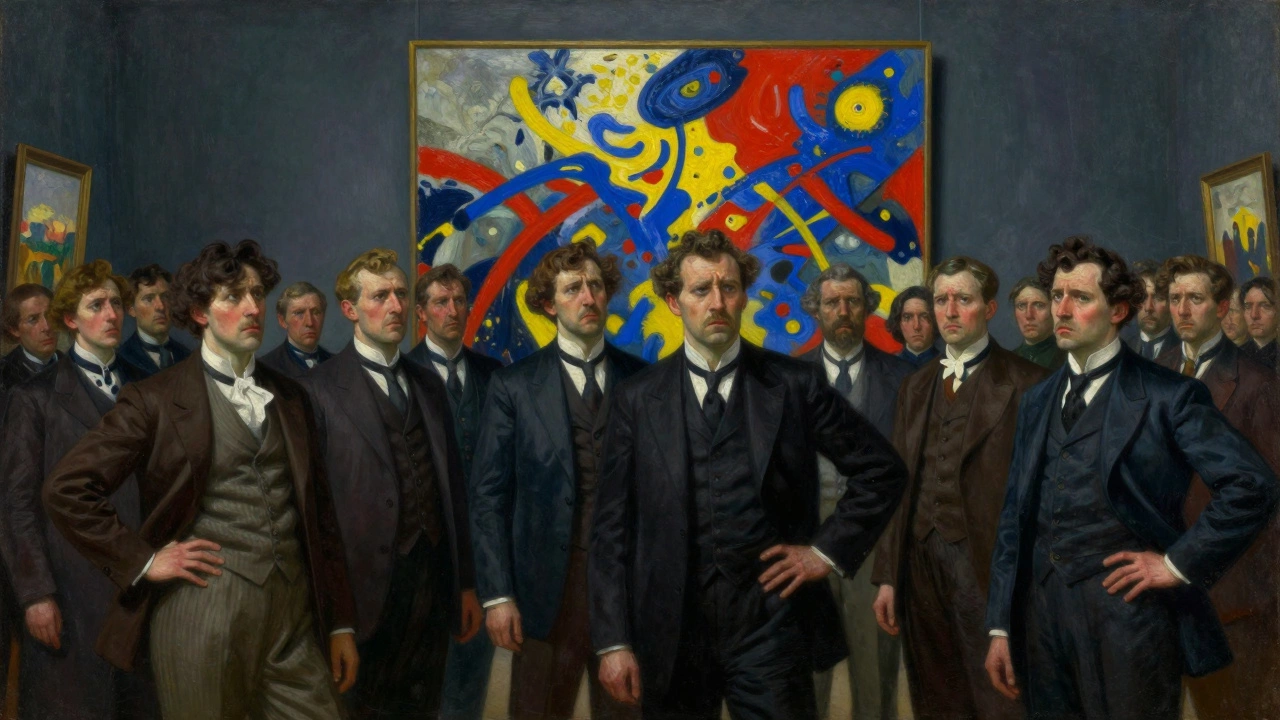
Imagine walking into a gallery in 1913. You expect to see landscapes, portraits, or biblical scenes. Instead, you are confronted with chaotic splashes of color, jagged lines, and shapes that look like they were made by a child. You feel confused. Maybe even angry. This was the reality for millions of people when abstract art first emerged. It wasn't just a new style; it was an insult to everything society believed about beauty, skill, and truth.
Today, we hang these paintings in museums and pay millions for them. But for decades, abstract art was mocked, banned, and called "degenerate." Why did this happen? It wasn't because the art was bad. It was because it broke the social contract between the artist and the viewer. To understand why abstract art was not accepted, we have to look at the psychology of perception, the politics of power, and the fear of the unknown.
The Betrayal of Representation
For thousands of years, art had one main job: to represent reality. If you wanted to know what a king looked like, you commissioned a portrait. If you wanted to understand a religious story, you looked at a fresco. Art was a window into the world. When artists like Wassily Kandinsky and Piet Mondrian started removing objects from their paintings, they weren't just changing colors. They were closing the window.
People didn't know how to process this. Our brains are wired to recognize patterns and objects. We look for faces in clouds and animals in rock formations. Abstract art denied us this satisfaction. It forced viewers to confront pure form and color without a narrative anchor. For the average person, this felt like being cheated. They paid for skill, and skill was traditionally measured by how realistically you could draw a hand or a tree. If you couldn't draw a hand, were you even an artist?
This betrayal of representation created a crisis of trust. If art no longer showed us the world, what was its purpose? Critics argued that it was pointless decoration. Without a subject matter, there was no moral lesson, no historical record, and no shared cultural reference. It was isolated. And isolation is terrifying to a society built on shared stories.
The "Degenerate" Label and Political Fear
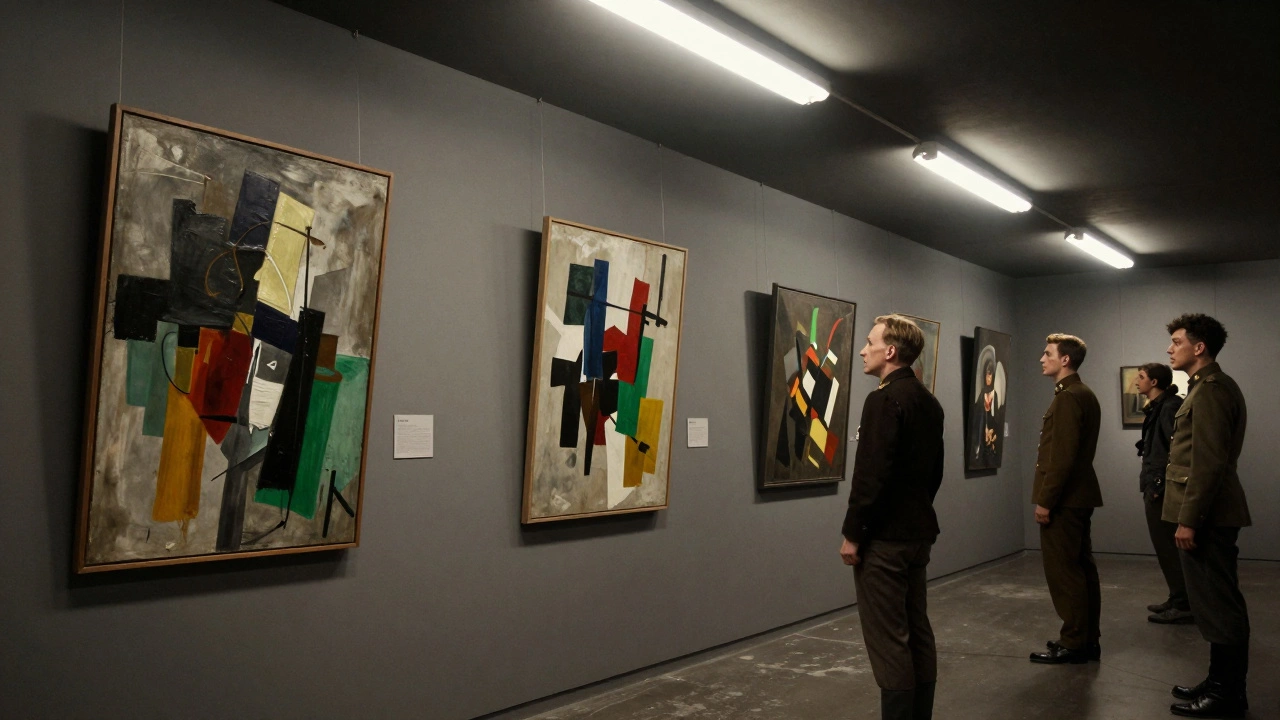
The rejection of abstract art wasn't just aesthetic; it was deeply political. In the early 20th century, Europe was fracturing. Wars were brewing, economies were collapsing, and traditional values were under attack. Abstract art, with its chaos and lack of order, became a symbol of this instability.
In Germany, the Nazi regime took this fear to its extreme. In 1937, they organized an exhibition called Entartete Kunst, or "Degenerate Art." They confiscated hundreds of abstract works from German museums and displayed them in a mocking manner, surrounded by insulting captions. They claimed this art was Jewish-Bolshevik corruption, designed to destroy German culture. By labeling abstract art as "degenerate," they turned artistic preference into a moral and racial issue. To like abstract art was to be unpatriotic, weak, or corrupt.
This political weaponization of art criticism silenced many voices. Artists who continued to work in abstract styles faced imprisonment, exile, or death. The message was clear: order and realism were safe; abstraction was dangerous. This legacy of fear lingered long after World War II, making it difficult for abstract art to gain mainstream acceptance in conservative circles.
The Dada Shock and the Question of Skill
While Kandinsky sought spiritual harmony through abstraction, other artists used it to shock. The Dada movement, led by figures like Marcel Duchamp, rejected the very idea of artistic merit. Duchamp's Fountain, a urinal signed with a pseudonym, challenged the definition of art itself. If a factory-made object could be art, then technical skill was irrelevant.
This provoked intense backlash. Critics and the public felt that Dadaists were lazy and cynical. They accused them of hiding behind philosophy because they lacked talent. The phrase "my kid could do that" became a common dismissal of abstract work. This critique still echoes today. People struggle to value art that doesn't require obvious manual dexterity. They equate effort with value, and abstract art often hides its effort in concept rather than execution.
The Dadaists' intent was to provoke exactly this reaction. They wanted to expose the absurdity of art institutions. But for the general public, this felt like a scam. It deepened the divide between the avant-garde elite and the everyday viewer. The more abstract art embraced anti-art sentiments, the more it alienated those who sought beauty and comfort in their cultural experiences.
Economic Elitism and the Museum Gatekeepers
Abstract art also suffered from an image problem related to class and economics. In the mid-20th century, particularly in the United States, abstract expressionism became associated with wealthy collectors and powerful critics. Figures like Clement Greenberg championed abstract art as the pinnacle of Western culture, but their language was dense and academic. They spoke of "flatness" and "medium specificity," terms that meant little to the average person.
This created a barrier to entry. Abstract art became the domain of the educated elite. Museums and galleries curated collections that reflected this narrow view, ignoring diverse perspectives and styles. For working-class audiences, abstract art felt exclusionary. It was art for people who read theory books, not for people who lived real lives. This elitism reinforced the idea that abstract art was pretentious and out of touch.
Furthermore, the high prices fetched by abstract works at auctions fueled resentment. When a painting worth thousands of dollars looked like a random splash of paint, it confirmed suspicions that the art market was a bubble driven by hype rather than genuine appreciation. This economic disconnect made it hard for abstract art to be seen as accessible or democratic.

Cultural Differences and Global Perspectives
The rejection of abstract art was not universal. In some cultures, non-representational forms had existed for centuries. Islamic calligraphy, Native American pottery patterns, and African textile designs all utilized abstraction to convey meaning. However, Western modernism often ignored these traditions, framing abstract art as a uniquely European invention. This erasure added another layer of confusion and resistance.
When abstract art was presented as a radical break from tradition, it clashed with cultures that valued continuity and heritage. In countries with strong realist traditions, such as Russia before the revolution or China during certain periods, abstract art was viewed as foreign and decadent. It was seen as a symptom of Western decline, not progress. This global tension highlighted how art acceptance is deeply tied to cultural identity and historical context.
| Factor | Impact on Acceptance | Key Example |
|---|---|---|
| Cognitive Dissonance | Viewers struggled to find meaning without recognizable subjects. | Kandinsky's early compositions |
| Political Ideology | Regimes banned it as subversive or degenerate. | Nazi "Degenerate Art" exhibition |
| Skill Perception | Critics dismissed it as lacking technical difficulty. | Duchamp's readymades |
| Economic Elitism | High prices and academic jargon alienated the public. | New York art market of the 1950s |
| Cultural Clash | Seen as foreign or contrary to local traditions. | Resistance in realist-focused societies |
The Slow Shift Toward Acceptance
So, how did abstract art go from being banned to being celebrated? It happened gradually, through education, exposure, and shifting cultural values. As generations grew up seeing abstract art in schools and media, it became less shocking. Children learn to appreciate patterns and colors before they learn to read realistic images. Abstract art tapped into this innate visual literacy.
Additionally, the rise of photography changed the role of painting. If cameras could capture reality perfectly, painters no longer needed to compete with them. This freed artists to explore emotion, concept, and form. Abstract art became a way to express the inner self, aligning with growing interests in psychology and individualism.
Museums also played a crucial role. By legitimizing abstract art through exhibitions and acquisitions, they signaled that it was worthy of study and preservation. Over time, the narrative shifted from "this is nonsense" to "this is a profound exploration of human experience." Today, while some skepticism remains, abstract art is a cornerstone of modern culture.
Was abstract art always rejected?
No, abstract elements have existed in art for millennia, such as in Islamic geometry and Indigenous patterns. However, modern abstract art, which completely removed representational subjects, faced significant rejection in the West during the early 20th century.
Why did the Nazis hate abstract art?
The Nazis labeled abstract art as "degenerate" because they associated it with Jewish and Bolshevik influences. They believed it undermined German cultural purity and traditional values, using it as a tool for political propaganda.
Is it true that anyone can make abstract art?
While abstract art may seem simple, it requires a deep understanding of color theory, composition, and conceptual intent. The challenge lies in creating emotional impact without relying on recognizable subjects, which is a complex artistic skill.
How did abstract art become popular?
Abstract art gained popularity through museum endorsements, critical acclaim, and generational shifts. As photography took over realistic representation, painting evolved to explore emotion and form, eventually becoming a respected cultural standard.
What is the difference between abstract and non-objective art?
Abstract art distorts or simplifies real-world subjects, while non-objective art has no reference to the visible world at all. Both were often grouped together and faced similar rejection, but they differ in their relationship to reality.