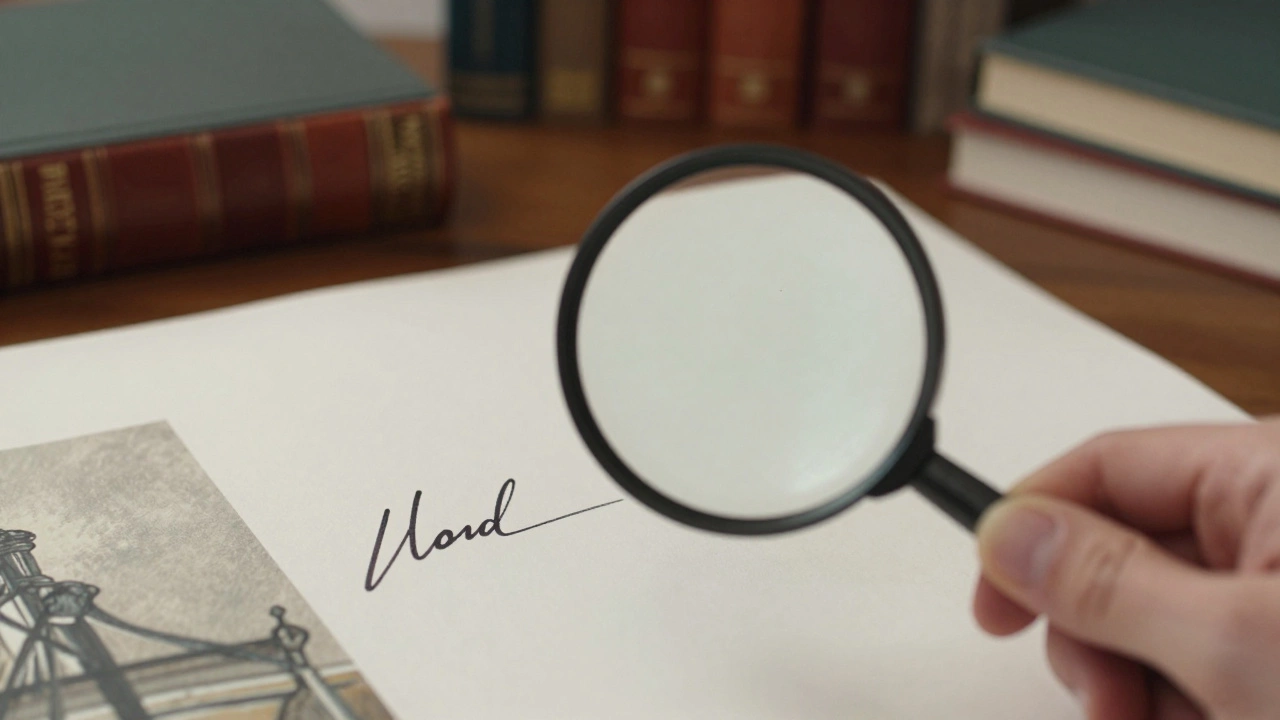
Art Print Value Estimator
Answer the following questions to see where your piece falls on the collectibility scale. Note: This is an estimation tool, not a professional appraisal.
Your Result:
The Truth About the Scribble
You find a stunning piece of art at a garage sale or inherit a dusty frame from a relative. You look closely and see a handwritten signature at the bottom. Immediately, the big question hits: does that ink actually make this piece valuable? The short answer is that a signature can act as a catalyst for value, but it isn't a magic wand that turns every piece of paper into a goldmine.
Many people confuse a signed art print is a reproduction of an original artwork that has been hand-signed by the artist to verify its authenticity and often its edition number with an original painting. If you have a mass-produced poster from a gift shop that the artist happened to sign during a gallery visit, it's a lovely memento, but it's not necessarily a high-value investment. The real money lives in the intersection of scarcity, provenance, and the artist's market demand.
Quick Takeaways for Collectors
- Signatures prove authenticity and intent, but scarcity drives the price.
- Limited editions with numbering (e.g., 10/100) are far more valuable than open-edition prints.
- The condition of the paper and the ink is critical; fading or foxing can tank the value.
- Provenance-the documented history of who owned the piece-is the ultimate value booster.
Limited Editions vs. Open Editions
To figure out if your print is worth anything, you first need to identify what kind of "run" it came from. In the world of collectibles, there is a massive divide between limited and open editions.
An Open Edition is a print where the artist or publisher can produce as many copies as they want without a set limit. Think of these as the "commercial" side of art. Even if the artist signed one of these, the value stays relatively low because the market is flooded with the same image. You're paying for the signature, not the rarity.
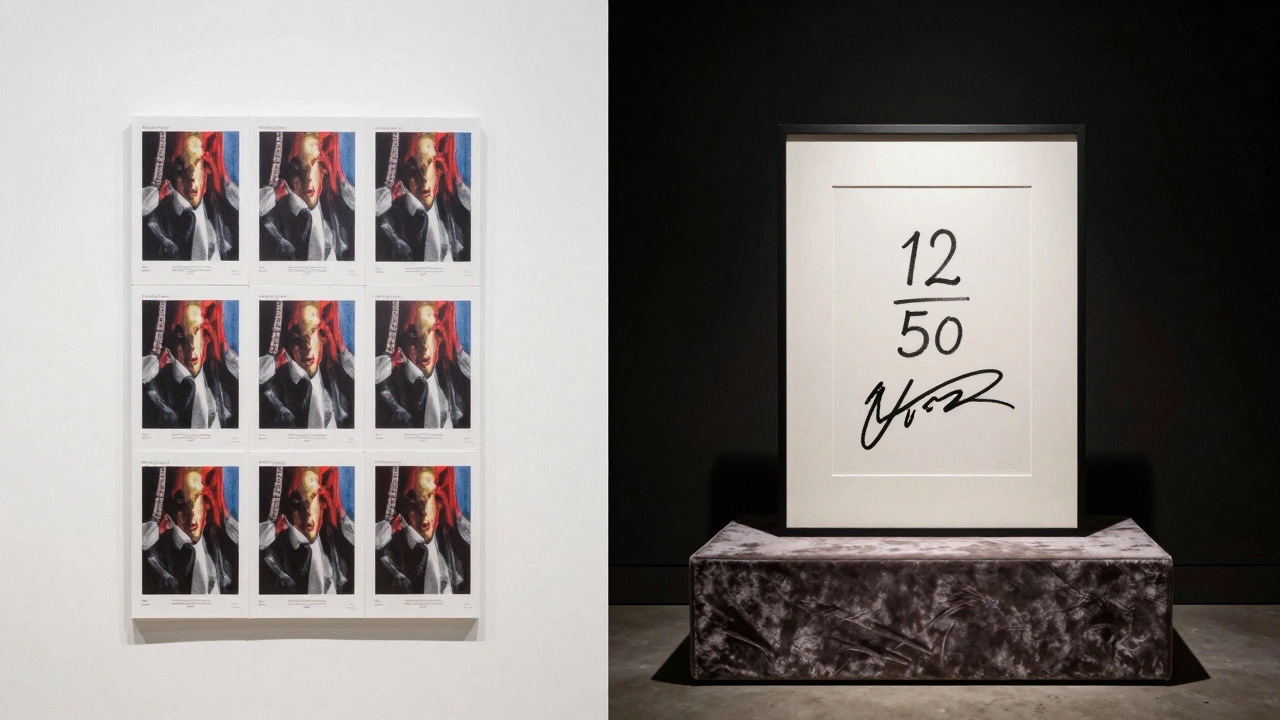
Now, a Limited Edition is a different beast. These are produced in a specific number of copies. Once the 100th print is sold, the plate is destroyed or retired. If you see a fraction like "12/50" next to the signature, you're looking at the 12th print out of only 50. This scarcity creates a competitive market. When only 50 people in the world own that specific version of an image, the price climbs.
| Feature | Open Edition | Limited Edition |
|---|---|---|
| Availability | Unlimited | Strictly Capped |
| Signature Value | Low to Moderate | High |
| Investment Potential | Low | High |
| Market Target | Decorators/Fans | Serious Collectors |
The Role of Printing Techniques
Not all prints are created equal. The method used to put ink on paper changes how a collector views the piece. A digital inkjet print (often called a Giclée is a high-quality archival inkjet print using pigment-based inks on fine art paper) is common today. While beautiful and durable, they are generally seen as less "prestigious" than traditional methods.
If you have a Lithograph, you're dealing with a process that involves drawing on stone or metal plates. This requires a level of craftsmanship that adds inherent value. Similarly, Serigraphs (screen prints) are highly prized, especially those by pop artists like Andy Warhol. Because these techniques involve more physical labor and specific materials, they are often valued higher than a print that came out of a high-end office printer.
How to Spot a Fake Signature
Is it a real signature or a "facsimile"? A facsimile signature is simply part of the printed image. It looks like a signature, but it's printed with the rest of the art. To tell the difference, get a magnifying glass or a jeweler's loupe. A real signature will have "ink build-up" or slight indentations in the paper where the pen pressed down. A printed signature will be made of tiny CMYK dots.
Another red flag is the consistency. If you compare your print to other known signed works by the same artist and the handwriting looks completely different-or too perfect-you might be looking at a forgery. Professional appraisers often look for "hesitation marks," which are tiny shakes in the line that happen when someone is slowly tracing a signature rather than writing it naturally.
Factors That Tank the Value
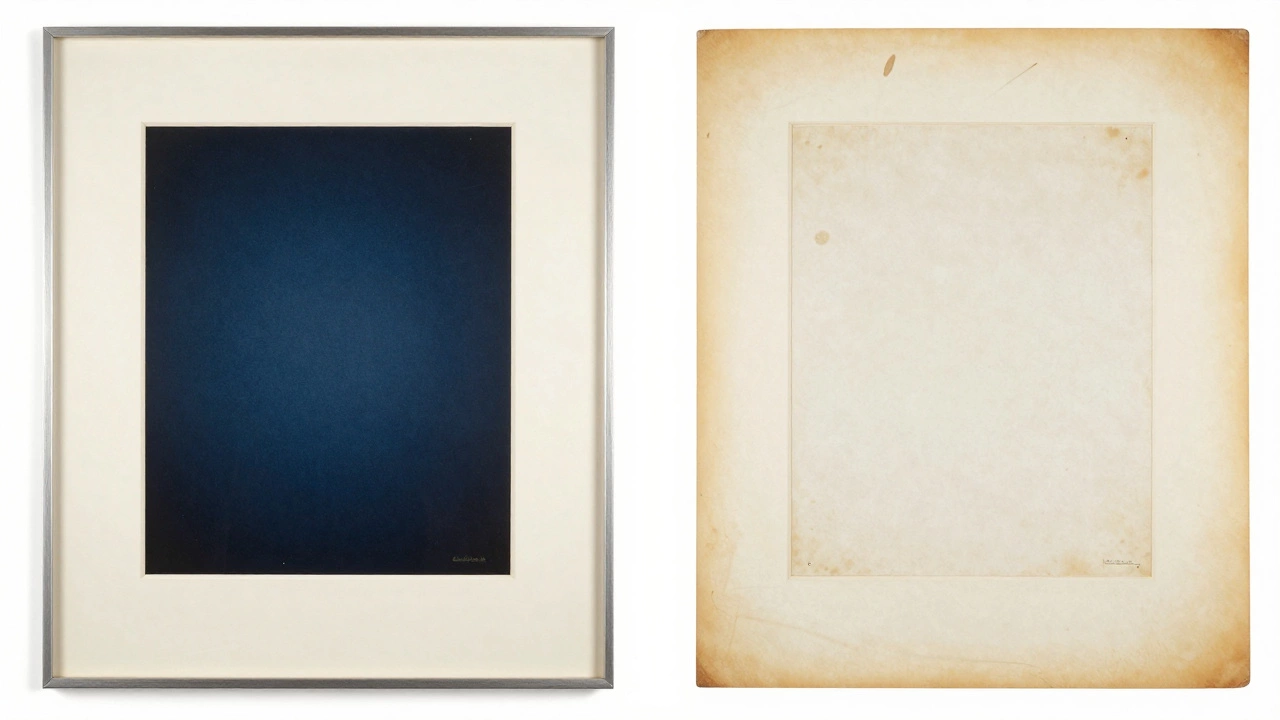
You could have a signed limited edition by a world-famous artist, but a few mistakes can wipe out the value. The biggest killer is improper framing. If the print is touching the glass, moisture can cause the paper to stick, leading to "foxing"-those little brown age spots you see on old documents. Acidic backing boards can also turn the paper yellow, which is a nightmare for collectors.
Sun damage is another disaster. UV rays bleach ink. If one side of a print is paler than the other because it hung opposite a window in a sunny living room, its value drops significantly. Collectors want "mint condition." Any rip, crease, or water stain is a reason for a buyer to negotiate the price down by 50% or more.
Determining Your Print's Market Value
So, how do you actually put a price tag on it? Start by searching for "sold" listings on auction sites. Don't look at what people are *asking* for their prints; look at what people actually *paid*. There's often a huge gap between an optimistic seller's price and the actual market value.
Check the Catalogue Raisonné is a comprehensive, annotated listing of all the known works of an artist, serving as the definitive record for authenticity. If your print is listed in the artist's official catalogue, its value is solidified. If it's not, you'll need a Certificate of Authenticity (COA) from a reputable gallery to prove it's real.
Does a signature always increase the price of a print?
Not always. For very famous artists, a signature is expected. For lesser-known artists, a signature on an open-edition print adds very little value because the piece isn't rare. The signature mostly serves as a guarantee of authenticity rather than a price multiplier.
What is an AP print?
AP stands for "Artist's Proof." These are prints made for the artist to check the quality before the main edition is released. Historically, APs were more valuable because they were rarer, but today they are generally priced the same as the numbered limited editions.
How can I protect my signed print from losing value?
Use acid-free mounting and museum-grade UV-protective glass. Never hang your art in direct sunlight or in a humid room like a bathroom. Keep all original paperwork, such as the gallery receipt or the Certificate of Authenticity, in a safe place.
Is a digital signature as valuable as a hand-signed one?
Generally, no. A digital signature is just part of the print process and can be replicated infinitely. Collectors value the "physical touch" of the artist. A pen-to-paper signature is what creates the connection and the value in the traditional art market.
Where is the best place to sell a signed art print?
For high-value pieces, a specialized art auction house is best because they provide authentication. For mid-range pieces, reputable online art marketplaces are a good bet. Avoid generic classified ads if you want to attract serious collectors who will pay a fair price.
What to Do Next
If you've discovered you have a potentially valuable piece, don't rush to a local framing shop for a quote-they aren't appraisers. Start by documenting everything. Take high-resolution photos of the signature, the edition number, and any stamps on the back of the paper. If the piece is worth more than a few thousand dollars, hire a certified appraiser who specializes in prints and multiples. This protects you from underpricing your work or getting scammed by a buyer who knows more about the artist's current market than you do.