Carving vs. Sculpting Interactive Guide
Select a technique to see how it works:
Carving
Subtractive Process
Stone & WoodSculpting
Additive Process
Clay & ModelingProcess Overview
Key Characteristics
Have you ever looked at a marble statue and wondered if the artist chipped away stone or built it up from nothing? It’s a common question. When we talk about creating three-dimensional art, two words pop up constantly: carving and sculpting. While they are often used interchangeably in casual conversation, they represent two completely opposite approaches to making art.
Understanding the difference isn't just about semantics; it changes how you see the artwork itself. One method is about revealing what is already there. The other is about building something that never existed before. Let's break down exactly how these techniques differ, why an artist chooses one over the other, and what materials define each process.
The Core Difference: Subtractive vs. Additive
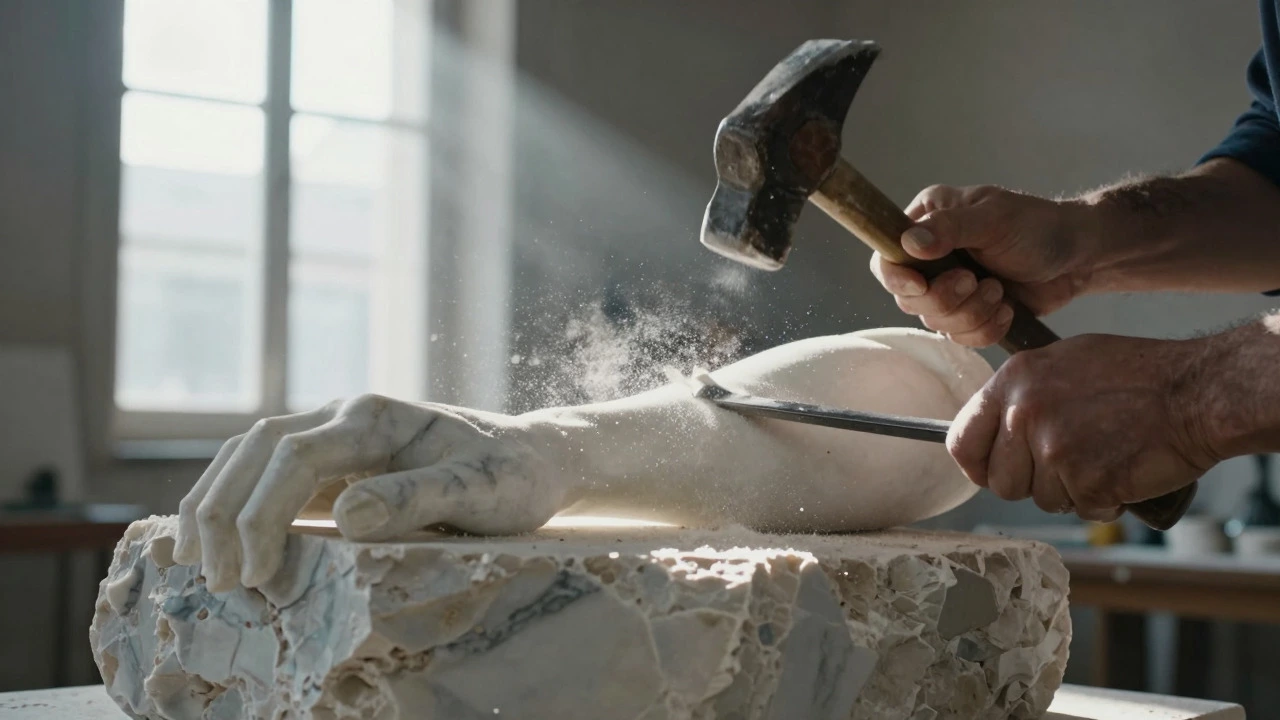
The fundamental split between carving and sculpting comes down to physics. Carving is a subtractive process where material is removed from a solid block to reveal the final form. Imagine you have a giant block of ice. You take a knife and chip away pieces until you have an ice sculpture. You can only go one way: less material. If you make a mistake, you can’t put that ice back. The form was hidden inside the block all along; your job was to uncover it.
Sculpting, in its broader sense, often refers to additive processes like modeling with clay or assembling found objects, where material is added to create a form. Think of playing with Play-Doh as a child. You start with nothing (or a small lump) and keep adding more until you reach the desired shape. If you mess up, you can add more clay to fix it. The form doesn't exist until you build it.
This distinction dictates everything else about the creative process, from the tools you use to the mistakes you can afford to make.
Carving: The Art of Removal
When artists carve, they work with hard, rigid materials. The most traditional examples include marble, limestone, and stone blocks that require precision and force to shape. Wood is another major medium for carving. In both cases, the artist starts with a substantial mass. The goal is to reduce this mass without breaking the structural integrity of the piece.
Tools play a huge role here. A carver relies on sharp, durable instruments. For stone, this means chisels and metal rods used to strike and fracture stone surfaces paired with heavy hammers. You might also see pneumatic drills for roughing out large shapes. For wood, the toolkit shifts to gouges, V-tools, and mallets. The action is aggressive but controlled. Every strike removes a tiny fragment of material.
The psychological aspect of carving is intense. Because it is subtractive, planning is critical. Artists often sketch their design directly onto the block before touching it with a tool. They have to visualize the negative space-the parts that will be thrown away-just as much as the positive space. Michelangelo famously described his approach to marble as freeing the figure trapped inside the stone. That mindset defines carving: it is an act of discovery rather than construction.
Sculpting: Building Form from Nothing
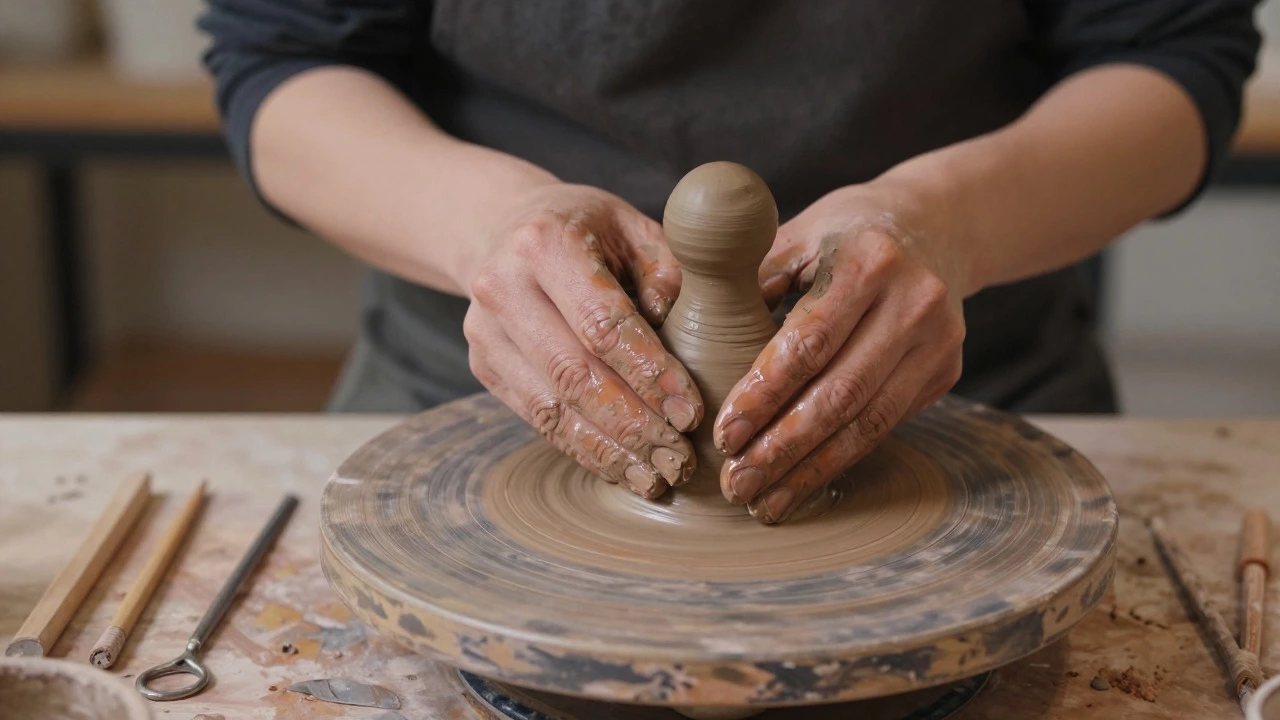
On the flip side, sculpting through modeling allows for fluidity and change. This technique is synonymous with working in clay, plaster, or soft pliable materials that can be shaped by hand. Since the material is soft, the artist uses their hands, wooden modeling tools, or metal loops to push, pull, and smooth the surface. There is no hammering involved. Instead, you are manipulating the material’s plasticity.
One of the biggest advantages of additive sculpting is forgiveness. If a nose looks too big, you scrape it off and add more clay. If a leg needs to be longer, you build it up. This makes the process more experimental. Many contemporary artists prefer this method because it allows them to respond to the work as it evolves, rather than following a rigid pre-planned path.
However, additive sculptures made of clay are rarely the final product. Clay shrinks and cracks when fired, and it can be fragile. So, artists usually create a "maquette" (a small model) or a full-size clay sculpture, then cast it into a permanent material like bronze using the lost-wax casting process. The sculpting happens in the soft stage; the permanence comes later through manufacturing.
Materials Define the Method
You generally don't choose a technique randomly; the material dictates the method. Here is how different mediums align with either carving or sculpting:
| Material | Primary Technique | Why? |
|---|---|---|
| Marble / Granite | Carving | Hard, brittle stone requires removal of fragments. |
| Wood | Carving | Fibrous structure must be cut against the grain. |
| Clay | Sculpting (Modeling) | Soft, pliable material allows for addition and subtraction. |
| Bronze | Sculpting (Casting) | Metal is melted and poured into molds created from models. |
| Ice | Carving | Temporary hardness allows for rapid removal of chunks. |
| Wire / Assemblage | Sculpting (Construction) | Separate pieces are joined together to form a whole. |
Notice that bronze is listed under sculpting, even though the final object is hard metal. This is because the artist didn't chip away a block of bronze. They modeled a clay version, made a mold, and poured liquid metal. The artistic act was additive modeling, not subtractive carving.
Tools and Workspace Differences
Your studio setup tells you immediately which discipline an artist practices. A carver’s workspace is messy in a specific way: it’s covered in dust, chips, and shavings. Stone carving produces fine powder that coats everything. Wood carving leaves sawdust. You need ventilation, masks, and sturdy benches that can withstand heavy impacts. The noise level is high due to hammering and drilling.
A sculptor’s studio (working in clay) is wet and sticky. You’ll find wedges (large slabs of clay), rib tools, and water sprays. The environment is quieter. There is no hammering, just the sound of scraping metal against clay. The focus is on tactile feedback-feeling the resistance of the clay under your fingers. Carvers feel vibration through their arms; sculptors feel texture through their palms.
Modern Blurs: When Lines Cross
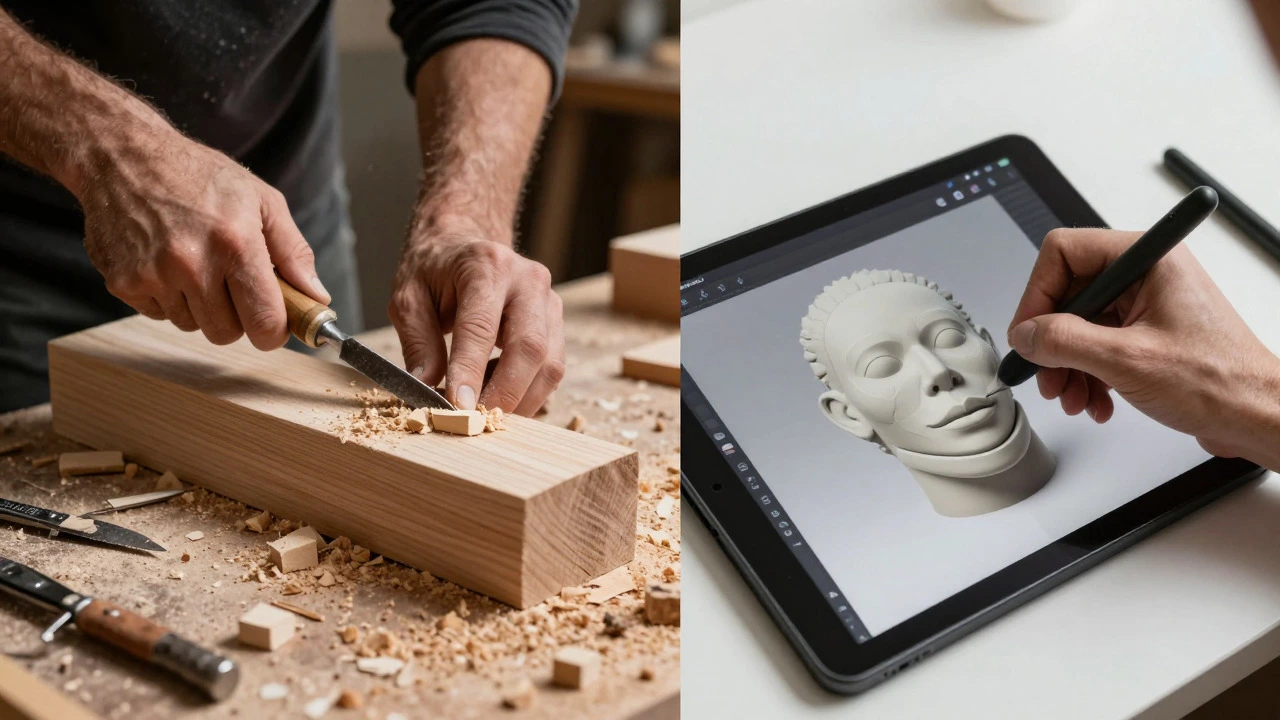
Art is rarely black and white. Today, many artists combine both methods. A sculptor might carve a wooden base for their clay figure. Or, they might use a CNC machine (computer numerical control) to carve a rough shape out of foam, then refine it by hand with additive techniques. Digital sculpting software like ZBrush mimics the feel of clay on a screen, allowing artists to "add" virtual clay, while 3D printers physically build layers of plastic (additive manufacturing).
Even within traditional mediums, exceptions exist. Some artists "carve" soap or cheese, which are soft enough to be manipulated like clay but still require removal. Conversely, some sculptors weld metal scraps together (assemblage), which is technically additive but feels very different from smoothing clay. The key takeaway is that "carving" implies cutting away from a solid, while "sculpting" is the broader umbrella term for creating 3D forms, often implying building up.
Which Is Harder?
It depends on what kind of difficulty you fear. Carving is harder if you hate making irreversible mistakes. One wrong swing of the chisel can ruin weeks of work. It requires immense physical strength and patience. Sculpting is harder if you struggle with spatial visualization from scratch. When you start with a blank armature and no clay, you have to invent every curve and angle. There is no block to guide you. Both demand years of practice, but they challenge different skills: precision and endurance for carving, creativity and adaptability for sculpting.
Is painting considered sculpting?
No, painting is a two-dimensional art form involving the application of pigment to a surface. Sculpting creates three-dimensional objects that occupy physical space and can be viewed from multiple angles.
Can you carve with clay?
Yes, once clay dries slightly (leather-hard stage), artists often use loop tools to carve details into the surface. However, the initial formation is usually additive, so it remains primarily a sculpting process.
What is the oldest known sculpture technique?
Stone carving is one of the oldest techniques, with examples dating back tens of thousands of years. Early humans used stone tools to chip away rock to create figurines and reliefs.
Do digital artists carve or sculpt?
Digital artists typically "sculpt" using software like ZBrush or Blender. These programs simulate additive modeling, allowing users to push and pull virtual clay. However, boolean operations in 3D modeling can mimic subtractive carving.
Why do museums label everything as "sculpture"?
"Sculpture" is the broad category for all three-dimensional art. Whether it was carved from stone, modeled in clay, or welded from steel, it falls under the museum department of sculpture.