Starry Night Knowledge Quiz
How well do you know the story behind one of the world's most famous paintings? Answer these questions to find out.
You’ve seen it on mugs, t-shirts, and phone cases. The swirling sky, the cypress tree like a dark flame, the quiet village below. But here’s a question that trips up a lot of people: Does the original Starry Night still exist?
The short answer is yes. It’s not a copy, a print, or a digital reconstruction. The actual canvas Vincent van Gogh painted in June 1889 is sitting right now in New York City. But if you’re planning to fly across the world just to see it, there are some crucial details you need to know before you book your ticket.
Where Is the Real Starry Night Hiding?
If you want to stand face-to-face with the paint strokes that changed art history, you need to go to the Museum of Modern Art (MoMA) in Manhattan. Since 1941, this institution has been the permanent home of the painting. It’s part of their core collection, meaning it’s rarely loaned out for exhibitions elsewhere. You won’t find it touring London or Paris anytime soon.
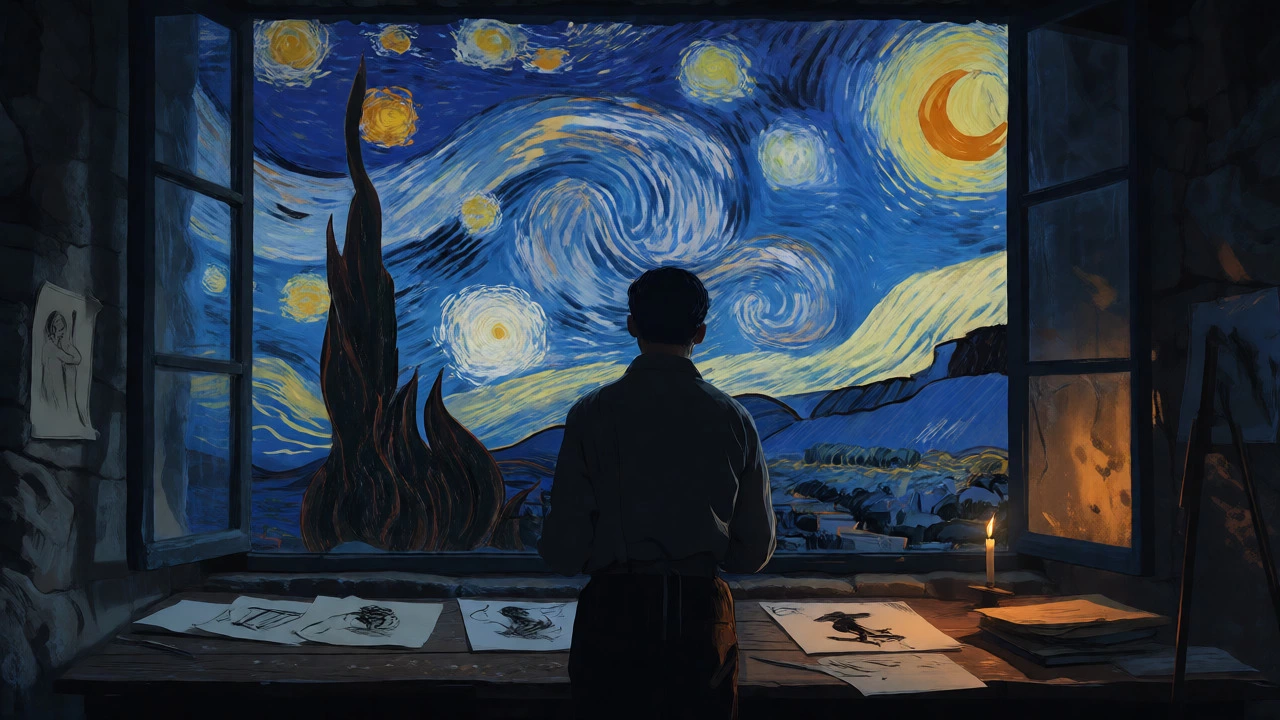
Van Gogh painted this piece during his stay at the Saint-Paul-de-Mausole asylum in Saint-Rémy-de-Provence, France. He was voluntarily committed after his famous ear incident. Interestingly, he didn’t paint it from life in the traditional sense. He worked from memory and sketches, looking out his east-facing window just before sunrise. This context matters because it explains why the sky looks so turbulent-it wasn’t just what he saw, but what he felt.
Why Do People Think It’s Lost?
It’s a fair question. We lose so much art to fire, war, and time. If you’ve ever visited a museum and seen a sign saying "Copy" or "Reproduction," you might wonder if the big names are safe. They usually aren’t. Many masterpieces have vanished. But Starry Night is one of the most protected artworks on Earth.
Part of the confusion comes from how often we see reproductions. Because the image is public domain (mostly) and endlessly copied, people sometimes assume the source material is gone or inaccessible. Another reason is that Van Gogh himself considered many of his works failures. He sent Starry Night to his brother Theo, who sold it later. It wasn’t always treated as the crown jewel it is today. For decades, it traveled through private collections before landing in the U.S.
What Does the Original Actually Look Like?
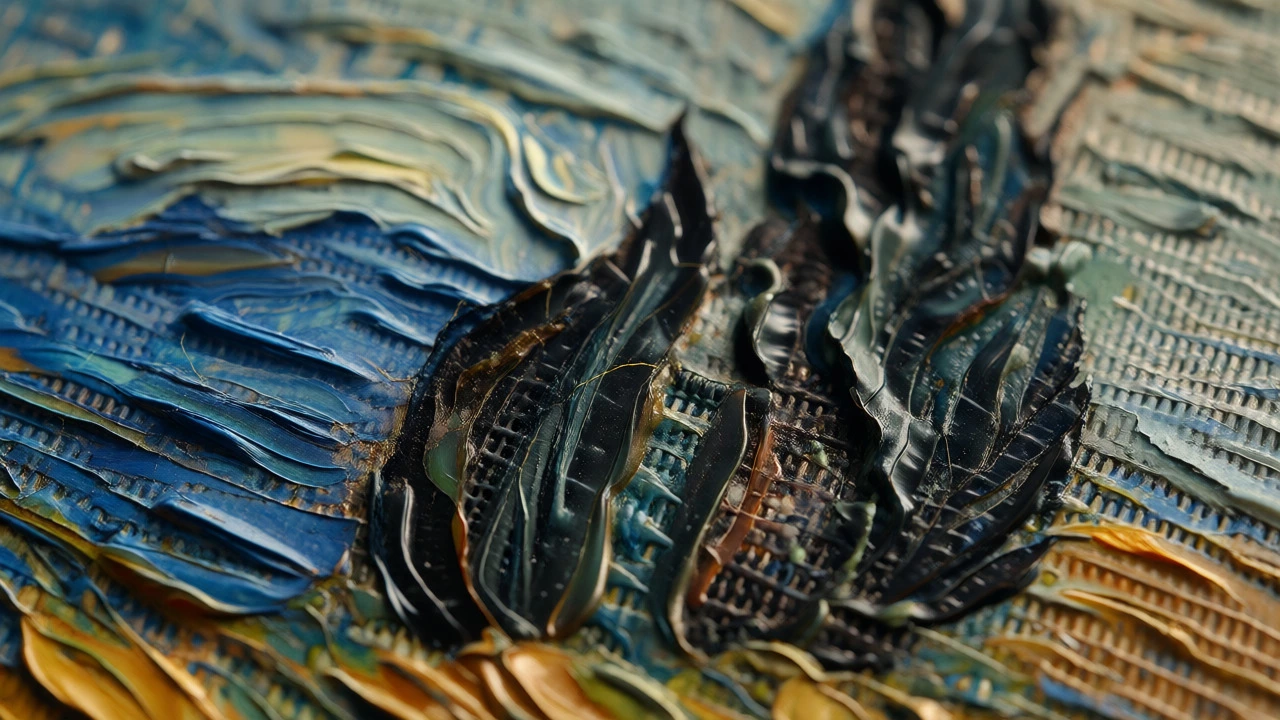
Seeing a JPEG on your screen doesn’t prepare you for the physical object. The canvas is smaller than you expect-about 29 inches by 36 inches (73.7 cm × 92.1 cm). When you stand in front of it at MoMA, the first thing you notice isn’t the colors, but the texture. Van Gogh used thick impasto techniques. The paint sticks out from the canvas. You can see the ridges where his brush dragged across the surface.
The colors also shift depending on the lighting. In photos, they look vibrant blue and yellow. In person, under the specific gallery lights MoMA uses, the blues are deeper, almost indigo, and the yellows glow with a warmth that screens can’t replicate. The black cypress tree in the foreground isn’t pure black; it’s mixed with greens and browns, giving it depth and movement.
| Attribute | Detail |
|---|---|
| Artist | Vincent van Gogh |
| Year Created | June 1889 |
| Medium | Oil on canvas |
| Dimensions | 73.7 cm × 92.1 cm |
| Current Location | Museum of Modern Art, New York |
| Acquisition Year | 1941 |
Can You Visit It Right Now?
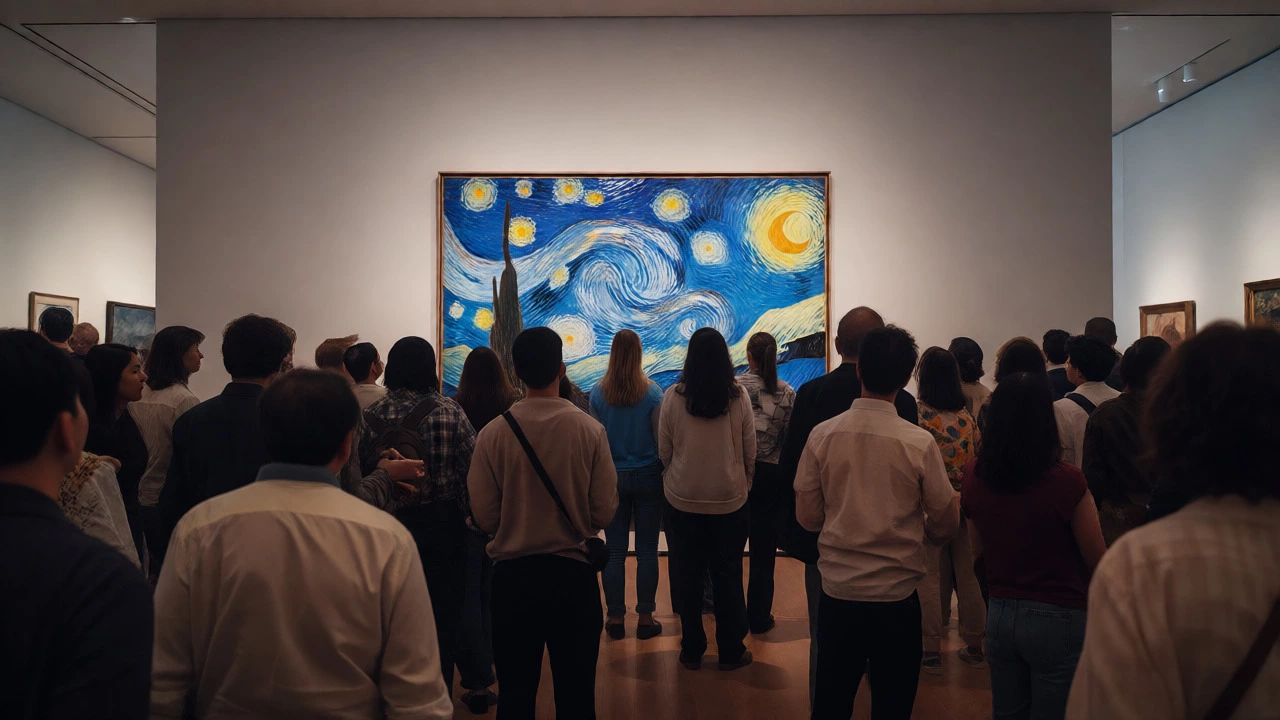
Yes, but it’s crowded. MoMA gets about three million visitors a year. Starry Night is usually the bottleneck. It hangs in Gallery 505 on the fifth floor. During peak hours, you might spend ten minutes just getting close enough to see the brushstrokes without someone’s elbow in your back.
Here’s a pro tip: Go early. MoMA opens at 10:30 AM. Be there at opening. Or go late afternoon when school groups leave. Weekdays are better than weekends. Also, note that MoMA occasionally closes galleries for conservation work. While rare for such an iconic piece, it happens. Check their website before you fly.
Is it worth the hassle? Most people say yes. There’s something powerful about standing near the exact spot where Van Gogh stood, mentally speaking. You realize how small the canvas is, yet how massive its impact has been. It changes your perspective on his mental state. The chaos in the sky feels less like madness and more like intense observation.
Are There Other Versions?
This is where things get tricky. Did Van Gogh make copies? Not exactly. Unlike some artists who reworked their own pieces, Van Gogh moved fast. He didn’t typically create multiple versions of the same composition in the way Monet did with haystacks. However, he did paint other night scenes. The Night Café and Café Terrace at Night are different paintings, not copies of Starry Night.
So, no, there isn’t a "Starry Night II" hanging in Amsterdam. The version in New York is unique. That uniqueness adds to its value. Insurance companies estimate it would be worth hundreds of millions if it were ever sold, but it’s not going anywhere. It’s a cornerstone of the modern art canon.
How Has Its Condition Held Up?
Paintings age. Oil cracks. Colors fade. Conservators at MoMA monitor Starry Night closely. They use climate-controlled environments to keep humidity and temperature stable. In the past, varnish layers have been cleaned carefully to restore brightness without damaging the original paint. Recent studies using X-ray fluorescence have revealed that Van Gogh used specific pigments, like cobalt blue and chrome yellow, which degrade differently over time.
The painting has survived over 130 years. That’s impressive for a work created by an artist who struggled with mental health and financial instability. It survived being shipped across the Atlantic during World War II, when many artworks were hidden or destroyed. Its survival is partly luck, partly careful stewardship.
Why Does It Matter That It Exists?
If Starry Night had burned down in a house fire in 1920, our understanding of Post-Impressionism would be different. We’d still have Van Gogh’s letters, his other landscapes, his portraits. But Starry Night captures a specific moment of synthesis-nature, emotion, and technique merging perfectly. Without it, we lose a key piece of the puzzle that explains how art moved toward abstraction.
It also serves as a reminder that genius isn’t always recognized in real-time. Van Gogh thought it was a failure. He wrote to Theo that it looked too abstract. Today, it’s the most recognizable painting in the Western world. Knowing the original exists grounds us. It connects us to a human being who suffered, created, and left behind a tangible piece of his soul.
Is the original Starry Night at the Louvre?
No. While the Louvre in Paris holds many famous works, Van Gogh’s Starry Night is located at the Museum of Modern Art (MoMA) in New York City. Some of Van Gogh’s other works are in the Musée d'Orsay in Paris, but not this specific painting.
Can I buy the original Starry Night?
Technically, it’s owned by MoMA, so it’s not for sale. Even if it were, the price would likely exceed $100 million. It’s considered a national treasure of sorts for the museum’s collection, making it virtually priceless and unavailable for private purchase.
Did Van Gogh paint Starry Night from memory?
Mostly, yes. He sketched the view from his asylum room window, but the final painting involved significant imagination and rearrangement of elements. The village in the painting doesn’t actually appear in the view from his window; he added it based on sketches of Dutch villages from his childhood.
Is the Starry Night at MoMA ever taken away for tours?
Rarely. Due to its fragility and immense popularity, MoMA keeps it on permanent display. Loaning it out risks damage and deprives their local audience of access. Major international loans happen for special retrospectives, but they are exceptional events.
What happened to the painting after Van Gogh died?
After Van Gogh died in 1890, the painting went to his brother Theo. After Theo died shortly after, it passed to Theo’s widow, Jo van Gogh-Bonger. She promoted his work extensively. It eventually entered a private collection in France before being acquired by MoMA in 1941 via the Lillie P. Bliss Bequest.