Modern Art Style Decoder
Which way do you see the world? Select the statement that resonates most with you to discover your artistic movement.
The Observer
I focus on the fleeting moment, the light, and the atmosphere. I value my immediate sensory experience over technical perfection.
The Analyst
I see things from multiple angles simultaneously. I want to understand the structure, the inside and outside, all at once.
The Feeler
I don't need recognizable objects. I connect with raw emotion, energy, and chaos. The process is more important than the result.
The Cultural Critic
I find significance in everyday objects and mass media. I like blurring the line between high culture and consumerism.
The Dreamer
Logic is boring. I am drawn to the subconscious, the absurd, and the distortion of reality to express deeper truths.
The Thinker
The idea matters more than the object. I question definitions, context, and what makes something "art" in the first place.
Your Result:
Key Concept:
Time Period
Famous Artist
Walk into any major museum today, and you might find yourself staring at a canvas that looks like someone threw paint at it from a ladder. Or perhaps a single banana taped to a wall. If your immediate reaction is "My kid could do that," you are not alone. But here is the thing: modern art wasn't about making things look pretty. It was about breaking every rule that had governed painting and sculpture for centuries. To get it, you have to stop looking for realistic portraits and start looking for ideas.
The term Modern Art refers to art produced during the period roughly between the 1860s and the 1970s. It’s a specific window in time when artists stopped trying to copy reality and started trying to interpret it. They were reacting to a world that was changing faster than ever before-industrialization, world wars, new technology, and shifting social norms. The key concepts of this movement aren't just about style; they are about a fundamental shift in how we perceive the world around us.
Rejection of Tradition and Realism
For hundreds of years, the goal of Western art was representation. Could you paint a horse so well that it looked like a real horse? That was the skill. Modern artists said, "Why bother?" With the invention of photography in the 19th century, cameras could capture reality perfectly. Artists realized they didn't need to compete with machines on realism. Instead, they turned inward. They wanted to show how they *felt* about the subject, not just what it looked like.
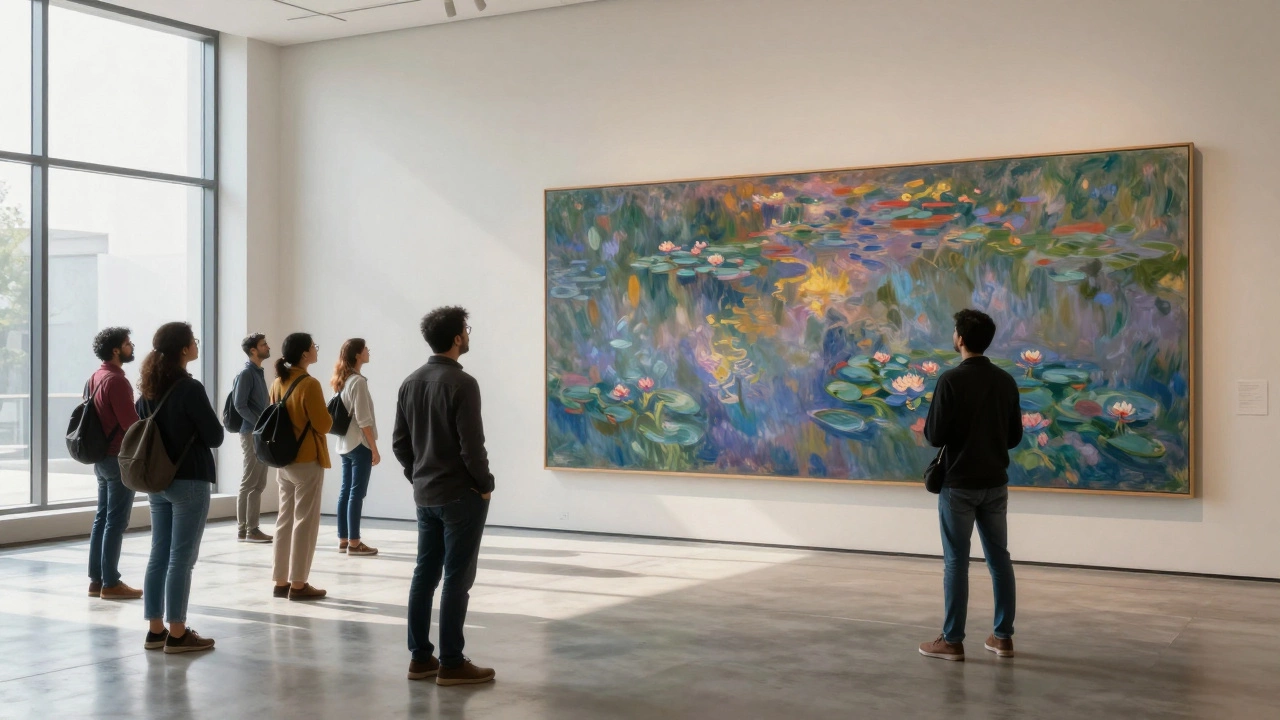
This rejection led to the rise of Impressionism, which began in the late 19th century and focused on capturing the fleeting effects of light and color rather than detailed outlines. Think of Monet’s water lilies. You don’t see sharp edges. You see dabs of color that blend together in your eye. This was the first crack in the foundation of traditional art. It told the viewer: trust your own perception, not the artist's technical perfection.
Abstraction and the Loss of Form
If Impressionism was a crack, Abstraction was the earthquake. By the early 20th century, artists like Wassily Kandinsky and Piet Mondrian were removing recognizable objects entirely. Why paint a tree if you can paint the *idea* of growth using vertical lines and green hues? This concept suggests that art doesn't need a subject matter to be meaningful. Color, line, and shape have their own emotional weight.
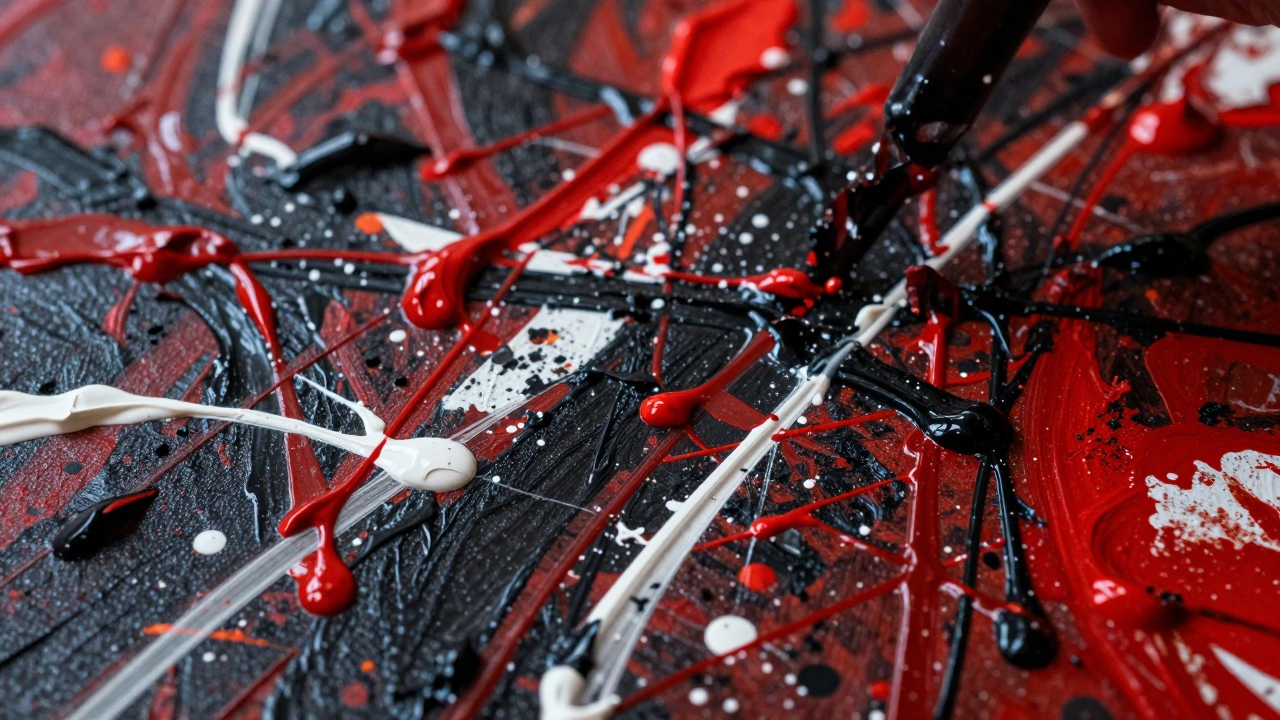
Abstract Expressionism, emerging in New York after World War II, took this further by emphasizing spontaneous, automatic, or subconscious creation. Jackson Pollock didn't hold a brush to the canvas; he dripped paint onto it from above. The process became the art. The viewer isn't asked to identify a face or a landscape but to feel the energy, chaos, or calm of the gesture itself. It’s music without lyrics-you don't need to understand the words to feel the rhythm.
Cubism and Multiple Perspectives
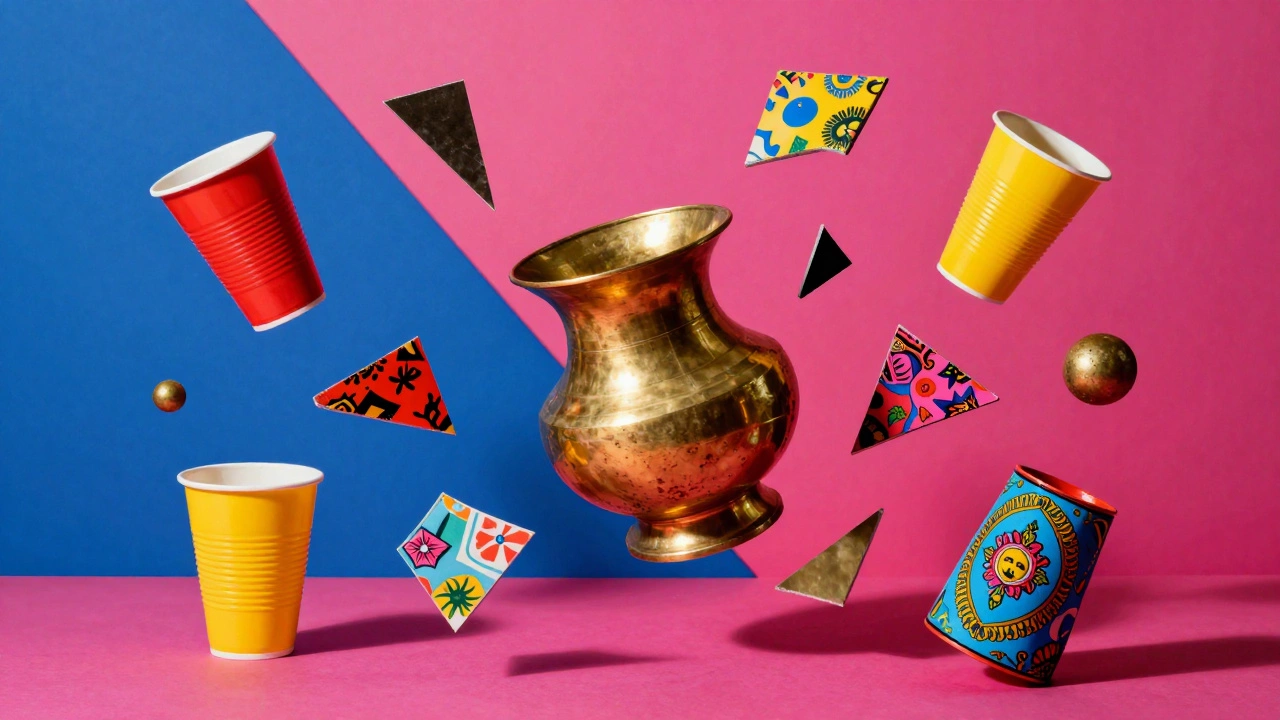
One of the most confusing yet influential concepts in modern art is Cubism. Before Pablo Picasso and Georges Braque shook things up, perspective was fixed. You looked at a scene from one angle. Cubism shattered that. Imagine smashing a glass vase and then arranging the pieces on a table so you can see the inside, the outside, the bottom, and the top all at once. That’s Cubism.
This wasn't just artistic flair; it was influenced by new ways of thinking in science and philosophy. Time and space weren't absolute. By showing multiple viewpoints simultaneously, artists challenged the idea that there is only one "true" way to see an object. It forced viewers to actively piece together the image, making them participants in the creation of meaning.
The Rise of Conceptual Art
As the 20th century progressed, the focus shifted even further away from the physical object. Conceptual art argues that the idea behind the work is more important than the finished product. If I tell you to imagine a red cube, and you do, the art has happened. The physical manifestation is secondary.
This leads to works that might seem absurd to the uninitiated, like Marcel Duchamp’s "Fountain," which was simply a urinal signed with a pseudonym. He wasn't claiming the urinal was beautiful. He was asking: What makes something art? Is it the skill of the maker, or the context in which it is placed? This question remains central to modern and contemporary art debates today. It democratizes art, suggesting that anyone can create it if they have the right idea.
Everyday Objects as High Art
Modern artists also blurred the line between "high culture" and everyday life. Pop Art, led by figures like Andy Warhol, took mass-produced images-soup cans, celebrity portraits-and elevated them to gallery status. This reflected a society increasingly dominated by consumerism and media. By repeating the same image over and over, Warhol commented on the loss of individuality in a mass-production world.
This concept invites us to look at our daily surroundings differently. That coffee cup on your desk isn't just a tool; it’s a cultural artifact. Modern art teaches us to find significance in the mundane, challenging the hierarchy that says only religious or historical subjects deserve artistic attention.
| Movement | Time Period | Core Concept | Key Artist |
|---|---|---|---|
| Impressionism | 1860s-1890s | Capturing light and momentary impressions | Claude Monet |
| Cubism | 1907-1914 | Fragmenting objects into geometric shapes | Pablo Picasso |
| Abstract Expressionism | 1940s-1950s | Emotional intensity through non-representational forms | Jackson Pollock |
| Pop Art | 1950s-1960s | Using imagery from popular culture and advertising | Andy Warhol |
Art as Social Commentary
Modern art rarely exists in a vacuum. It is deeply tied to the political and social climate of its time. During the two World Wars, artists used surrealism and distortion to express the trauma and absurdity of conflict. Salvador Dalí’s melting clocks aren't just weird; they represent the collapse of logical order in a world gone mad. Later, feminist and civil rights movements found voice in art that challenged traditional gender roles and racial stereotypes.
This aspect of modern art reminds us that creativity is often a response to crisis. It’s a way of processing collective anxiety. When you look at a chaotic, dark painting from the 1930s, you’re seeing the fear of impending war. When you see bright, bold commercial imagery from the 1960s, you’re seeing the optimism and materialism of post-war prosperity.
Understanding these concepts doesn't require an art degree. It just requires curiosity. Next time you see a piece that confuses you, ask yourself: What is the artist trying to say? How does this make me feel? What rules are they breaking? You might find that the "messy" painting speaks louder than the perfect portrait ever could. For those interested in exploring other curated directories of unique experiences and profiles, resources like this directory offer a different kind of modern cataloging, though far removed from the canvas.
How to Look at Modern Art
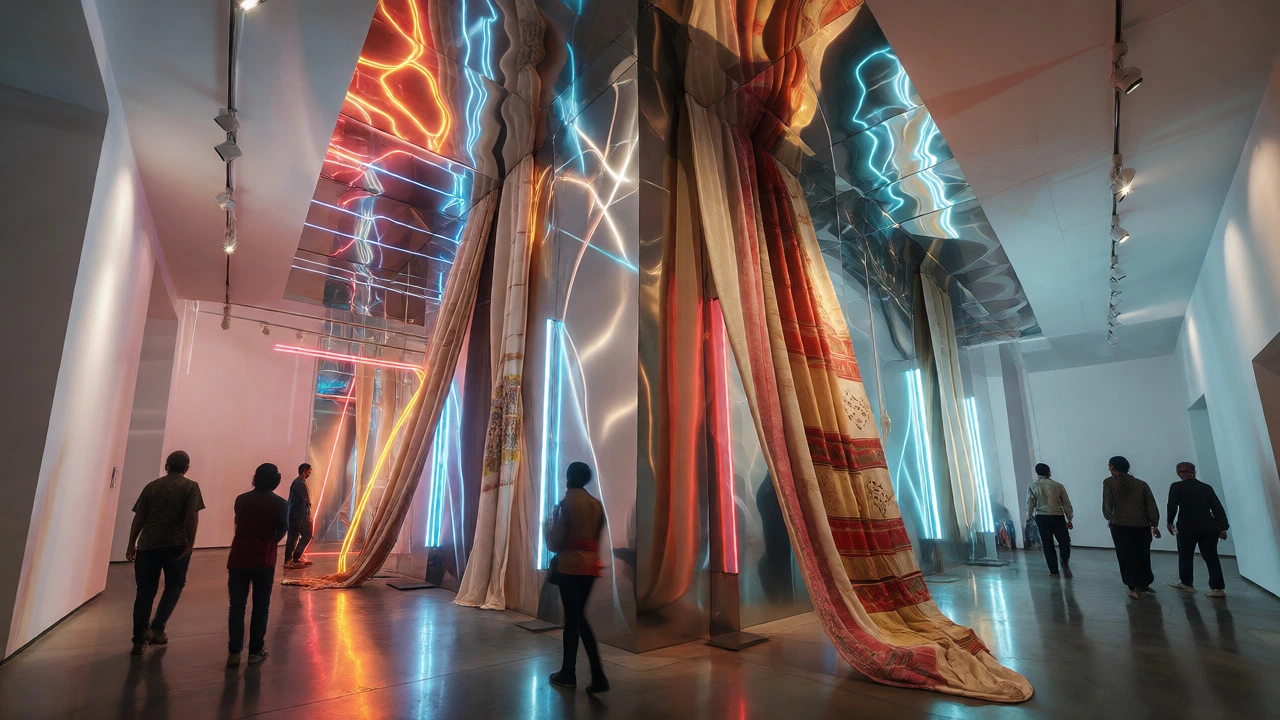
So, how do you actually engage with these concepts? Start by dropping the expectation of likeness. Don't ask "What is it?" Ask "What does it do?" Does it make you feel uneasy? Calm? Angry? That reaction is valid. Modern art is often designed to provoke. If it makes you uncomfortable, it’s working. Engage with the texture, the scale, and the materials. Notice if the artist used industrial materials like steel or plastic, which signals a break from traditional easel painting.
Also, consider the context. When was it made? What was happening in the world then? A painting from 1914 looks very different because of the looming shadow of World War I compared to one from 1955, amidst the Cold War. Context turns confusion into comprehension. You don't have to love every piece, but understanding the intent transforms frustration into appreciation.
Why is modern art so abstract?
Modern art became abstract because artists wanted to move beyond copying reality, which photography had already mastered. They sought to express emotions, ideas, and inner experiences through color, form, and line rather than recognizable objects. Abstraction allows for a more direct emotional connection between the artwork and the viewer.
When did modern art begin and end?
Modern art generally spans from the 1860s to the 1970s. It began with movements like Impressionism that rejected academic traditions and ended with the rise of Postmodernism, which questioned the very definitions of art established by modernists. The exact dates are fluid, but this period marks the era of radical experimentation.
What is the difference between modern and contemporary art?
Modern art refers to a specific historical period (late 19th to mid-20th century) characterized by a break from tradition. Contemporary art refers to art being created today, by living artists. While contemporary art builds on modern concepts, it often addresses current global issues, digital technology, and identity politics in ways modern artists did not.
Is my child's scribble considered modern art?
While children's drawings share some visual similarities with abstract art, modern art is intentional. Artists like Pollock or Kandinsky spent years mastering technique before deconstructing it. Their "scribbles" are calculated expressions of emotion and theory, whereas a child's drawing is exploratory play. However, modern art values the spontaneity found in children's work.
Why is modern art so expensive?
The price of modern art is driven by scarcity, historical significance, and market demand. Works by pivotal artists who defined movements like Cubism or Abstract Expressionism are rare. Additionally, the art market functions as an investment sector, where provenance, auction history, and critical acclaim inflate values far beyond the cost of materials.