Modern vs. Contemporary Art Quiz
Do you know the difference? Test your knowledge on the shift from form-focused Modernism to concept-driven Contemporary art.
Quiz Complete!
Quick Summary
- Contemporary art refers to art created from the late 1960s or 1970s to the present day, defined more by its time period than a specific style.
- Unlike modern art, which focused on formal experimentation, contemporary art prioritizes conceptual depth, social commentary, and personal identity.
- There are no strict rules for materials; artists use everything from traditional paint to code, video, and found objects.
- Key themes include globalization, technology, politics, and the blurring of boundaries between high art and everyday life.
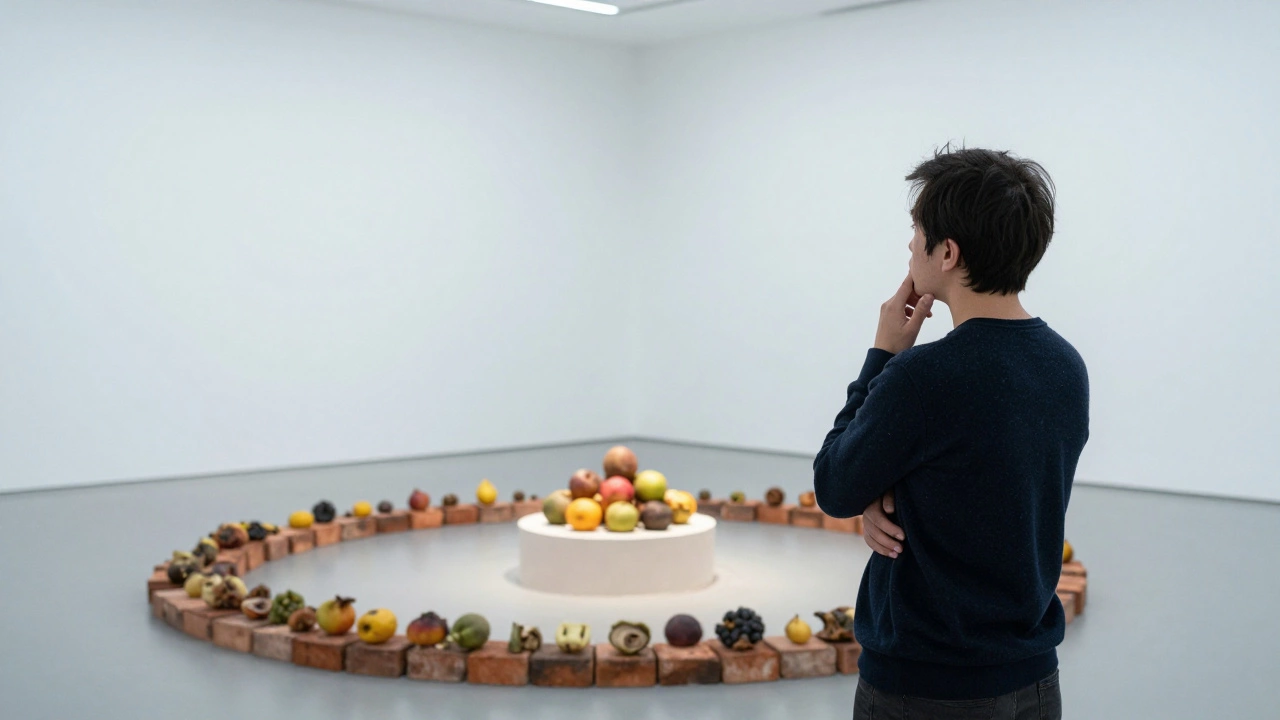
You walk into a gallery. You expect to see a painting. Instead, you find a room filled with rotting fruit, a video loop of a sleeping person, or a pile of bricks arranged in a perfect circle. You look around, confused. Is this art? Who decided it was art? And why does it matter?
If you’ve ever felt that sting of confusion standing in front of a piece of work that defies easy explanation, you aren’t alone. That feeling is actually part of the point. To understand what defines contemporary art, we have to stop looking for a single visual style and start looking at the questions the art asks.
Contemporary art isn’t a movement like Impressionism or Cubism. It’s a timeframe. Specifically, it covers the period from roughly the late 1960s or early 1970s right up to today. But simply saying "it’s new" doesn’t help much. A photograph taken yesterday isn’t automatically contemporary art just because it’s recent. So, what makes it distinct? What separates it from the Modern art that came before it? Let’s break down the core elements that define this complex, often chaotic field.
The Shift from Modern to Contemporary
To get a handle on contemporary art, you first need to know what it reacted against. For decades, Modern art dominated the cultural landscape. Think Picasso, Pollock, or Warhol. Modern art was obsessed with form, color, and the act of making itself. It asked, "How can I paint differently?" or "What is the essence of sculpture?" It was largely Western-centric, male-dominated, and focused on aesthetic innovation.
Then came the rupture. In the 1960s and 70s, artists started asking different questions. They weren’t interested in making beautiful objects anymore. They wanted to challenge the very idea of what art could be. This shift marked the beginning of the contemporary era.
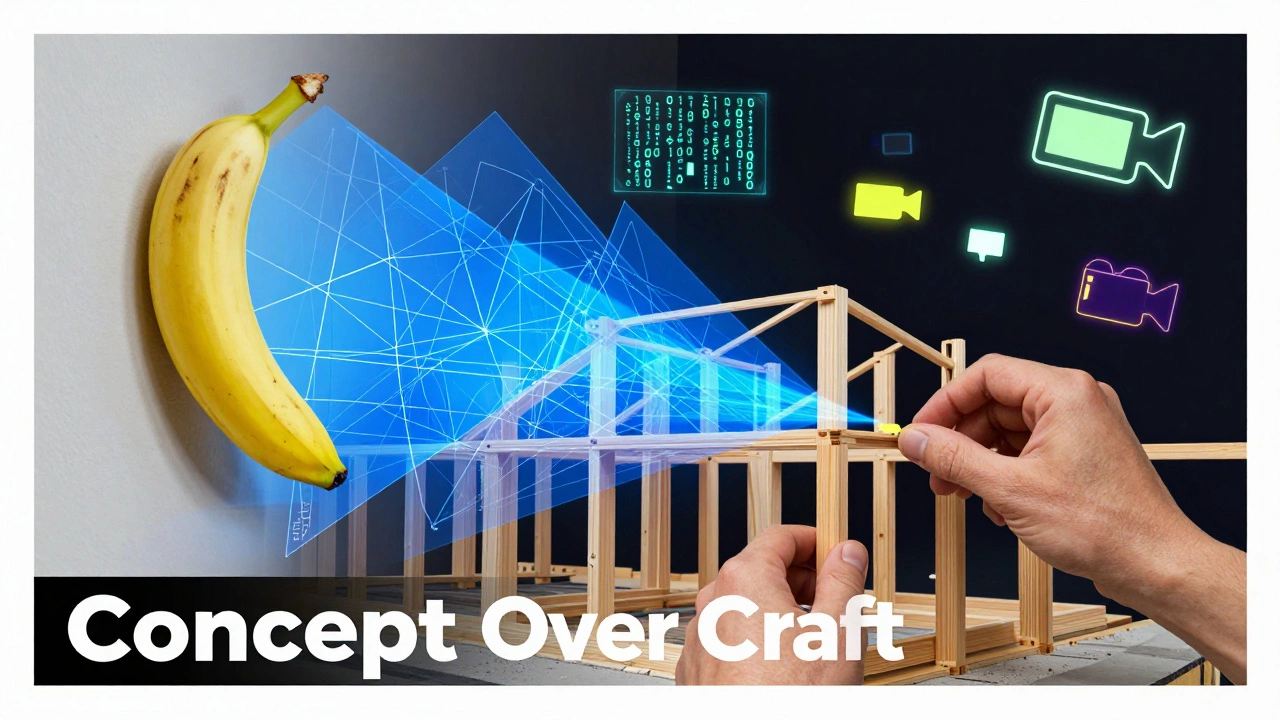
While Modern art said, "Look at how I made this," contemporary art says, "Think about what this means." The focus moved from the eye to the brain. The material didn’t matter as much as the message. If an artist could convey a powerful idea using a banana glued to a wall (yes, that happened), then that was valid art. This democratization of materials broke the gatekeeping of traditional galleries and museums.
Concept Over Craft: The Idea is King
The most defining characteristic of contemporary art is Conceptual Art. In this framework, the concept or idea behind the work is more important than the finished object. The physical artifact is just a vehicle for the thought.
Consider Sol LeWitt’s famous statement from 1967: "The idea becomes a machine that makes the art." He drew instructions for geometric structures, but he didn’t always build them himself. Others followed his blueprints. The art wasn’t the building; it was the instruction set. This shifted the role of the artist from a skilled craftsman to a thinker or director.
This approach allows for incredible flexibility. An artist might create a performance piece that lasts only five minutes, leaving no physical trace except photographs or memories. Or they might write a poem that serves as the artwork. Because the value lies in the intellectual engagement, the viewer has to do some work. You can’t just glance at it and move on. You have to engage with the context, the history, and the intent.
No Rules for Materials: Mixed Media and Beyond
If there’s one thing contemporary art loves, it’s breaking boundaries. Traditional art had strict categories: painting, sculpture, drawing. Contemporary art ignores these lines completely. Artists freely mix media, creating hybrid forms that don’t fit into old boxes.
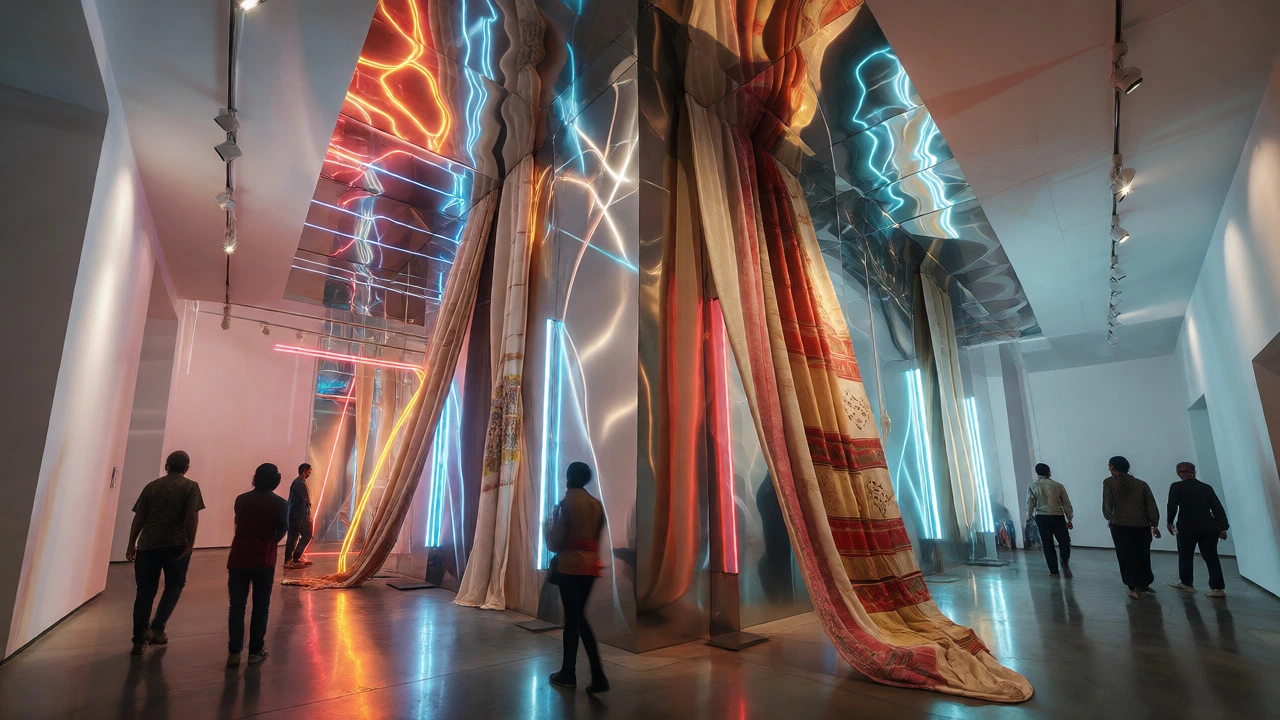
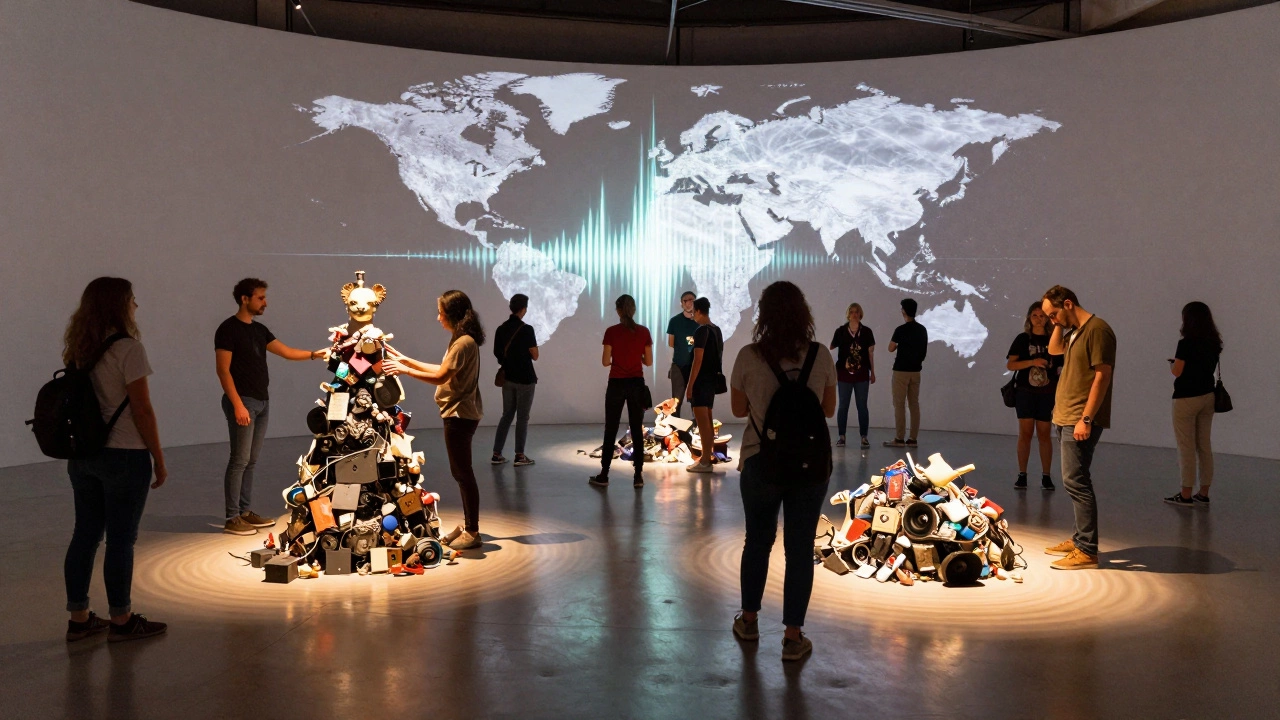
You’ll see paintings combined with video projections. Sculptures made from trash, electronics, or biological materials. Installations that fill entire rooms with sound and light. This is known as Mixed Media, but it goes even further. Many contemporary works are interdisciplinary, borrowing from science, technology, fashion, and politics.
Take Ai Weiwei, for example. He uses ancient Chinese ceramics, Olympic rings, and refugee life jackets in his work. He’s not just making sculptures; he’s making political statements about culture, power, and human rights. The material choice is deliberate and symbolic. A plastic chair isn’t just a chair; it’s a symbol of consumerism or disposability.
This freedom extends to digital spaces too. With the rise of the internet and virtual reality, contemporary art now exists in code. NFTs (Non-Fungible Tokens) sparked a massive debate about ownership and value in the digital realm. While controversial, they represent a logical extension of contemporary art’s interest in challenging traditional notions of authenticity and scarcity.
Identity, Politics, and Social Commentary
Contemporary art is deeply engaged with the world outside the studio. Unlike Modern art, which often claimed to be "art for art’s sake," contemporary art rarely shies away from controversy. It tackles issues of race, gender, sexuality, class, and global politics.
Artists like Kara Walker use silhouettes to explore the brutal history of slavery and racism in America. Her large-scale installations force viewers to confront uncomfortable truths about power and violence. Similarly, Kehinde Wiley paints Black men and women in the poses of classical European portraits, challenging who gets to be seen as powerful or heroic in art history.
This focus on identity reflects our increasingly diverse and connected world. Globalization has allowed voices from Africa, Asia, Latin America, and indigenous communities to enter the mainstream art conversation. These artists bring their own histories and perspectives, expanding the definition of what art can say and who it can speak for.
Politics is everywhere in contemporary galleries. From protests against war to critiques of capitalism, artists use their platforms to advocate for change. The art isn’t just reflecting society; it’s trying to shape it. This activism makes contemporary art feel urgent and relevant, even when it’s difficult to look at.
The Role of the Viewer: Participation and Interpretation
In traditional art, the viewer was passive. You looked at the painting, appreciated the technique, and left. In contemporary art, the viewer is active. Your presence, your reaction, and your interpretation are part of the work.
Many contemporary pieces are interactive. You might be invited to touch the sculpture, walk through the installation, or contribute your own data to a digital project. Marina Abramović’s performance art often relied on the energy and behavior of the audience to complete the piece. Without the viewer, the art doesn’t exist.
Even when the work isn’t physically interactive, it demands mental participation. Ambiguity is common. Artists often leave things open-ended, refusing to provide a single "correct" answer. This can be frustrating, but it’s also empowering. It means you get to decide what the work means to you. Your personal experiences, biases, and knowledge shape your understanding.
This shift places responsibility on the viewer. You can’t blame the artist if you don’t "get it." You have to ask questions. Why did they choose this material? What is the context? How does this relate to current events? Engaging with contemporary art is a dialogue, not a monologue.
Globalization and the Decentralization of Art
For centuries, the centers of the art world were Paris, New York, and London. Today, the map looks very different. Cities like Beijing, Lagos, São Paulo, and Mumbai are major hubs for contemporary art production and consumption.
This decentralization has changed the types of stories being told. Local issues gain global visibility. An artist in Nigeria might address colonial legacies, while an artist in Brazil focuses on environmental destruction in the Amazon. These local narratives resonate globally because they touch on universal themes of justice, survival, and identity.
Biennales and triennales-large international art exhibitions held every two or three years-have become key platforms for this global exchange. Events like the Venice Biennale or Documenta in Kassel showcase artists from all over the world, highlighting diverse perspectives and challenging Western dominance in the art market.
This global perspective means contemporary art is less homogeneous. There isn’t one "style" everyone follows. Instead, there’s a rich tapestry of approaches, techniques, and concerns that reflect the complexity of our interconnected world.
| Feature | Modern Art (c. 1860-1970) | Contemporary Art (c. 1970-Present) |
|---|---|---|
| Primary Focus | Form, aesthetics, medium-specificity | Concept, context, social commentary |
| Materials | Traditional (oil, canvas, bronze) | Anything (video, code, found objects, performance) |
| Artist’s Role | Skilled craftsman, innovator | Thinker, activist, collaborator |
| Viewer’s Role | Passive observer | Active participant, interpreter |
| Geographic Center | Western Europe, USA | Global, decentralized |
Why Does It Matter?
So, why should you care about contemporary art? Even if you prefer landscapes or portraits, contemporary art holds up a mirror to society. It challenges us to think critically about the world we live in. It gives voice to marginalized communities and exposes injustices.
It also pushes the boundaries of creativity. By experimenting with new technologies and methods, contemporary artists inspire innovation in other fields, from design to engineering. The skills developed in navigating ambiguity and complex ideas are valuable in any profession.
Finally, engaging with contemporary art can be personally transformative. It encourages empathy, curiosity, and open-mindedness. When you learn to sit with discomfort and seek meaning in the unfamiliar, you become a more thoughtful and engaged citizen.
Is all modern art considered contemporary art?
No. Modern art generally refers to the period from the 1860s to the 1970s. Contemporary art starts after that, from the late 1960s/1970s to the present. While there is overlap in the transition period, they are distinct eras with different philosophies and styles.
Do I need an art degree to understand contemporary art?
Not at all. While academic training can provide useful context, contemporary art is designed to engage with real-world issues that anyone can relate to. Trust your instincts, ask questions, and read the artist’s statements if available. Understanding comes from engagement, not credentials.
Why is contemporary art so expensive?
The art market is driven by speculation, rarity, and brand value. Famous artists command high prices due to demand from collectors and investors. However, price doesn’t equal artistic merit. Many incredibly significant contemporary artworks are affordable or free to view in public institutions.
Can digital art be considered contemporary art?
Absolutely. Digital art, including video games, VR experiences, and AI-generated images, is a major part of contemporary practice. It reflects our current technological reality and explores new ways of creating and experiencing art.
How do I start collecting contemporary art?
Start by visiting local galleries and art fairs. Look for work that resonates with you emotionally or intellectually, regardless of price. Support emerging artists, join online communities, and educate yourself on different mediums. Collecting is a personal journey, not just an investment strategy.