Sculpture Identity Finder
Instruction: Select the primary material you use or are interested in to discover your specific professional title, key techniques, and unique challenges.
Stone
Marble, Granite
Metal
Bronze, Steel
Wood
Timber, Logs
Clay
Ceramics, Pottery
Digital
Pixels, Code
Select a material above to reveal your sculptor identity.
You see a breathtaking statue in a park or a modern installation in a gallery. It looks like it was grown from the earth or forged by fire. But who actually made it? If you’ve ever stood before a piece of three-dimensional art and wondered about the person behind it, you’re not alone. The answer is simpler than you might think, but it’s also layered with history, technique, and specific trades.
The direct answer to your question is that someone who makes sculptures is called a sculptor. However, just calling them an "artist" feels too broad, and sometimes the term doesn't capture the intense physical labor involved. Depending on the material they use-whether it’s cold marble, molten bronze, or digital code-the title can shift. Understanding these distinctions helps you appreciate the craft more deeply.
The Core Identity: What Is a Sculptor?
Being a sculptor isn’t just about having a good idea. It’s about understanding weight, balance, and structural integrity. If you build a tall figure out of clay without proper internal support, it will collapse under its own gravity. A sculptor must be part engineer and part dreamer. They visualize the final form inside a raw block of material and then remove everything that isn’t part of the image. This process is often described as "liberating the form" from the stone.
The term comes from the Latin word *sculptrum*, meaning chisel. Historically, this job was physically demanding. Before power tools, a sculptor spent hours striking stone with a hammer and chisel, wearing down their hands and lungs with dust. Today, while technology has changed the tools, the core definition remains: a creator of solid forms.
Material-Specific Titles: More Than Just a Sculptor
While "sculptor" is the umbrella term, professionals often identify strongly with the medium they master. Using the wrong title can sometimes feel like calling a surgeon a "cutter." Here are the specific names for creators based on their primary material.
| Material | Specific Title | Key Technique |
|---|---|---|
| Stone (Marble, Granite) | Stone Carver / Stone Mason | Subtractive carving |
| Metal (Bronze, Steel) | Metalworker / Foundry Artist | Casting, welding, forging |
| Wood | Woodcarver | Chiseling, whittling |
| Clay/Ceramics | Potter / Ceramicist | Molding, wheel-throwing |
| Digital Files | 3D Modeler | Digital sculpting software |
Stone Carvers and Masons
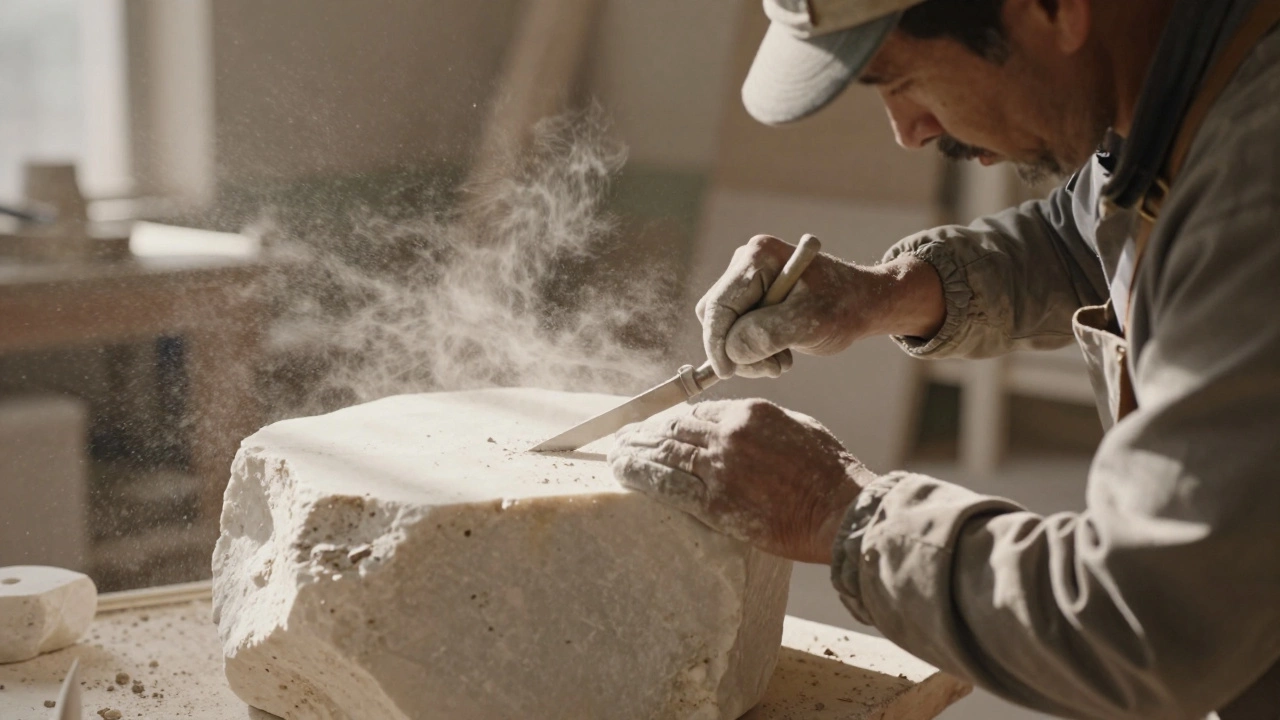
If you look at ancient temples or Renaissance statues, you are looking at the work of stone carvers. This is a subtractive process. You start with a massive block and take pieces away. There is no undo button. If a stone carver chips off too much marble, the piece is ruined. This high-stakes environment requires immense precision. In many cultures, stone masonry is considered a separate trade from fine art sculpture, focusing more on architectural elements like columns and facades, though the skills overlap significantly.
Metalworkers and Casters
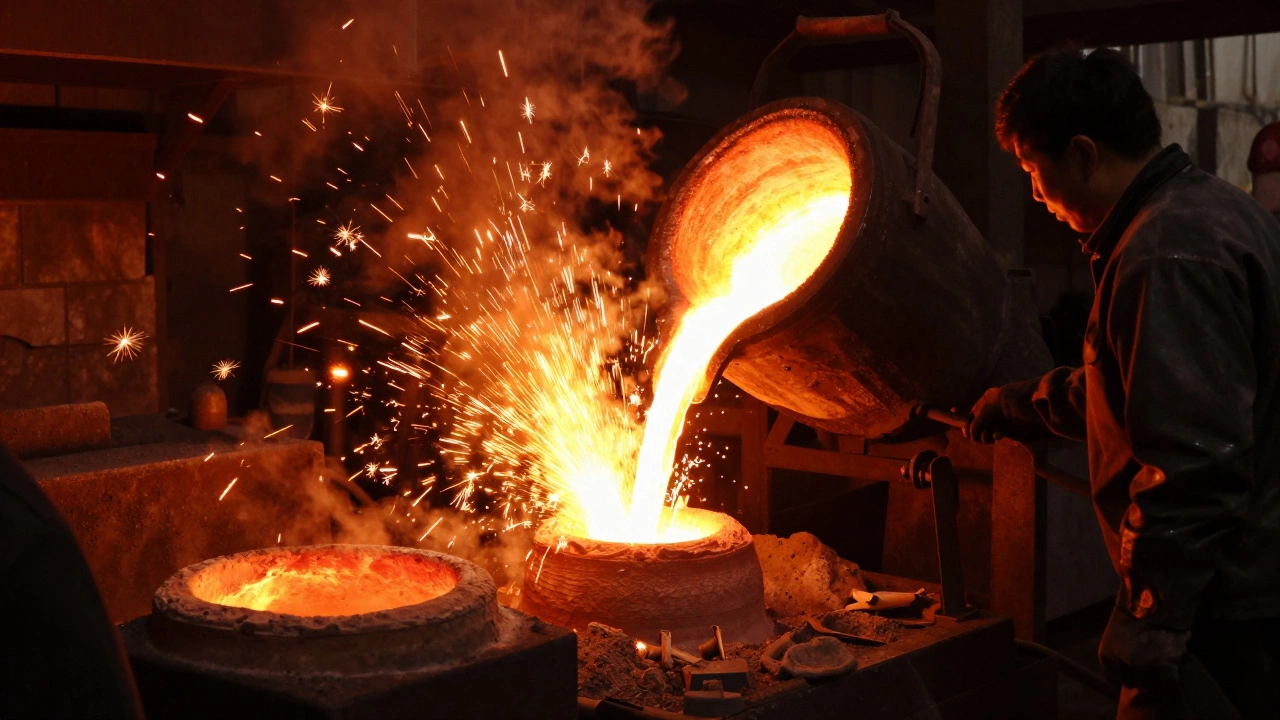
Metal sculpture involves heat and chemistry. A Bronze caster is an artisan who specializes in the lost-wax casting method to create durable metal sculptures. They don’t usually carve the metal directly. Instead, they create a model in wax, surround it in clay, melt the wax out, and pour molten bronze into the void. This requires knowledge of metallurgy. If the temperature is off, the metal cracks. Welding artists, on the other hand, build up forms by joining pieces of steel together, creating industrial, rugged aesthetics.
Woodcarvers
Wood is organic and unpredictable. Grain direction matters immensely. A woodcarver must read the wood, working with the grain rather than against it. This tradition ranges from intricate religious icons to large-scale outdoor totems. The smell of sawdust is as much a part of the identity as the visual result.
The Process: How a Sculptor Works
Understanding what a sculptor does helps clarify why they have such a specific title. The workflow generally falls into two categories: additive and subtractive.
- Conceptualization: Every piece starts with a sketch or a mental image. The sculptor decides on the scale and the emotional impact they want to achieve.
- Maquette Creation: Before tackling the final material, most sculptors make a small study called a maquette. This allows them to test proportions and composition without wasting expensive marble or bronze.
- Armature Building: For soft materials like clay, the sculptor builds a metal skeleton (armature) to hold the shape. Without this, the clay would slump.
- Execution: This is the heavy lifting. Whether chipping stone or rolling clay, this stage takes weeks or months. It involves constant assessment from all angles.
- Finishing: Sanding, polishing, patinating (for bronze), or glazing (for ceramics). This final step brings out the texture and color.
This rigorous process distinguishes a sculptor from a casual hobbyist. It requires patience and a tolerance for failure. A single mistake in the armature can ruin weeks of clay work.
Sculptor vs. Artist: Why the Distinction Matters
All sculptors are artists, but not all artists are sculptors. The term "artist" is a broad container that includes painters, musicians, writers, and performers. When you say "I am an artist," people might assume you paint. When you say "I am a sculptor," you immediately communicate that you work in three dimensions, deal with volume, and likely engage in physical labor.
In the art world, specialization commands respect. A painter rarely understands the tensile strength of steel, and a sculptor might struggle with color theory on a canvas. By identifying as a sculptor, you align yourself with a lineage of craftsmen from Michelangelo to Rodin. It signals expertise in spatial reasoning and material science.
Modern Evolution: Digital Sculptors
In 2026, the definition of a sculptor has expanded beyond physical materials. Enter the Digital Sculptor is a professional who uses software like ZBrush or Blender to create 3D models for animation, gaming, and virtual reality. These artists use a stylus and tablet to "clay" pixels into existence. They manipulate vertices and polygons instead of atoms.
Does a digital sculptor count as a real sculptor? Absolutely. They face the same challenges of proportion, anatomy, and lighting. The difference is the output. Instead of a physical statue, they produce a file that can be printed via 3D printers or rendered in a video game. This blurs the line between traditional craftsmanship and computer programming, creating a new hybrid role in the creative industry.

Famous Sculptors Through History
To understand the weight of the title, look at those who carried it. These individuals didn’t just make objects; they defined eras.
- Auguste Rodin: Known for his expressive, textured surfaces. He broke away from smooth, idealized forms to show raw human emotion.
- Alexander Calder: Inventor of the mobile. He introduced movement and randomness into sculpture, challenging the idea that a sculpture must be static.
- Anish Kapoor: A contemporary giant who uses vast mirrors and deep pigments to play with perception and infinity.
- Frida Kahlo (Minor Sculpture):** While known for painting, she experimented with small sculptural forms, showing how artists often cross boundaries.
Each of these figures pushed the boundaries of what a sculptor could do. Rodin showed us imperfection is beautiful. Calder showed us that air is a material. Kapoor shows us that reflection is a substance.
How to Start Your Journey as a Sculptor
If you are inspired to pick up a chisel or a lump of clay, here is how you begin. You don’t need a fancy studio on day one.
- Choose a Medium: Start with something forgiving. Clay is excellent because you can reshape it if you make a mistake. Stone is unforgiving and expensive for beginners.
- Study Anatomy: If you plan to sculpt figures, you must understand muscles and bones. Draw every day. Drawing teaches you to see forms in 2D, which translates to 3D.
- Get Basic Tools: For clay, you need wooden modeling tools and a wire cutter. For stone, a basic chisel set and a safety mask are non-negotiable.
- Practice Observation: Look at everyday objects. Try to understand their volume. Imagine holding them. This mental exercise sharpens your spatial awareness.
- Join a Community: Sculpture can be isolating. Find local workshops or online forums where you can share progress and get feedback.
Remember, becoming a sculptor is a marathon, not a sprint. Your first few pieces might look lumpy or awkward. That is normal. Even masters started with clumsy hands. The key is persistence and a willingness to learn from the material itself.
Is a sculptor the same as a craftsman?
There is overlap, but a distinction exists. A craftsman typically focuses on functional objects or decorative items made with skilled manual labor, such as furniture or pottery. A sculptor focuses on creating artistic expressions that may not have a practical function. However, many sculptors consider themselves craftsmen because of the technical skill required to manipulate materials like stone or metal.
Do I need a degree to be called a sculptor?
No, you do not need a formal degree. Many renowned sculptors were self-taught or learned through apprenticeships. The title "sculptor" is earned by doing the work. However, art school can provide valuable training in anatomy, art history, and access to expensive equipment like kilns and foundries.
What is the difference between a sculptor and a potter?
Both work with clay, but their goals differ. A potter primarily creates functional vessels like bowls, cups, and vases, often using a wheel. A sculptor uses clay to create non-functional art pieces, focusing on form, expression, and narrative. Potters often fire their work for durability, while sculptors may leave clay unglazed or cast it in bronze later.
Can a painter also be a sculptor?
Yes, many artists work across multiple mediums. Pablo Picasso, for example, was a famous painter who also created significant sculptures. Being versatile allows artists to explore ideas in different ways. However, mastering both requires dedicating time to learning the distinct technical skills of each discipline.
Is digital sculpting considered "real" sculpture?
Yes, digital sculpting is widely recognized as a valid form of sculpture. It involves the same principles of form, volume, and composition. The main difference is the toolset and the final output. Digital sculptures can be 3D printed, turning them into physical objects, bridging the gap between virtual and tangible art.