Alla Prima Color Mixer Calculator
Mix Your Alla Prima Palette
The article recommends starting with 5 essential colors for alla prima painting. Mix these to create your working palette.
Result
Ever watched an artist paint a portrait in just a few hours and wondered how they got such bold, lively colors without blending everything into mud? That’s the alla prima technique at work. It’s not some secret method reserved for masters-it’s a straightforward, no-nonsense way to paint oil that’s been used since the 1600s and still thrives today because it works.
What Does 'Alla Prima' Actually Mean?
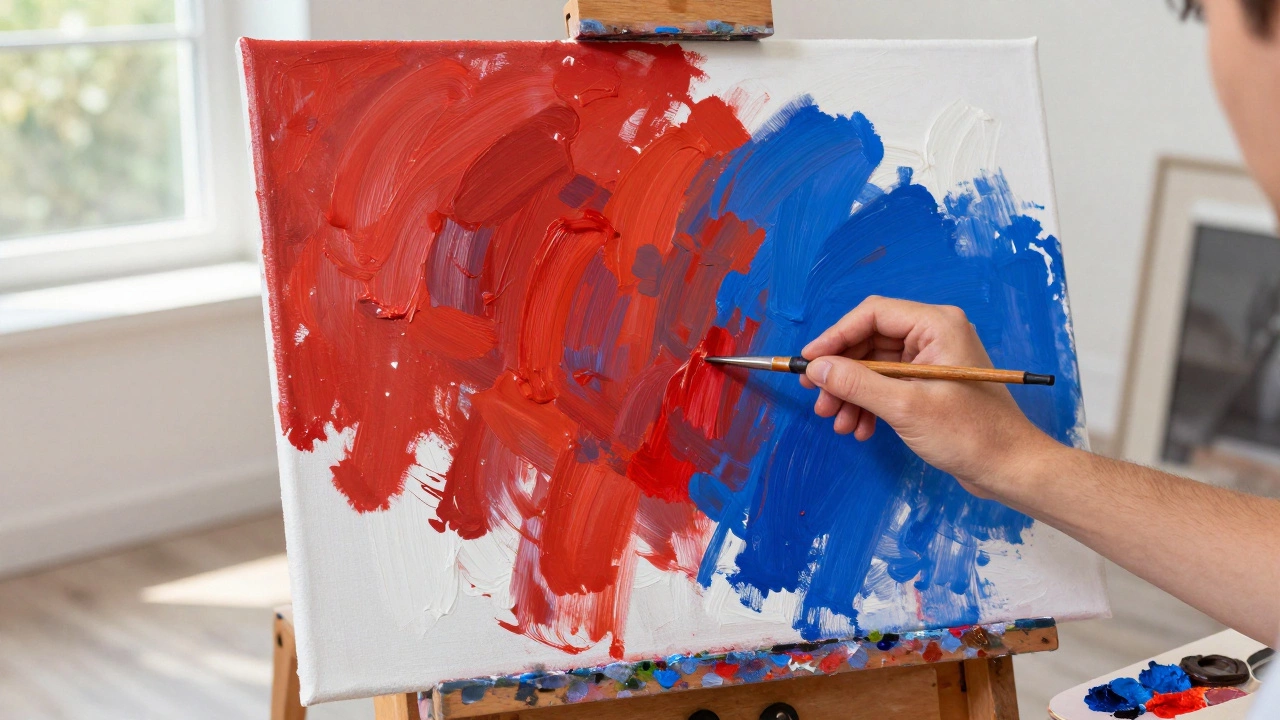
Alla prima is Italian for "at first attempt." It doesn’t mean you’re rushing. It means you finish the painting in one session while the paint is still wet. No waiting days for layers to dry. No glazing. No underpainting. You lay down your colors directly, side by side, and let them mix on the canvas-not on the palette.This approach turns painting into a conversation between your brush and the surface. You see a shape, you put it down. You notice a shadow, you add it. You adjust the temperature of a cheek, you blend a little with a dry brush. It’s immediate. It’s physical. And it demands confidence.
How Is Alla Prima Different from Other Oil Techniques?
Traditional oil painting often follows a multi-layered process: sketch, underpainting in grayscale, glazes, scumbles, waiting weeks between layers. That’s the old-school method taught in academies for centuries. It’s precise. It’s controlled. But it’s slow.Alla prima flips that. It’s like sketching with paint. You work fast, you commit, you solve problems as they come. You don’t hide mistakes-you fix them with fresh paint on top. That’s why you see so much energy in alla prima works: the brushstrokes are alive. The colors stay bright because they’re not dulled by dried layers underneath.
Compare it to watercolor: you work quickly before the paper dries. Alla prima is oil’s version of that. But with oil, you get more time-hours, not minutes-to adjust. The paint stays workable longer, which is why it’s perfect for this method.
What Tools Do You Need for Alla Prima?
You don’t need fancy gear. Just the essentials:- Oil paints (preferably high pigment load-think Winsor & Newton, Old Holland, or Gamblin)
- A few brushes: a medium flat, a round, and a filbert for blending
- A palette (wood, glass, or disposable paper)
- Odorless mineral spirits or linseed oil for thinning
- A canvas or panel primed with gesso
Some artists skip mediums entirely and use paint straight from the tube. That’s fine. Thicker paint holds its shape better, which helps when you’re building form with strokes instead of blending.
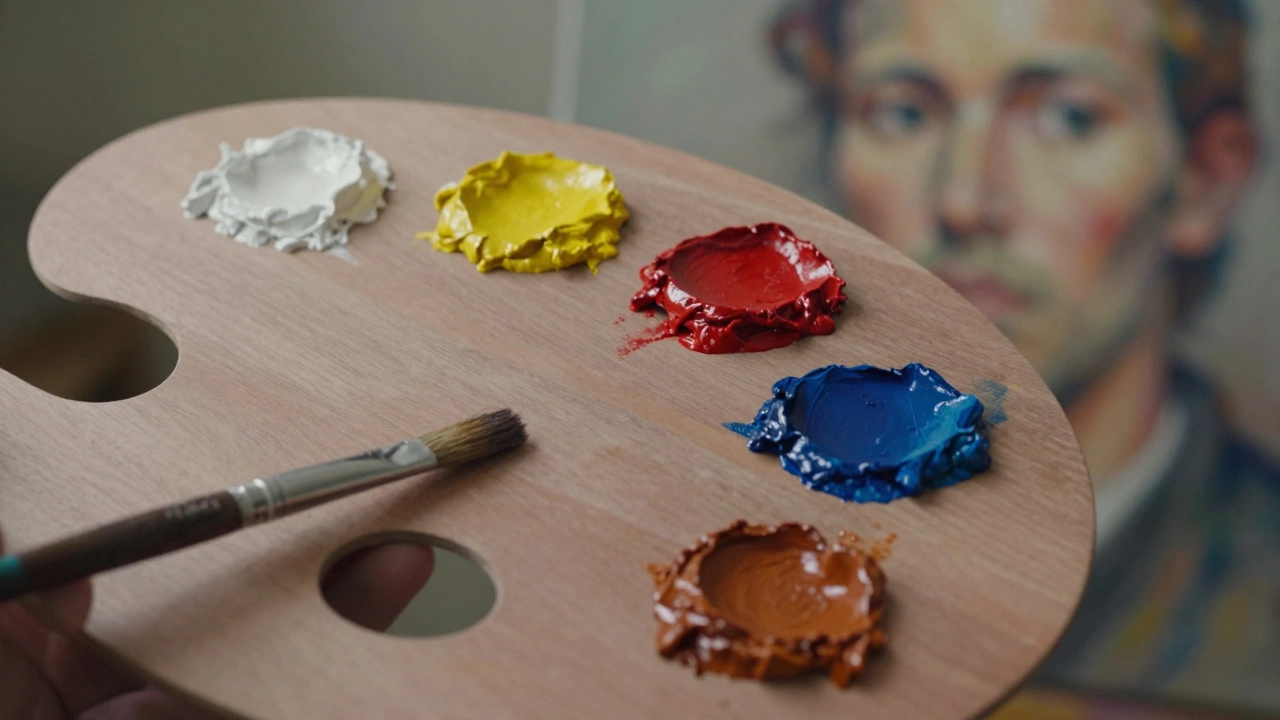
Don’t use too many colors. Start with five: titanium white, cadmium yellow light, cadmium red medium, ultramarine blue, and burnt sienna. That’s enough to mix most skin tones, landscapes, and still lifes. Less color = less muddiness.
Why Do Artists Choose Alla Prima Today?
Because it’s fast, honest, and full of personality. In a world of digital edits and endless revisions, alla prima forces you to make a decision-and stick with it. There’s no undo button.Modern artists like Richard Schmid, Bob Ross (yes, him), and Jamie Wyeth used this method to capture light and mood in real time. Schmid painted portraits from life in under four hours. He’d start at 9 a.m. and finish by 1 p.m., with the subject still sitting there. The painting wasn’t perfect-but it was alive. It had the warmth of the moment.
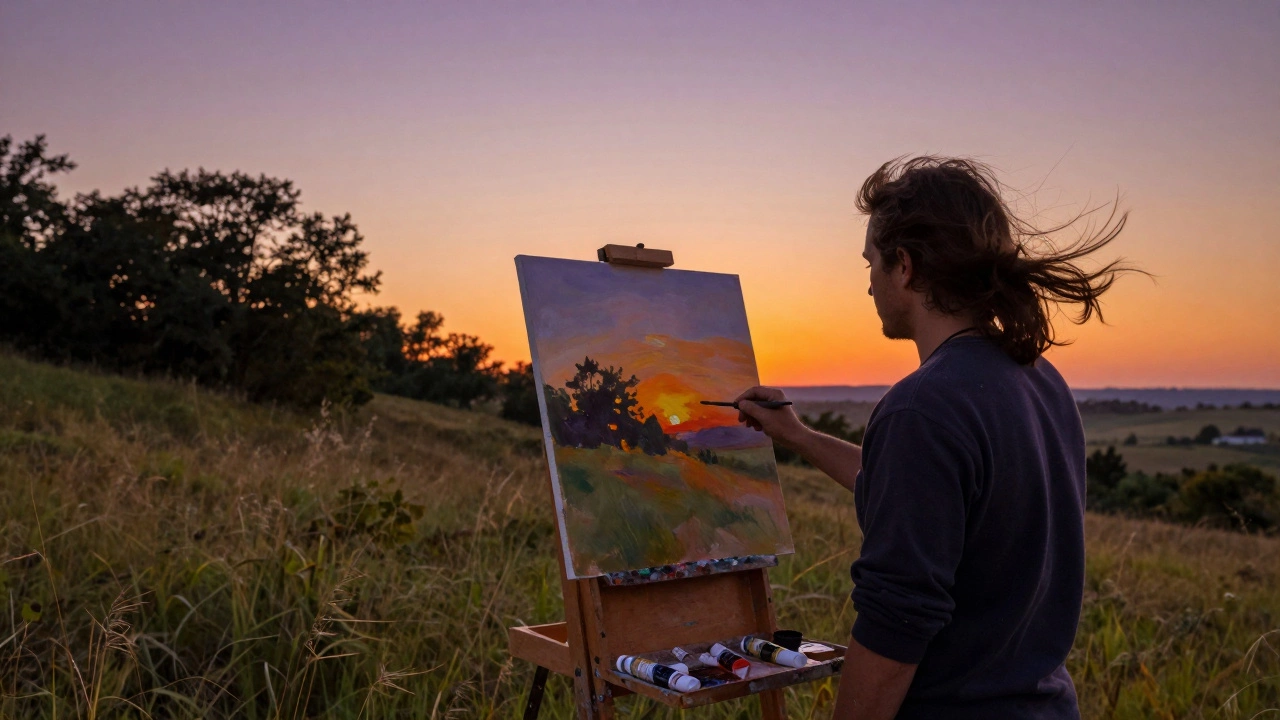
It’s also popular among plein air painters. If you’re outside painting a sunset, you don’t have time to wait for layers to dry. The light changes in minutes. Alla prima lets you chase it.
Common Mistakes Beginners Make
You can’t just slap paint on a canvas and call it alla prima. Here’s what goes wrong:- Using too much medium. If you thin the paint too much, it sinks into the canvas and turns dull. Keep it thick enough to hold brushstrokes.
- Over-blending. The magic is in the edges. If you smear every transition into gray mush, you lose energy. Let some colors sit next to each other-let the eye mix them.
- Waiting too long. If you pause for more than 30 minutes, the paint starts to set. You’ll drag it, not lay it. Work in blocks: background first, then shapes, then details.
- Trying to render everything. Alla prima is about suggestion, not detail. A few strokes can suggest an eye. A dab of white can be a highlight on a nose. Less is more.
How to Start Practicing Alla Prima
Start small. Pick a subject you can finish in 90 minutes: a single apple, a coffee cup, a self-portrait in a mirror.- Sketch lightly with a brush and burnt umber thinned with mineral spirits.
- Block in the darkest areas first-shadows, deep tones. Don’t worry about color yet.
- Then, add the lightest values. White or pale yellow on the highlights.
- Work from large shapes to small. Don’t jump to eyes or buttons.
- Use a dry brush to soften edges where needed. Don’t blend with wet paint.
- Stop when you feel it’s done-even if it’s not "perfect."
After three or four sessions, you’ll start seeing how light behaves on surfaces. You’ll notice how a red apple reflects green onto its shadow. You’ll learn to mix colors directly on the canvas instead of trying to guess the right hue on your palette.
What Makes Alla Prima Art Look So Real?
It’s not about realism in the photographic sense. It’s about truth in perception. When you paint alla prima, you’re recording how you saw something at a single moment-not how you think it should look.The brushstrokes show the movement of your hand. The texture of the paint shows where you pressed hard or dragged lightly. The color shifts show how light changes across a surface. That’s why an alla prima portrait feels more human than a hyperrealistic one: it carries the artist’s presence.
Think of it like a live jazz solo. No edits. No retakes. Just the player, the instrument, and the moment. That’s the soul of alla prima.
Where Can You See Great Examples?
Look at John Singer Sargent’s watercolor sketches-he used alla prima principles even in watercolor. His oil portraits, like "Madame X," show bold, decisive strokes that define form without overworking.Modern painters like Ted Nasmith and David Kassan paint portraits in one sitting using this method. Their work is in galleries, museums, and art books-not because they’re perfect, but because they’re alive.
Visit your local art museum and look for 19th-century genre paintings. Many were done alla prima. You’ll see the brushwork, the freshness, the lack of polish-and that’s what makes them compelling.
Is Alla Prima Right for You?
If you hate waiting. If you love movement. If you want to feel the paint, not just control it-then yes.If you need everything to be perfect before you move on. If you like planning every detail in advance. If you think painting is about precision over presence-then maybe not.
Alla prima doesn’t make you a better painter overnight. But it teaches you to trust your eyes. To see color as it is, not as you think it should be. To accept that a painting doesn’t need to be finished to be powerful.
It’s not about speed. It’s about presence.
Can you use alla prima with acrylics?
Technically, yes-but it’s harder. Acrylics dry too fast, usually within 10 to 20 minutes. That leaves little room for adjustment. Some artists use retarders or wet palettes to extend drying time, but the traditional alla prima method was designed for oil’s slow drying time. If you want to try direct painting with acrylics, work in small sections and keep your brushes wet.
Do you need to varnish an alla prima painting?
Yes, but wait at least six months. Even though alla prima paintings are done in one session, oil paint takes months to fully cure. Varnishing too early traps solvents and can cause yellowing or cracking. Once cured, a removable varnish protects the surface and unifies the gloss level.
Can you paint alla prima on canvas panels?
Absolutely. Many artists prefer rigid panels over stretched canvas because they don’t flex while you’re working. Wood panels, masonite, or even thick illustration board work well. Just make sure they’re properly primed with gesso so the oil doesn’t soak in.
Is alla prima the same as impasto?
Not exactly. Impasto refers to thickly applied paint that creates texture. Alla prima refers to painting wet-on-wet in one session. You can do alla prima with thin paint or thick paint. Many alla prima paintings use impasto for highlights or edges-but not all impasto paintings are alla prima. Some artists build thick layers over weeks.
How long does an alla prima painting take to dry?
The surface might feel dry in 24 to 48 hours, but the paint underneath can take 6 to 12 months to fully cure, especially if you used thick layers. Don’t stack or frame the painting until it’s fully dry. Keep it in a well-ventilated area away from direct sunlight.
If you’ve ever felt stuck in your painting process-overthinking, overworking, over-blending-try alla prima for one session. Just one. Paint something small. Finish it. See how it feels to let go. You might find that the painting you thought was "unfinished" is actually the most honest one you’ve ever made.