Some music sounds simple but takes years to master. Other pieces? They seem impossible from the first note. If you’ve ever sat down at a piano, held a violin under your chin, or tried to blow into a French horn with precision, you know not all music is created equal. The hardest music to play isn’t just fast or loud-it’s a perfect storm of technical precision, emotional depth, and physical endurance that pushes even the most seasoned musicians to their limits.
Why Some Music Is Harder Than Others
Hardness in music isn’t just about speed or complexity. A piece can be slow, quiet, and still be brutally difficult. Think of a single sustained note on a violin that needs to ring out perfectly without vibrato-no room for error. Or a piano passage where both hands play different rhythms, dynamics, and articulations at the same time. The hardest music demands total control over every muscle, every breath, every micro-movement.
It’s not just about notes on a page. It’s about how those notes interact with the human body. The human hand has physical limits. The lungs have capacity. The ears need to hear and adjust in real time. When composers push past those limits, they create music that feels less like performance and more like an athletic feat.
1. Franz Liszt’s ‘La Campanella’
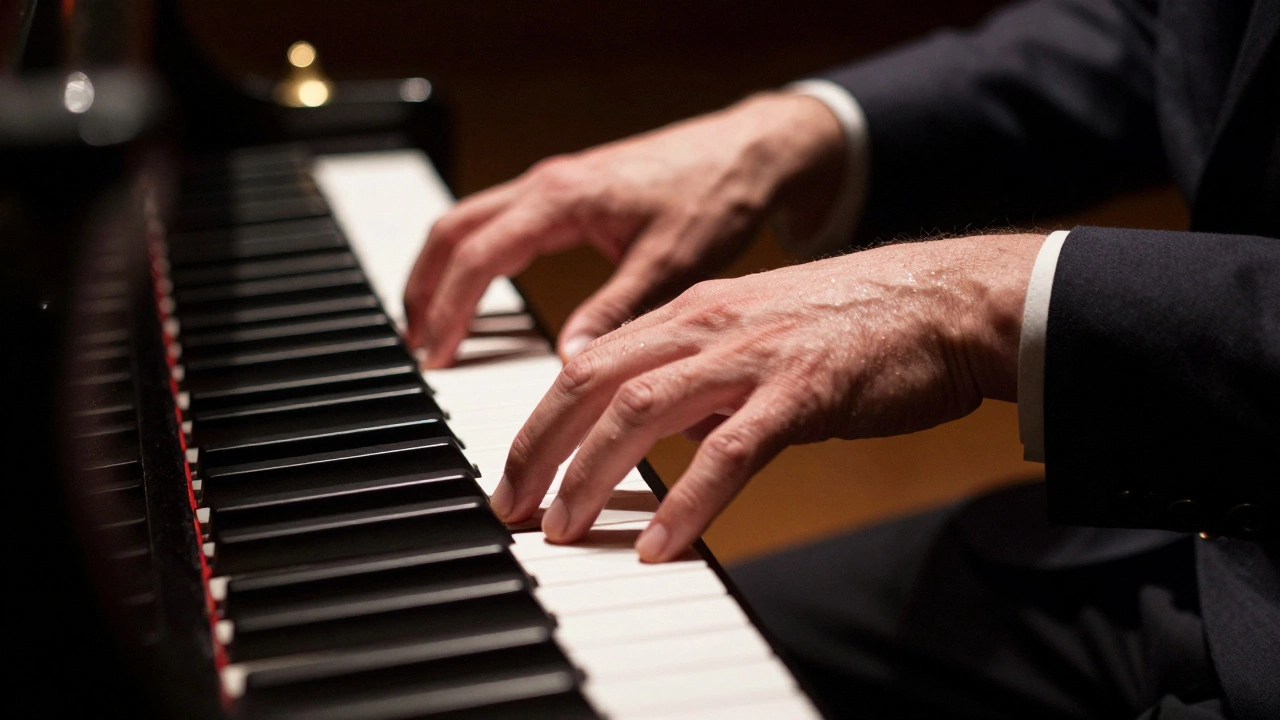
There’s a reason this piece is called ‘The Little Bell.’ It’s a dazzling, high-pitched melody that mimics the sound of a distant bell, played mostly with the right hand. But the real challenge? The jumps. You’re expected to leap across the entire keyboard-sometimes more than an octave-in the middle of a rapid passage, hitting each note dead center, without missing a beat. One wrong landing and the illusion of the bell shatters.
It’s not just the jumps. The left hand plays delicate arpeggios that must be light as air, while the right hand handles rapid repeated notes and trills at a tempo that feels like it’s speeding up. Professional pianists spend years just on this single movement. It’s not uncommon for even advanced players to need 100+ hours of focused practice to get it to sound clean, let alone musical.
2. Paganini’s ‘Caprice No. 24’
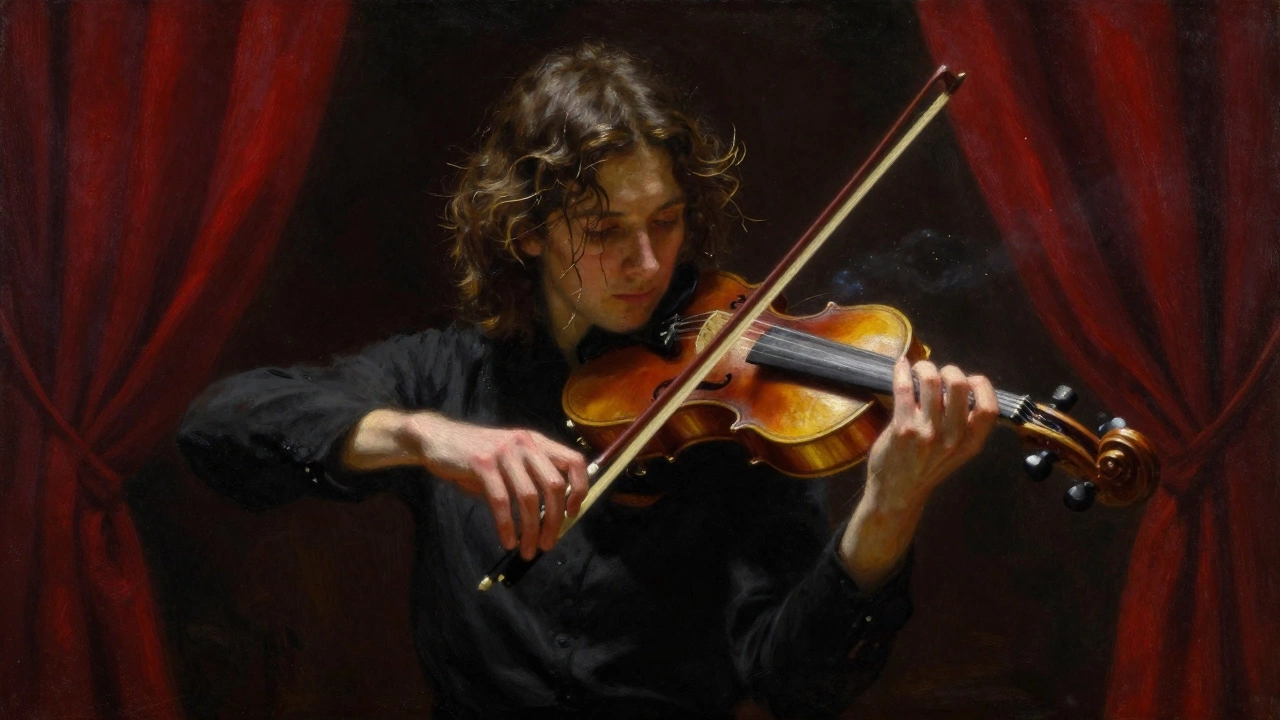
If Liszt pushed the piano to its edge, Paganini did the same to the violin. Caprice No. 24 is the Mount Everest of violin repertoire. It’s a theme and variations piece that starts deceptively simple, then spirals into a whirlwind of double stops, harmonics, left-hand pizzicato, and bowing patterns that defy logic.
One variation requires playing two notes at once while plucking another note with the left hand-like juggling three balls while riding a unicycle. Another demands rapid bowing across all four strings in a single breath, with no pause to reset. And it’s not just physical. The piece must sound elegant, not mechanical. A single misaligned finger or uneven bow pressure ruins the entire effect.
Even top violinists admit they don’t play this piece often. It’s too taxing. It wears out the fingers, the bow arm, and the nerves. But when it’s done right? It’s one of the most electrifying things you’ll ever hear live.
3. Olivier Messiaen’s ‘Vingt Regards sur l’Enfant-Jésus’
This 90-minute piano suite isn’t hard because it’s fast. It’s hard because it’s mentally overwhelming. Messiaen, a French composer and devout Catholic, wrote this piece as a spiritual meditation. Each movement is a different gaze at the infant Jesus-some peaceful, some chaotic, some filled with cosmic wonder.
The technical demands are brutal: complex polyrhythms (like 5 against 7), dense clusters of notes that require fingers to stretch beyond natural reach, and sudden shifts in dynamics from pianissimo to fortissimo in a single bar. But the real challenge? The emotional weight. You can’t just play the notes. You have to feel the theology behind them. The silence between notes matters as much as the sound.
There’s a movement called ‘Regard du Père’ that lasts over 12 minutes with almost no rest. The pianist must sustain a single chord for nearly a full minute while slowly changing the voicing of each note-without letting the sound fade or waver. It’s like holding your breath underwater while doing yoga. Few pianists attempt the full cycle. Those who do often describe it as emotionally exhausting.
4. Igor Stravinsky’s ‘The Rite of Spring’ (Full Orchestra)
This isn’t a solo piece. It’s an orchestra-wide nightmare. The Rite of Spring caused riots at its 1913 premiere-not just because of the radical choreography, but because the music was so physically impossible to play. The rhythms are irregular, shifting constantly between 5/4, 7/8, and 13/8. The harmonies are clashing, dissonant, and unpredictable.
For the bassoon, there’s a famous opening solo that requires playing in the highest register of the instrument, where the tone is thin and unstable. The player must hit a high B-flat with perfect intonation, no vibrato, and no room for error. One wrong note and the whole atmosphere collapses.
For the percussion section, it’s worse. Timpani players must hit precise pitches while switching drums mid-phrase. Horn players face 16-page solos with no time to breathe. The entire orchestra must play with brutal precision, yet sound like chaos. It’s not just hard-it’s designed to feel like a primal ritual. One misstep in timing or tuning can throw off dozens of musicians.
Even today, after over a century of rehearsals and recordings, The Rite of Spring remains one of the most feared pieces in orchestral repertoire. It doesn’t just test skill-it tests endurance, focus, and group cohesion.
5. John Cage’s ‘4’33”’
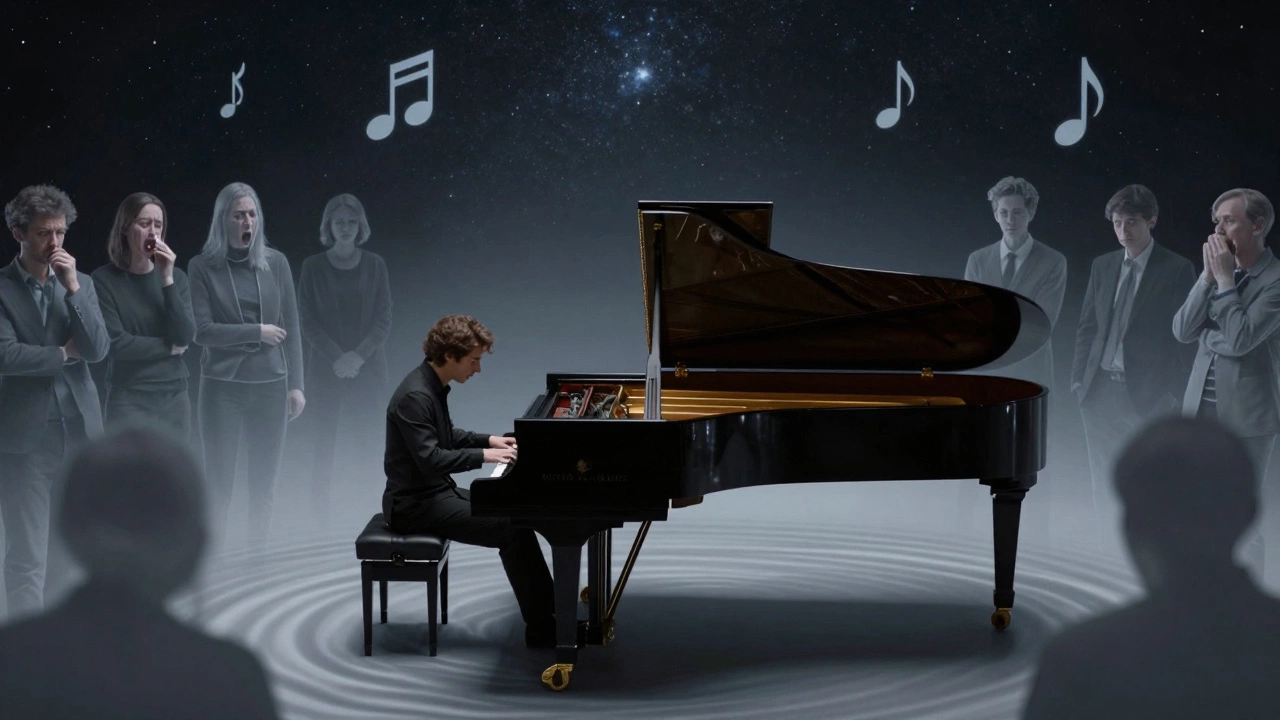
Yes, this is on the list. And no, it’s not a joke. 4’33” is four minutes and thirty-three seconds of silence. The performer sits at the instrument-usually a piano-and doesn’t play a single note. The challenge? To make silence meaningful.
It sounds easy. But it’s the hardest music to play because it requires total control over your own presence. You can’t fidget. You can’t look nervous. You can’t rush. You have to be still, focused, and present while the audience squirms, coughs, or even walks out. The music isn’t in the notes-it’s in the tension, the expectation, the way people experience time.
For a performer, this piece demands more mental discipline than any virtuoso concerto. You’re not just playing music. You’re conducting an experiment in perception. One glance at your watch, one sigh, one shift in posture-and the entire piece breaks. It’s not about technique. It’s about surrender.
What Makes a Piece ‘Hard’? It’s Not Just Notes
There’s a myth that the hardest music is the one with the most notes. That’s not true. The hardest music is the one that exposes your weaknesses. It doesn’t hide behind speed or volume. It forces you to confront your timing, your tone, your breath, your focus, your nerves.
Some pieces are hard because they require impossible fingerings. Others because they demand emotional honesty. A single wrong note in a Mozart sonata might sound like a mistake. A single wrong note in a Messiaen movement can feel like a betrayal of the entire piece’s soul.
And then there’s the psychological toll. Many musicians avoid these pieces not because they can’t play them-but because they fear what they’ll uncover about themselves in the process. The hardest music doesn’t just challenge your hands. It challenges your identity as a musician.
Can You Learn These Pieces? Yes-but Not Overnight
You don’t wake up one day and play Paganini’s Caprice No. 24. It takes years of foundational work: scales, etudes, slow practice, listening, and patience. Most professional musicians spend a decade or more building up to these pieces. Even then, many never perform them publicly.
But you don’t need to master them to appreciate them. Listen to recordings by the greats-Vladimir Horowitz, Itzhak Perlman, Pierre Boulez-and notice how they breathe with the music. That’s the real secret. The hardest music isn’t about perfection. It’s about truth.
Final Thought: The Hardest Music Is the One You Can’t Stop Thinking About
The pieces that stay with you aren’t always the loudest or fastest. They’re the ones that haunt you. The ones that make you sit in silence after they end, wondering how anyone could play them. That’s the mark of true difficulty. Not technical skill alone-but the way the music reaches into you and refuses to let go.
Is classical music the hardest to play?
Classical music has some of the most technically demanding pieces, but it’s not the only genre with hard music. Jazz improvisation at high speed, Indian ragas requiring perfect microtonal control, and complex polyrhythms in African drumming are equally challenging. Hardness depends on the skill set required, not the genre.
What’s the hardest instrument to play?
There’s no single answer, but the French horn and violin are often cited as the most difficult. The French horn has no frets or keys to guide pitch-you must hit notes with just your lips and breath, and a slight mistake can sound like a completely wrong note. The violin has no frets either, and intonation is entirely up to the player’s ear and muscle memory. Both require years to master.
Can a beginner ever play hard music?
Not directly. Hard pieces are built on years of foundational skills. A beginner might learn simplified versions or excerpts, but the full versions require advanced technique, muscle memory, and musical understanding that only time and consistent practice can build. Trying to rush it often leads to bad habits that are harder to fix later.
Why do some hard pieces sound easy?
Great performers make difficult music sound effortless. That’s the goal. What you hear as smooth and natural is the result of thousands of hours of practice, refining every detail until even the most complex passages feel like second nature. The effort is hidden-not because it wasn’t there, but because it was mastered.
Do modern composers write harder music than classical ones?
Modern composers often push boundaries in rhythm, harmony, and notation, making their music harder to read and interpret. But classical composers like Liszt and Paganini pushed physical limits just as far. It’s a different kind of difficulty: modern music challenges your brain, while classical challenges your body. Both are brutal in their own ways.