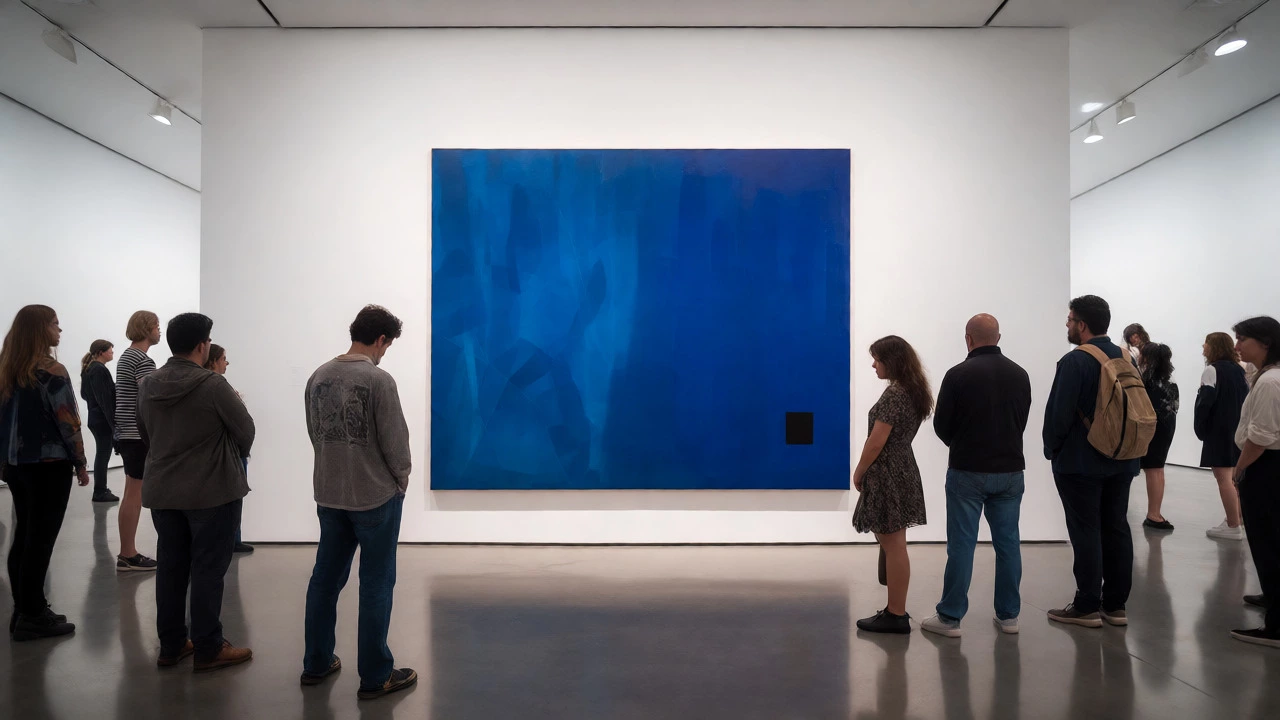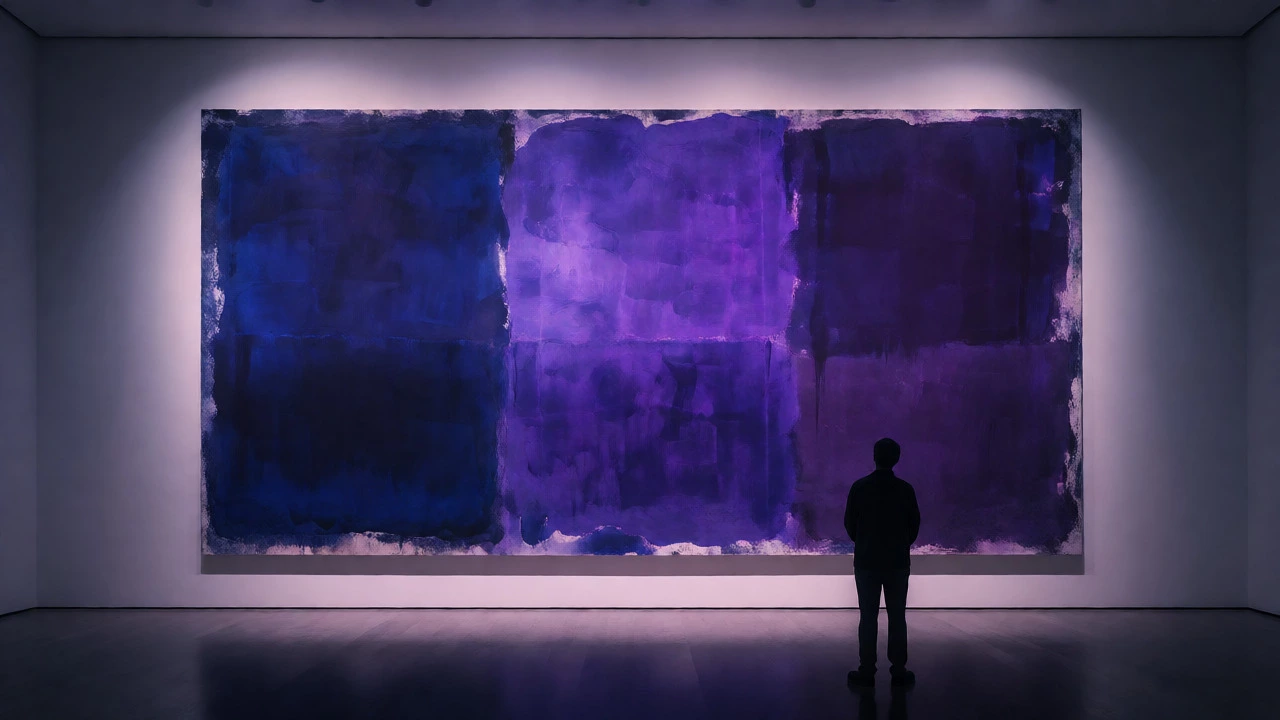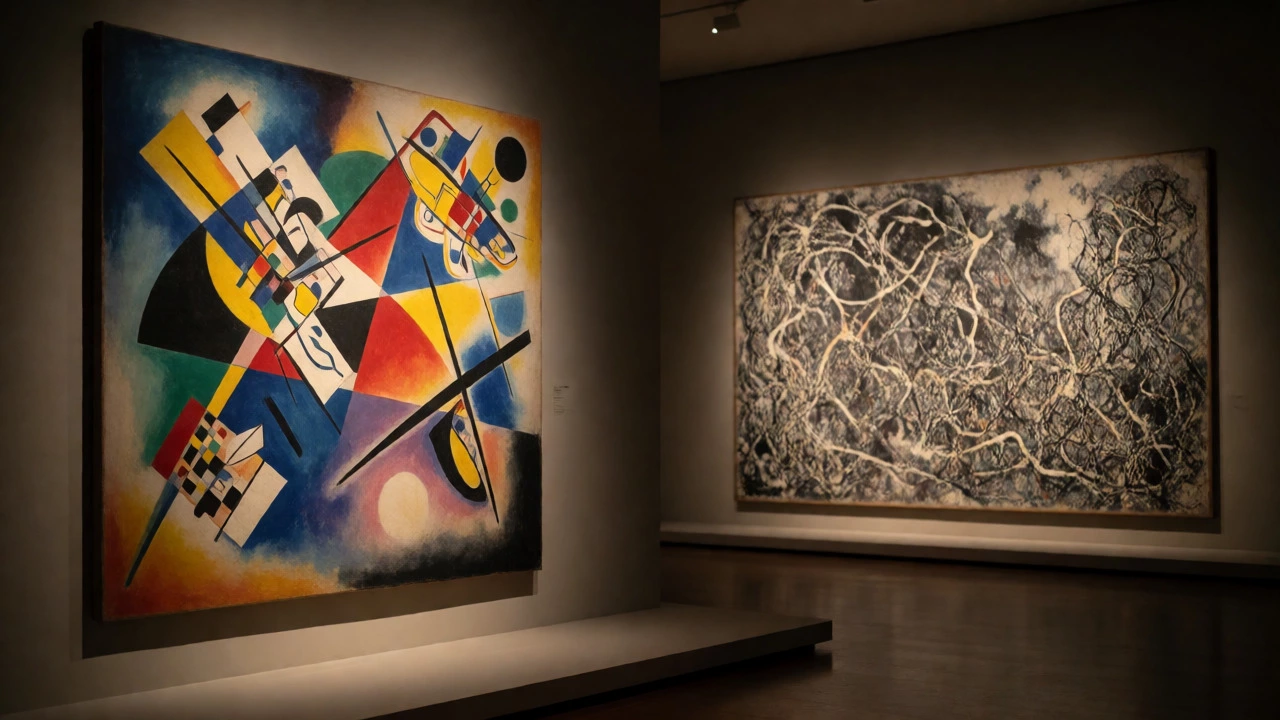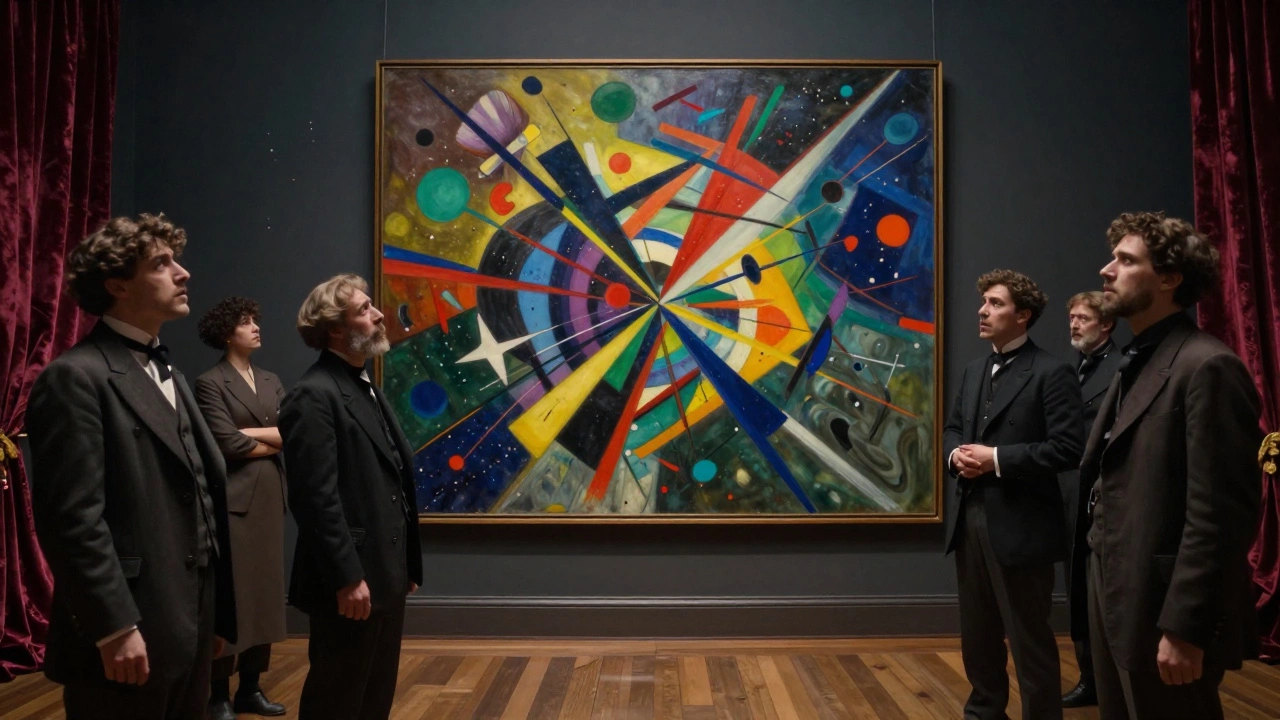
Abstract Art Style Generator
Select an artist style to generate a unique abstract composition based on their techniques.
Click "Generate Art" to create a new piece.
Imagine walking into a gallery in 1913. You expect to see a realistic painting of a landscape or a portrait. Instead, you’re staring at chaotic splashes of color and geometric shapes that look like they were thrown together by accident. For most people at the time, it was confusing, even offensive. Today, those same works sell for millions. So, who made this radical shift happen? Who turned "non-sense" into high art?
The answer isn’t just one person. It’s a group of rebels who decided that art didn’t need to copy reality. They believed art should express inner feelings, spiritual truths, or pure mathematical order. This article breaks down the key figures who made abstract art famous, from the early pioneers in Europe to the bold painters of mid-century America.
The First Break: Wassily Kandinsky
Wassily Kandinsky is often called the father of abstract art. Born in Moscow in 1866, he was a lawyer before becoming an artist. But his true breakthrough happened in Munich, Germany. In 1911, he published a book titled Concerning the Spiritual in Art. This wasn’t just a collection of paintings; it was a manifesto. Kandinsky argued that colors and shapes had their own emotional language, similar to music. Just as a symphony can make you feel sad or excited without telling a story, a painting could do the same with blue circles or red lines.
In 1911, Kandinsky created what is widely considered the first purely abstract watercolor. There were no trees, no faces, no objects-just color and form. He joined the group Der Blaue Reiter (The Blue Rider) with Franz Marc. Together, they pushed boundaries. Kandinsky’s work evolved from representational scenes to complex compositions that felt like visual jazz. His influence was immediate among other artists, proving that abstraction wasn’t just a gimmick but a serious artistic direction.
Geometric Purity: Piet Mondrian and Kazimir Malevich
While Kandinsky focused on emotion and spirituality, two other artists took abstraction in a different direction: logic and geometry. On opposite sides of Europe, Piet Mondrian in the Netherlands and Kazimir Malevich in Russia were stripping art down to its bare bones.
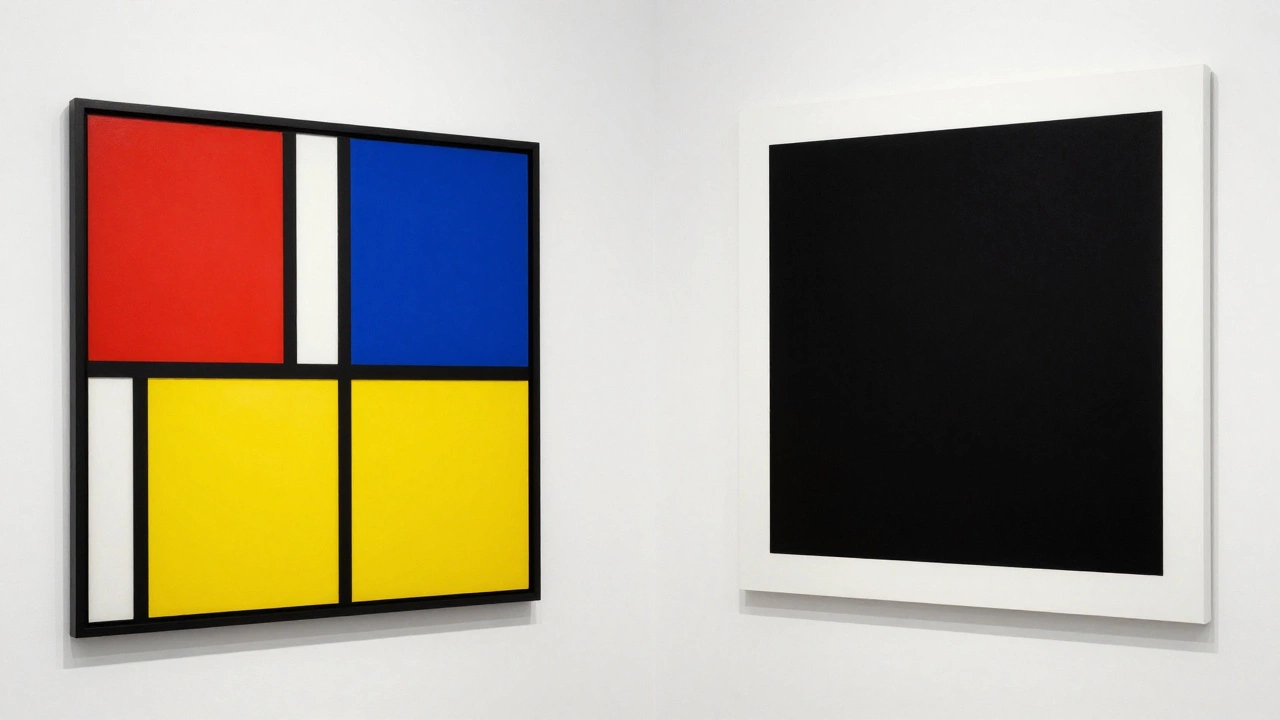
Mondrian started as a painter of landscapes. But over time, he became obsessed with simplification. He wanted to remove all individuality and emotion to reveal universal harmony. By the 1920s, he developed his signature style: black grid lines dividing the canvas into rectangles filled with primary colors (red, blue, yellow) or left white. This movement was called De Stijl, which means "The Style." Mondrian’s famous painting Composition with Red, Blue, and Yellow is now iconic. You’ve probably seen it on coffee mugs, t-shirts, and phone cases. It changed design forever, influencing everything from architecture to fashion.
At the same time, Malevich was creating something even more extreme in Russia. He founded Suprematism, a movement dedicated to "pure feeling." His most famous work, Black Square (1915), was literally a black square on a white background. When he hung it in the highest place in the room-the corner where icons usually go-he was making a statement. He was saying that traditional art was dead, and a new era of non-objective art had begun. It was shocking then, but it paved the way for minimalism later on.
Bringing Abstraction to America: Peggy Guggenheim
Abstract art remained largely European until World War II forced many artists to flee to the United States. But one person played a crucial role in introducing these ideas to the American public: Peggy Guggenheim.
Guggenheim was an heiress and a collector with sharp instincts. In the 1930s, she bought works by Picasso, Miró, and other modernists when few Americans understood them. In 1942, she opened her gallery, Art of This Century, in New York City. This wasn’t just a shop; it was a stage. She displayed large-scale abstract works in dramatic lighting, making them feel powerful and relevant. Artists like Jackson Pollock and Mark Rothko showed there. Guggenheim gave them visibility and credibility. Without her support, Abstract Expressionism might have taken much longer to gain traction in the US.
The New Vanguard: Abstract Expressionism
By the 1940s and 1950s, the center of the art world shifted from Paris to New York. A group of artists known as Abstract Expressionists took abstraction to new heights. They weren’t interested in small, quiet compositions. They wanted big, bold statements that reflected the chaos and energy of post-war life.
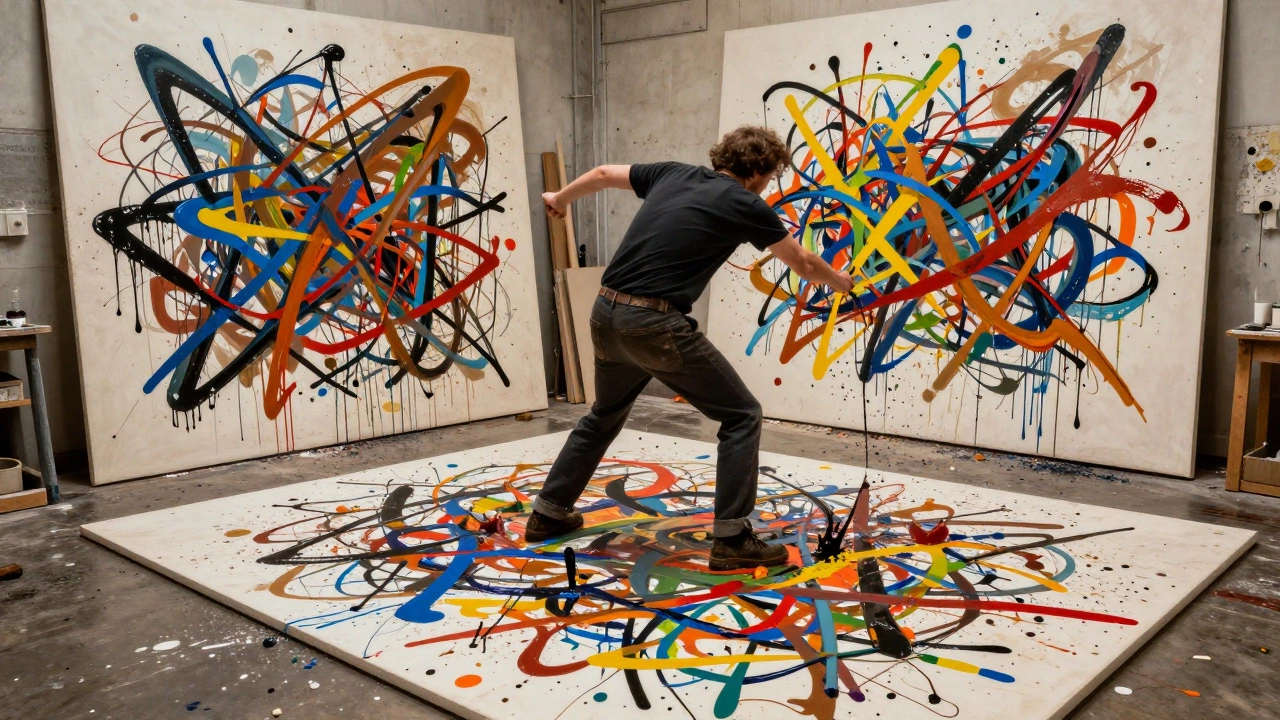
Jackson Pollock is perhaps the most famous name here. He didn’t use brushes in the traditional sense. Instead, he dripped and splashed paint onto canvases laid on the floor. This technique, called "drip painting," made the process itself part of the art. Critics initially called it messy, but it captured raw emotion and movement. Pollock’s fame exploded after Life Magazine featured him in 1949, bringing abstract art into living rooms across America.
Another key figure was Mark Rothko. His paintings consisted of large, soft-edged blocks of color floating against dark backgrounds. Rothko wanted viewers to stand close and get lost in the colors. He said his paintings were about basic human emotions: tragedy, ecstasy, doom. Unlike Pollock’s energetic action, Rothko’s work was meditative and intense. Both approaches proved that abstract art could be deeply personal and universally moving.
Why Did Abstract Art Become Popular?
So why did this strange new style take off? Several factors came together:
- Rejection of Tradition: After World War I, many people felt that old values had failed. Realistic art seemed inadequate to express the trauma and change of the modern world.
- New Technologies: Photography could capture reality perfectly. Why bother painting a realistic portrait when a camera could do it faster and better? Painters needed a new purpose.
- Global Exchange: As artists traveled and galleries opened, ideas spread quickly. The connection between European avant-garde and American collectors created a vibrant market.
- Cultural Shift: Mid-century culture valued innovation and individuality. Abstract art fit perfectly with this mindset.
Comparison of Key Abstract Art Movements
| Movement | Key Artist | Focus | Visual Style |
|---|---|---|---|
| Expressionist Abstraction | Wassily Kandinsky | Spirituality, Emotion | Fluid shapes, vibrant colors |
| De Stijl | Piet Mondrian | Harmony, Order | Grids, primary colors |
| Suprematism | Kazimir Malevich | Pure Feeling | Basic geometric forms |
| Abstract Expressionism | Jackson Pollock | Action, Subconscious | Drips, splashes, large scale |
Legacy and Modern Impact
Today, abstract art is everywhere. It’s in graphic design, interior decor, and digital interfaces. The principles established by these pioneers-simplicity, emotional resonance, and breaking rules-are still relevant. Young artists continue to experiment with abstraction, using new tools like AI and digital media. But the core idea remains the same: art doesn’t have to look like the real world to be meaningful.
The journey from Kandinsky’s spiritual visions to Pollock’s chaotic canvases shows how one idea can evolve through different hands. Each artist added their voice, making abstract art richer and more diverse. Understanding these origins helps us appreciate not just the paintings, but the courage it took to create them.
Who invented abstract art?
There is no single inventor. Wassily Kandinsky is often credited with creating the first purely abstract painting around 1911. However, other artists like Hilma af Klint created abstract works earlier, though they were not publicly recognized until later. The movement emerged from multiple sources across Europe.
Why is abstract art so expensive?
Price depends on historical significance, rarity, and demand. Works by pioneering figures like Kandinsky or Pollock are rare and define entire movements. Museums and collectors compete for these pieces, driving up prices. Additionally, abstract art allows for broad interpretation, making it appealing to a wide range of buyers.
What is the difference between abstract art and modern art?
Modern art refers to a broad period roughly from the 1860s to the 1970s. Abstract art is a specific style within modern art that does not attempt to represent external reality. All abstract art is modern art, but not all modern art is abstract. For example, Impressionism is modern art but not abstract.
Did Hilma af Klint invent abstract art before Kandinsky?
Yes, Hilma af Klint created abstract paintings as early as 1906, five years before Kandinsky. However, she kept her work private and requested it not be shown until after her death. Because Kandinsky exhibited his work publicly and wrote theoretical texts, he received initial credit. Af Klint’s recognition has grown significantly in recent decades.
How can I start appreciating abstract art?
Start by looking at the composition. Notice how colors interact and how shapes guide your eye. Ask yourself how the piece makes you feel rather than trying to identify objects. Read about the artist’s intent. Many abstract artists provide clues in their titles or writings. Visit museums to see the scale and texture of the original works, which photos often fail to capture.